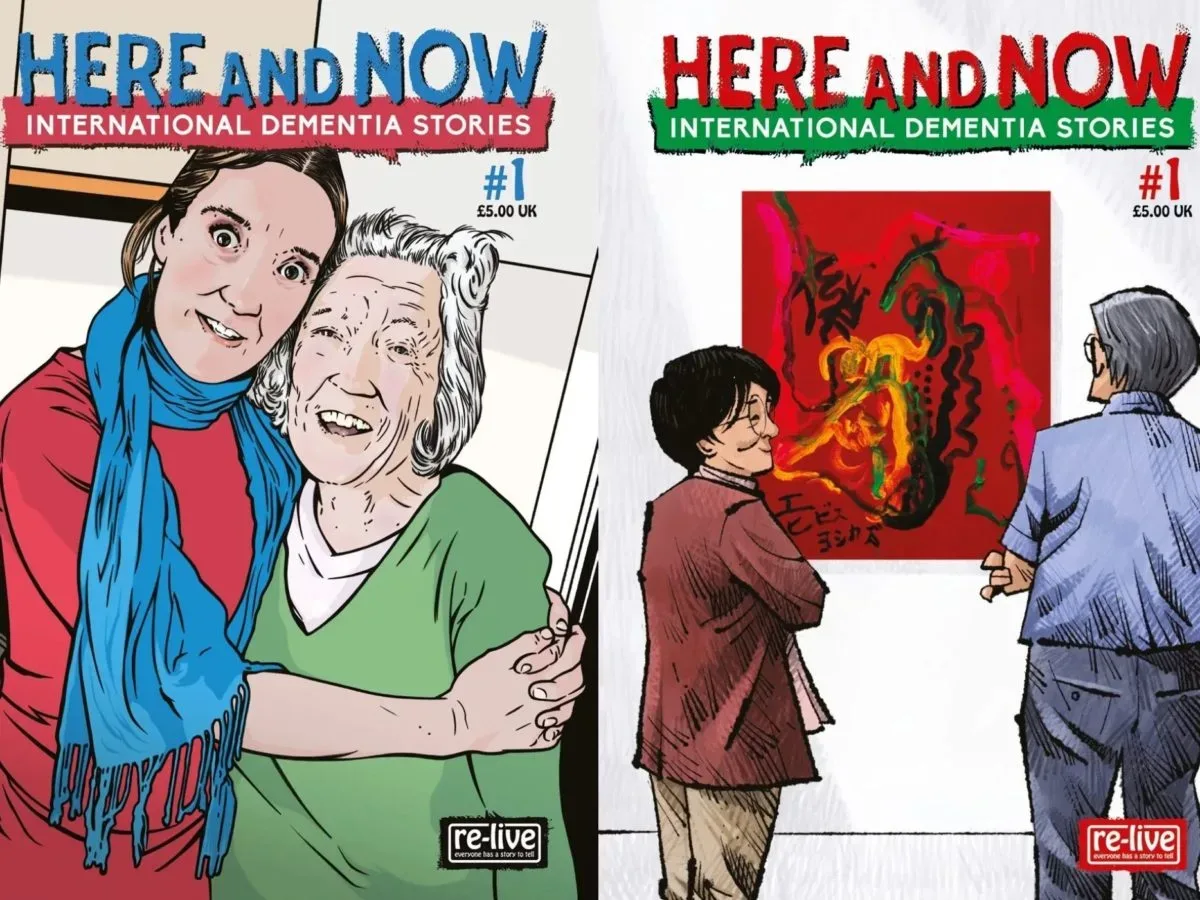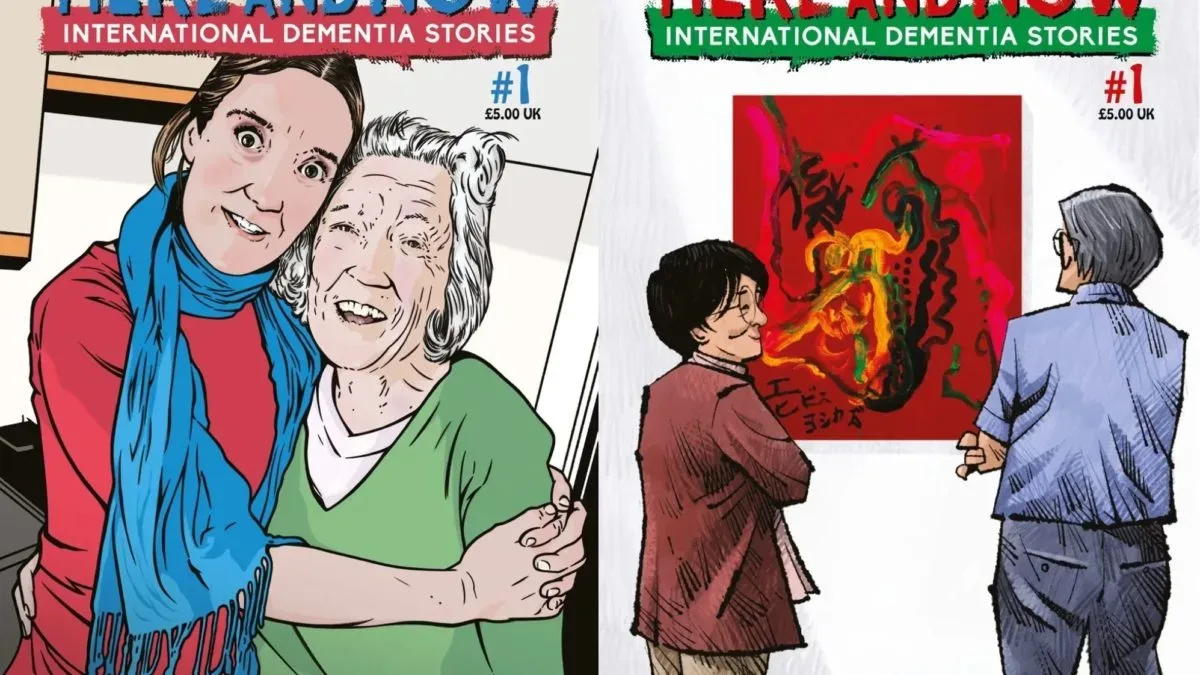
Here and Now is a 44-page, full-colour comic built around a deceptively simple idea: stories about dementia should be told by the people living through them, alongside the relatives and carers whose lives are intertwined with theirs. Created by Welsh arts-in-health charity Re-Live with the Tenjin-kai dementia-care organisation in Ofunato, northern Japan, the book collects four real life stories—two from each country—and presents them in a format designed to move between comic-reading traditions.
The project premieres at the Lakes International Comic Art Festival in Kendal and is scheduled to go on sale on November 11, 2026. It will be available in English, Welsh under the title Yma Nawr, and Japanese as 今、ここに立つ. UK and European comic shops can take pre-orders through Diamond UK using order code SEP262089, with orders closing October 10. Re-Live is also offering copies directly through www.re-live.org.uk. The listed price is £5, while US distribution is expected to be confirmed separately.
A comic designed to be read from both directions
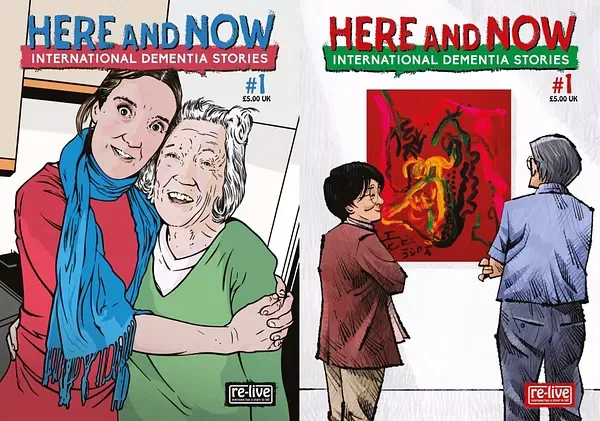
Here and Now is a flip-book: it has two covers and can be approached from either side. One half follows the left-to-right reading direction common to English- and Welsh-language comics. Turn the book over, however, and the other side runs right to left in the manga tradition.
That physical design is more than a novelty. It gives the Welsh and Japanese material equal presence rather than treating one as a translation, supplement, or special feature of the other. The book’s structure asks a reader to literally change orientation as they move between cultural contexts. For a work concerned with care, communication, and the ways people try to understand experiences beyond their own, that seems an especially fitting use of comics’ format.
The four accounts do not claim that Wales and Japan handle dementia in identical ways. Instead, the book places personal experiences side by side: diagnosis, family routines, care, loneliness, resilience, humour, and moments of connection. Comics can make room for all of those elements at once. Panels can show a gesture, a room, an ordinary meal, a shared dance floor or a remembered place without requiring the story to reduce a person to a clinical description.
Four stories, four creative teams
Each chapter pairs a real storyteller with a different artist. That approach matters because these are life stories rather than fictional case studies: the central aim is to preserve individual perspective while using drawn images to make each account approachable for readers.
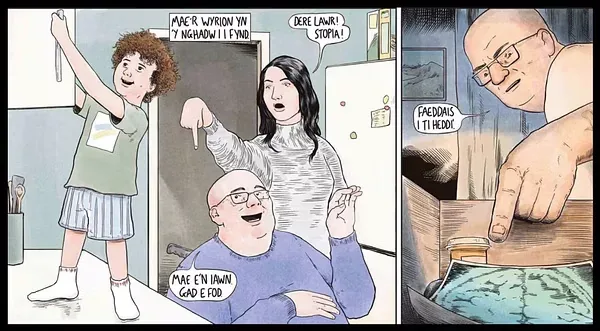
- Patrick, a former rugby player living with vascular dementia, reflects on receiving his diagnosis and on the things that sustain him: family, friends, a Sunday roast and dancing. Matt Beese draws his story.
- Carri speaks about caring for her mother, Mavis, including the isolation and loneliness that can accompany family care as well as the love within that relationship. Archie McKenzie illustrates the chapter.
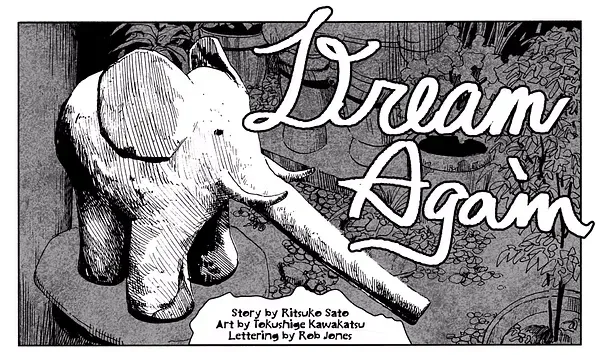
- Ritsuko Sato, from Ofunato, recounts life with her husband as his dementia progressed. Her story includes a significant day when his carers took him back to his former home and school. Tokyo mangaka Kawakatsu Tokushige draws the account.
- Dr Yukimi Uchide, chair of the Tenjin-kai Social Welfare Foundation and a dementia specialist, considers what her mother Fumiko-san taught her—understanding that professional expertise alone had not provided. Yuki Monou is the artist.
Vascular dementia is the diagnosis named in Patrick’s chapter. In the context of the book, the term identifies his lived condition rather than defining the entire story. That distinction is important across the project: a diagnosis is part of someone’s life, but it is not a replacement for their tastes, relationships, history, character, or ability to participate in daily life.
Carri’s chapter also turns attention toward family carers. A narrative about dementia can easily focus only on the diagnosed person or only on formal care systems. Her account instead makes space for a reality that is often less visible: care may involve affection and commitment while also bringing social isolation and exhaustion. Presenting that experience in a short comic does not solve those pressures, but it can name them clearly and give them the dignity of being discussed.
Ebisu Yoshikazu’s final painting on the cover
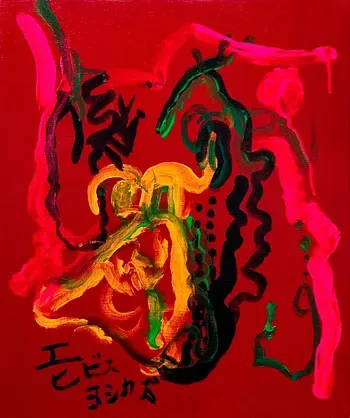
The Japanese-facing cover features Relieved (ほっとした), a painting licensed for the project by Ebisu Yoshikazu. Ebisu, now in his eighties and living with dementia, is associated with Japan’s heta-uma movement, a term commonly explained as “bad but good.” It refers to art that deliberately embraces an apparently rough, awkward, or unpolished visual quality while achieving an expressive result that polished technique alone may not produce.
Ebisu was also a longstanding contributor to the manga anthology Garo and became a familiar figure on Japanese television. Including his painting gives the book an additional artistic connection to the subject at its centre: it is work by an artist living with dementia, rather than imagery merely made about dementia from a distance.
Welsh illustrator Jonathan Edwards has created an accompanying image of two of the book’s storytellers, Mr and Mrs Sato, standing before the painting in a gallery. The cover treatment creates a conversation among the featured artwork, the people whose experiences inform the publication, and the illustrators translating those experiences into comics.
It is also a reminder that dementia is not synonymous with the disappearance of creativity. The project does not romanticise the condition or suggest that art removes its challenges. Rather, the inclusion of Relieved recognizes artistic agency and the value of a person’s work in the present.
A collaboration built over years, not a one-off exchange
Although Here and Now is Re-Live’s first international comic collaboration, the relationship behind it reaches back 15 years. Re-Live artistic director Karin Diamond travelled to Ofunato in 2011 on a Churchill Fellowship to study with Dr Uchide. That encounter informed Re-Live’s subsequent theatre work with people living with dementia and its training for more than 5,000 care workers in Wales and elsewhere.
The collaboration was developed as part of the Wales–Japan 2025 Culture Programme. Its care perspective is relationship-centred: people living with dementia are understood as people who can remain involved in the ordinary life of a home and community. The examples identified include cooking, cleaning, gardening, caring for one another, and making everyday contributions.
Relationship-centred care, as represented here, shifts the question away from what a person can no longer do in isolation. It asks how family members, care workers, neighbours, familiar places, activities, and routines can support connection. This is not a technical fix or a promise that difficult circumstances become easy. It is a way of recognising that dignity can reside in daily participation and that companionship is often built through small interactions rather than grand interventions.
The Sato story’s return to a home and old school is a concrete example of place becoming part of care. The significance is not presented as a universal prescription. But the account suggests why personal history, familiar environments, and meaningful locations can matter profoundly to a person and the people around them.
Why the comic form is well suited to these accounts
Re-Live has previously produced two issues of Coming Home, comics about military veterans’ mental-health experiences. With Here and Now, the charity applies a similar life-story approach to dementia. The format can be especially useful when a subject involves emotion, memory, care routines, and conversations that may be difficult to summarize in straightforward informational prose.
Comics are neither automatically simpler nor less serious than other forms. Their combination of words and pictures can clarify who is speaking, show pauses and body language, establish the importance of a location, or hold conflicting feelings in the same sequence. A reader may see a difficult day alongside a tender one without the work insisting that either cancels out the other.
That ability to keep contradictions visible is central to the book’s apparent purpose. The stories include diagnosis and progression, but also dance, food, family, professional learning, humour and care. They are not framed as inspirational tales in which hardship vanishes. They are accounts of people continuing to live in relationships that can be demanding, loving, lonely, surprising, and meaningful at the same time.
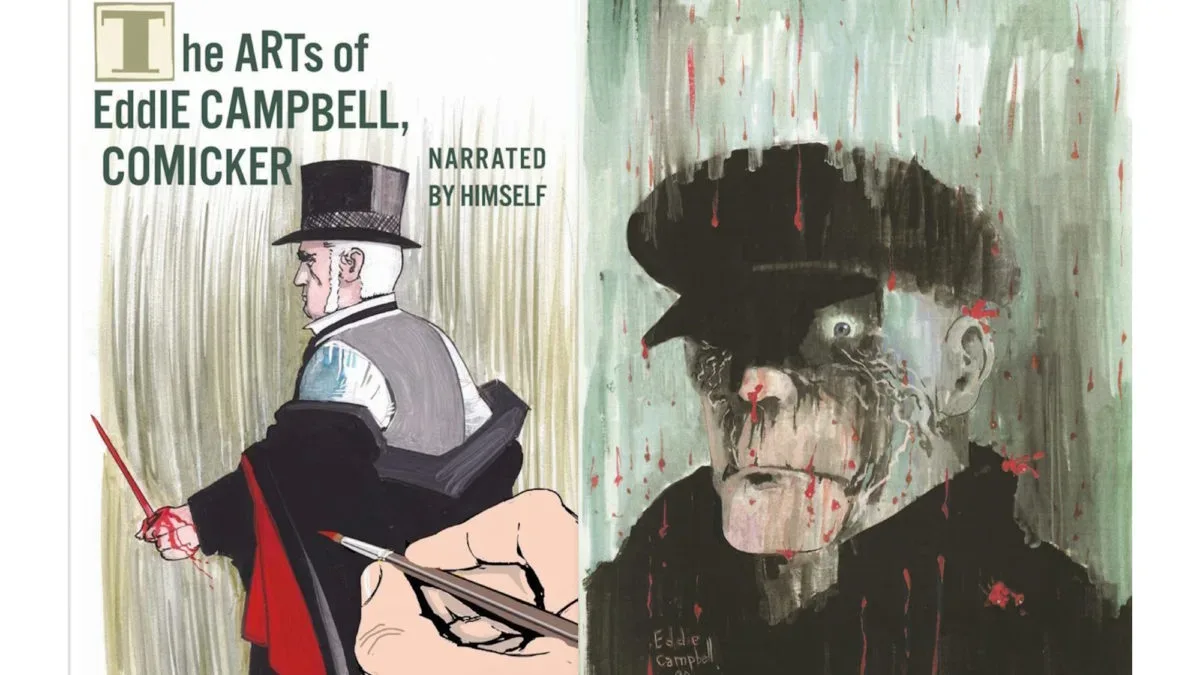
For comics readers, the project is also an example of the medium operating beyond genre boundaries. Comics have long carried memoir, journalism, education and personal testimony alongside adventure, superhero fiction and manga serialisation. A recent comics-focused art-book project around Eddie Campbell likewise highlights the breadth of work that can emerge from the medium; Campbell’s five-decade retrospective offers a separate illustration of how varied comics practice can be. Here and Now belongs to a different kind of project altogether, but it similarly treats comics as an art form capable of carrying personal and socially important material.
What readers can take from Here and Now
The book’s value is unlikely to rest on offering one authoritative answer to dementia care. Its four chapters are specific to four people and their families. That specificity is a strength. It resists treating anyone with dementia, or anyone providing care, as a category with a single experience.
For readers who know dementia through family or care work, the comic may offer recognition: everyday pleasures and difficult feelings can coexist, and experiences that feel private or isolating can be spoken about. For readers without that direct connection, it offers a grounded introduction shaped by people’s own accounts rather than abstract generalisations.
Most importantly, the project makes room for people living with dementia as present-tense participants in creative and community life. Between its bilingual, bidirectional design; its Welsh and Japanese storytellers; and Ebisu Yoshikazu’s cover art, Here and Now uses the material form of a comic to reinforce its central idea: connection is made when people pay attention to one another as they are, here and now.