Harley Quinn can turn nearly any bad day into a bit, but Harley Quinn #68 appears to hand her a particularly crowded one: she is badly hurt, recovering in a hospital, still attached to an IV, and facing a killer who wants her dead. The issue is scheduled to arrive in comic shops on Wednesday, November 25, 2026, from DC.
The credited creative team pairs writer Elliott Kalan with artist Carlos Olivares, while Bailie Rosenlund is listed as the cover artist for the regular edition. Rather than positioning a hospital stay as a pause between the action, the premise makes it the pressure cooker. Harley is supposed to be resting after her latest adventure, but the solicitation says the threat has followed her into the one place meant for recovery.
And, naturally, Harley’s response is not merely to ask for protection. She calls for her lawyer, Rev. Carl Booger Jr., because apparently a life-threatening emergency is also grounds for litigation. It is a sharp little piece of Harley logic: an assassin is alarming, but hospital customer service may be the real villain.
A recovery room becomes the battleground
The issue’s setup is deliberately compact. Harley’s “rockin’ bod” is described as badly damaged following the events of her most recent outing. She expects a quiet stretch of recovery, only to discover that her hospital time has become a “fiasco” involving an active attempt on her life.
That framework matters because it puts limits on a character usually defined by motion, mayhem, and the ability to barrel through obstacles headfirst. An IV, or intravenous line, delivers fluids or medication through a vein; in the solicitation, its more immediate storytelling function is visual and physical. Harley is not presented as fully free to sprint into the next gag or start swinging a comically oversized weapon. She has to contend with danger while visibly in the middle of medical treatment.
That does not mean readers should presume the full shape of the story from a short solicitation. It does, however, establish the core tension: Harley is vulnerable at the exact moment an attacker decides to escalate. The title’s “Pittstain” exclamation and Harley’s blunt complaint about the hospital signal that the issue is not abandoning the character’s irreverent voice simply because the stakes are serious.
“My life is on the line, and I don't think any doctors are gonna be able to help this time!”
There is a useful contrast in that hook. Hospitals conventionally represent care, expertise, order, and the prospect of getting better. Harley’s world seldom stays orderly for long. Bringing a killer into that setting lets the comic turn a place of safety into a hostile environment without requiring a change of location or a grand new criminal scheme in the solicitation itself.
What the premise confirms—and what it leaves open
The confirmed details are straightforward: Harley is recovering in a hospital after an earlier escapade, a killer is after her, she remains hooked up to an IV, and she wants Rev. Carl Booger Jr. brought in so she can sue. The issue is written by Kalan, illustrated by Olivares, and set for November 25.
Several questions are intentionally unanswered. The available setup does not identify the killer, explain what injuries Harley sustained, say who else is at the hospital, or reveal how long the confrontation occupies the issue. It also does not establish the legal target of Harley’s proposed suit. Her grievance may be sincere, a coping mechanism, an attempt to enlist help, or some gleeful combination of all three. With Harley, those categories are rarely mutually exclusive.
That restraint is worth preserving. A comic solicitation is designed to sell a premise and a tone, not to provide a scene-by-scene roadmap. Readers looking for confirmation about the attacker’s identity, the outcome of Harley’s recovery, or the ramifications of the prior adventure will need to wait for the issue itself.
The Harley Quinn ingredient: danger with a punchline attached
Harley’s lawyer request is more than a throwaway joke because it crystallizes the book’s advertised tone. The danger is real enough for Harley to say her life is on the line, yet her first instinct is filtered through aggrieved, rapid-fire outrage. The proposed lawsuit turns the hospital crisis into a customer complaint of the most extreme possible kind.
That is a useful distinction for readers deciding whether this is their kind of comic. The solicitation is not selling a solemn medical drama. It is selling a Harley Quinn crisis: high stakes, an absurdly specific response, and a lead character determined to make a chaotic situation even noisier.
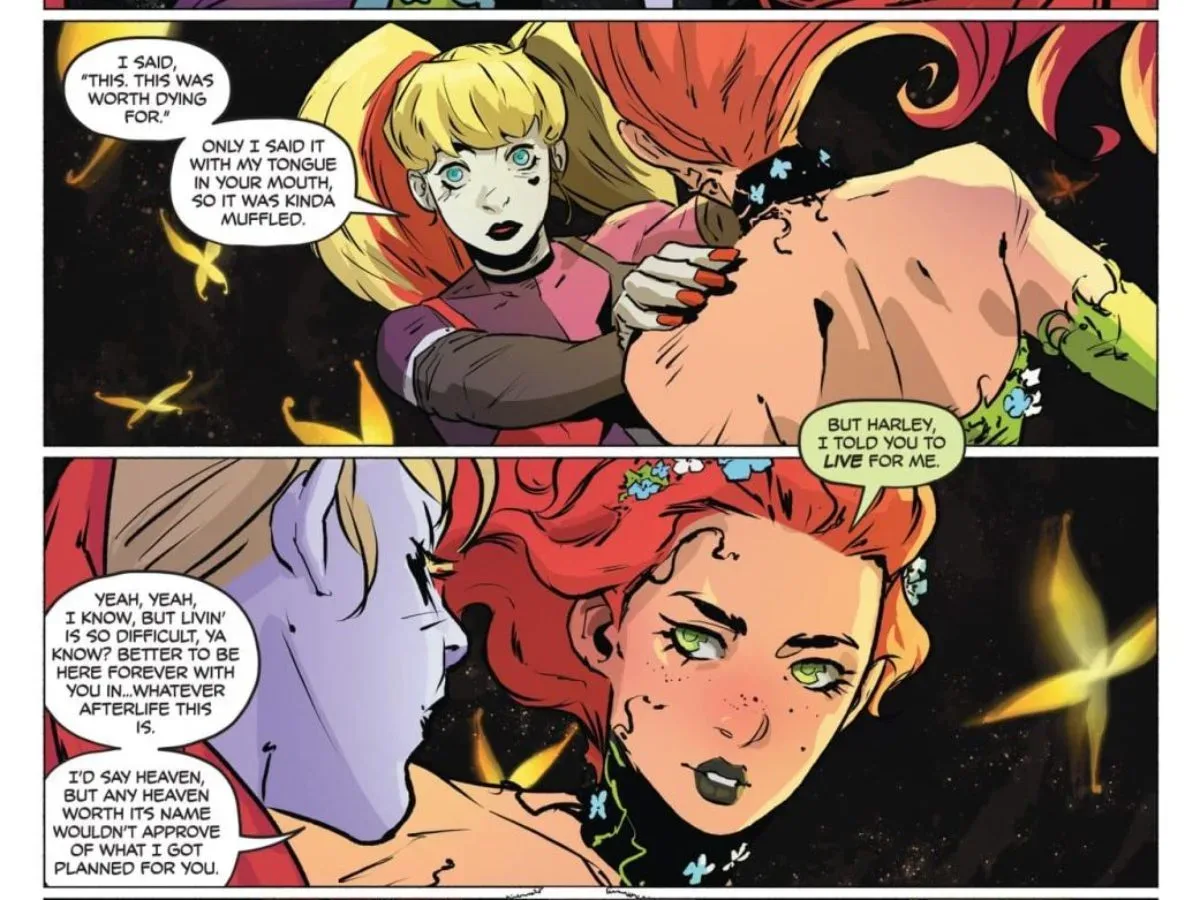
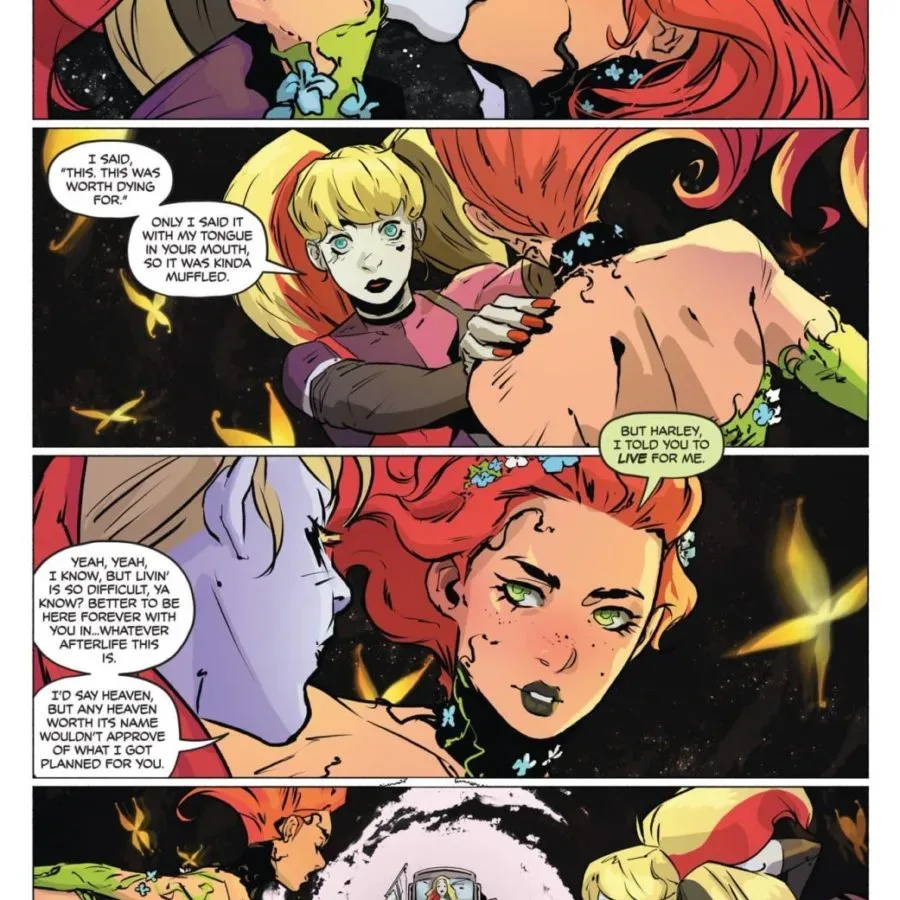
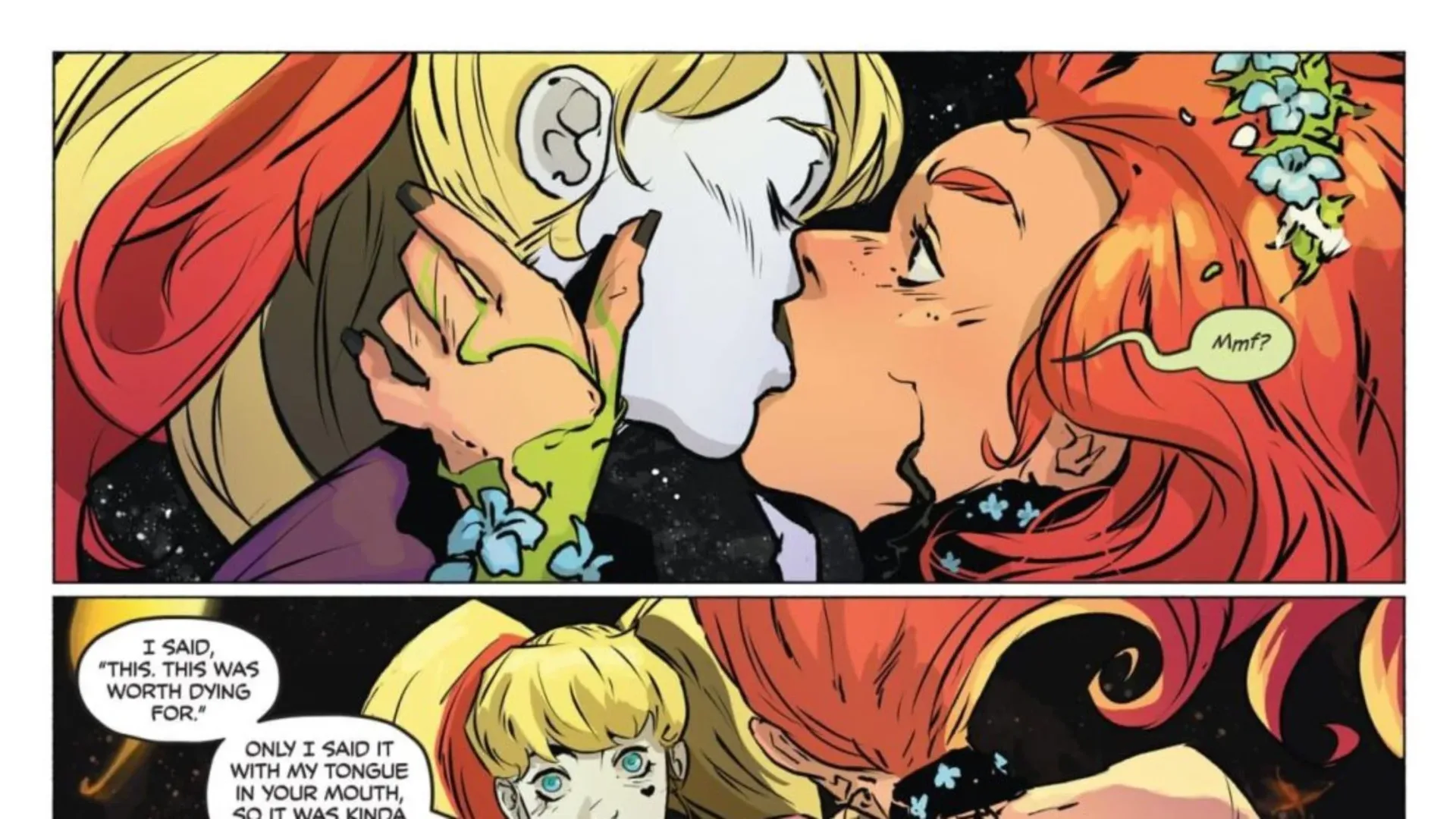
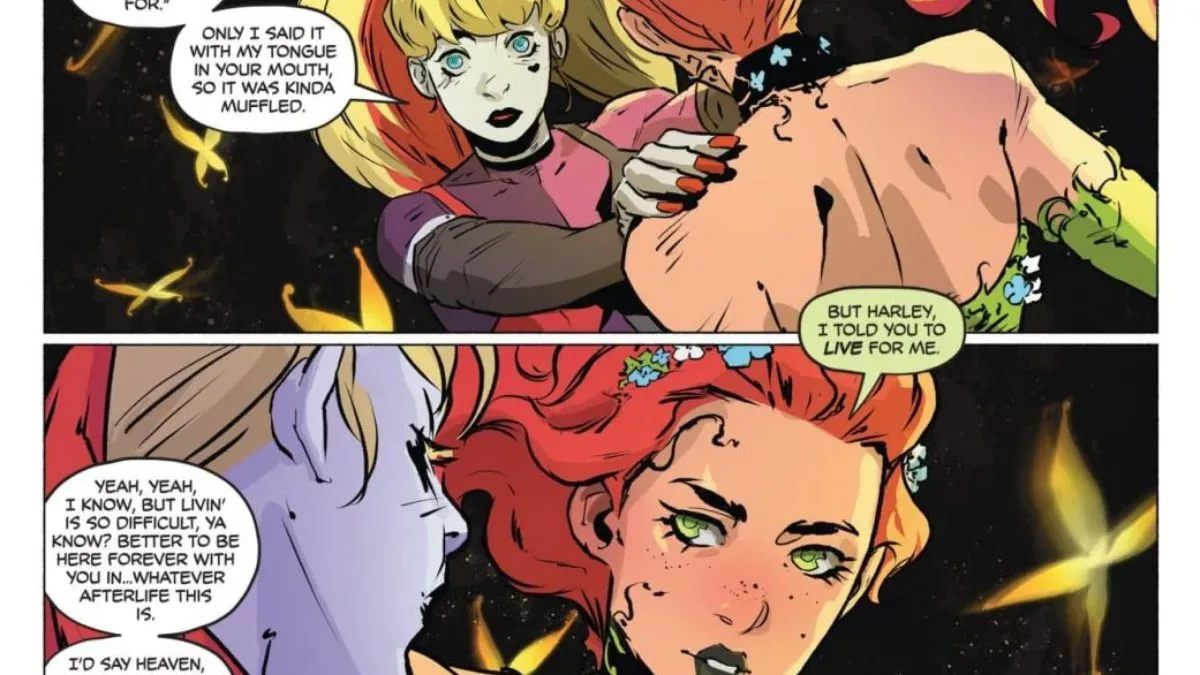
The mention of Ivy within Harley’s mind adds another layer to that pressure. The setup indicates Ivy is urging Harley to keep living, placing emotional support alongside the threat outside the hospital room. Even in a very short preview description, that creates a split between Harley’s outwardly comic rage and an inward voice pushing her toward survival.
How that internal Ivy presence functions on the page, and how much attention it receives, are details the solicitation does not define. Still, its inclusion suggests that Harley’s predicament is not only physical. The issue has room for an interior emotional current while Harley manages the very external problem of someone trying to kill her.
Who is making Harley Quinn #68
Elliott Kalan is credited as writer and Carlos Olivares as artist. A writer establishes dialogue, plot, pacing, and scene direction, while an interior artist turns the script into the sequential images that carry action, facial expression, movement, and page-to-page rhythm. For an issue built around a constrained location and an injured protagonist, visual storytelling can do a great deal of work: an IV line, a hospital bed, a corridor, or a single incoming threat can all make Harley’s lack of easy escape immediately readable.
Bailie Rosenlund is credited for the main cover. The issue will also have variant cover editions credited to David Nakayama, Terry Dodson and Rachel Dodson, and Nimit Malavia. In comic-book terms, a variant cover is an alternate exterior image for the same issue. It does not mean a different story or different interior pages have been announced here; it gives readers and shops alternate cover art options.
The listed cover pricing is $4.99 for the Nakayama, Dodson, and Malavia variants. The regular issue has a listed suggested retail price of $3.99. As always, a suggested retail price is the publisher’s listed price, and readers should check with their chosen comic shop about ordering and stock.
Why the hospital setting is a practical hook
From a storytelling perspective, putting an action-comedy lead in recovery does two things at once. First, it gives the character an immediate obstacle beyond the killer: she is injured and receiving treatment. Second, it makes every decision more consequential. Walking away, fighting back, calling for help, or even trying to find out who is responsible can become more difficult when a character is not operating at full strength.
The premise also gives the creative team a setting with a built-in cast of possible roles—medical staff, visitors, patients, security, and anyone moving through the building—without confirming that any of them are actually involved. That is analysis of the setup, not a claim about the issue’s plot. The solicitation itself names only Harley, the killer, Rev. Carl Booger Jr., and Ivy’s presence in Harley’s mind.
For Harley specifically, the setting can amplify the comedy. Her complaint that “this hospital sucks” takes an extreme situation and reframes it as a spectacularly bad consumer experience. It is the kind of perspective that can make panic funny without insisting the danger is trivial. The killer remains the threat; Harley’s response is the joke delivery system.
Release and cover checklist
- Title: Harley Quinn #68
- Publisher: DC
- On sale: November 25, 2026
- Writer: Elliott Kalan
- Artist: Carlos Olivares
- Regular cover artist: Bailie Rosenlund
- Variant cover artists: David Nakayama; Terry Dodson and Rachel Dodson; Nimit Malavia
- Regular issue SRP: $3.99
- Listed variant cover SRPs: $4.99
Comic readers tracking the broader publication side of the medium may also be interested in how demand can reshape a release cycle, as seen in a recent report on multiple books returning to press. That is separate from Harley Quinn #68, for which the material here only identifies the regular release and its listed cover editions.
For now, Harley Quinn #68 is promising an unusually inconvenient recovery: a hospital bed, an IV, a killer, an internal plea to keep going, and a legal representative summoned into the fray. Harley might be down, but the solicitation strongly suggests she is not prepared to be quiet about it.