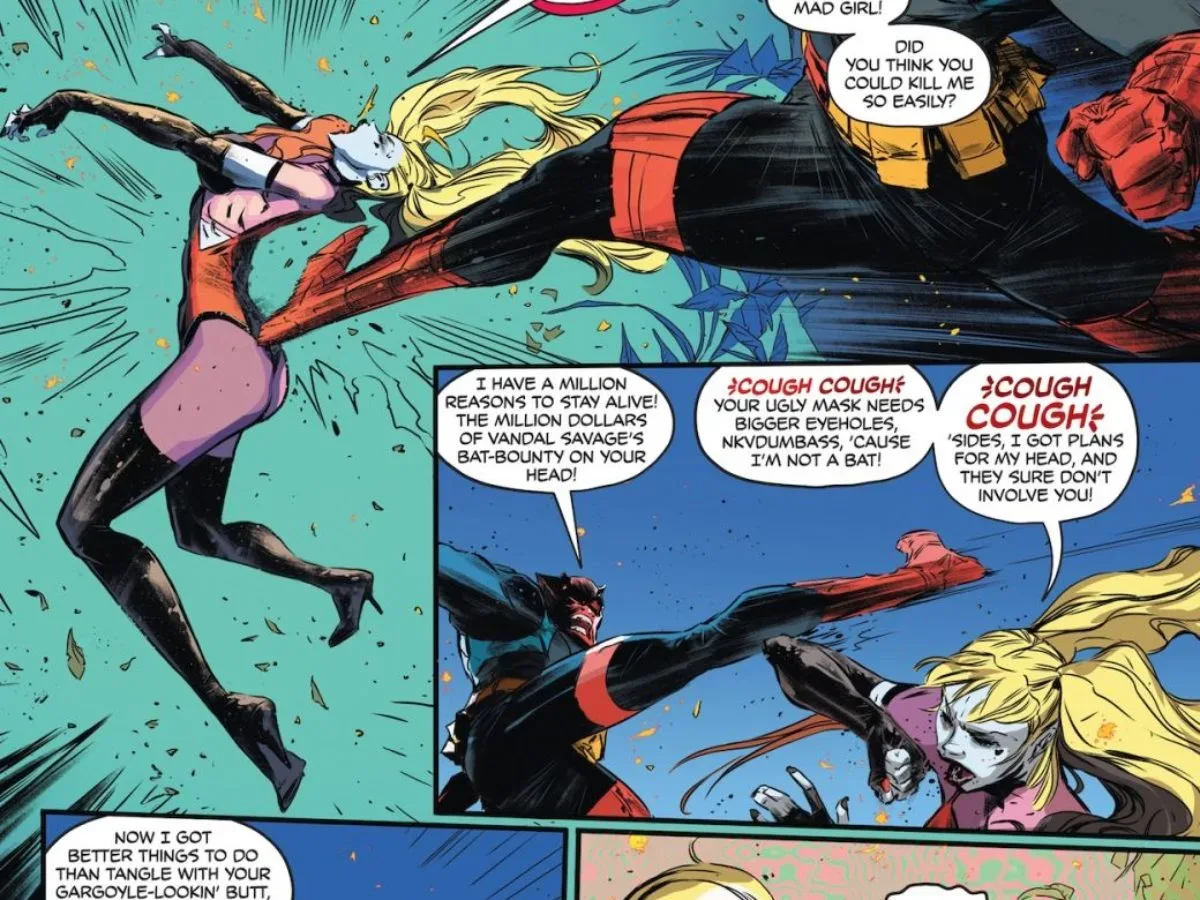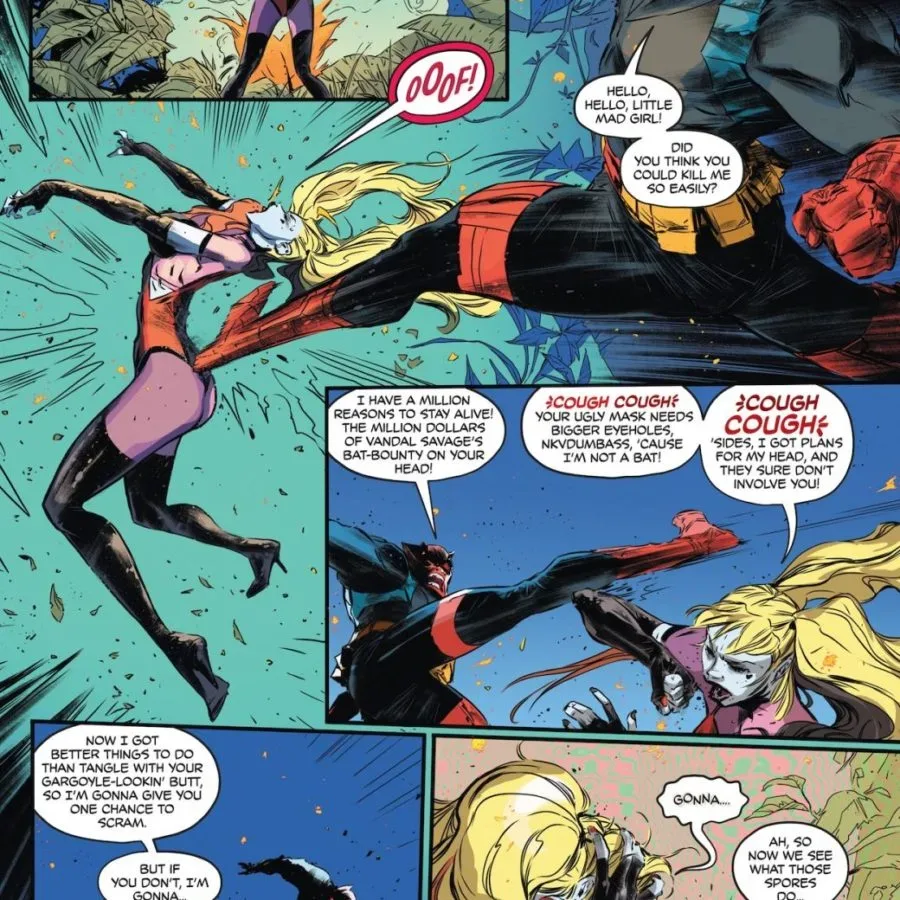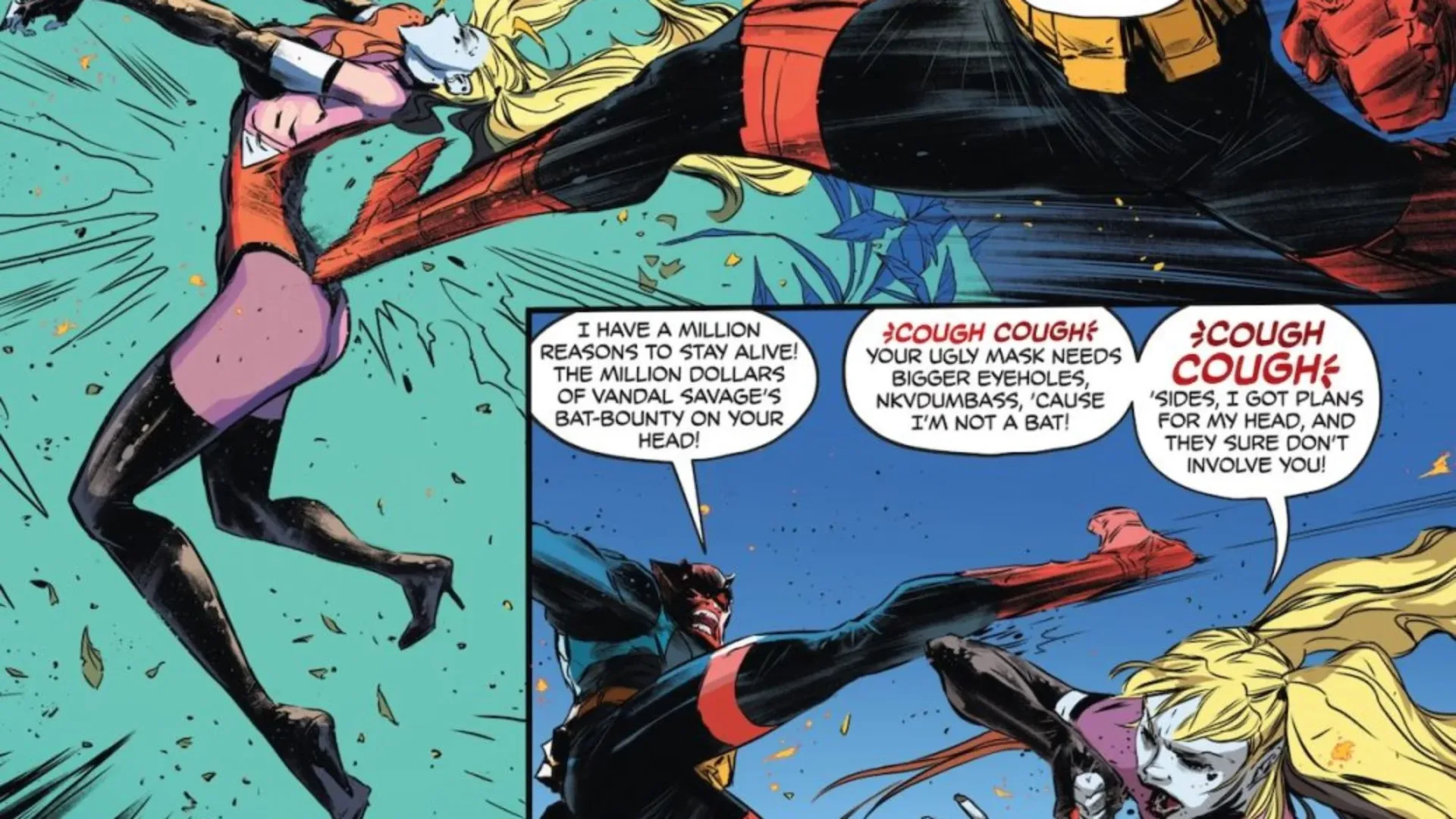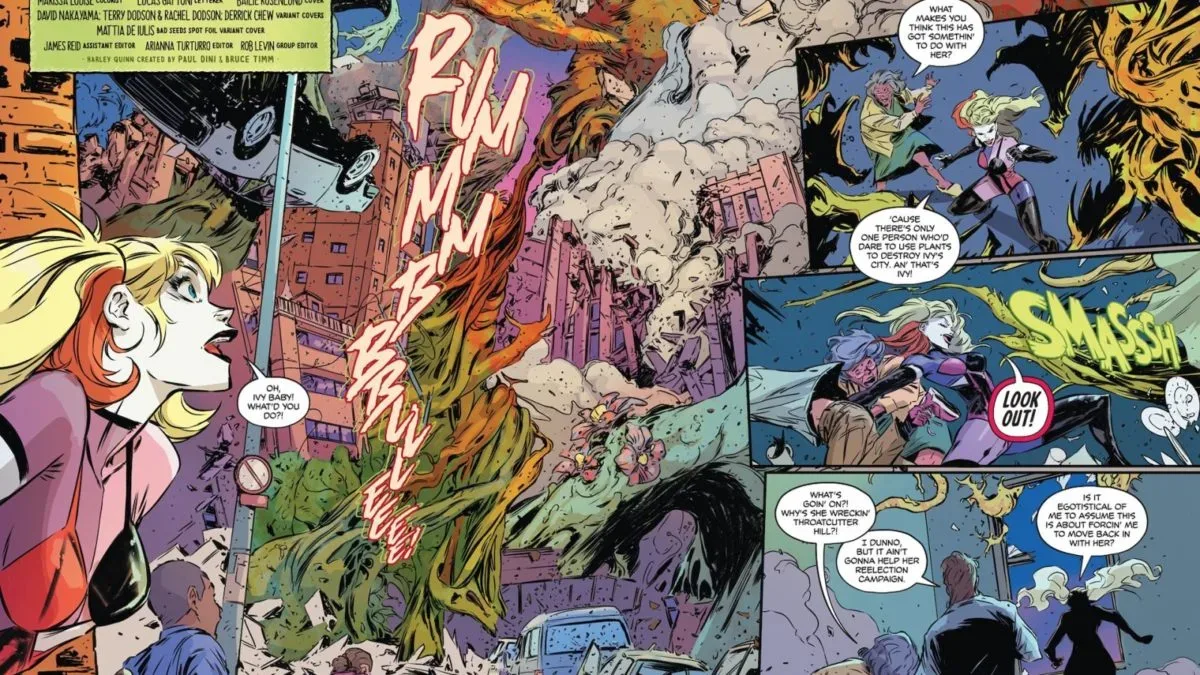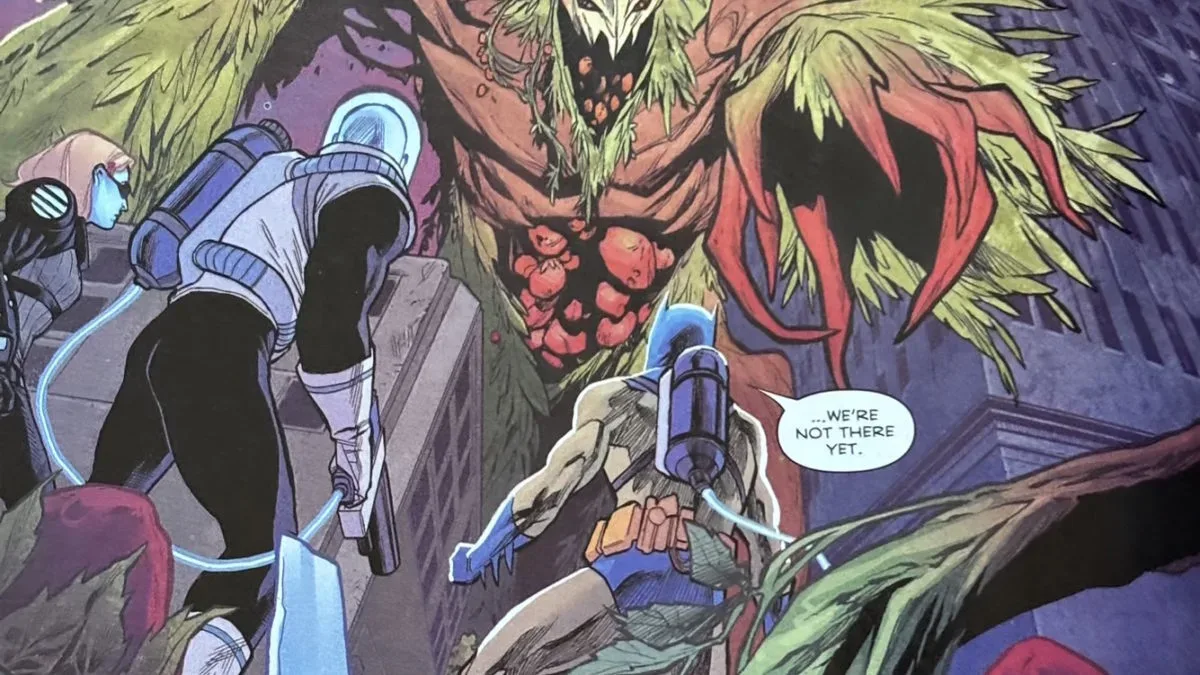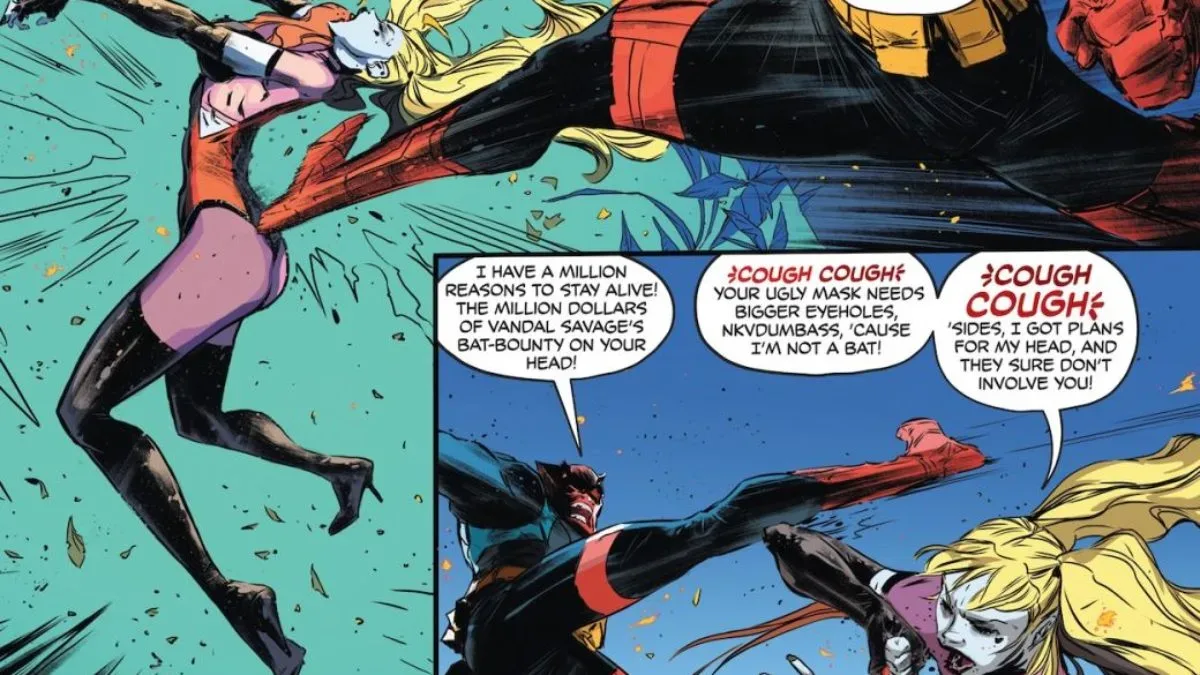
Harley Quinn #67 is set to put a very literal obstacle between Harley Quinn and Poison Ivy: a city-sized jungle packed with prehistoric plant life. DC Comics lists the issue for release on October 28, 2026, with Harley taking up her “Harley-machete” and heading into the overgrown chaos to find Pam for an overdue heart-to-heart.
It is an appropriately outsized setup for Harley. The immediate goal is personal rather than world-saving—reach Ivy and have a conversation—but the route turns that emotional distance into a physical expedition. Ivy’s plans apparently involve transforming the city through ancient flora, while Harley is left to decide whether she ought to help, stop the destruction, or somehow do both at once.
“All that's standing between us is a city-sized jungle full of Swamp Thing's prehistoric cousins.”
A relationship story with a machete-shaped complication
The premise gives the issue a clear visual and dramatic engine. Harley has to cut and swing through dense vegetation, navigating a city remade into an aggressive wilderness. That makes the jungle more than a colorful backdrop: it externalizes the difficult conversation Harley wants to have with Ivy. There is no simple walk across town, no quiet doorstep scene, and no indication that the environment will politely stay out of the way while the pair sort out their feelings.
Harley and Ivy are at the center of the issue’s advertised conflict, but they are not presented as being on uncomplicatedly opposite sides. Harley’s apparent uncertainty over whether to support or interfere with Ivy’s city-altering plans is the key tension. She is trying to get to the person she cares about while confronting the consequences of what that person is doing. A sincere reunion, an argument, or an uneasy mix of both could fit that setup; the solicitation does not reveal where the conversation lands.
That restraint matters. The issue’s hook is not simply “Harley fights plants.” It is Harley making her way through a dangerous, sprawling situation because she wants to reach Ivy. The oversized foliage and prehistoric creatures associated with Swamp Thing supply comic-book spectacle, while the relationship stakes keep the journey pointed somewhere specific.
What “Swamp Thing’s prehistoric cousins” means here
The phrase is a concise way to signal a particular kind of DC-universe botanical menace. Swamp Thing is a major plant-associated character in DC stories, and the description positions these creatures as ancient plant relatives rather than everyday vines, trees, or a conventional urban park gone wild. Readers should expect vegetation that is large, strange, and narratively active enough to obstruct Harley’s path.
“Prehistoric” also establishes a visual contrast with the city setting. Instead of a familiar Gotham-like streetscape, Harley is moving through terrain that evokes a much older natural world. The city-sized scale elevates the premise beyond an inconvenient block of overgrowth. Harley’s destination is separated from her by an entire transformed landscape, which gives Carlos Olivares room to build action around traversal as well as confrontation.
The solicitation calls Harley’s tool a “Harley-machete,” a bit of phrasing that matches the character’s tendency to put her own stamp on whatever crisis she is facing. In practical story terms, a machete is suited to clearing brush, so it makes immediate sense as a survival prop. In Harley’s hands, it also suggests that the trek will be energetic and messy rather than cautious. The available description specifically points to her swinging through the vegetation, reinforcing that movement through the jungle is a central part of the issue rather than a scene-setting detail.
The creative team and cover options
Elliott Kalan is credited as writer, with Carlos Olivares on interior art and Bailie Rosenlund providing the main cover. The issue’s standard retail price is listed as $3.99.
Three additional cover editions are listed at $4.99:
- David Nakayama cover
- Terry Dodson and Rachel Dodson cover
- Derrick Chew cover
For readers deciding what to pick up, the distinction supported by the listing is straightforward: these are different cover versions of the same numbered issue, with the main edition carrying the lower listed price and the named alternate covers carrying a $1 premium. The solicitation does not provide story differences between editions, so the choice is principally about cover preference rather than additional plot material.
Why the city-sized setting changes the stakes
Comic-book stories routinely give characters enormous obstacles, but the scale in Harley Quinn #67 is particularly useful because it links Ivy’s abilities and ideology to the relationship story. A transformed city is not a private gesture. Whatever Ivy is attempting has consequences beyond Harley and Ivy themselves, and Harley cannot reach her without moving through the evidence of those consequences.
That leaves Harley with a question that is larger than whether she can physically survive the route. If Ivy’s jungle represents a destructive plan, then helping Ivy may mean accepting damage to the city. If Harley opposes Ivy, then she risks turning a hoped-for heart-to-heart into a direct clash. The comic’s setup allows those positions to overlap: Harley can be worried about the city, still love Ivy, and be unsure how to act on either feeling.
It is also a setup built for Harley’s voice. The official description frames the mission with impulsive confidence and a joke about the issue number, before pivoting into a plainly meaningful objective: “I gotta get my Pammy.” That tonal swing—goofy presentation around genuine attachment—is exactly what the premise appears designed to explore. The jungle can support physical comedy and grand action, but its purpose is to delay a conversation Harley clearly considers important.
What has and has not been revealed
The supplied details establish the issue’s central destination: Harley intends to reach Poison Ivy. They establish the obstacle: an enormous jungle inhabited by prehistoric plant beings connected in description to Swamp Thing. And they establish Harley’s dilemma: she is weighing whether to assist or obstruct Ivy’s destructive city transformation.
They do not establish the reason Ivy has created the jungle, whether the two characters begin the issue separated by choice or circumstance, or what resolution their conversation produces. There is likewise no confirmed outcome for the city itself. Those unanswered questions are the actual hook heading into the issue, rather than something to be filled in with assumptions.
For readers tracking the wider superhero-comics conversation, the premise also arrives amid a steady stream of character and continuity speculation across publishers. Marvel readers, for example, can compare a separate report on Christopher Abbott’s comments about Professor X and Avengers: Doomsday. Harley Quinn #67, however, is selling a much more immediate problem: get through the jungle, find Ivy, and figure out whether love can survive an ecological takeover of the city.
Release details
- Title: Harley Quinn #67
- Publisher: DC Comics
- Release date: October 28, 2026
- Writer: Elliott Kalan
- Artist: Carlos Olivares
- Main cover artist: Bailie Rosenlund
- Standard retail price: $3.99
Harley’s next problem is therefore both simple and enormous: there is a conversation waiting at the other side of a prehistoric urban jungle. Whether her machete clears a path to reconciliation, a fight, or an even stranger compromise remains the part Harley Quinn #67 is holding back for release day.