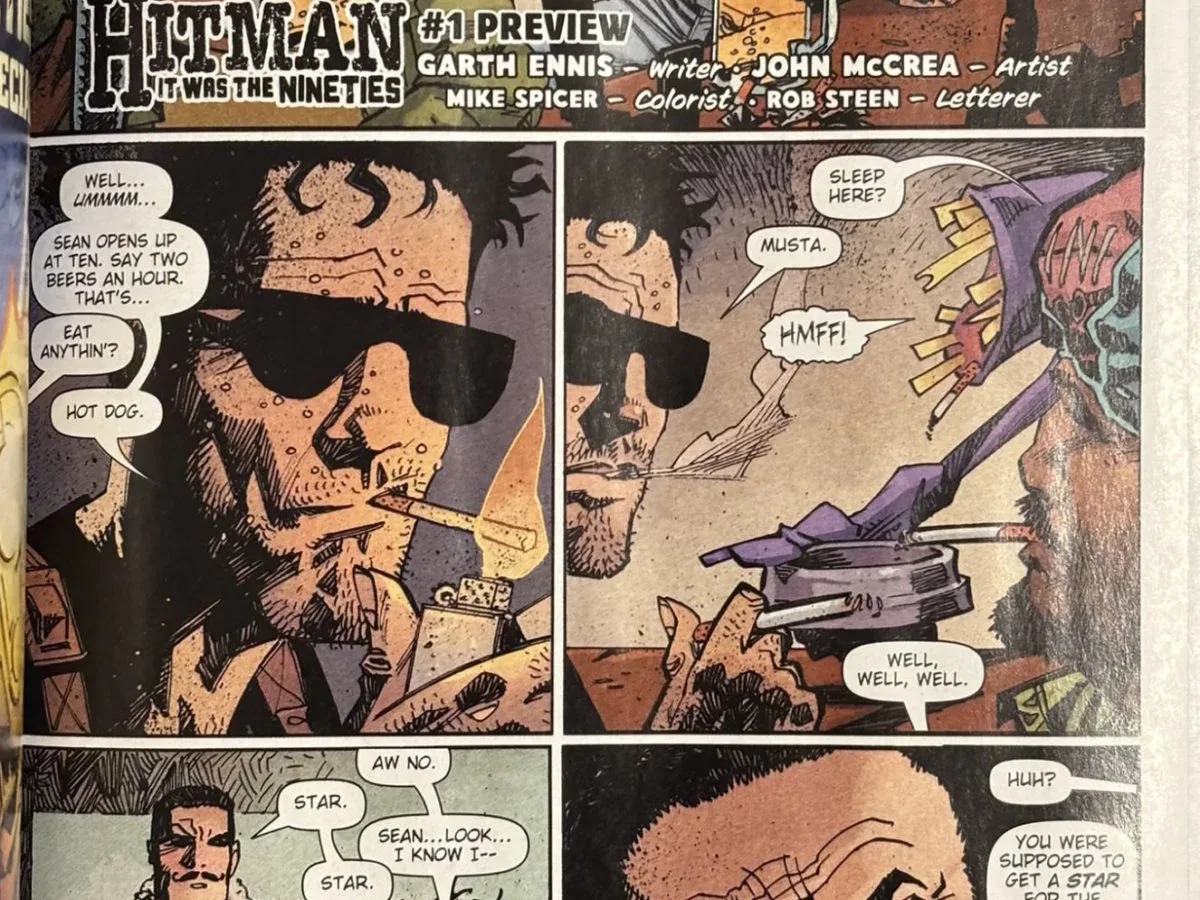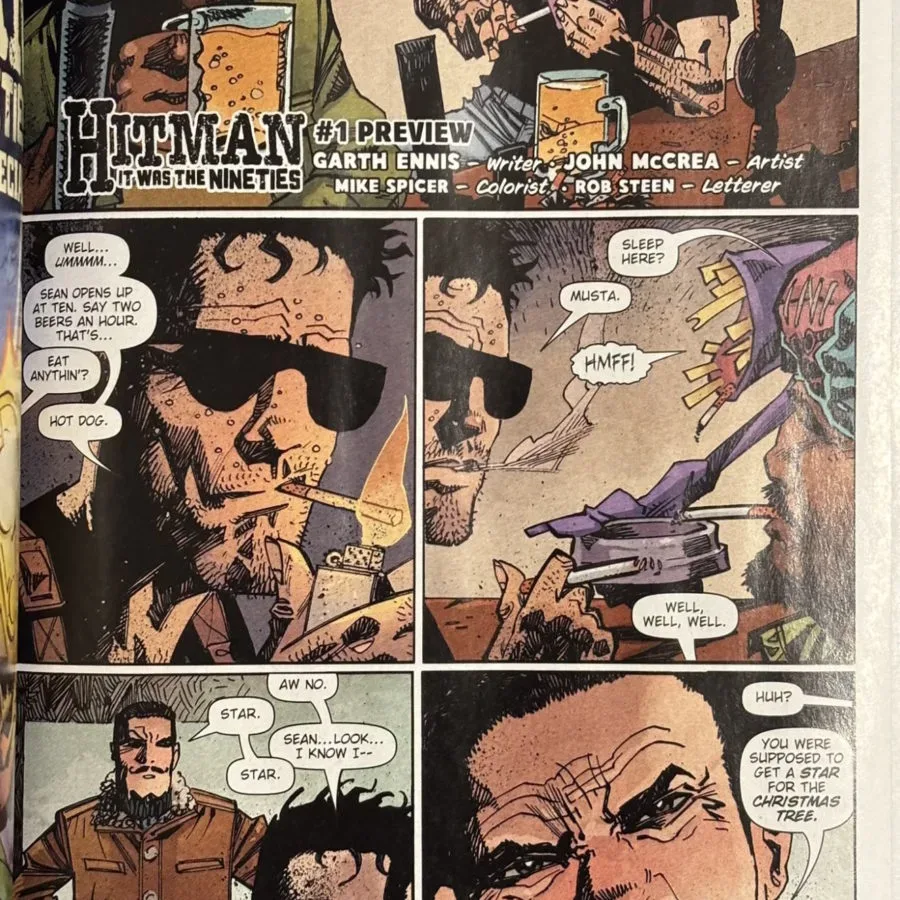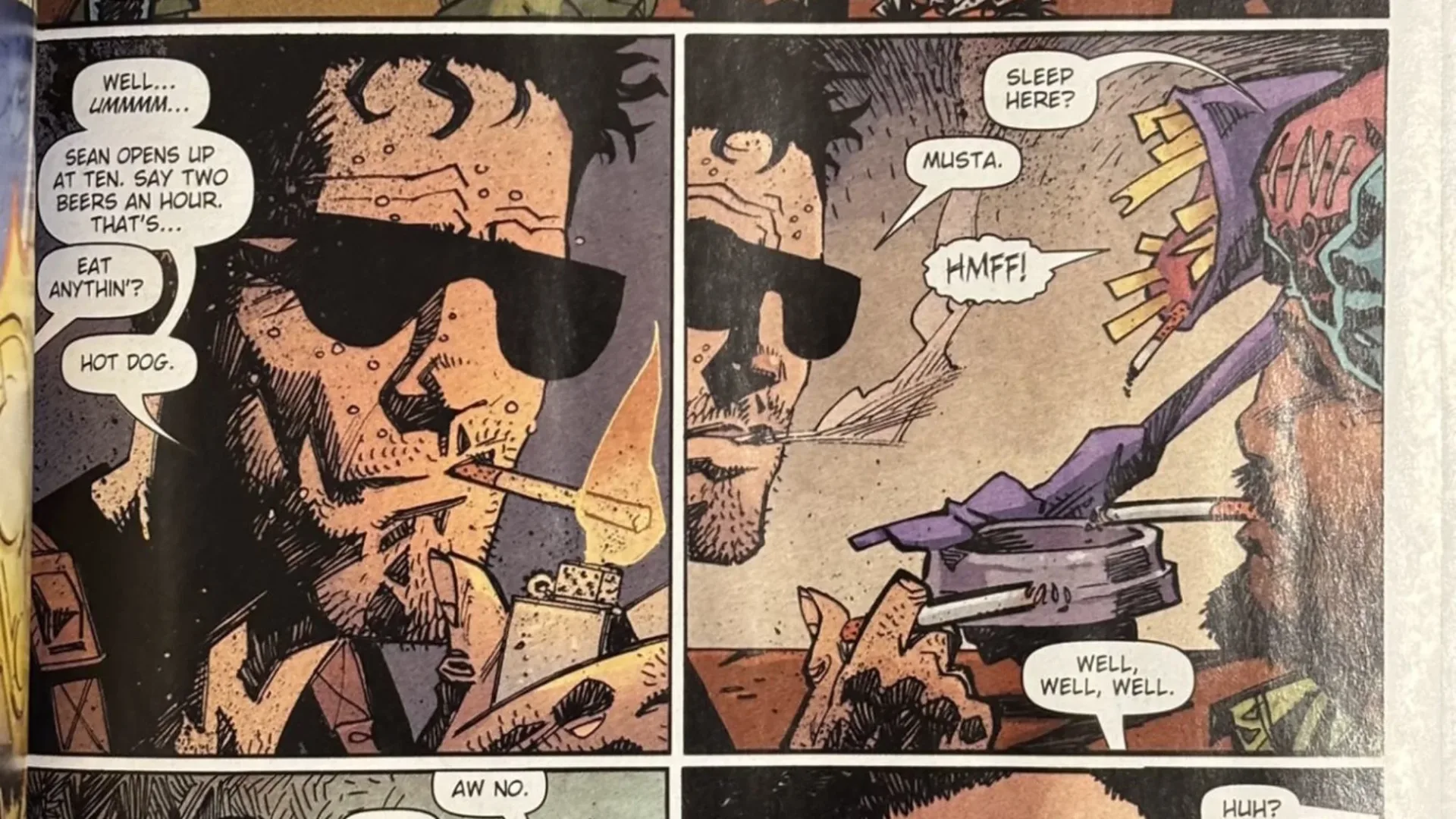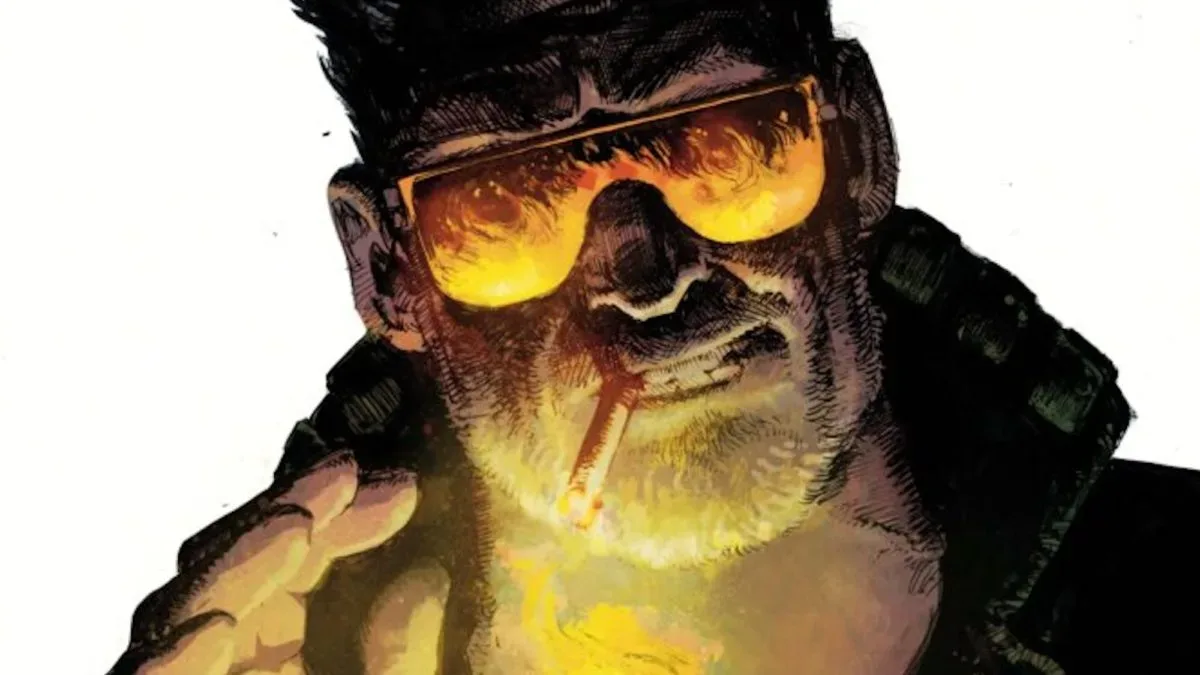
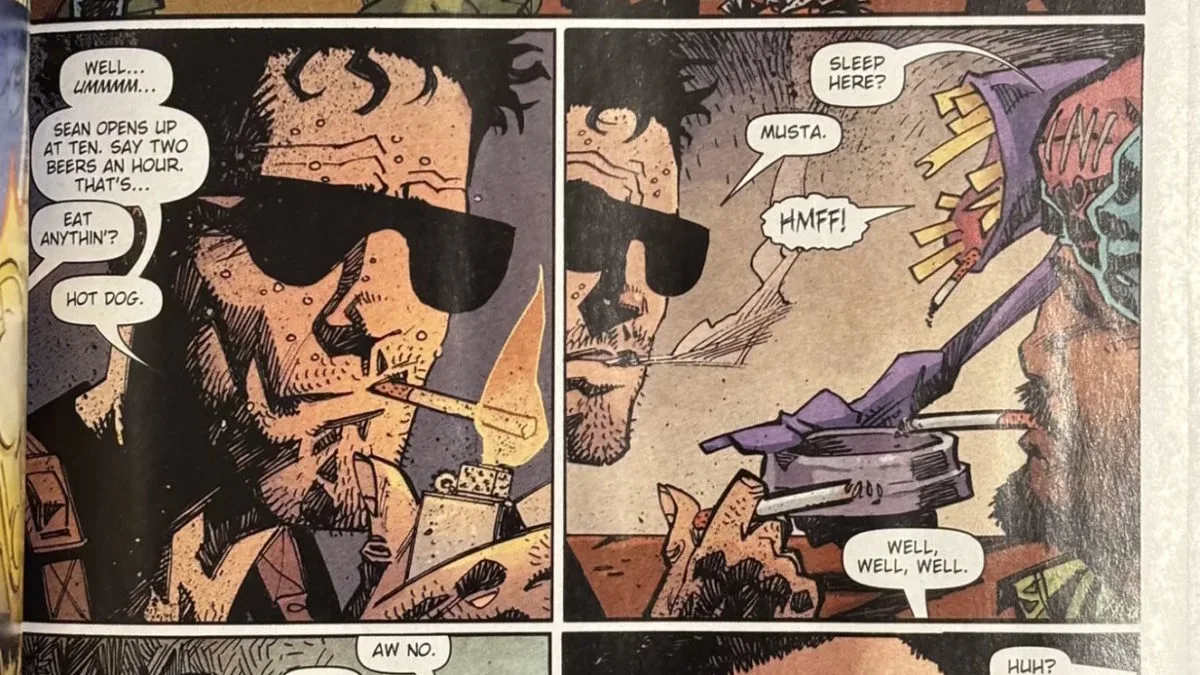
Tommy Monaghan is coming back to DC, sunglasses, black eyes, bad attitude and all. Hitman: It Was the Nineties Special #1 reunites writer Garth Ennis and artist John McCrea with the character they created for a 48-page Christmas one-shot, scheduled for sale on December 9, 2026.
The issue is explicitly pitched as a return to the DC Universe of the 1990s rather than a quiet, reflective epilogue. Its lead story gives Tommy an apparently simple festive errand: find a star for the top of a Christmas tree. Naturally, that task becomes much less straightforward when multiple killers carrying old grudges decide there is money to be made from his head. The promised ingredients are violence, irreverence and ninjas, which is a remarkably efficient way to describe the particular corner of Gotham that Hitman used to occupy.
A backup story shifts attention to Baytor, who is tending bar at a familiar café and joins one of DC’s “World’s Finest” heroes in an effort to save the day. The solicitation’s final question—whether that rescue really happens—suggests the special is not planning to trade the series’ old habit of undercutting heroics for a tidy seasonal bow.
What the new special includes
- Title: Hitman: It Was the Nineties Special #1
- Writer: Garth Ennis
- Artist: John McCrea
- Cover artists: John McCrea, Amanda Conner, Declan Shalvey and Gerardo Zaffino
- Format: 48 pages
- Price: $5.99
- On sale: December 9, 2026
The phrase “one-shot” matters here. In comic-book publishing, it generally means a self-contained special issue rather than the start of a newly announced ongoing monthly series. Nothing in the available details establishes a continuing Hitman run beyond this issue. Readers should therefore approach it as a reunion special built around two stories, not as confirmation that Tommy has a permanent new place on the DC schedule.
Why Tommy Monaghan remains a distinctive DC character
Tommy first appeared in The Demon Annual #2 in 1993, during DC’s Bloodlines crossover. That event involved alien parasites attacking people; survivors could emerge with metahuman abilities. Tommy’s were X-ray vision and limited telepathy. His eyes becoming solid black was both a visible result of that encounter and a practical reason for the sunglasses that became inseparable from his look.
“Metahuman” is DC’s broad in-universe term for a person with superhuman abilities. But Hitman was never simply a book about testing the limits of Tommy’s power set. His abilities were used less and less as the series developed. The premise instead put a professional killer—one who operated with street-level cynicism and a talent for attracting chaos—next to the heightened people, places and moral language of the DC Universe.
That contrast was the hook. Gotham is a city strongly associated with vigilantism, costumed criminals and dramatic declarations about justice. Tommy was not built in that mold. His presence allowed the series to make room for action and crude comedy while also looking at the less glamorous, more compromised edges of a superhero setting. A Christmas tree-topper mission becoming a hit-filled nightmare is exactly the kind of premise that can use that contrast without requiring an elaborate cosmic event.
The main Hitman series ran from 1996 to 2001, giving Ennis and McCrea five years to turn a crossover-born character into a recognizable fixture of the era. This new special arrives 25 years after the creative pair’s previous return to the world of Hitman, making the reunion itself a significant part of the issue’s appeal.
The legacy is not only shock comedy
Hitman has a deliberately abrasive reputation, and the forthcoming special’s title acknowledges the period in which it was born. Some material connected to the series’ wider cast reflects sensibilities that are plainly uncomfortable now. That context should not be erased, but neither does it fully describe what made the book memorable.
Its strongest counterpoint came in Hitman #34, “Of Thee I Sing.” The issue places Superman and Tommy on a Gotham rooftop for a quiet conversation. That restrained encounter won the 1999 Eisner Award for Best Single Issue. The Eisner Awards are major comic-book honors, and the recognition is notable because it highlights a side of the series that its most chaotic premises can obscure: Hitman could move from gross-out or violent comedy to an unexpectedly sincere character moment.
That range gives the Christmas special more potential texture than a simple nostalgia exercise. The announced premise leans into the series’ loudest traits—assassins, grudges and ninjas—but Tommy’s history in DC includes being used as a foil for characters with radically different ideas of heroism. Baytor’s team-up with a top-tier hero in the backup could continue that tradition, even if the exact hero and the story’s outcome have not been detailed.
A return to a specific DC era
The setting is as important as the cast. The first story is described as a return to the DC Universe of the 1990s. That is more precise than merely placing a current character in retro clothes. Tommy emerged from an actual 1990s crossover, and the original series was published through the end of that decade and into 2001. The special can therefore revisit the tone and continuity environment that shaped the character rather than treating “the nineties” as generic decoration.
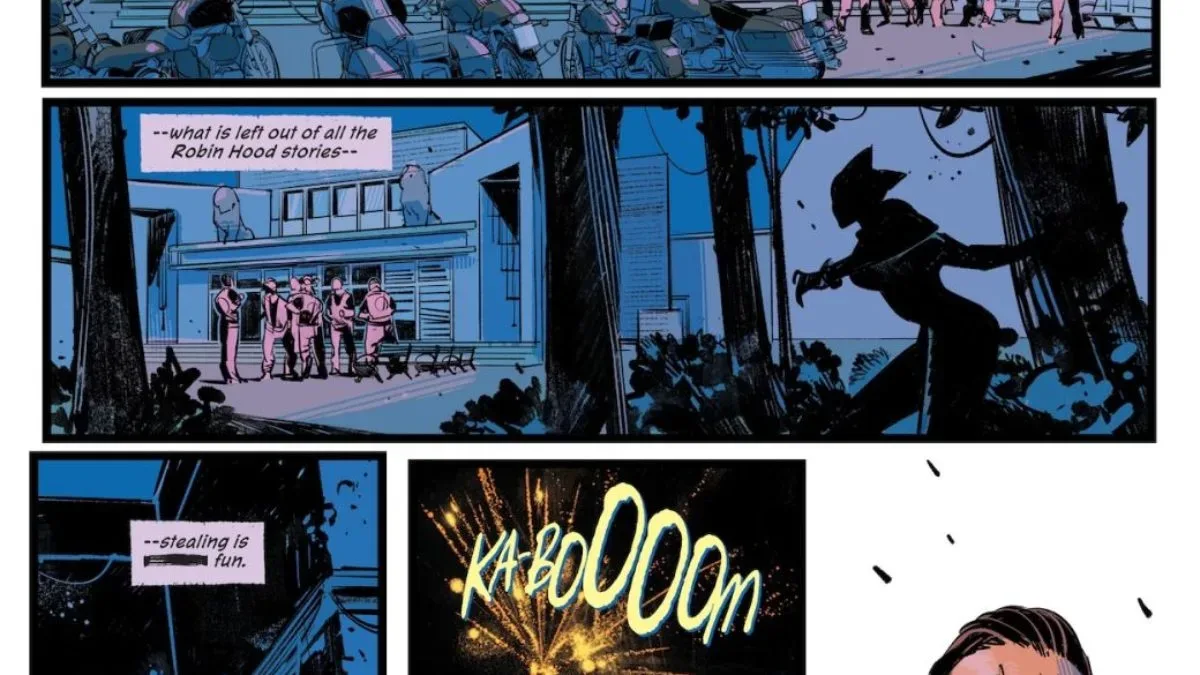
It also puts the issue in conversation with another forthcoming Gotham-focused annual, Batman 2026 Annual #1. The two projects are very different in subject and approach, but together they underline how elastic Gotham remains: it can host a conspiracy-driven Batman story and a darkly comic holiday chase involving a contract killer looking for tree décor.
There is a practical advantage to the special’s premise for both longtime readers and curious newcomers. A mission to retrieve a star, followed by a string of people trying to collect on Tommy, is immediately understandable. It does not require readers to know every prior arc to grasp the situation. At the same time, the old grudges and familiar supporting players give established fans clear signals that this is intended as a trip back to Tommy’s original milieu.
What has—and has not—been confirmed
DC has confirmed the core creative team, the cover artists, the 48-page format, the $5.99 price and the December 9 sale date. It has also outlined two stories: Tommy’s hazardous Christmas errand and Baytor’s bar-based backup adventure with a World’s Finest hero.
What remains unknown is equally worth keeping straight. No full interior-story breakdown, complete supporting cast list, identity of Baytor’s heroic partner, or plans for additional Hitman issues have been established in the available information. The special’s retro framing should not be mistaken for a confirmed broader revival.
Still, for a property defined by the collision of grimy crime-comic energy and superhero absurdity, a standalone holiday special may be the appropriate vehicle. Hitman: It Was the Nineties Special #1 is not promising to make Christmas peaceful. It is promising that Tommy Monaghan will try to decorate a tree while half the city attempts to put him in one.