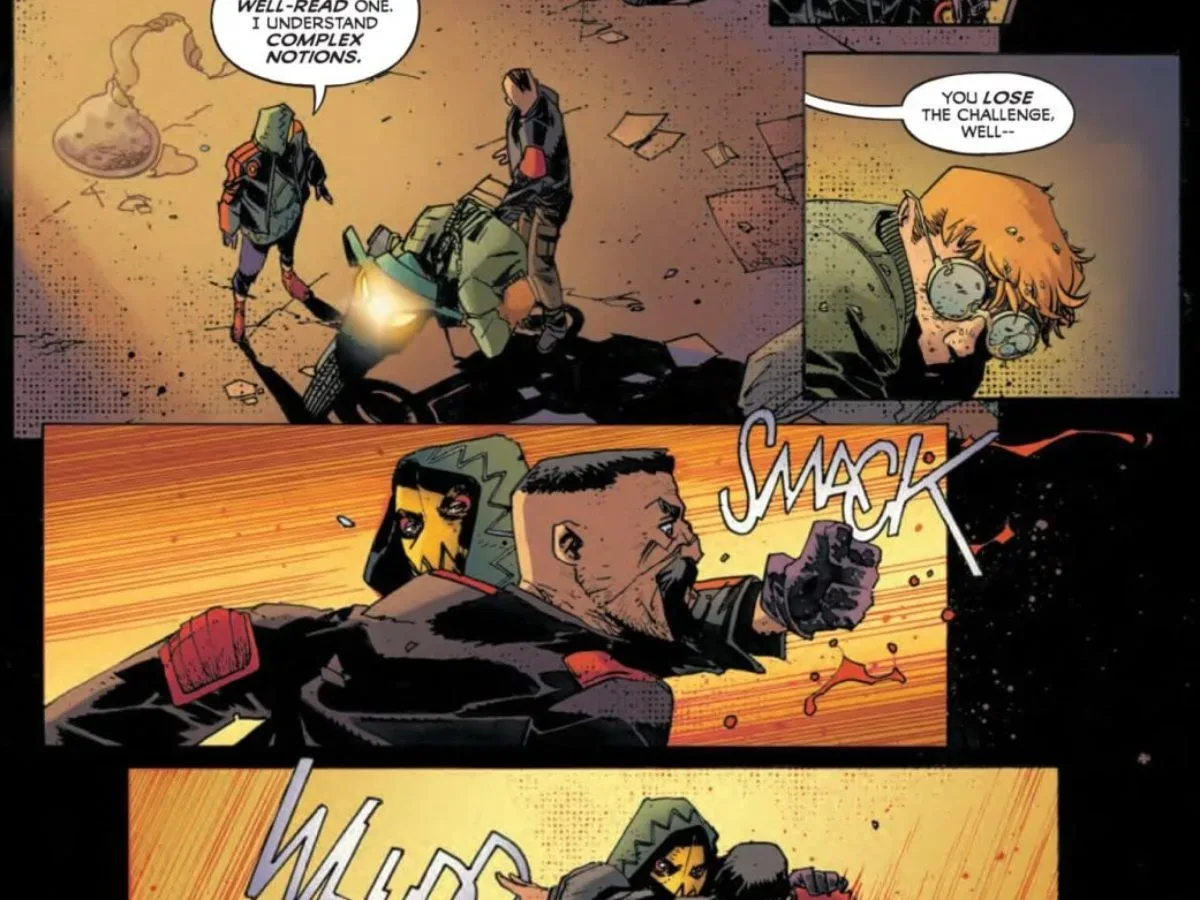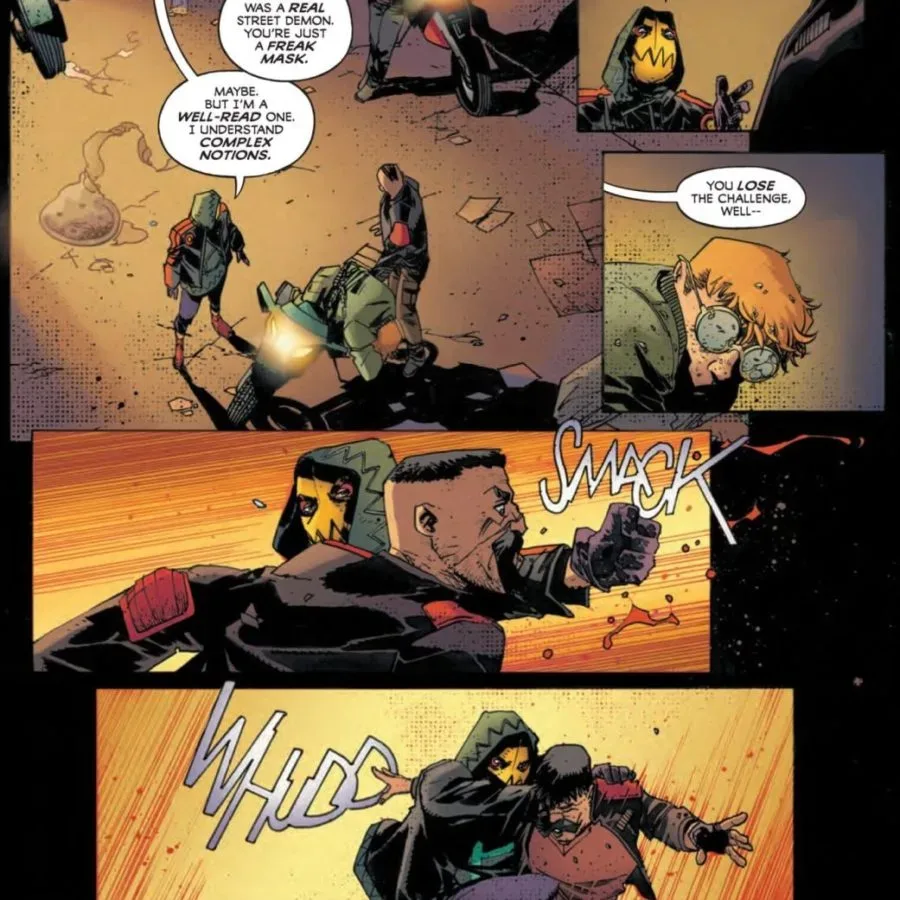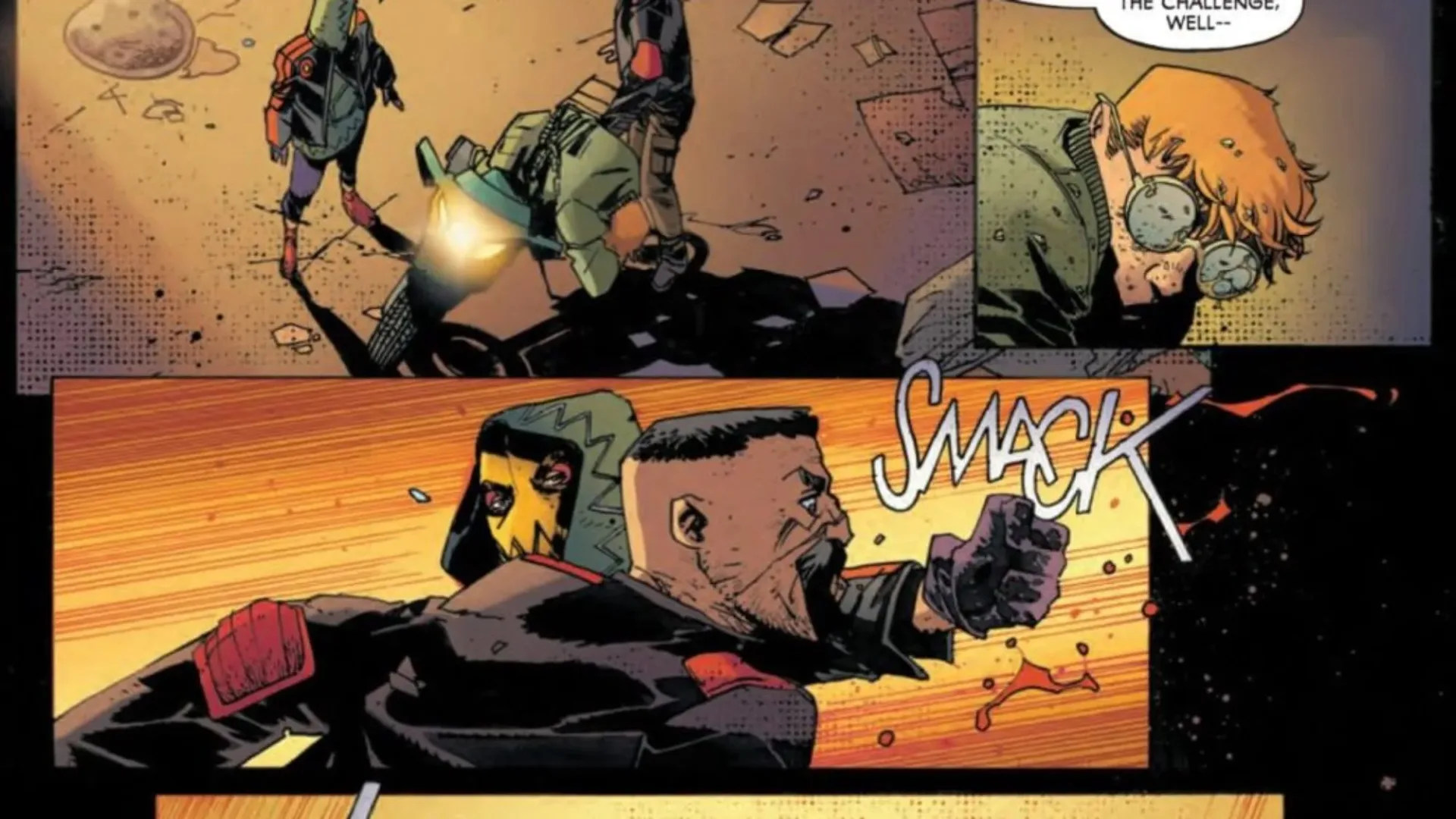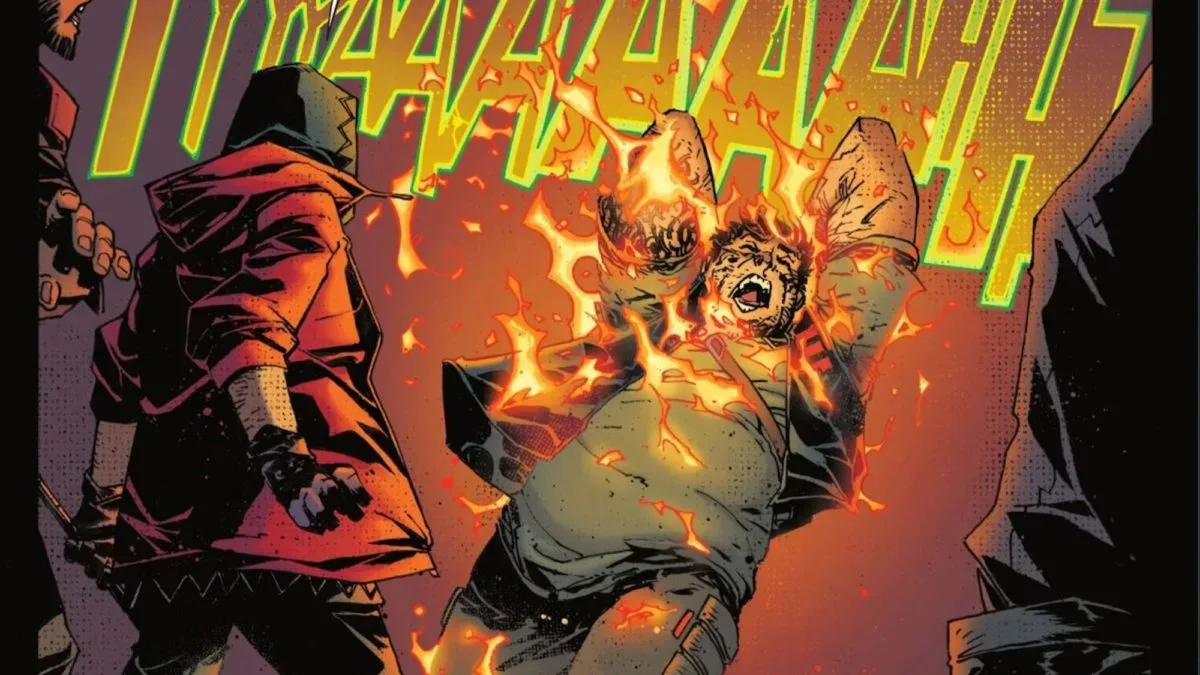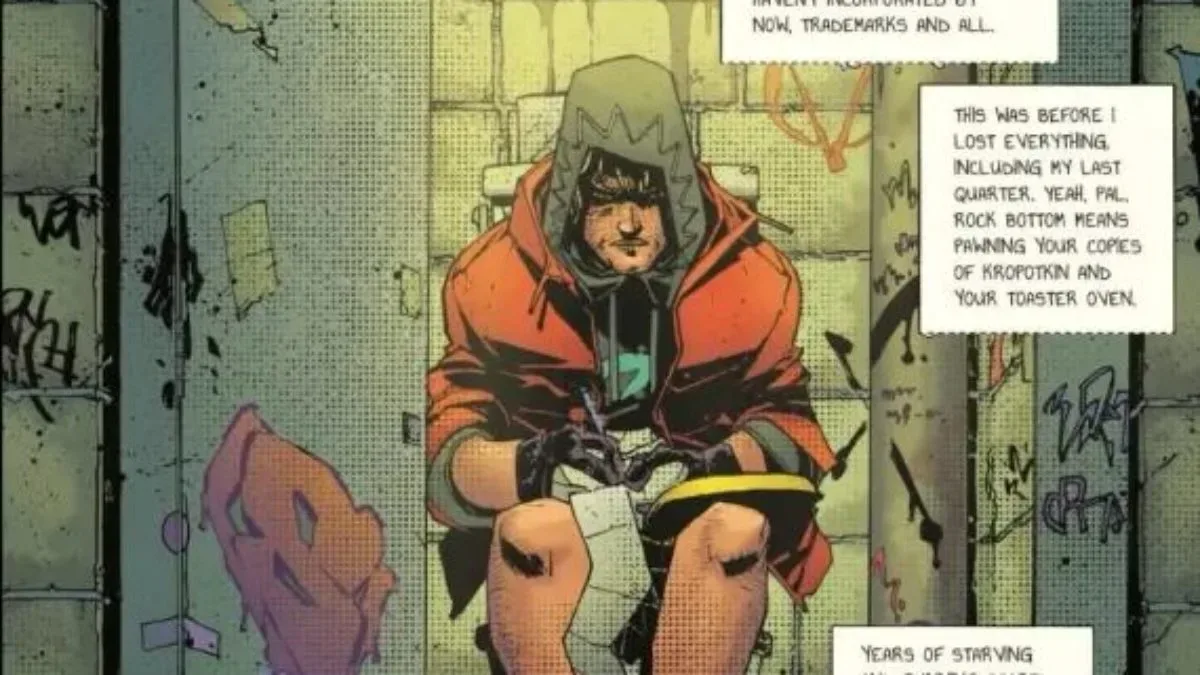
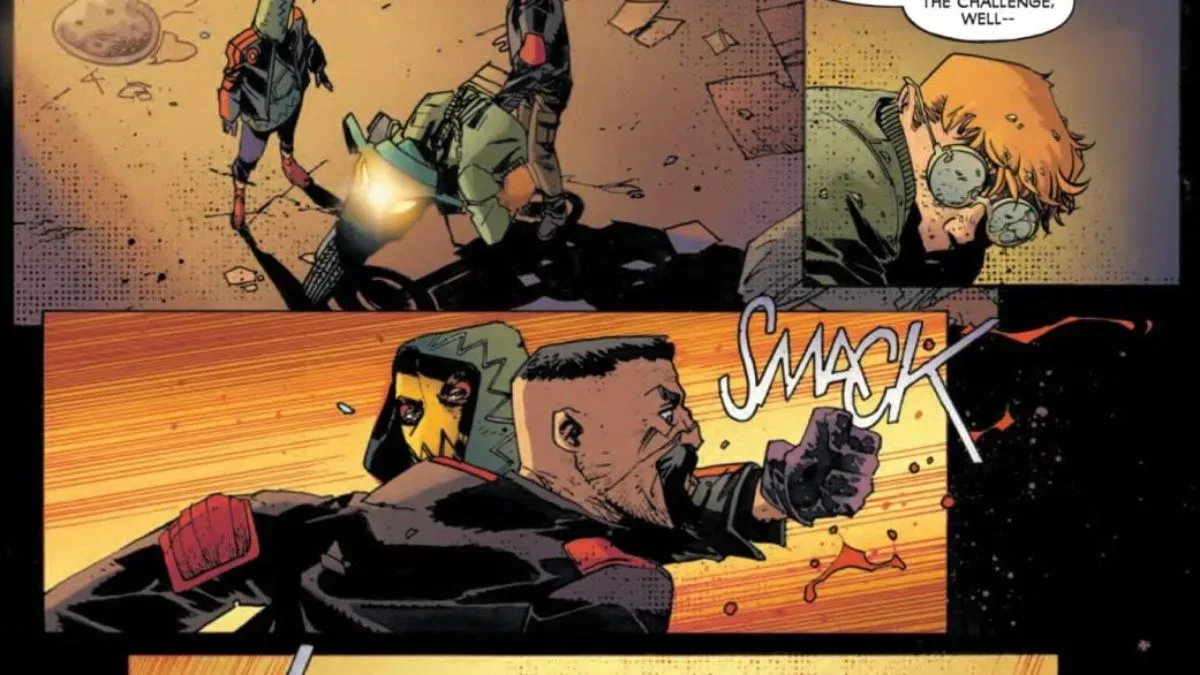
Gangs of Gotham #2 is scheduled to reach comic shops on December 2, 2026, with Christopher Cantwell writing and Mike Henderson providing the interior art. The new issue places Lonnie Machin, better known as Anarky, inside Gotham’s criminal ecosystem—but makes it clear that joining the Street Demons is only the beginning of a much more dangerous climb.
The central setup is a three-way pressure point. Anarky has secured a position with the Street Demons and intends to advance through Gotham’s underworld. Stephanie Brown, operating as Clu, has ambitions involving the gang of her own. Then Damian Wayne arrives, adding another Bat-family figure to an already unstable contest for leverage. The solicitation’s promise of “bat Blood” in Gotham’s streets signals a confrontation, though it does not establish exactly who will fight, who will cooperate, or where the loyalties ultimately land.
Anarky’s rise is the issue’s stated focus
Anarky is not simply encountering the Street Demons in this chapter. He has already earned a place among them, and the issue begins from that changed position. That distinction matters: gaining admission to a gang and gaining influence within it are very different problems. The former asks whether someone is useful enough to bring in; the latter invites rivalries, tests of trust and conflicts over who gets to set the group’s direction.
The term underworld here refers to Gotham’s organized criminal landscape rather than one isolated villain or crew. The premise frames it as a hierarchy, with Anarky moving upward after establishing his Street Demons credentials. It is a suitable arena for a character whose name itself suggests a contradiction. Anarky may have a political and anti-authoritarian image, but the immediate story engine is fundamentally about navigating rank, membership and power inside an organization.
That tension gives the issue a sharper hook than a straightforward turf fight. Anarky’s goal is ascent, which means he has reason to preserve the gang even while trying to reshape his status within it. A character working from outside can destroy an organization without concern for its future. A character seeking authority inside it has to decide which structures are worth exploiting, which relationships can be useful and which obstacles must be removed.
Stephanie Brown’s Clu has her own designs on the Street Demons
Stephanie Brown is identified in the issue’s setup as Clu, and her plans conflict with Lonnie’s. The details of those plans have not been disclosed, so readers should not assume that Clu is pursuing the same kind of criminal ascent—or that her role will be purely antagonistic. What is confirmed is that both characters want something from the Street Demons, and neither has an easy incentive to yield ground.
The situation is presented as a difficult choice: work together or stay out of one another’s way. Both outcomes are described as unappealing. That phrasing leaves room for an uneasy arrangement rather than a conventional team-up. Cooperation in a gang-centered Gotham story can be transactional: two people may need the same access, information or protection while still expecting the relationship to end the moment their interests split.
Clu’s presence also makes the Street Demons more than a backdrop for Anarky. The gang becomes contested territory. If the issue is about climbing a ladder, Stephanie’s competing agenda asks an important question about who built that ladder, who controls it and whether its rungs are worth taking in the first place. With only the premise available, the actual answers remain deliberately uncertain.
Damian Wayne raises the stakes without defining the sides
Damian Wayne’s arrival is the major complication named for the issue. The solicitation does not say whether he is investigating the Street Demons, pursuing Anarky, confronting Stephanie, or responding to an event connecting all three. That lack of specificity is useful: it leaves his role open while establishing that the dispute will not stay confined to internal gang politics.
Damian’s appearance also changes the likely scale of consequences. A power struggle can remain covert when it is limited to aspiring members and rival agendas. Bringing in a member of the Wayne family introduces the possibility that the conflict becomes personal, public or violent enough to attract attention beyond the Street Demons themselves. The promotional copy’s street-level language suggests a Gotham story rooted in immediate danger rather than a distant cosmic threat.
For readers watching the larger superhero landscape, the basic appeal is the collision of distinct approaches to power: Anarky trying to rise through a criminal hierarchy, Clu challenging his path, and Damian acting as a destabilizing presence. That kind of setup has room for shifting alliances, but it would be premature to treat any alliance as confirmed before the issue arrives.
What is known about the creative team and editions
Cantwell is credited as writer and Henderson as artist for Gangs of Gotham #2. Ariel Olivetti is credited for the main cover. Two additional listed covers are by Martin Simmonds and Christian Ward. The main edition carries a suggested retail price of $3.99, while the Simmonds and Ward cover editions are listed at $4.99 each.
Variant covers are alternate cover artworks for the same numbered comic issue. They can be appealing to readers who follow a particular artist, favor a specific visual interpretation of a character or simply want a different cover for their shelf. A higher listed price for an alternate cover does not, by itself, establish rarity, print quantity or future collector value. Those details are not supplied here, so the practical choice is largely one of art preference and budget.
- Issue: Gangs of Gotham #2
- Publisher: DC
- Release date: December 2, 2026
- Writer: Christopher Cantwell
- Interior artist: Mike Henderson
- Main cover artist: Ariel Olivetti
- Additional listed cover artists: Martin Simmonds and Christian Ward
- Listed main-cover price: $3.99
- Listed alternate-cover prices: $4.99
What readers can reasonably expect—and what remains unknown
The confirmed material positions this as an issue about status, strategy and conflict within Gotham’s criminal world. Anarky’s Street Demons membership is already in place; his attempt to rise higher is the immediate plot movement. Stephanie Brown’s Clu is not a peripheral obstacle but another character with an agenda tied to the same gang. Damian Wayne’s entrance is the unpredictable variable that threatens to turn competing ambitions into open conflict.
There is also a small but telling character detail in the preview material: Lonnie is shown writing letters to Batman, and he reflects on the idea that even a purported loner may have allies to call. That does not confirm Batman’s physical appearance in the issue, nor does it explain the exact content or consequence of those letters. It does, however, reinforce the story’s concern with isolation versus affiliation. Anarky is trying to advance within a group while wrestling with the value—and risks—of having people at his side.
Readers should keep the line between premise and prediction clear. The issue has not established a final partnership between Steph and Lonnie, an outright betrayal, a particular battle involving Damian, or a lasting shift in the Street Demons’ leadership. Those are the story questions being put into play, not answers already available in the announced material.
For another corner of superhero entertainment where character positioning and franchise direction are being debated, see Channing Tatum’s comments on the MCU’s new X-Men and his Gambit.
Gangs of Gotham #2 arrives December 2, 2026. Its stated premise promises a Gotham crime story where getting into the gang is easy compared with surviving the politics after the door closes behind you.