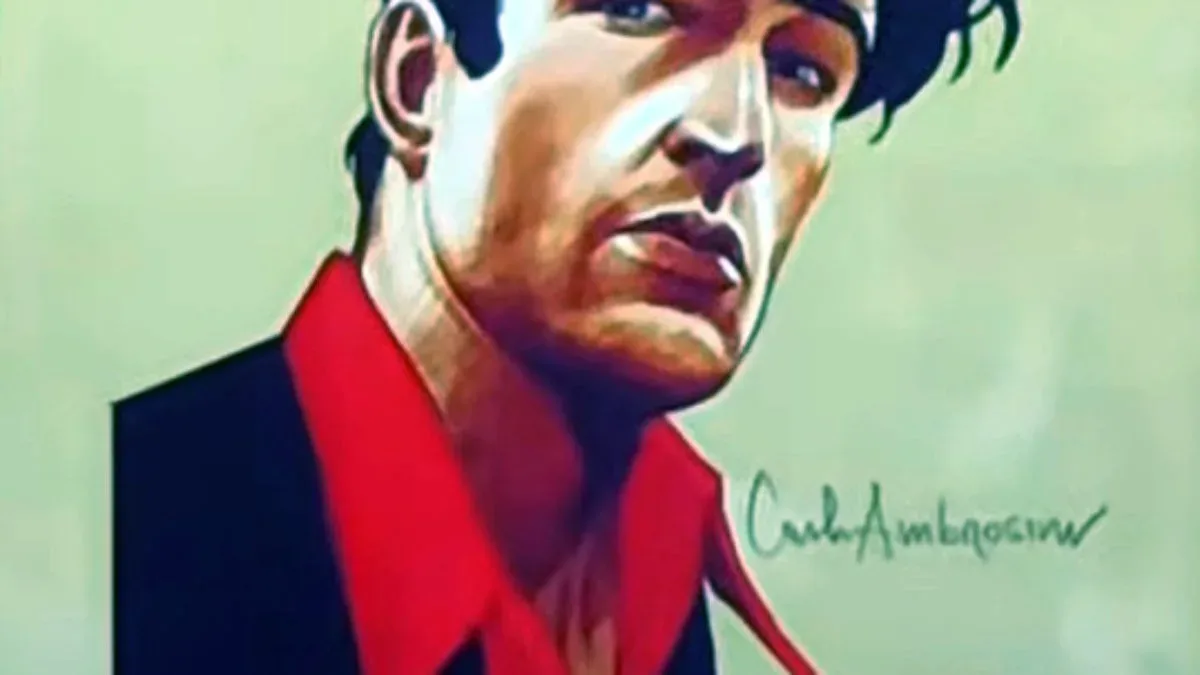
Dylan Dog’s 40th anniversary is shaping up as more than a commemorative comic cover. The long-running Italian horror series is being marked with new editions, a theatrical production, public events, a postal tribute and a substantial pipeline of stories that reaches into 2027 and beyond.
Created by Tiziano Sclavi and published by Sergio Bonelli Editore since 1986, Dylan Dog follows a London-based private investigator whose cases lead him into ghosts, vampires, demons, werewolves and other supernatural threats. That premise has proven flexible enough to sustain one of Italy’s most enduring comic series, while allowing its creators to move between mystery, horror, dark humour and formally experimental work.
The anniversary activity at Lucca Comics & Games made that breadth especially clear. Editorial director Michele Masiero, series curator Barbara Baraldi and Franco Busatta presented current work and future plans in a dedicated panel, followed by a public zombie parade through Lucca. The celebration also extended beyond the convention itself through a Rome stage show and a newly issued official stamp.
A milestone issue with different ways to read it
Dylan Dog #481, Before the Dawn, arrived at the end of September, timed to the anniversary of the character’s 1986 debut. Baraldi wrote the issue, Davide Furnò drew it and Giulia Brusco provided the colours. Its central mystery begins when Dylan finds a diary in his library that he cannot remember writing. The discovery sends him toward a story concerned with memory, fate and Death.
For more context, explore Michael Mann Treated for Superficial Leg Injury After Accidental Gun Range Discharge.
It is a particularly appropriate framework for an anniversary installment. A diary creates an immediate question about authorship and identity: if Dylan wrote it but has no recollection of doing so, the case is not merely something happening around him. It is potentially embedded in his own past. The choice also fits a series whose supernatural investigations can turn inward, making the investigator’s perceptions part of the mystery.
The newsstand edition was printed entirely in colour and sold at the normal price in sealed blind bags. A blind bag is opaque packaging that prevents buyers from knowing which included cover they have received before opening it. The issue had four cover options: work by Gianluca Cestaro and Raul Cestaro, Claudio Villa’s one-in-four cover, Corrado Roi’s one-in-40 version, and Angelo Stano’s one-in-400 edition. The reported print run was 100,000 copies.
For readers who prefer the series’ familiar black-and-white presentation, a separate larger-format bookstore hardcover reprints the same story in monochrome and includes eight pages unavailable in the newsstand edition. The two approaches serve distinct purposes: the blind-bag release makes cover variation a part of the purchase, while the hardcover provides a different reading format and additional story material.
Baraldi also revealed that Sclavi changed the ending of issue #481, and that he continues to read every script. That is a notable detail for a series celebrating four decades: its creator remains involved in the editorial life of the character even as newer writers and artists shape individual installments.
Theatre takes Dylan Dog beyond the page
The anniversary has already produced Dylan Dog Horror Show, described as Sergio Bonelli Editore’s first theatrical production. Written by Sclavi and Nicola Russo and directed by Valter Malosti, it opened at Rome’s Teatro Eliseo on October 28. Its opening night sold out, and the run was extended through December 6.
Gabriele Graham Gasco plays Dylan, with Loris Fabiani as Groucho. The supporting cast includes Xabaras, Inspector Bloch, Madame Trelkovski and several of Dylan’s former romantic partners. The production’s foyer has also become an immersive “Casa di Dylan Dog” space, with audience members invited to dress as characters from the series.
That setting matters because it translates a serial comic’s ongoing world into a shared physical environment. Rather than simply staging a single printed story, the production uses recognisable figures and spaces to make the wider mythology part of the night out. It also reinforces how many recurring characters orbit Dylan’s investigations.
Further multimedia projects, including television-related work, are said to be in development. No specific productions, formats or release plans have yet been detailed, so the key point for now is that the publisher sees the 40th anniversary as a launch point for continued expansion, not a final retrospective.
An Ambrosini tribute built by former pupils
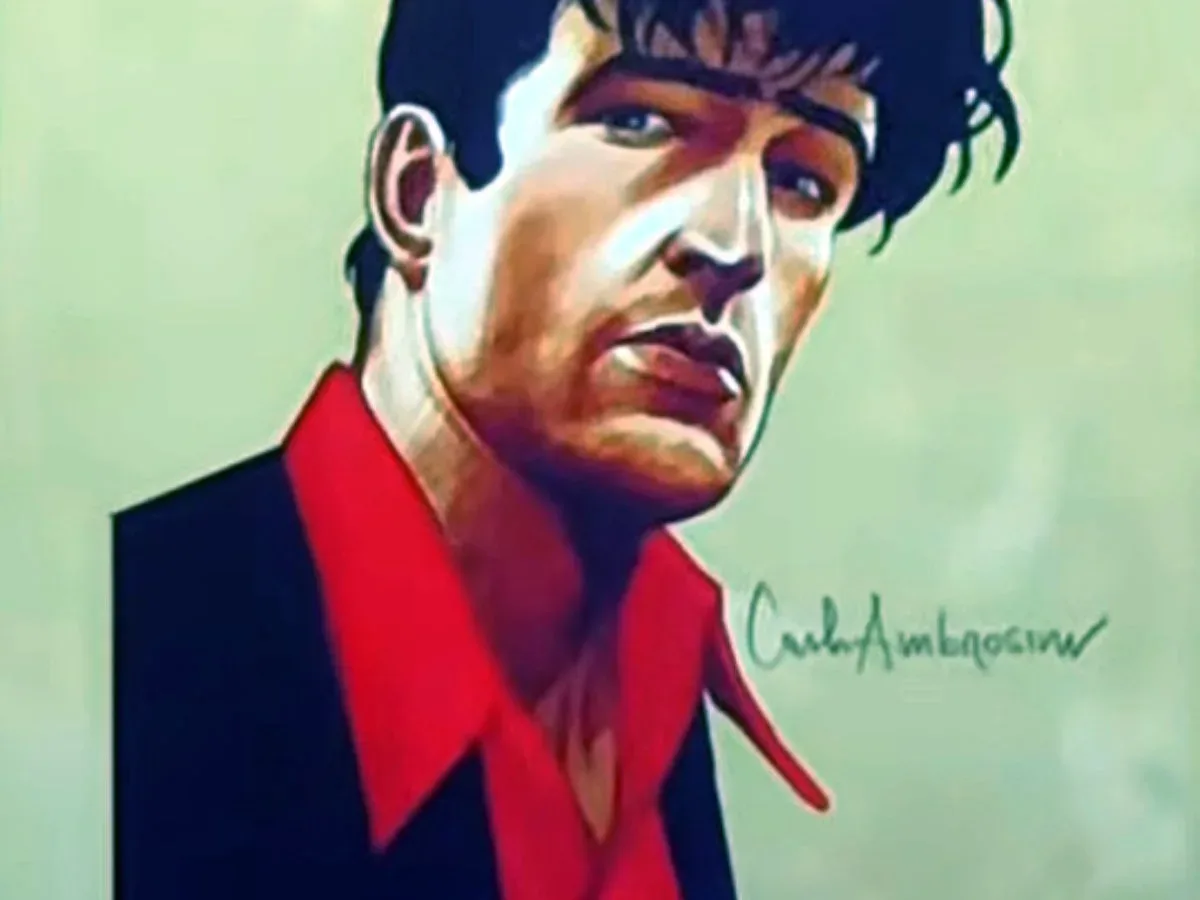
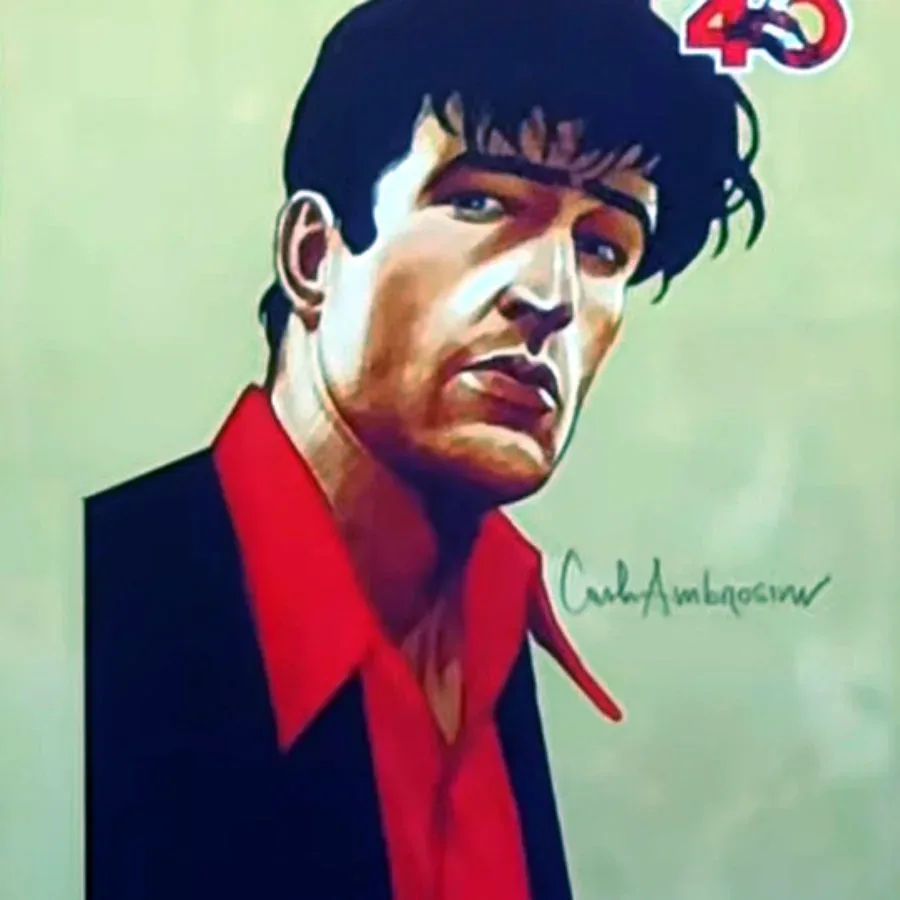
A forthcoming Colour Special is dedicated to the late Carlo Ambrosini. Its cover uses an older illustration Ambrosini made for Sergio Bonelli’s death. Inside is the last story Ambrosini wrote: an approximately 60-page work that reached the editorial team late in his life and was incomplete in places.
Rather than leave it unfinished, Ornigotti, Giulio Camagni and Paolo Bacilieri—three of Ambrosini’s former pupils—expanded and redrew the material into a 94-page story. Francesca Zamborlini, also a former pupil, and Erica Bellazzoli contributed colours, while the collaborators also made plotting adjustments where necessary.
This makes the special different from an ordinary posthumous reprint. It is a completed and expanded version of an unfinished final work, developed by artists with a direct connection to Ambrosini. The edition is therefore both a Dylan Dog release and a deliberate act of creative stewardship: it preserves his contribution while openly recognising the work needed to bring it to a finished form.
What is next for the regular series and specials
The announced slate suggests that the anniversary will not narrow Dylan Dog into one commemorative style. Instead, it retains the anthology-like variety possible in a long-running monthly horror comic, with returning creators, new teams, stand-alone concepts and continuing lines.
- De Feo and Camagni are set to close the year with a mystery tied to the anniversary of Agatha Christie’s death. A Christie-like writer appears in the story, though the character cannot be named directly.
- Trial of a Nightmare is credited to Aragoni and Fregieri.
- Baraldi, Poretti, Mericone and Roi are preparing a “What If” story set in an isolated early-20th-century lighthouse and featuring Bloch. Sclavi reportedly reacted to the submitted premise with the unusually emphatic comment “molto.”
- Massimiliano Filadoro and Paolo Massagli make their regular-series debut with They Live Among Things, a story about fear of objects coming to life. Its art is described as using dense, dripping black that envelops the page.
- Marzano and Lo Manto are working on a provisional project called Pain Killer, continuing the series’ growing interest in experimental page design.
- Claudio Chiaverotti and returning artist Silvia Califano are behind Taglia il personale, a workplace-set horror story openly inspired by Battle Royale and involving a giant mouse leaving a bloody trail through corporate corridors.
- Bilotta and Sergio Gerasi will feature a returning character, though the identity was kept under wraps.
- Old Boy 2, the awaited sequel by Allesandro, Bilotta and Ponchione, was nearly complete at the time of the presentation, with seven pages remaining.
- An anniversary ColorFest entry brings together Xella, Gabos, Mignacco, Baralsi, Bondi and Torti.
- A delayed Poretti, Mericone and Ripoli story, plus a new Gigi Simeoni story, are also on the schedule.
ColorFest is especially suited to an anniversary because it foregrounds colour and collaboration, two elements that can give familiar material a markedly different visual character. Meanwhile, the lighthouse alternate-history premise, living-object horror and aggressive page-layout experiments point toward a line still willing to vary its storytelling tools rather than rely only on familiar monsters.
The Horror Stories line will continue at two issues per year, with fresh Angelo Stano covers. The next installment, Black Glasses by Armitano, will move away from Prague, the setting used for the prior entry. The Enciclopedia della Paura reprint is also receiving a fully redesigned Paolo Martinello cover.
A deluxe return to the beginning
For readers interested in Dylan Dog’s starting point, the publisher has launched a deluxe 208-page black-and-white hardcover of the original 1986 story L’alba dei morti viventi, by Sclavi and Angelo Stano. The edition includes the complete original script in an appendix, including Sclavi’s directions to Stano.
That addition gives the book value beyond a simple archival reprint. A comic script records the instructions and intentions that precede the final finished pages; placing it beside the published story offers a direct look at the writer-to-artist process behind Dylan Dog’s debut. The regular edition has a new Gigi Cavenago cover. An Angelo Stano variant, available only through Manicomix stores and the Bonelli Store, has already sold out.
The hardcover went on sale in bookstores and comic shops on November 3, after early convention availability. Together with the new bookstore edition of Before the Dawn, it gives readers two very different entry points: the beginning of the series in a deluxe format, and a contemporary anniversary case with extra pages.
Stamps, zombies and the scale of a cultural anniversary
The Italian Post Office has issued an official Dylan Dog stamp in its Eccellenze del Patrimonio culturale italiano series. Angelo Stano designed it. The sheet contains 41 stamps and four illustrated seals reproducing classic covers and imagery from the comic’s history, with first-day-stamped editions available during the Lucca event.
A stamp is a small object, but an official postal issue places the character in a different kind of cultural frame: not only as a current serial comic, but as a recognised part of Italian cultural heritage. The Lucca zombie parade made the same anniversary public in a more playful fashion, travelling from Giardino degli Osservanti past the Auditorium and ending at the PalaBonelli stand in Piazza Antelminelli.
Those events sit alongside creator appearances, signings and live drawing sessions featuring figures including Furnò, Gerasi and Stano. The result is a 40th-year programme that treats Dylan Dog as a living property with several audiences: monthly readers following new experiments, readers revisiting 1986, theatre audiences, stamp collectors and fans who want to gather in costume behind a parade of zombies. For a nightmare investigator, it is an unusually cheerful way to mark forty years of the strange.