Spoilers for DNX #4 and discussion of the setup for DNX #5 follow.
DNX #4 makes its five-issue structure feel increasingly like a countdown. The comic, written by Jed MacKay with art by Federico Vicentini, brings the X-Men and Fantastic Four back to the consequences of 3K Chairman Henry McCoy’s scheme, but its largest dramatic pressure point is much more personal: Scott Summers versus McCoy.
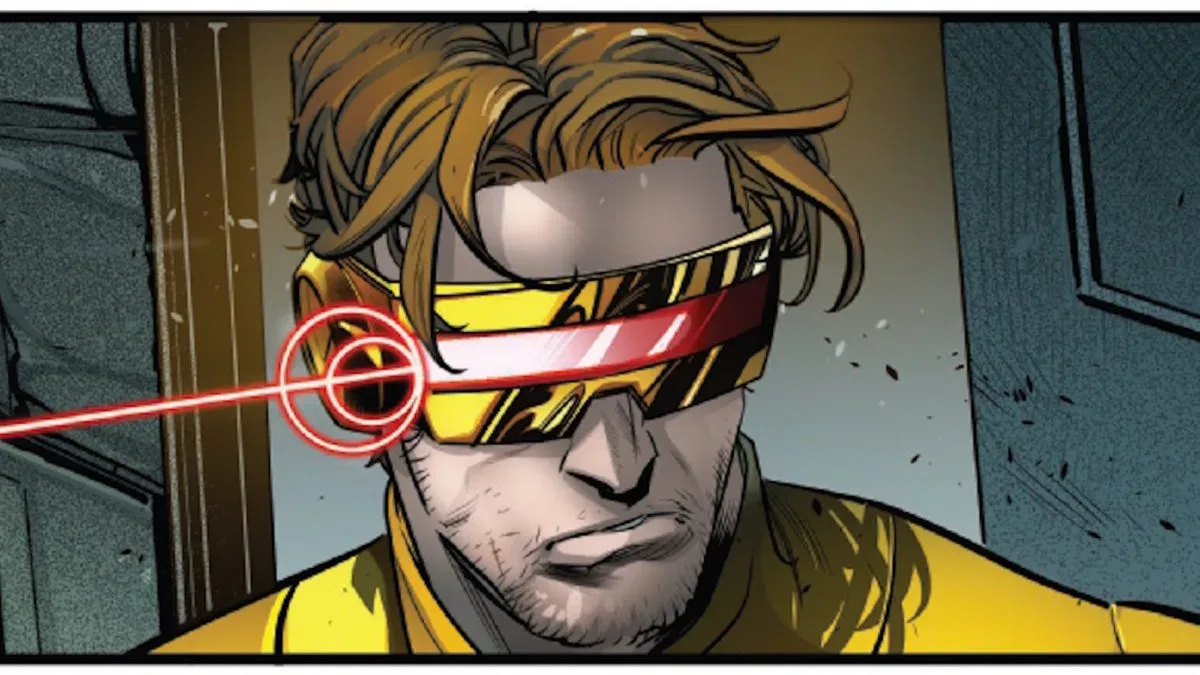
The next issue’s official setup identifies the combatants in both their familiar and current roles: Scott Summers and Henry McCoy; Cyclops and the Chairman. It also promises a fight “to the death.” That language does not establish which character, if either, will die. It does, however, make clear that the series is framing the confrontation as more than another temporary disagreement between teammates with a long, complicated history.
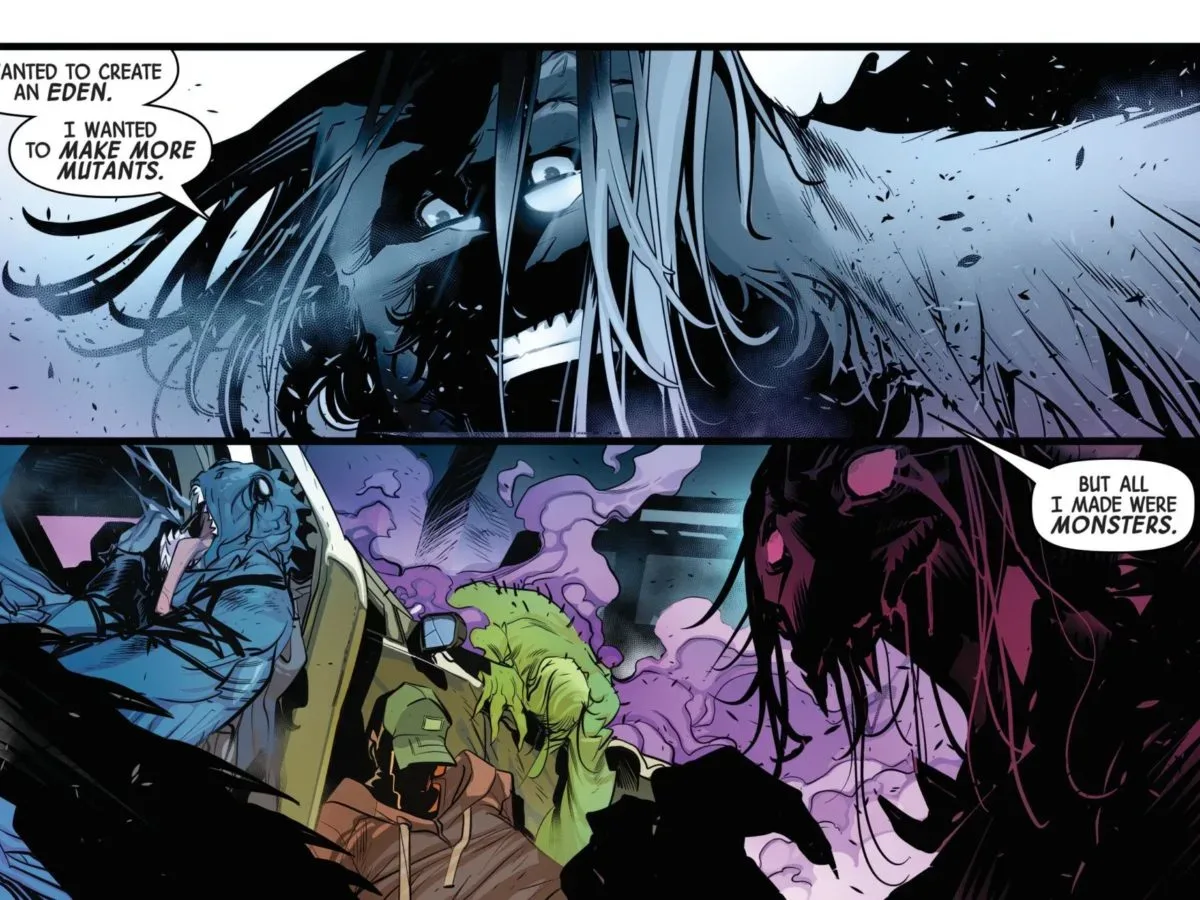
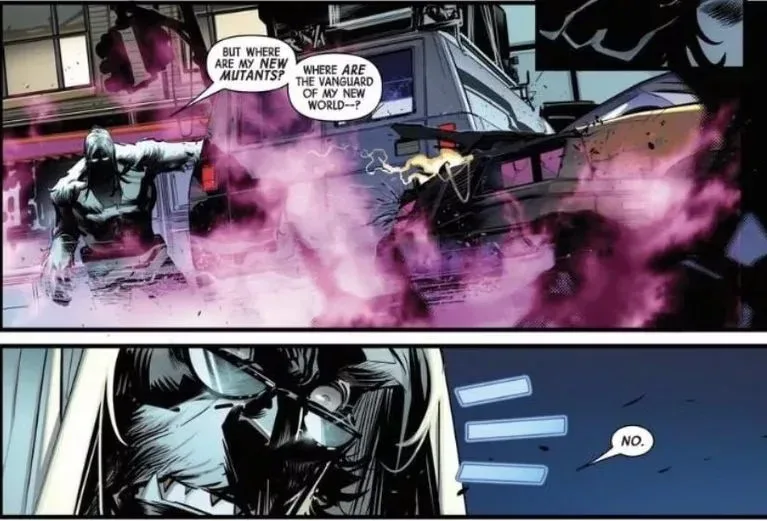
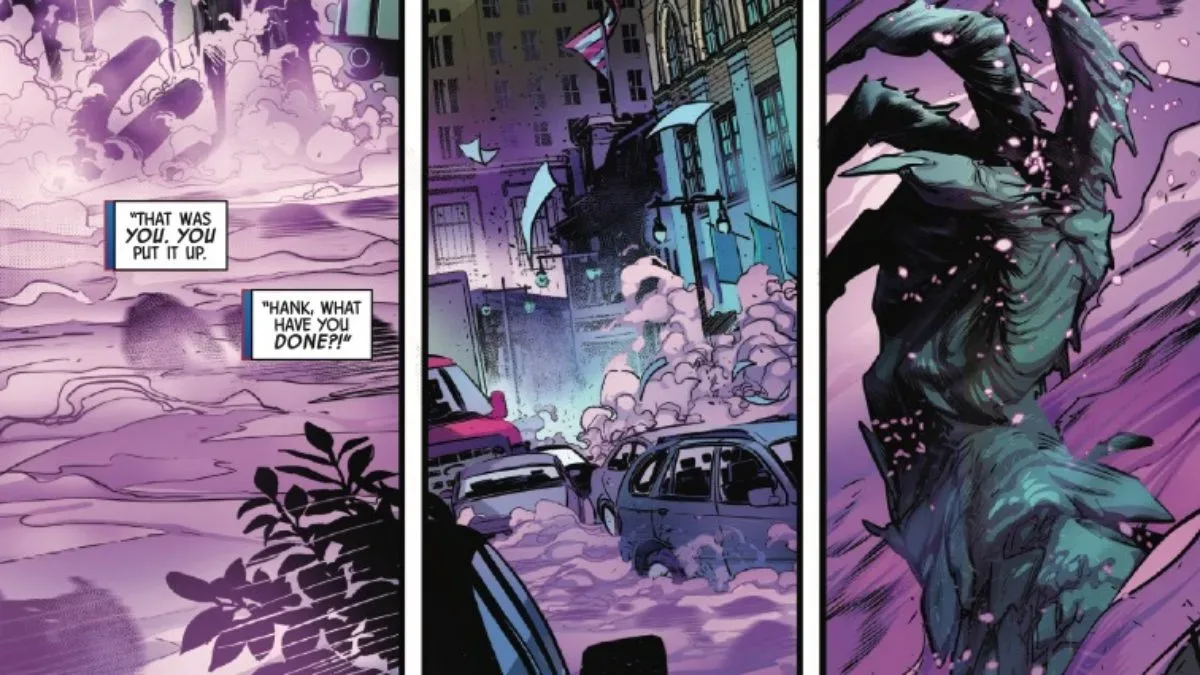
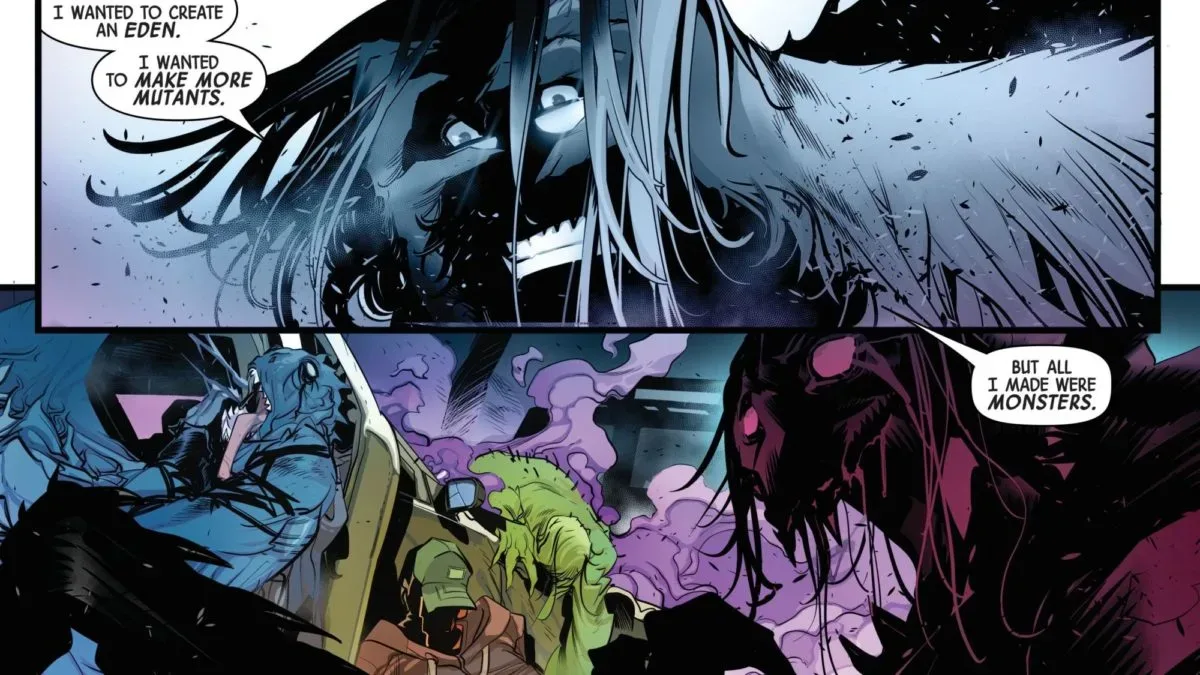
Issue #4 provides the emotional and structural groundwork for that clash. Cyclops is attempting to stop an ongoing genocide, while the Chairman faces the fallout from his own conduct, including what he did to a town in Pennsylvania. The story puts two versions of mutant survival in opposition: Scott’s effort to halt atrocity and McCoy’s ruthless willingness to treat people and places as material for a plan.
A conflict built on names, identities and consequences
The coming confrontation is compelling partly because the solicitation does not merely call it Cyclops versus Beast. It says Cyclops versus the Chairman. That distinction matters. “Beast” is the identity associated with the X-Man and scientific genius Henry McCoy. “Chairman” identifies the figure running 3K and signals a position of authority, control and institutional power.
That wording also leaves room for the issue’s key tension: the story is dealing with the original Hank McCoy, but one whose actions have made him a profoundly different figure from the teammate Cyclops once knew. The conflict is therefore not simply hero versus villain in the abstract. It is Scott confronting an old ally whose choices, organization and ideology have turned that shared history into an added source of pain.
Issue #4 reportedly has Cyclops making a serious commitment about his former teammate. The exact consequences of that decision remain for the comic to reveal, but the timing makes the promise of a death match in #5 feel deliberate rather than ornamental. The series is not hiding that its final issue will put an X-Men relationship at the center of the climax.
DNX #4 revisits its time-travel logic
There is another major job for the fourth issue: clarifying how its time-travel elements affect the present. Time travel is useful in superhero fiction because it can make consequence feel enormous. It can also create a basic storytelling problem: if people in the future can intervene in the past, the future that motivated the intervention may no longer exist in the same form.
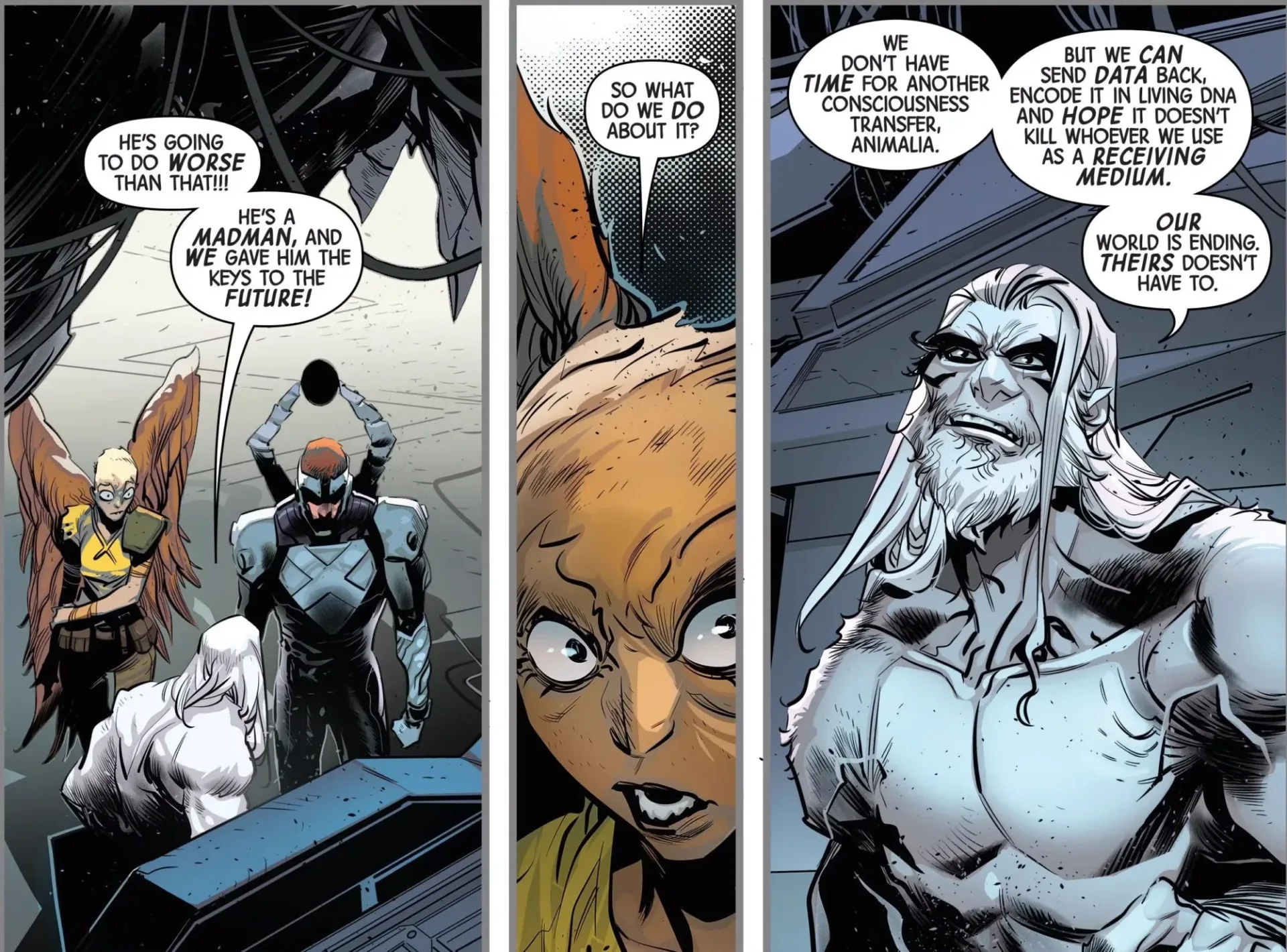
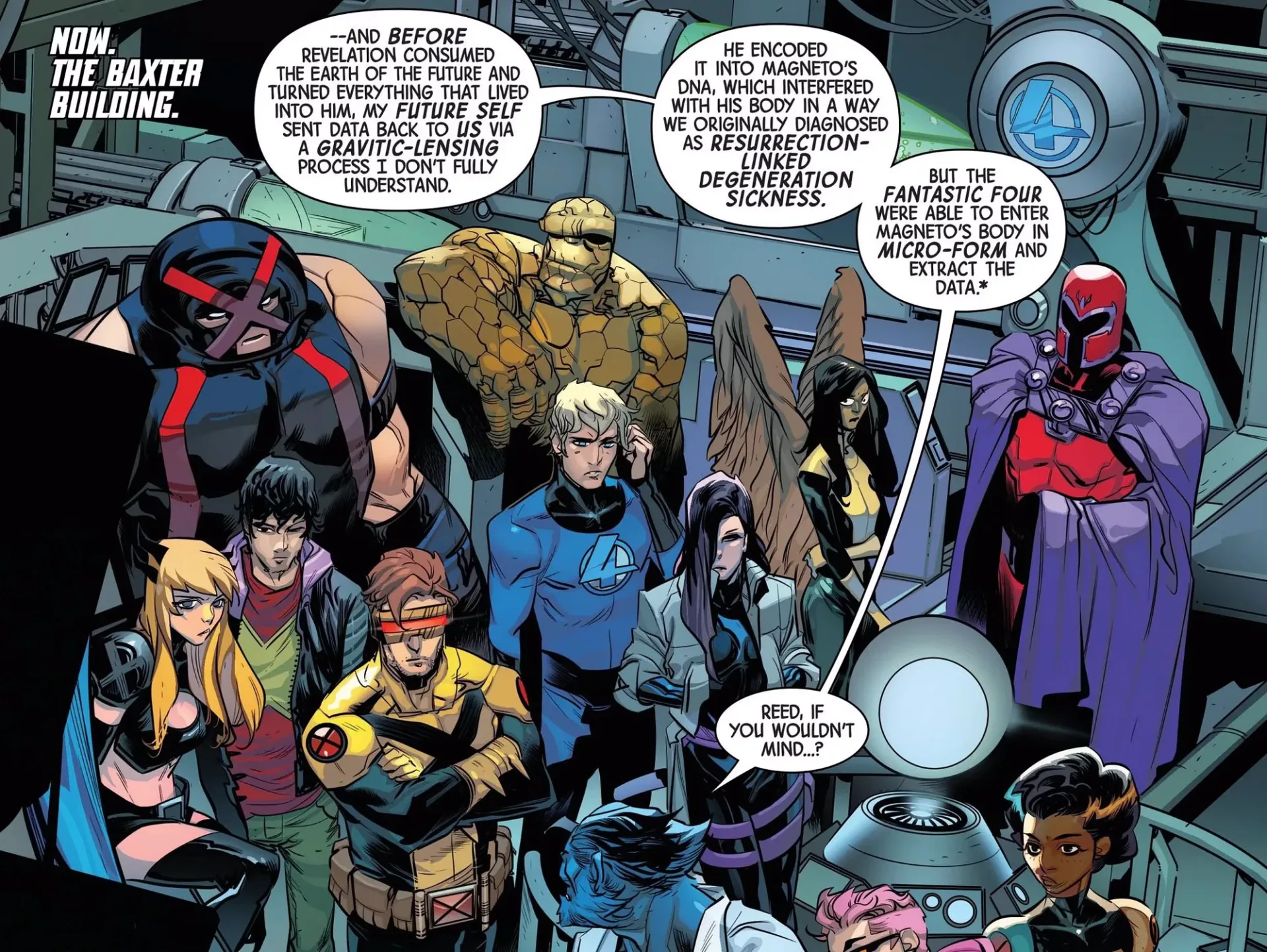
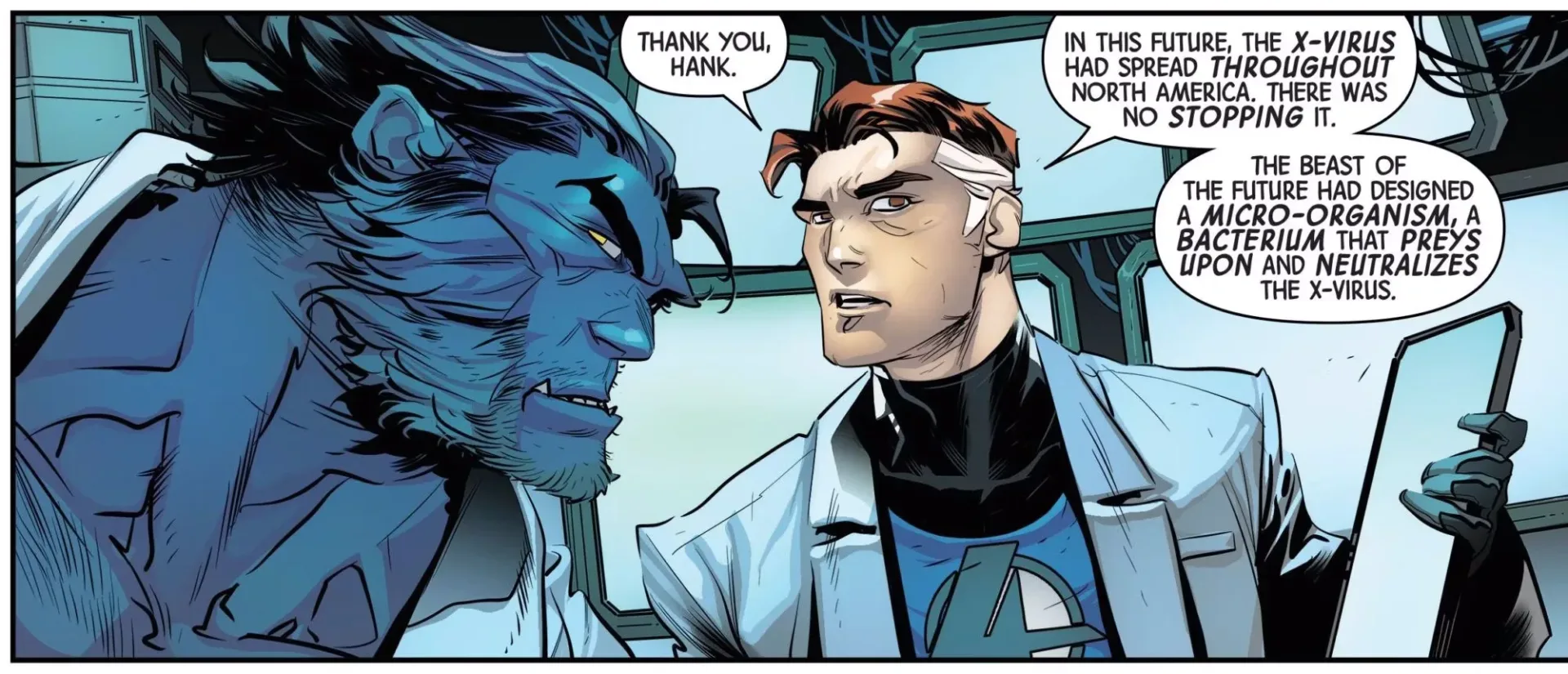
DNX #4 engages directly with that problem. The issue explains Magneto’s sickness as something sent back following the events of the future known as the Age of Revelation, arriving at a point before the time jump. In other words, the effect appears in the earlier era before the readers have reached the future event that would ordinarily explain it.
That is a causal loop, or paradox: an event from a future timeline changes the conditions that lead toward that timeline. The comic’s approach does not erase the oddness of the sequence, but it gives the illness a more defined place in the story’s timeline. Magneto was not simply struck by an unexplained condition before the relevant future was conceived; the illness is connected to a future that can now reach backward.
Reed Richards and a classic version of Beast are also working to alter the present using something from that non-existent—or at least threatened—future. The idea of a “present” delivered from a future that may be prevented is a concise description of the book’s central time-travel tension. The characters are trying to use knowledge or tools created by disaster to stop that disaster, even though success could erase the source of what they are using.
For readers, the practical takeaway is that #4 is not only a bridge toward a superhero brawl. It is an explanation issue as well as an escalation issue. It establishes why earlier events, particularly Magneto’s sickness, connect to the future storyline and puts Reed and classic Beast in an active role in reshaping the present.
The Fantastic Four connection is more than a guest appearance
The Fantastic Four are explicitly part of the situation in DNX #4. The issue’s premise has the X-Men and Marvel’s First Family regrouping after an unexpected catastrophe, while the effects of the Chairman’s scheme continue to spread. Reed’s involvement is especially logical within the story’s boundaries: the time-travel material requires someone capable of engaging with impossible scientific circumstances, and Reed is working alongside classic Beast on a solution.
That crossover energy continues in Iron Man #11, written by Joshua Williamson with art by Luca Maresca. The issue places Tony Stark under observation by those closest to him, including Reed and Sue Richards. Its stated direction is a confrontation between Iron Man and the Fantastic Four, with the question of what Tony has been doing leading toward his status as the “Incarcerated Iron Man.”
The connection is thematic as well as logistical. DNX has Reed and Beast trying to alter present-day circumstances with material from a future that may not survive. Iron Man #11 has Tony Stark and Reed considering how they could defeat one another if that became necessary. Both stories examine brilliant people treating contingency planning as a survival tool—and show the moral unease that arises when such planning becomes a license to discard people, plans or even entire outcomes.
There is a particularly unsettling contrast in how the stories handle experimentation and replacement. The Chairman’s actions in Pennsylvania are presented as something he must answer for. Elsewhere, the material around Iron Man #11 invokes a cold laboratory mindset: if one attempt fails, discard the dish and begin again. In a superhero setting where science can literally rewrite the world, that kind of thinking raises an essential question: who gets treated as a person, and who gets reduced to a variable?
Why the Cyclops-Chairman fight carries unusual weight
A final-issue showdown can be easy to predict in form: protagonists locate the antagonist, arguments end, powers fly, and the series reveals whether its threat has been stopped. What makes the setup for DNX #5 more pointed is that Scott and Henry share a nameable past. The solicitation deliberately pairs civilian names with superhero or political identities, asking readers to hold both versions of the relationship at once.
Scott Summers is not only Cyclops, the X-Men leader confronting a danger. Henry McCoy is not only the Chairman, architect of 3K’s plans. They are also Scott and Henry, former teammates. That personal framing gives every threat of lethal violence a second meaning. The fight is about ending the Chairman’s threat, but it is also about whether anything of Scott’s old friend remains reachable—or whether the past has become irrelevant next to the damage already done.
The title’s promise should still be treated as a threat, not a confirmed outcome. “To the death” is the stated setup for DNX #5; it is not proof that the series will permanently kill Cyclops, the Chairman, or anyone else. Superhero comics routinely use life-or-death stakes to heighten a finale, and time travel adds still more uncertainty because the status of the future itself is under dispute.
But #4 makes it harder to dismiss the wording as empty promotion. The Chairman is learning that his plans have flaws. Cyclops is making a commitment concerning him. The plot has linked current disasters to a future intervention, while the Fantastic Four and classic Beast seek a way to change the present. All those threads are converging just as the series reaches its final chapter.
What to know before DNX #5
- DNX #4 is a five-issue miniseries installment by Jed MacKay and Federico Vicentini, dated November 4, 2026 and priced at $4.99.
- The issue has the X-Men and Fantastic Four responding to an unexpected catastrophe as the effects of 3K Chairman Henry McCoy’s plan continue.
- Its time-travel material ties Magneto’s sickness to events after the Age of Revelation future, with the condition sent to a point before the time jump.
- Reed Richards and classic Beast are attempting to change the present with something originating in a future that may no longer exist.
- Iron Man #11, also dated November 4, places Tony Stark on a collision course with Reed and Sue Richards and the Fantastic Four.
- DNX #5, by MacKay and Vicentini, is dated November 25, 2026, priced at $4.99, and promises Cyclops and the Chairman in a battle to the death.
For comic readers tracking how superhero universes use legacy characters and branching timelines, the larger attraction here is the collision of scale and intimacy. The book has a future catastrophe, a past-altering intervention, Reed Richards science and a villainous political apparatus. Yet its apparent endpoint is a confrontation between two people who were once X-Men together.
That makes DNX #5 the issue to watch not because a death has been confirmed, but because #4 has narrowed the possibilities. The Chairman’s plans are failing in ways that cannot be waved away, Scott has drawn a line, and the time-travel solution may be altering the ground beneath every participant. A promised fight to the death is now the culmination of the story’s moral argument: what should happen when saving the future means judging someone from your past?
Readers looking for more comic-book screen-development context can also follow the uncertain screen future of John Constantine.