ComicBooks For Kids (CB4K) is marking its 10th anniversary by creating a new program, ComicBooks For Schools, intended to put comics and related reading material in front of K-12 students. The expansion grows out of the charity’s existing work sending comics and pop-culture items to hospitals, as well as feedback that those materials were helping children engage with reading beyond the original hospital-focused mission.
The core idea is straightforward: comics can be a welcoming route into reading for young people who might not respond to conventional prose-first books. CB4K says the school-focused effort will place particular attention on reluctant readers and neurodivergent children, including children with autism, dyslexia, or reading anxiety. The organization has cited feedback describing one autistic child who moved from not reading to looking forward to reading every day after receiving materials.
That is a meaningful goal, especially because “reluctant reader” is not a diagnosis or a single type of student. It is a practical label for someone who does not regularly choose to read, for any number of reasons: confidence, attention, past struggles, a lack of material that feels relevant, or simply not having found the right format. Comics can lower the perceived barrier to starting a story by combining sequential art, dialogue, pacing, and shorter blocks of text. None of that makes comics a shortcut around reading; rather, it gives readers another way to build a reading habit and follow narrative information.
From hospital deliveries to a schools initiative
Mark Weiss and Michelle Weiss founded CB4K in 2017. Over the decade since, the charity has developed programs that distribute comics and pop-culture items to hospitals. It also launched ComicBooks For Troops nearly six years ago, extending the organization’s reach to military families. A UK initiative followed in 2022.
More recently, CB4K said it delivered 100,000 Digital Lizards of Doom graphic novels to military families, described as what is believed to be the largest single drop of comic material to that audience. That scale matters in understanding the schools launch: ComicBooks For Schools is not being presented as a one-off comic drive, but as another branch of an established distribution model.
The program’s stated focus on children with dyslexia and reading anxiety is worth treating carefully. A comic’s images, panel structure, lettering, and page design may help some readers break a story into manageable moments, but those same elements can be visually dense for others. The useful implication is not that one format works for every student. It is that schools and families benefit from having more appealing formats available, and from letting children find what holds their attention.
CB4K’s argument for the expansion rests on an observation from its hospital work: boxes originally meant for one setting were also finding an audience among K-12 students and autistic children. That connection gives ComicBooks For Schools a practical starting point. The charity is attempting to support a reading experience that children may voluntarily return to, rather than treating comics as a lesser substitute for “real” reading.
Industry support and a year of anniversary activity
The anniversary program is planned to run throughout 2027, with CB4K promising something special in each month. The organization has named support from DC, Archie, Oni Press, Dark Horse, IDW, BOOM! Studios, BCW, Voyage Publishing, Universal Distribution, Lunar, Zenescope, CGC, and others. That list covers publishers alongside retailers, distributors, grading and storage-related companies, illustrating how an industry-wide charity effort can depend on more than just the companies that make comics.
For readers, a publisher’s participation can mean material and visibility. Retailers and e-tailers can help connect campaigns with local communities and collectors. Distributors can be essential to moving books at scale. Meanwhile, fundraising events can give supporters an avenue to contribute even if they cannot donate physical comics themselves. The stated 2027 schedule includes a current Rick and Morty Humble Bundle connected with Oni Press, a ComicBooks For Troops weekend involving retailers, e-tailers, influencers and others, and a December Zenescope livestream fundraiser featuring Mark and Michelle Weiss at the CB4K office.
CB4K is also preparing a refreshed logo for 2027 and plans to provide a minted anniversary challenge coin to 100 people who helped the organization reach the 10-year milestone. The coin is set to feature the new logo on one side and the Troops branding on the other. It is a thank-you item, not the point of the initiative, but it signals that the organization is using its anniversary to recognize longtime support while seeking momentum for the school program.
The comic space regularly makes room for promotional editions, collector items, and crossover initiatives. For a look at how surprise-format comic promotions can be structured on the commercial side, see this coverage of a ThunderCats blind-bag comic release. CB4K’s coin has a different purpose: it is positioned as recognition for supporters of a charitable anniversary rather than a standard retail collectible.
The AI artwork issue complicates the message
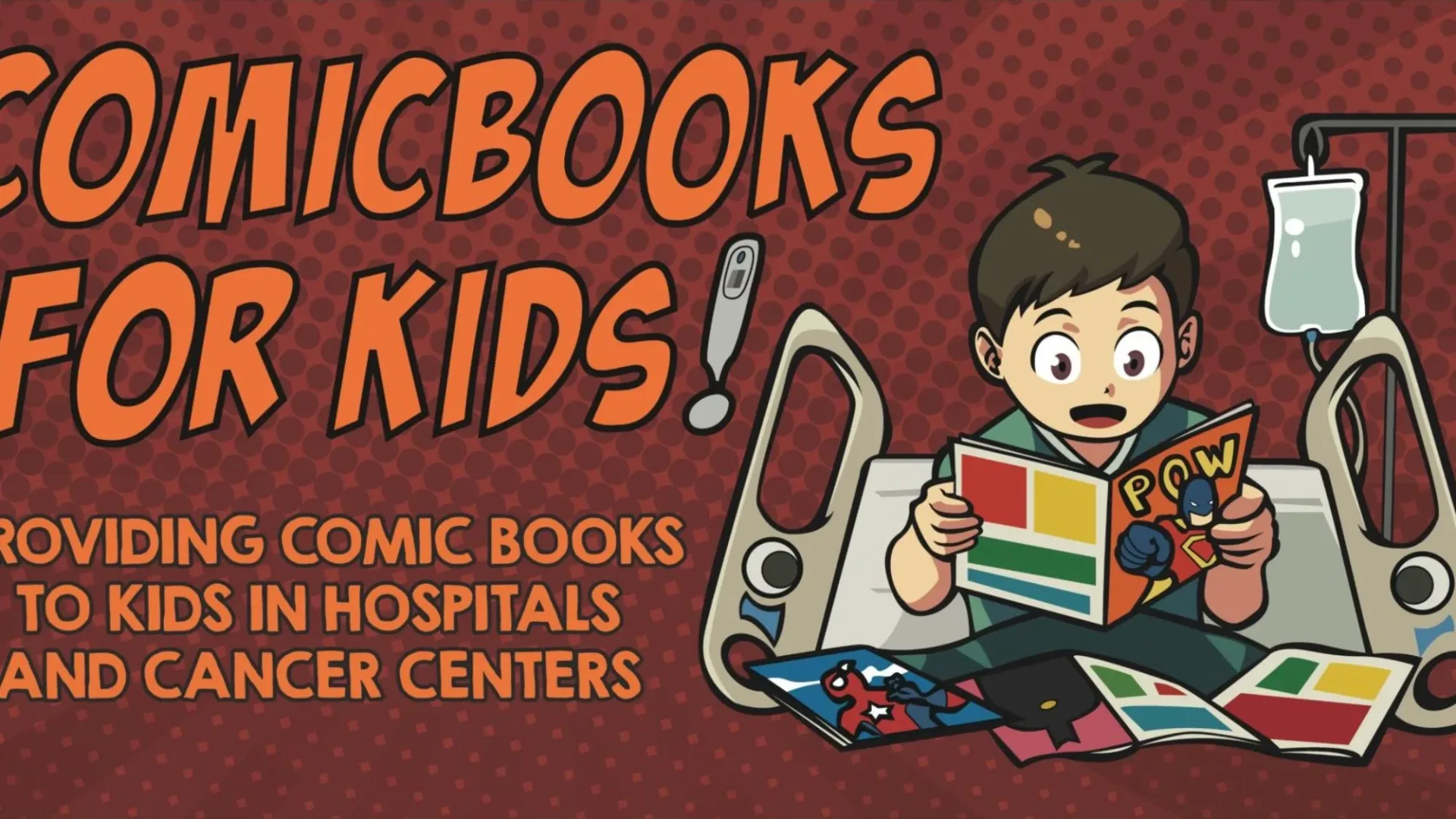
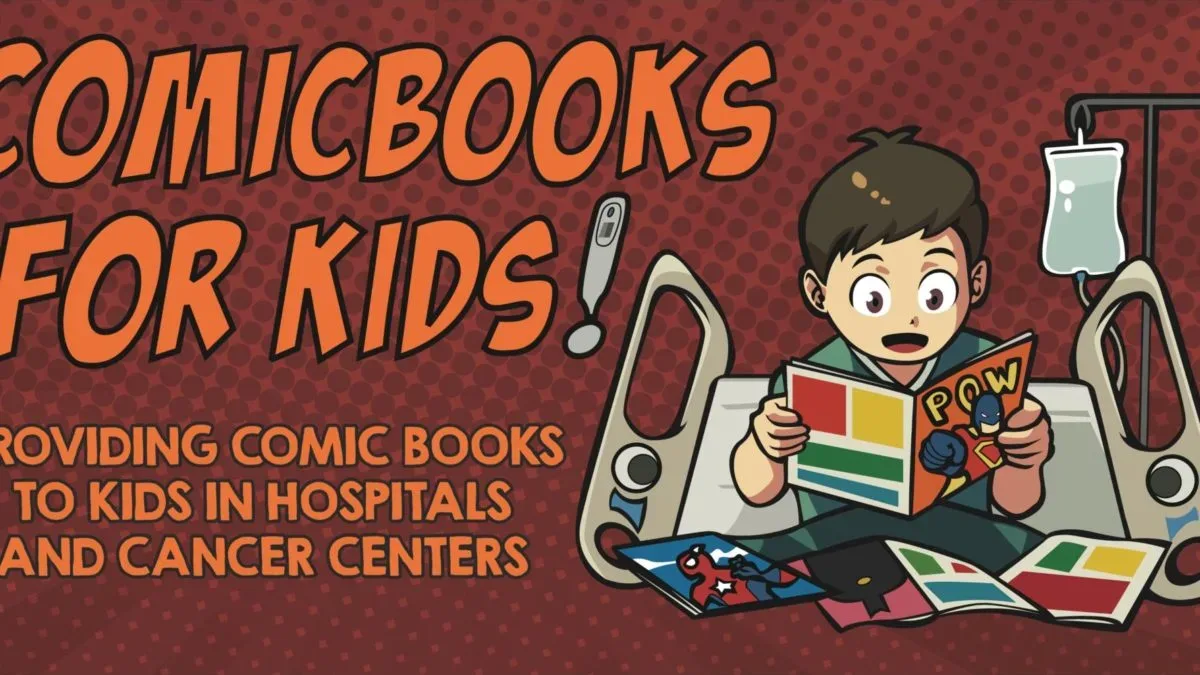
The encouraging news around literacy and distribution has been accompanied by a more difficult discussion: CB4K’s updated anniversary logo and new website imagery have been criticized for using generative AI. The branding was reported to carry SynthID identification, and much of the new site imagery was described as AI-generated. The older UK-facing version of the site remains in place but has not been updated in more than a year.
Generative AI refers here to systems that create images from prompts or other inputs, rather than an artist manually drawing or assembling every visual element. The technology has become particularly contentious in comics and illustration because artists have raised questions about training data, permission, attribution, job opportunities, and the visual replacement of human creators. Those debates are relevant even when an organization is nonprofit and is not directly selling the image itself.
CB4K’s situation exposes a genuine tension. A charity working to promote comic reading can want fast, inexpensive promotional imagery while also operating in a creative field whose artists may see AI-generated visuals as conflicting with the value of human-made art. The concern is not limited to whether a particular graphic is sold. Branding is public-facing; it represents the organization and shapes the message surrounding a project that relies on comics culture and industry support.
Mark Weiss acknowledged that the decision was debated internally. He said the organization’s reasoning was that the imagery was being used to promote the industry rather than sold, and that CB4K had been speaking with artists about creating work to replace some images. He also described difficulty securing artist time, saying creators are in high demand amid the current variant-cover market.
That response does not make the disagreement disappear, but it does establish that the organization recognizes the concern and is considering replacement artwork. The productive next step would be clear follow-through: commission or accept donated artist-created visuals where appropriate, make the transition visible, and ensure that participating creators receive prominent credit. For a charity whose mission centers on comics, the people who make comics are not incidental to the message.
Why the distinction matters for ComicBooks For Schools
There is no contradiction between supporting children’s literacy and asking tough questions about how that work is presented. In fact, both issues stem from the same belief: comics have cultural and educational value. The school initiative is strongest when it foregrounds the many human contributions behind a comic—writers, artists, colorists, letterers, editors, educators, librarians, retailers, donors, and young readers themselves.
For schools, the practical value of the program will come down to access and fit. A box of comics can create an opening, but the best use of those materials depends on adults making space for student choice and on children finding stories that meet them where they are. The stated inclusion of students with autism, dyslexia, and reading anxiety points toward a broad, reader-centered ambition, provided the collection itself remains varied enough to accommodate different needs and tastes.
For CB4K, 2027 now carries two linked tests. One is whether ComicBooks For Schools can turn its hospital-delivery experience and broad industry backing into sustained literacy support for K-12 students. The other is whether the organization can align its outward visual identity with the creator community it says it wants to champion. The first goal has clear potential; the second is an opportunity to listen, adjust, and put artists visibly back at the center of a comics-focused campaign.