CBGB, the former Bowery club inseparable from the rise of American punk, new wave and later New York hardcore, is being adapted into comics. Z2 Comics and the CBGB brand have announced an official partnership for a line of graphic novels, beginning in 2027 with The Illustrated History of CBGB.
Daniel Kohn and Josh Bernstein are attached as writers for the opening book. No artist has been announced, and there are no further format details, release dates or additional volumes confirmed at this point. The wider collaboration is intended to examine the people, performers, cultural movements and lasting mythology associated with the venue, not simply retell a list of famous concerts.
That is an unusually large assignment for a comic. CBGB was a physical club at 315 Bowery in New York City’s East Village, operating from 1973 until 2006, but it has endured as an idea far beyond its doors. Its history contains formative performances, handmade scene-building, harsh living conditions, violence, commercial licensing and the eventual loss of the original venue. A graphic narrative can make those threads immediate; an official project also raises a fair question about how fully it will address the less glamorous parts of that legacy.
The first book: The Illustrated History of CBGB
The announced first volume, The Illustrated History of CBGB, will be written by Kohn and Bernstein. Bernstein is Z2’s president. The project is billed as the first step in a broader official graphic-novel initiative rather than a one-off book.
“Official” matters here. It means the project has been developed in partnership with the CBGB brand, which can provide a direct connection to the venue’s surviving identity and licensed legacy. It does not, on its own, tell readers what period the story will cover in detail, whose perspectives will shape it, what visual approach it will use, or how sharply the book will interrogate the club and its management. Those are creative questions that remain unanswered until more information, including the artist, is revealed.
Graphic nonfiction and historical comics are well suited to a subject such as this because they can operate on several levels at once. Panels can establish the cramped proportions of a room, map the relationship between stage and crowd, isolate a flyer or piece of wall graffiti, and then cut to a wider picture of a changing neighborhood. That visual grammar may be especially useful for a venue whose identity was tied as much to its conditions and atmosphere as to its booking history.
It also creates a challenge. Comics necessarily select moments and build visual emphasis. A book can convey momentum and noise without literally reproducing a gig, but readers should expect an interpretation of CBGB’s history, not a substitute for every firsthand account or a comprehensive archive.
Why CBGB became larger than one address
CBGB & OMFUG was founded by Hilly Kristal and Karen Kristal. Its name originally expanded to “Country, Blue Grass, Blues; Other Music For Uplifting Gourmandizers,” a phrase that sits in striking contrast to the music for which the club became famous.
The club became a crucial meeting point for American punk and new wave during the 1970s. The Ramones debuted there in 1974. In the following year, performers associated with the club’s rise included Blondie, the Patti Smith Group, Talking Heads, Mink DeVille, Richard Hell and the Voidoids, the Dead Boys and the Dictators. British punk and new-wave performers later entered the story too: the Damned played the venue in 1977 as the first UK punk band to do so, followed by Elvis Costello and the Police.
Those names explain part of CBGB’s reputation, but not all of it. The club’s small stage, graffiti-heavy walls, shared backstage and restroom space, and deliberately rough presentation helped create a setting in which an emerging act could seem close enough to touch. That intimacy supported a DIY ethos: do-it-yourself culture built around participation, small-scale infrastructure and a willingness to create before a larger industry declares something viable.
In that sense, the venue was not merely a showcase for artists who had already arrived. It became associated with a scene in formation. Coverage in music-focused publications helped circulate word of what was happening there, while the Ramones’ 1976 debut album further fixed CBGB in popular memory as a punk landmark.
From punk and new wave to hardcore
CBGB’s role did not freeze in the 1970s. During the 1980s it also became an important venue for New York hardcore. Hardcore, in this context, refers to a more aggressive and faster-moving branch of punk with a strongly participatory live culture. The style’s connection to the club broadened CBGB’s musical footprint, while also exposing tensions around crowd behavior and safety.
Mosh pits and organized groups within crowds were associated with fights and injuries. Reports from the club’s history include stabbings, bottle attacks, drug use in bathrooms and disruption both inside and outside the venue. Kristal temporarily stopped booking hardcore around 1990 because of the problems, although hardcore later returned intermittently. Some participants described the environment as increasingly aggressive and less welcoming, with senseless violence pushing people away.
That history should not be treated as an incidental footnote. It is part of what makes a serious account of CBGB more complicated than a familiar roll call of legendary bands. The club could represent artistic freedom and self-expression while also being a place where real people faced hazardous conditions and intimidation. An illustrated history has the potential to hold those conflicting truths in the same frame. Whether the new book does so will be a key measure of its historical value.
Grit is part of the record, not just an aesthetic
CBGB’s physical roughness became central to its legend. The venue was notorious for its unclean bathrooms; the floor was known for being used as a toilet by Kristal’s dog; and the kitchen was linked with rat, ash and hygiene problems. That grime has often been folded into a romantic shorthand for the club’s authenticity.
There is a meaningful difference, however, between depicting a raw, low-budget creative space and glamorizing unsafe or unhealthy conditions. An official illustrated account will need to navigate that distinction. The comic medium can do more than turn the graffiti and cramped room into stylish backdrops. It can show why the place appealed to artists who wanted room to take risks, while preserving the fact that its shortcomings were not merely cool set dressing.
The same applies to the famous tiny stage and crowded room. Their visual appeal is obvious, but the important story is what those features did socially: they reduced the distance between performer and audience and made the club feel unlike a polished concert hall. That is a more useful explanation of CBGB’s cultural appeal than simply repeating that it was dirty, loud or notorious.
Closure, branding and an ongoing legacy
The original club closed in 2006 after the Bowery had changed through gentrification and its landlord sued over $90,000 in unpaid rent. Kristal planned to relocate the club and remove fixtures, including its urinals, but he died of lung cancer in August 2007. Disputes within the family followed over his estate.
The CBGB name did not disappear with the location. It became part of a branded legacy spanning merchandise, licensing, radio, festivals and even an airport restaurant in Newark. The new comics therefore arrive in a different cultural setting from the original venue: CBGB is simultaneously a remembered place, a musical symbol and an active brand.
That gap is one of the most interesting aspects of the new partnership. The club’s original cachet was deeply connected to a specific Bowery space and a particular time in New York music. A branded project aimed at new readers must translate that history without pretending the original room can be recreated on paper. Comics may be particularly equipped for that task, because they can evoke an environment without claiming to replace it.
For readers already interested in music-related comics, the announcement also lands within a medium that regularly turns cultural touchstones into sequential stories. The format can make a sprawling history easier to enter while encouraging readers to look beyond a single iconic image or band name. Joking Joystick recently covered another comic installment in The Last Starfighter #3, a reminder that serialized and graphic storytelling can approach established pop-cultural legacies from very different angles.
What is confirmed—and what remains open
- Confirmed: Z2 Comics and the CBGB brand have an official graphic-novel partnership.
- Confirmed: The first announced book is The Illustrated History of CBGB.
- Confirmed: Daniel Kohn and Josh Bernstein are writing it.
- Confirmed: The book is planned for 2027.
- Not yet announced: an artist, a precise publication date, pricing, edition formats, a cover, or the full slate of later graphic novels.
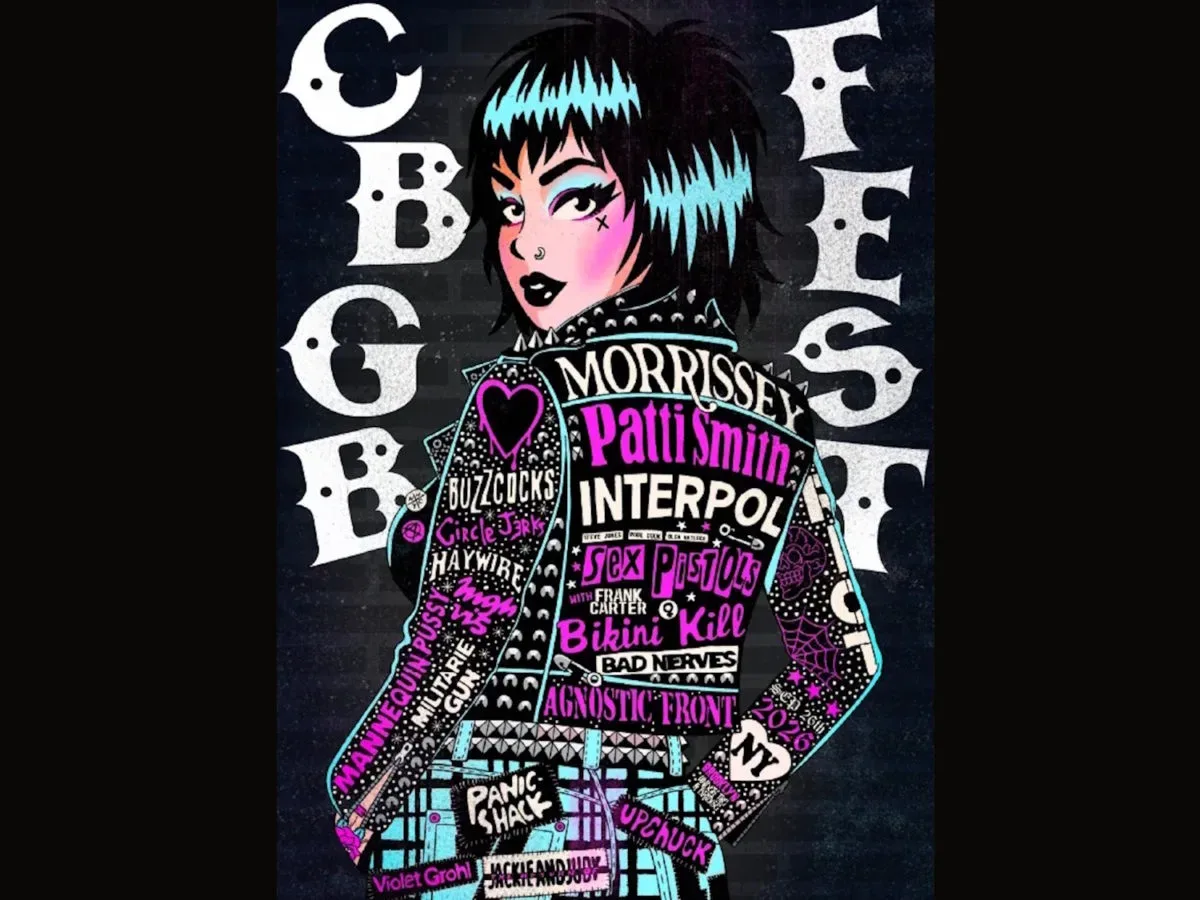
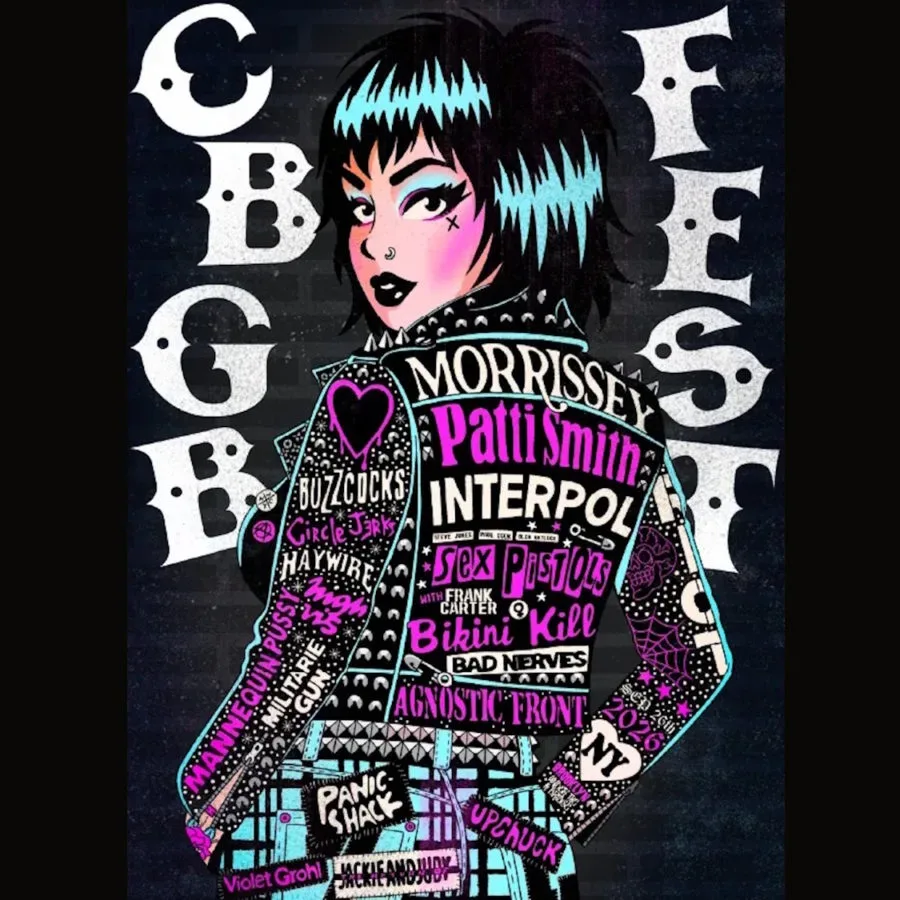
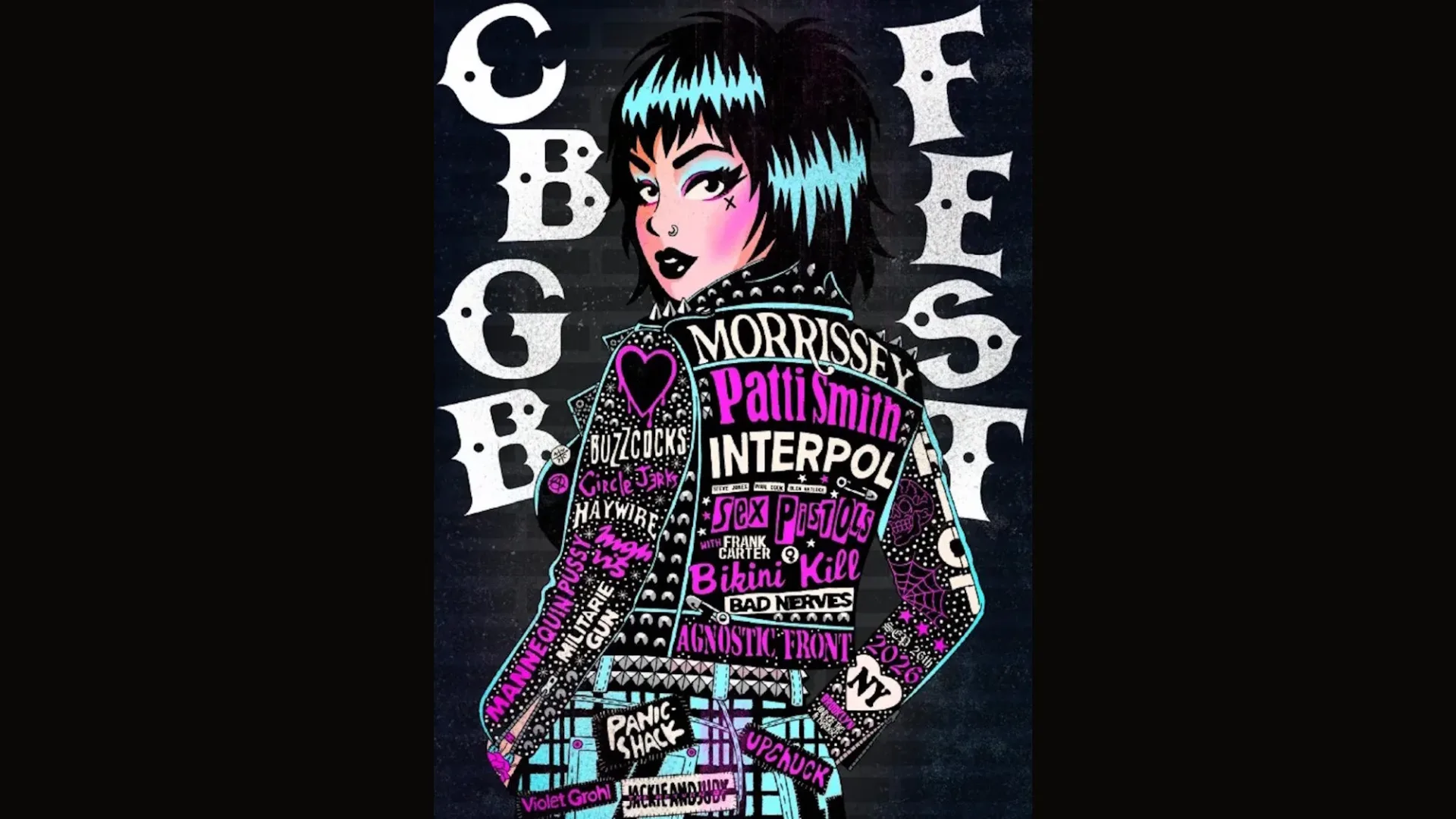
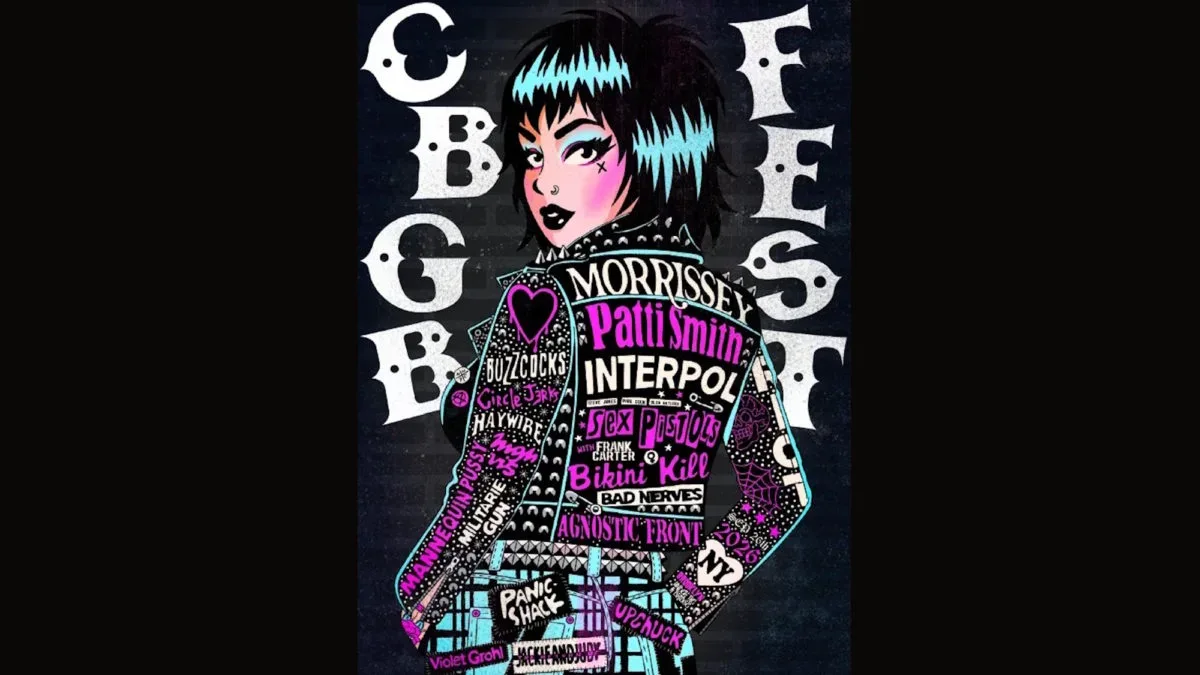
The partnership is also accompanied by an official CBGB Festival poster illustrated by HeCreative Studios. The 11-by-17-inch print is being sold in connection with the festival, with limited copies available there while supplies last. It is a separate item from the forthcoming graphic novels, but it underscores the wider push to present CBGB’s identity through contemporary visual art.
For now, The Illustrated History of CBGB is a promising but still early announcement. Its subject has ample material for a compelling comic: the emergence of punk and new wave, the subsequent hardcore era, the club’s contentious realities, its 2006 closure and the evolution of its name into a continuing commercial and cultural symbol. The eventual creative team’s choices—especially the still-unannounced art—will determine whether the project becomes a vivid historical entry point, a celebratory brand document, or something capable of being both without sanding down the contradictions that made CBGB matter.