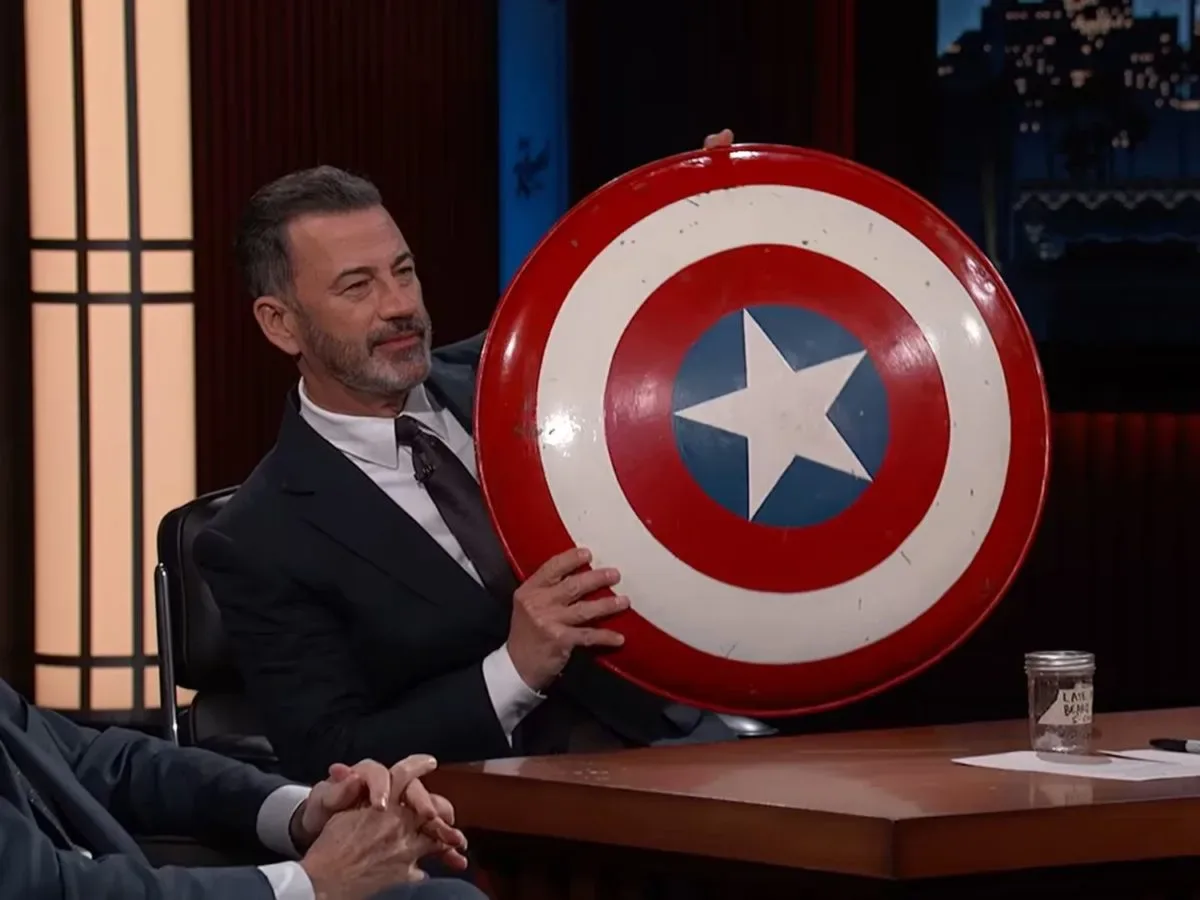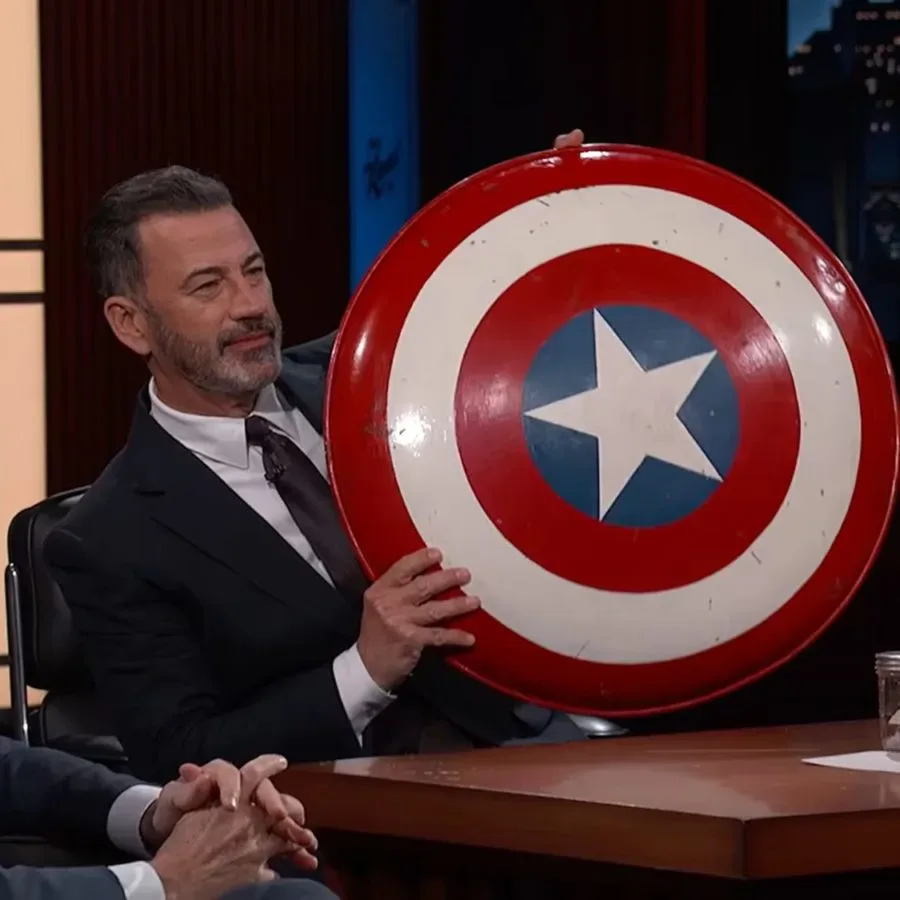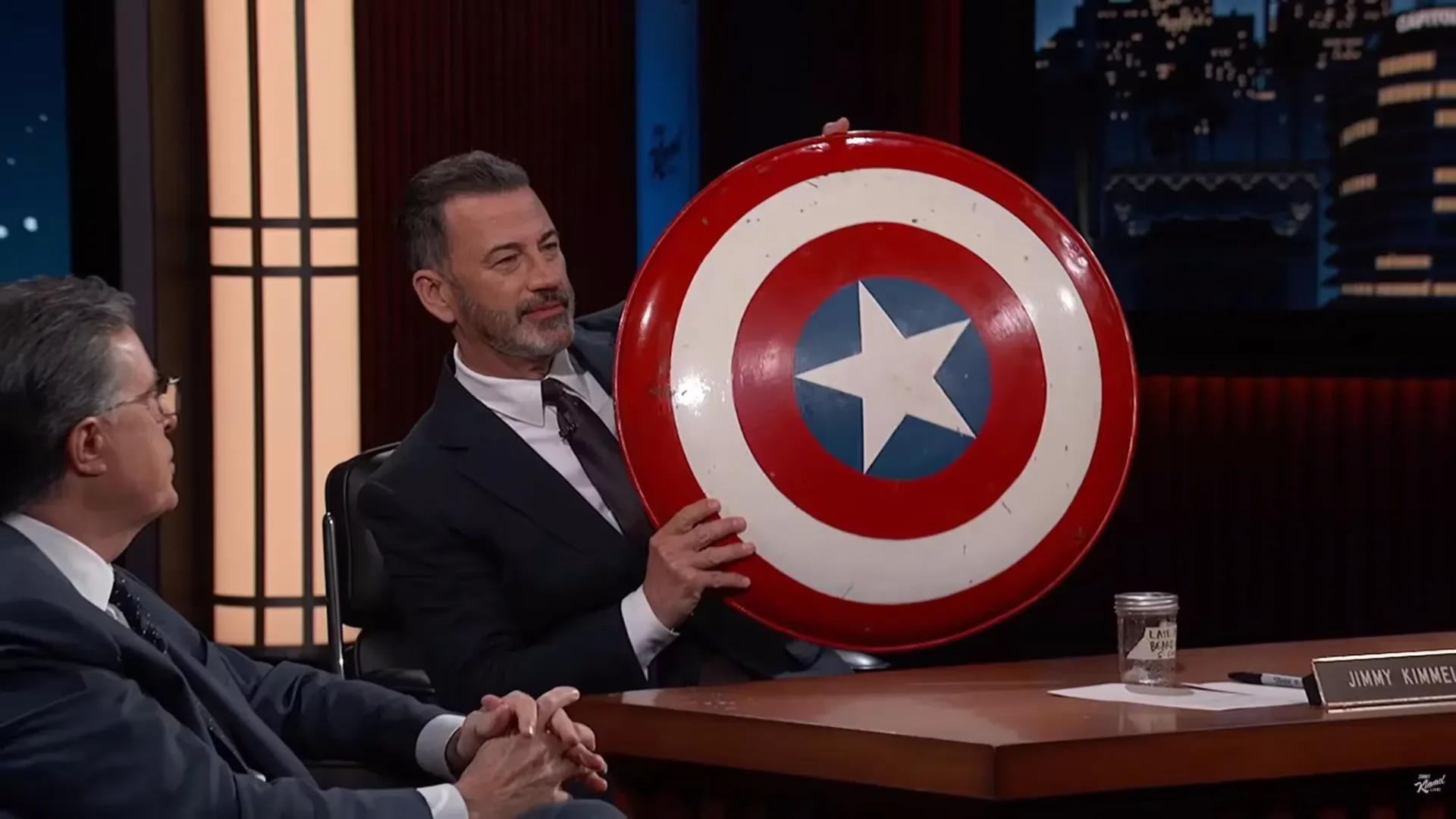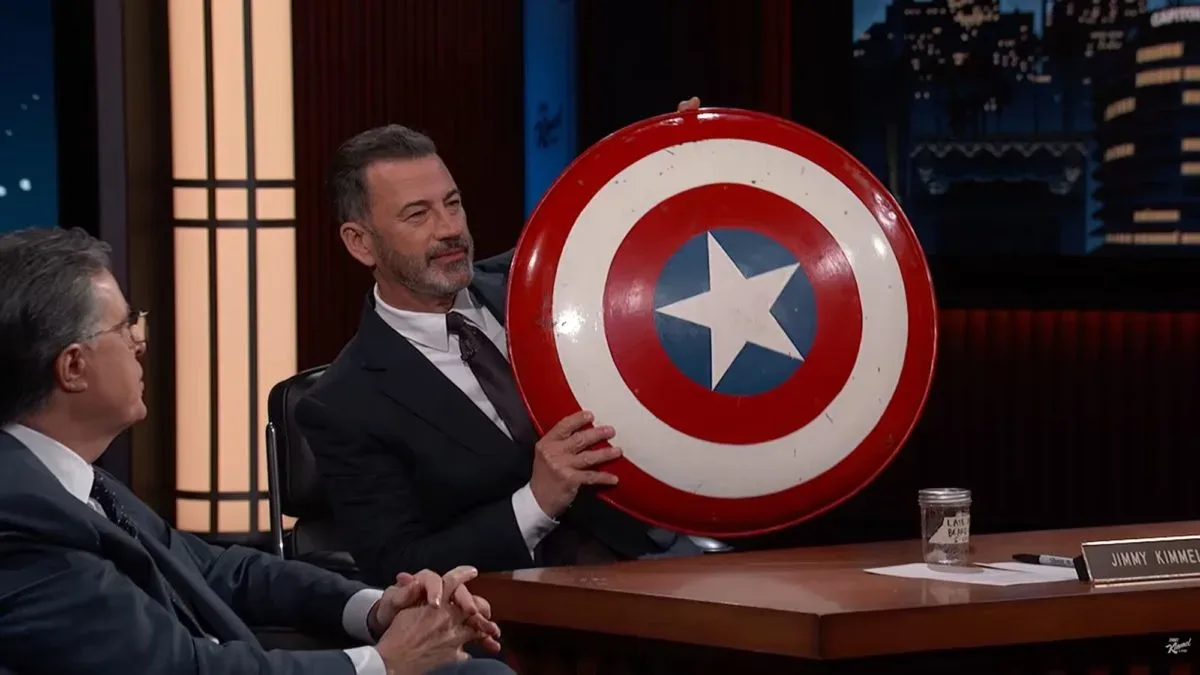
A Captain America story connecting Stephen Colbert, Jimmy Kimmel, and the Gruenwald family led a September 17 reader-interest roundup, placing one of comics’ most recognizable symbols at the center of a wider day of superhero discussion.
The available information identifies the story as “Colbert, Kimmel, Give Captain America's Shield Back To The Gruenwalds,” but does not establish the precise circumstances behind that headline. That limitation matters. It supports reporting that the shield and the Gruenwalds were the subject of a high-interest discussion; it does not establish whether a physical prop, a comic-related item, a campaign, or another kind of public appeal was involved.
Even without those missing specifics, the headline’s prominence is notable because Captain America’s shield is more than a piece of superhero equipment. In comics language, it is an instantly legible character symbol: the visual object readers connect with Steve Rogers before dialogue, plot continuity, or even a particular costume design enters the picture. A shield also carries unusually direct ideas of defense, responsibility, and public identity. When it becomes the focus of a real-world conversation, the discussion can quickly expand beyond a single comic issue.
What the roundup actually establishes
The September 17 list ranks the Colbert, Kimmel, Captain America, and Gruenwalds item first among the previous day’s most-read stories. The entries immediately following it point to the breadth of interests that can converge around comics coverage: Marvel placing Miracleman with the Avengers, developments involving X-Men and DNX, an Absolute Green Arrow question involving Merlyn, a future-Venom thread in Queen in Black, and a December 2026 Highlander comic listing.
The same group also included a game-related item about Barbie content for PowerWash Simulator 2, illustrating how comic-book readership commonly overlaps with games, animation, film, television, licensed collectibles, and character-driven pop culture. For another example of comics properties being brought together in a new project, see the announced Judge Dredd and Biker Mice From Mars comic miniseries.
A popularity ranking is not a measure of consensus, accuracy, or long-term importance. It simply shows which subject attracted attention in that particular reading window. Still, a Captain America topic beating a slate of current Marvel and DC continuity material is a useful signal: readers were drawn to the human and symbolic dimensions implied by the headline, not only to the week’s fictional plot mechanics.
Why a family name changes the conversation
The presence of “the Gruenwalds” in the title gives the Captain America discussion a personal dimension. Comics are often discussed through companies, brands, and fictional universes, but individual creators, editors, families, and estates can also be central to the stories around the work. A headline framed as “give [an item] back” naturally raises questions of history, stewardship, emotional value, and who should be recognized in connection with a cultural artifact.
Those questions should not be answered by assumption here. The supplied material does not explain what relationship the Gruenwald family has to the shield referenced in the headline, nor does it describe any ownership claim, agreement, dispute, or result. Readers should therefore treat the headline as an indication of the topic, not as proof of its unresolved details.
That distinction is especially useful in fandom reporting. A symbolic claim—the idea that an item belongs with a particular person or family because of its cultural meaning—is not necessarily the same as a legal ownership claim, which would depend on documentation and applicable law. Likewise, a request for recognition is not automatically evidence of an active transaction. Headlines can point toward an important debate while leaving those categories separate.
Captain America remains a dependable focal point
The roundup’s wider archive reinforces Captain America’s ability to pull attention across different kinds of comics stories. Past entries highlighted Captain America alongside Wonder Woman, a Captain America #1 preview characterized as another relaunch, and a Captain America variant-cover discussion. The character appears in publishing conversations, superhero-continuity talk, visual-art debates, and broader cultural arguments.
That adaptability is partly practical. A long-running superhero can be approached through new series, older comics, creators, screen adaptations, merchandise, artwork, and icons such as the shield. It also creates a challenge for audiences: identical character branding can refer to very different things. A discussion of a comic issue is not necessarily a discussion of a collectible, and a discussion about a real-world object is not automatically a development in Marvel’s fictional continuity.
In this case, the headline is framed around the shield and named public figures rather than a numbered comic or an announced series. The strongest reading is therefore that the appeal lay in the real-world conversation surrounding a famous comics emblem. The exact event behind it remains unspecified in the available material.
The day’s other signals from comics and games
Elsewhere in the September 17 selection, Marvel and DC readers had plenty of continuity-oriented material to examine. Miracleman’s reported Avengers connection drew attention, as did X-Men-related items, a question over whether Merlyn could be Absolute Green Arrow, and an apparent return of a future vision involving Venom. Several of these entries are explicitly marked as spoilers, a label that tells readers the discussion likely concerns plot information rather than broad, spoiler-free premises.
For readers, spoiler labels are a simple but important navigation tool. They identify coverage that may reveal narrative twists, character appearances, or future developments. Anyone collecting an issue or waiting to read it should decide whether they want that context before opening the article itself.
The list also shows that licensed games remain part of the same attention economy. Barbie additions for PowerWash Simulator 2 sat alongside superhero news, and earlier roundup snapshots included Pokémon, The Legend of Zelda, Pokémon GO, Magic: The Gathering Arena, and the ZX Spectrum. That is not evidence that every comics reader plays games, but it does demonstrate the regular overlap of these audiences in pop-culture coverage.
What readers can take away
The immediate fact is straightforward: a Captain America shield story involving Colbert, Kimmel, and the Gruenwald family was the most-read topic in the September 17 roundup. The broader takeaway is more cautious. Comic-book icons retain a power that is both fictional and personal; the object can matter as a character signifier, a piece of visual history, and a prompt for public discussion.
Until more details are independently established, it is best not to fill in the blanks around the appeal suggested by the headline. The readership result itself, however, is clear enough: amid Avengers, X-Men, DC, animation, comics solicitations, and game tie-ins, Captain America’s shield commanded the day’s greatest interest.