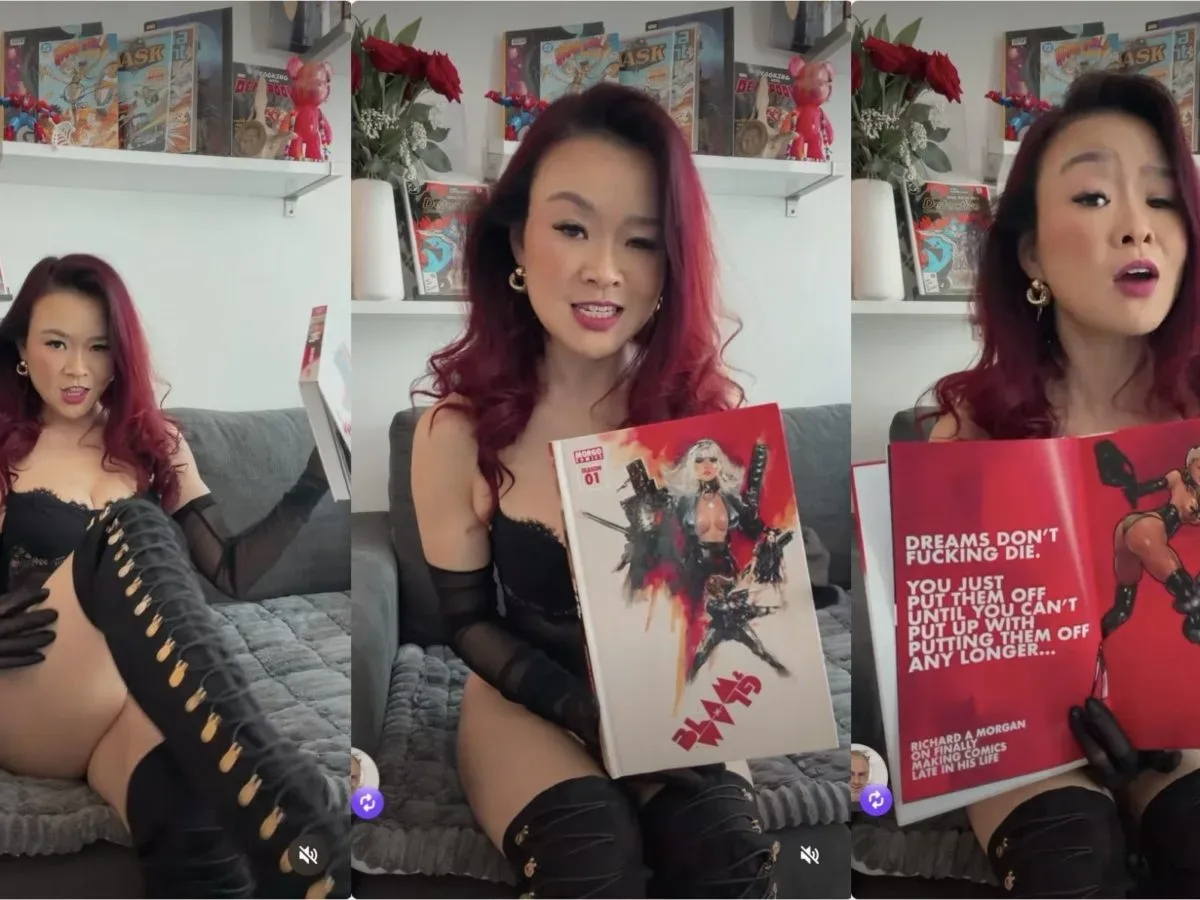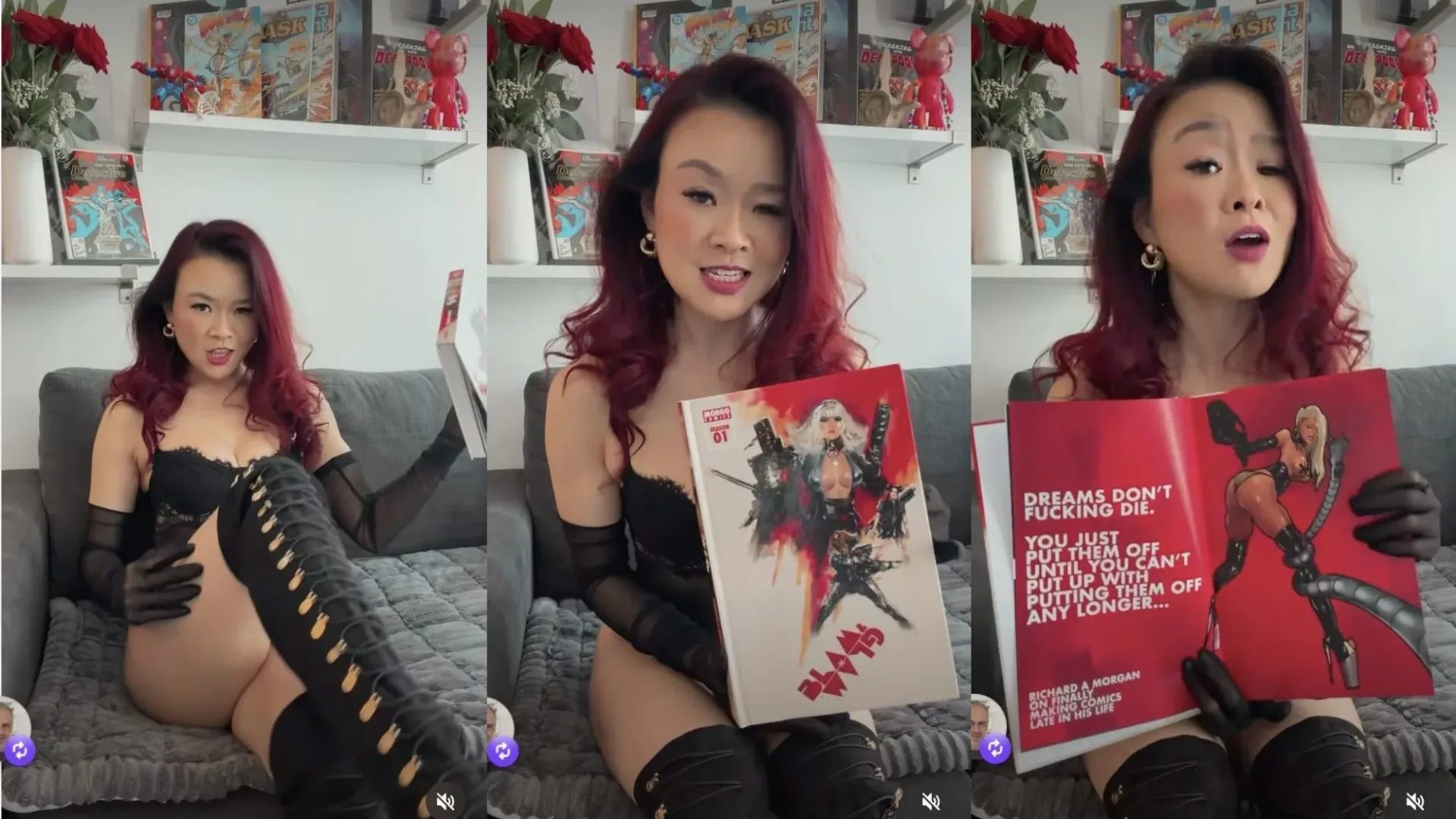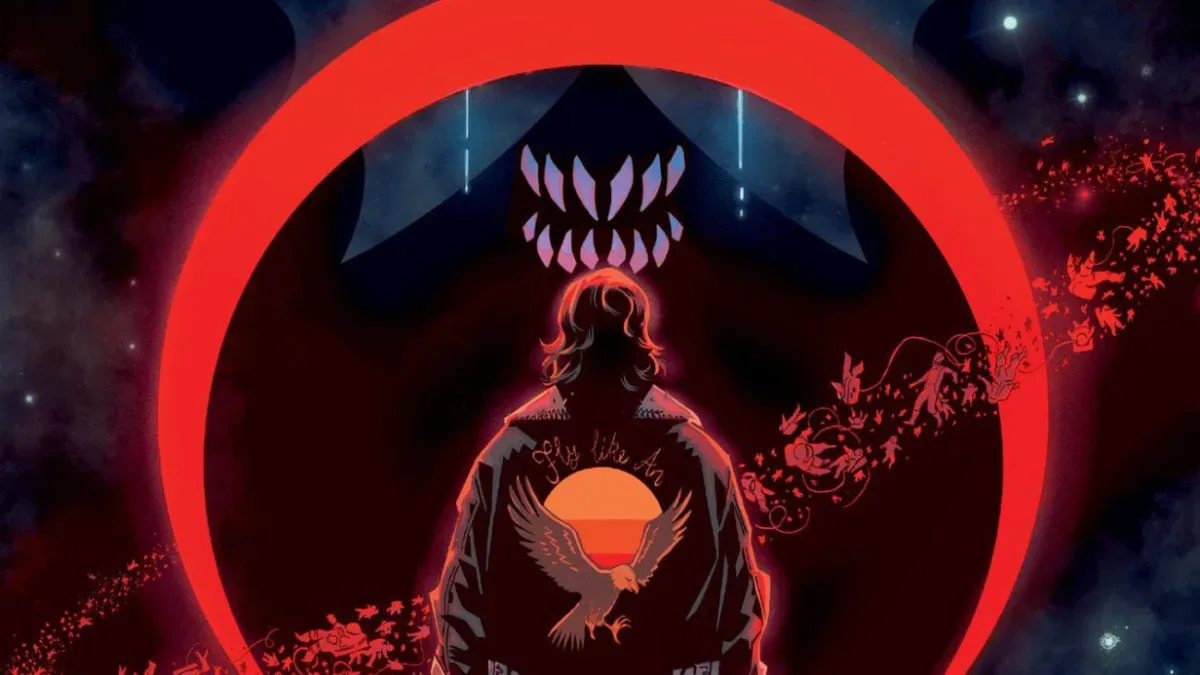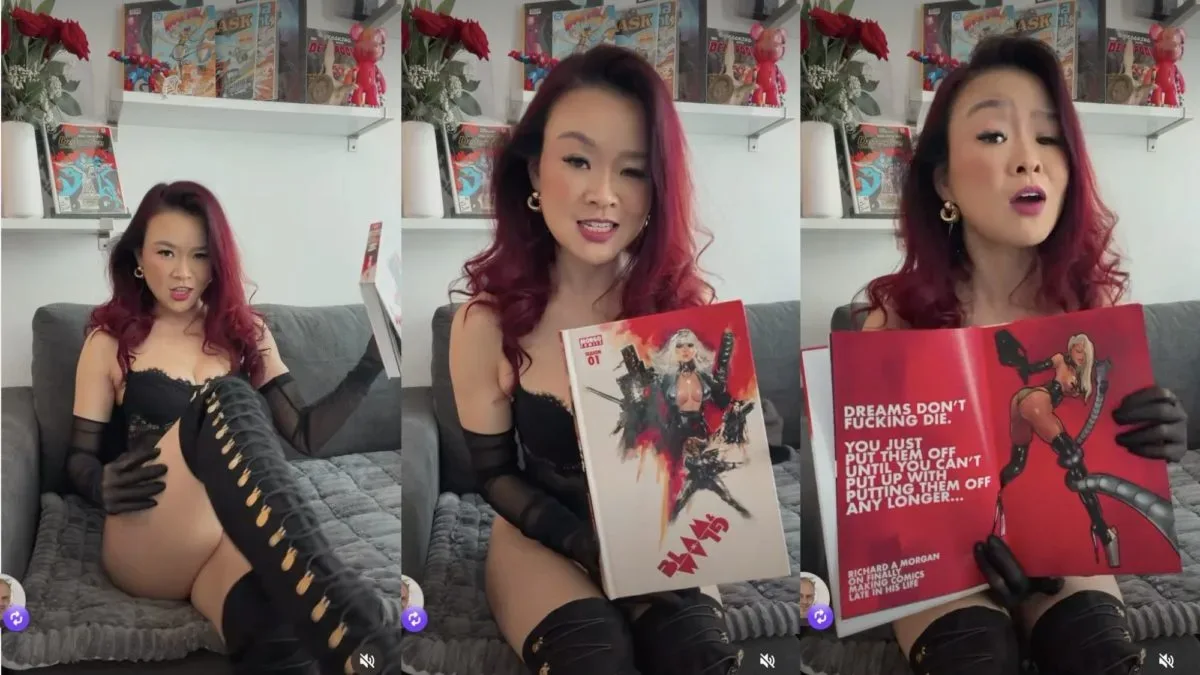
Richard Morgan’s Blam & Glam is pressing deeper into its second season with a crowdfunding campaign built around the series’ first 15 issues. The adult, self-published sci-fi comic combines a painted visual approach with dystopian action in an alternate version of London during 2020 and 2021, where Demonic Mecha have upended society and only a small resistance remains.
The campaign includes standard editions and variant covers for the individual issues, collected editions, and a 3D statue of the central heroine. It also provides a complete PDF of issue one at no cost on the campaign page, giving potential backers a way to sample the comic’s tone, storytelling and artwork before choosing a physical or collected format.
At the time reflected in the campaign details, it had reached $12,674 from 170 backers against a $1,332 target. It launched on October 6, met its funding target in under half an hour, and is scheduled to run through October 27.
A one-person production with a distinctly painted identity
Morgan writes, draws, digitally paints and letters Blam & Glam himself. That makes the book a genuinely creator-driven production rather than a title divided among a conventional creative team. The same artist is responsible for the script, page construction, finished imagery and lettering, which can give an ongoing comic a tightly unified visual and narrative character.
In comics, lettering is more than placing dialogue on a page. It encompasses speech balloons, captions, sound effects and the visual pacing created by where text appears relative to figures, panels and action. Having the writer and artist also handle that stage gives Morgan control over how quickly a reader moves through a sequence and how much space dialogue occupies within the painted compositions.
The artwork is digitally painted on an iPad, an approach that distinguishes the production method from a traditionally inked-and-coloured page while still aiming for a full-colour painted result. Digital painting can refer to artwork made with painting software and a stylus rather than physical paint on paper or board. The important point here is not that the comic is less crafted for being digital; Morgan’s stated process covers the complete creation of each page, from drawing through final lettering.
That all-in-one structure also explains why crowdfunding is central to the project. Rather than presenting the series as a single debut, the campaign is part of an ongoing run supported through multiple successful crowdfunding efforts. Readers are backing a continuing independent comic and, depending on their selected option, may be choosing between separate issues, cover treatments, collected formats and display-oriented extras.
What the story has established so far
Blam & Glam is set in an alternate pandemic-era London. In its science-fiction and horror framing, Demonic Mecha dominate a largely deserted city. The premise moves quickly: the protagonist wakes with no memories, dressed in latex, and finds herself inside a conflict between the machines and the rebels still fighting against them.
An amnesiac protagonist is a useful device for this kind of dystopian setting because the lead character’s uncertainty can align with the reader’s. Questions about who she is, what happened to London and how the surviving factions operate can emerge as the plot advances rather than needing to be fully explained before the action begins. Here, the memory loss is paired with a deliberately heightened adult sexploitation aesthetic and a catastrophic sci-fi world.
Sexploitation, in this context, describes an adult-oriented genre mode that foregrounds sexualized imagery alongside sensational action, horror or exploitation-film influences. It is a descriptor of the comic’s stated presentation, not an indication that the series is designed for all ages. Prospective readers should take the adult framing seriously, especially when using the issue-one PDF to judge whether its blend of imagery, violence, satire and sci-fi is a fit for them.
The first eight issues comprise season one. Season two continues from there and is described as widening the chaos while revealing more about the setting. The current issue range, 1 through 15, therefore offers both an entry point for newcomers and a means for existing followers to continue beyond the original eight-issue arc.
Campaign options: issues, collections, variants and a statue
The campaign’s scope is notable because it serves several different kinds of comic buyer without changing the core project. Single issues suit readers who want the serialized experience. Collected editions are aimed at those who prefer to read a larger portion of the story in one format. Variant covers offer alternate cover art for collectors who value distinct editions of the same issue.
A variant cover is an alternate cover version attached to the same comic issue; it does not inherently mean the interior story differs. Buyers should distinguish the cover format from the reading order of the series. Someone interested chiefly in the narrative can focus on obtaining the relevant issues or collection, while someone building a display or cover-art collection may be more interested in the variants.
For the first time, the campaign also includes a 3D statue of the heroine, derived from one of Morgan’s red-cover images. That addition extends Blam & Glam beyond printed comics into a physical display collectible. It is specifically worth treating as a separate type of purchase from the reading material: a statue is intended for presentation, while the comics and collections deliver the serial story itself.
Physical backers have also received stretch-goal additions including standees and guest-art prints. Stretch goals are extra rewards or upgrades unlocked when a crowdfunding campaign reaches defined milestones beyond its initial funding threshold. They can make a campaign’s package more elaborate, but readers should still look at the campaign’s listed tiers and fulfilment details to understand exactly which items are included with a particular pledge.
One guest-art print comes from Joe Paquette. The project has also received an Instagram recommendation from comics journalist Tiffany Leigh. These additions help position the campaign within an independent-comics audience, but the clearest way to evaluate the book remains its available first-issue PDF and the creator’s own sample material.
Why the free first issue matters
The free full PDF is particularly useful for a book with such a specific combination of elements. Blam & Glam is not presented as a broadly neutral superhero or all-ages adventure: it is an adult dystopian sci-fi action comic with a painted style, satire, horror-inflected machines and an intentionally provocative visual identity. A digital preview lets readers assess whether those elements work together for them before they commit to multiple issues, a collection or the statue.
It can also help newcomers determine how they want to read the series. Those who enjoy the first issue may decide that individual issues are the preferred route, while readers who would rather wait for a longer uninterrupted run can look to the collected options. Existing readers, meanwhile, have a route to the later material as the story moves beyond season one.
Independent genre projects often live or die on whether their identity is immediately legible. Morgan’s premise is unusually direct: a memory-lost heroine, a ravaged alternative London, Demonic Mecha, resistance fighters and digitally painted pages created by one person. The campaign does not need to disguise what sort of comic it is, and the issue-one PDF turns that clarity into a practical try-before-backing option.
What this continuation means for the series
The move from issues 1-8 to a campaign spanning issues 1-15 gives Blam & Glam a larger on-ramp than a season-two launch aimed only at established readers. It recognizes that independent series need to accommodate both audiences: people following every campaign and people discovering the title after its opening arc has already concluded.
It also reflects the expansion of Morgan’s world from its basic survival setup into a story that can reveal more of the forces controlling London and the circumstances surrounding its lead. Season two is not being framed merely as more combat with the Demonic Mecha; it is also positioned as a gradual uncovering of the world behind the initial chaos.
For readers drawn to self-contained creative voices in science fiction, Morgan’s extensive role across the book is central to the appeal. And for anyone whose interest begins with the setting rather than the comic format itself, Joking Joystick has also covered another very different darkly comic deep-space premise in Space Savory’s diner-sim trip through deep space.
With the campaign already funded and set to continue until October 27, the immediate decision for prospective backers is less about whether the project crosses its initial line and more about which format suits them: digital sampling first, serialized comics, collected editions, alternate covers, or the new display statue.