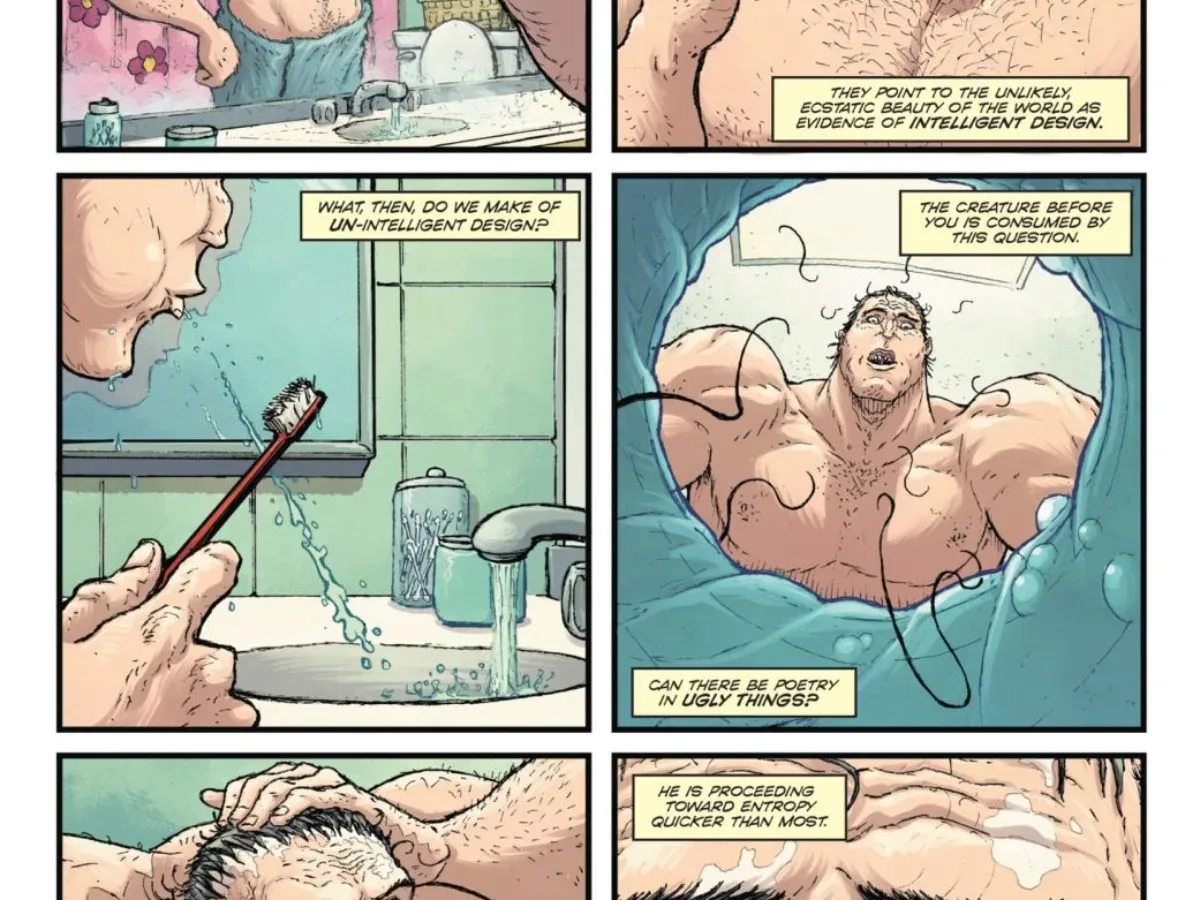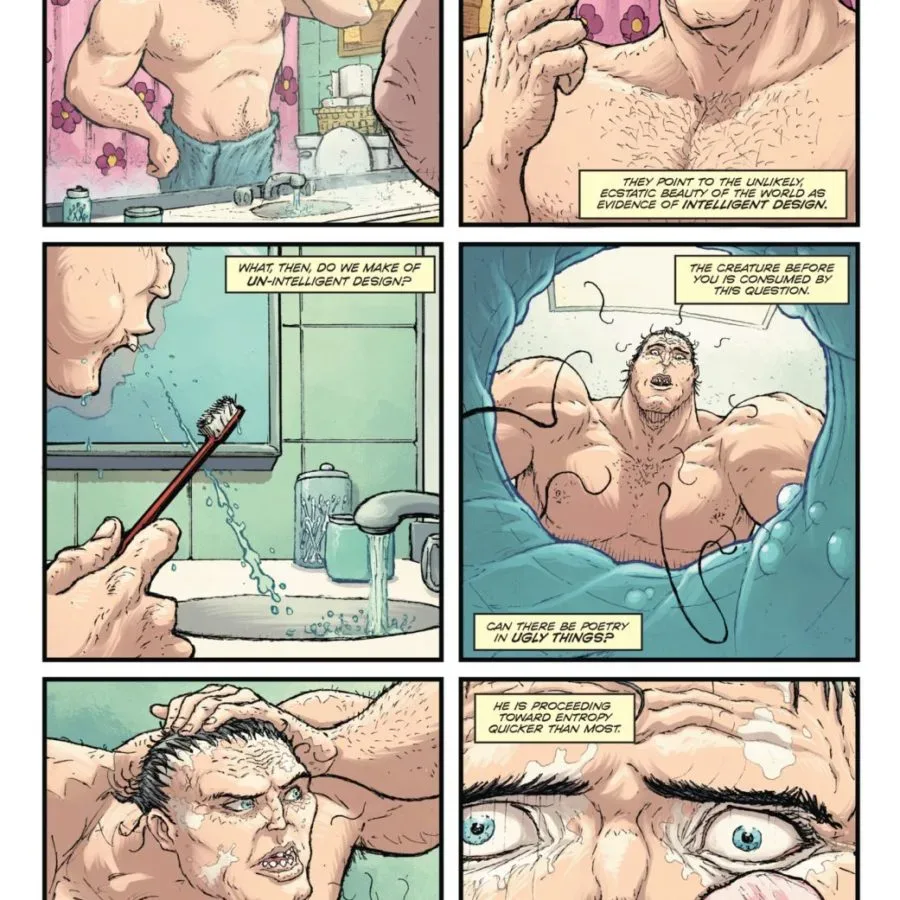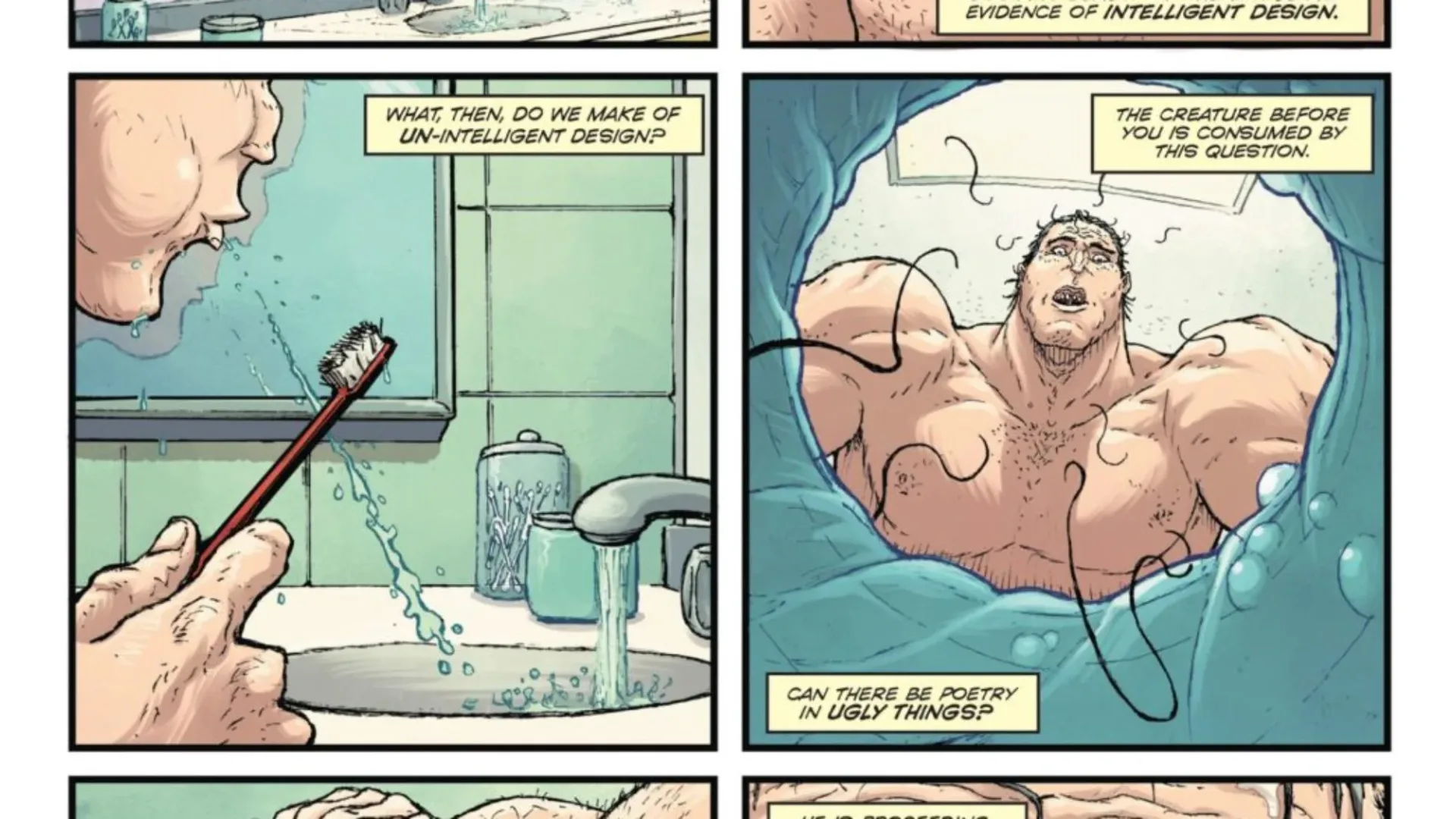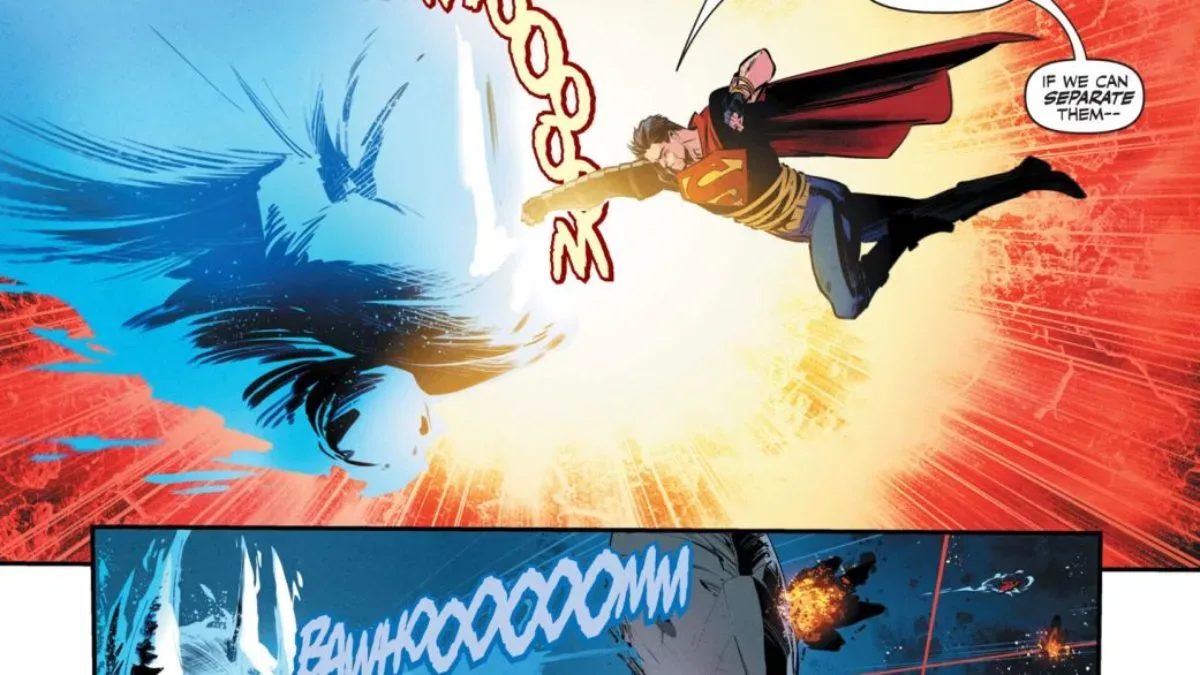
Bizarro: Year None #3 is scheduled to arrive in comic shops on September 30, 2026, continuing DC Comics’ stated official origin story for Superman’s distorted counterpart. The new issue places Jimmy Olsen and Perry White on Bizarro World, where the familiar joke of everything being reversed is presented as more than a collection of odd phrases and contrary behavior.
The issue’s solicitation frames the planet as a place in which madness may have an author. Jimmy and Perry are still trying to adjust to their surroundings when they discover that Bizarro World’s logic is not simply a mirror image of Earth’s. Something more sinister appears to be operating underneath it, with its citizens seemingly treated as disposable “drafts” in a cycle of life, death, and reworking.
That is an unusually unsettling premise for a character and setting often associated with absurdity. The core appeal of Bizarro stories has long been contradiction: praise can sound like an insult, destruction can be welcomed, and statements are constructed to mean the reverse of what readers expect. Here, that inversion is being used to suggest vulnerability rather than merely chaos.
A Bizarro World mystery, not just a world of opposites
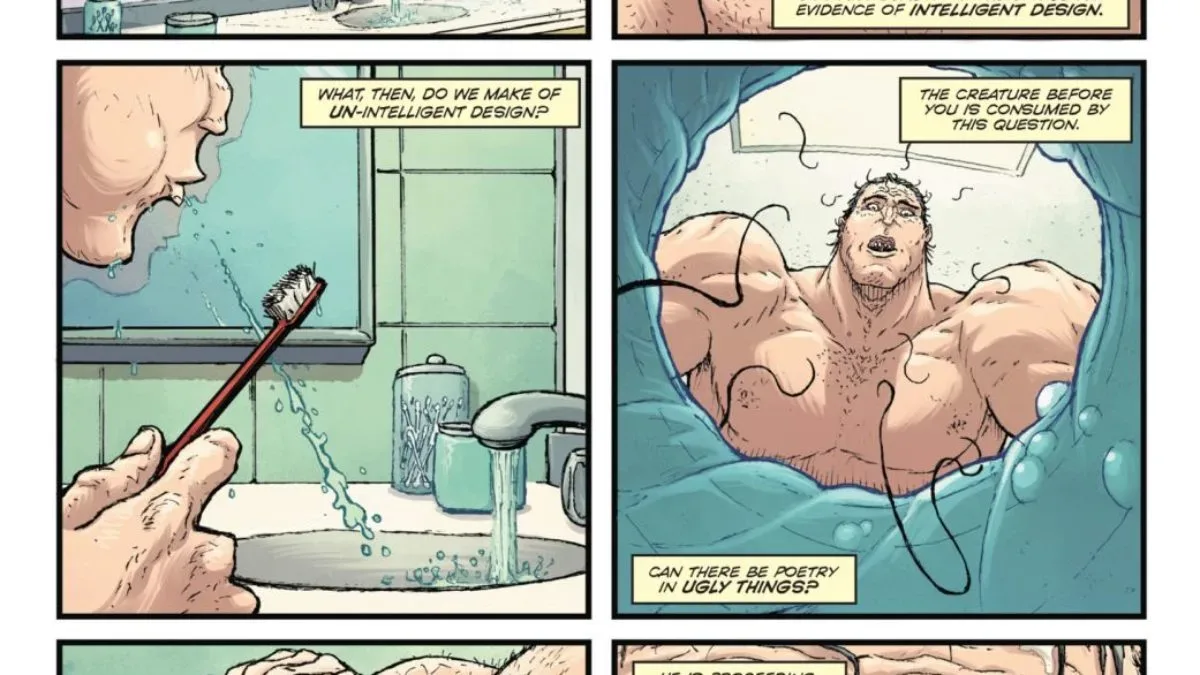
The official synopsis gives the issue the banner “Un-Intelligent Design,” a phrase that captures its central tension. On the surface, Bizarro World is an environment of incorrectness and backwards reactions. But the description asks readers to consider whether its disorder is actually designed—or at least controlled—by an unseen force.
“As Jimmy and Perry adjust to life on Bizarro World, this backwards planet of opposites reveals itself to be more than a mirror reflection… there’s something sinister in the madness.”
That distinction matters. A mirror reflection implies an equal and opposite world, one that is strange but fundamentally legible. The solicitation instead proposes a system that can discard and remake people. In story terms, the phrase “draft to be tossed away and re-worked” evokes repetition, replacement, and a lack of individual agency. It also turns the usual Bizarro gag inside out: if the citizens’ behavior is wrong because they are made wrong, their apparent enthusiasm for calamity may not be freely chosen at all.
The available material does not identify who or what is responsible, nor does it explain the mechanics of this life-and-death loop. Readers should therefore treat the idea of a hidden architect as an implication of the setup, rather than a confirmed plot reveal. Still, it establishes a strong thematic direction for the third issue: Bizarro World may be a place where the rules themselves have become the threat.
Why Jimmy Olsen and Perry White are useful guides
Jimmy and Perry’s presence offers a practical way into a setting built on miscommunication. Neither character is described in the solicitation as having Bizarro’s warped perspective, so both can function as outsiders encountering rules that do not make emotional or social sense.
Jimmy Olsen is positioned in the premise alongside Perry White rather than Superman, which helps make the issue feel oriented around discovery and adjustment. Perry, meanwhile, brings an adult authority figure into a world that undermines ordinary authority at every turn. Their challenge is not framed as a straightforward battle. It is learning how to read a society where a seemingly obvious response—helping someone in danger, for instance—could be rejected or misunderstood.
That makes the darker wrinkle in the synopsis more effective. If Bizarro World’s inhabitants react to disaster in reversed ways, Jimmy and Perry may initially interpret that reaction as part of the planet’s culture. The suggestion that everyone may be treated as a plaything changes the question from “Why are these people acting backwards?” to “Are they able to act any other way?”
It is a premise with room for both comedy and discomfort. The official copy still uses deliberately inverted Bizarro-style phrasing, including a declaration that this is an installment readers “need to miss.” But its description of a rinse-and-repeat mortality cycle lends that comic language a harsher edge.
What “Un-Intelligent Design” appears to mean
The title phrase is a pun, but it also establishes a useful contrast. Design means intentional arrangement: a system where elements are made to serve a purpose. Un-intelligent, in this context, signals something defective, irrational, or cruel rather than an orderly plan. Together, the words point toward a world that may have been shaped with intent but whose outcomes are nonsensical and destructive.
The solicitation’s imagery reinforces that contradiction. Bizarro World is described as a “planet of opposites,” yet the emerging concern is not merely that it reverses values. Its people could be repeatedly revised, like failed versions of something someone else is trying to perfect. A draft is provisional; it can be changed without regard for its previous form. Applied to people, the metaphor suggests that their lives are being denied permanence and value.
This is where Bizarro’s familiar language becomes narratively useful. Bizarro speech is often associated with negation and reversal, but the preview’s phrasing can also convey a world in which plain meaning is unreliable. If language cannot be trusted, then consent, fear, comfort, and danger become harder for visitors to recognize. The premise does not prove that every Bizarro statement masks an opposite feeling, but it gives Jimmy and Perry reason to question what they see.
The creative team and editions
Kevin Smith and Eric Carrasco are credited as writers on Bizarro: Year None #3. Nick Pitarra is credited for both interior art and the main cover.
The issue has a listed standard retail price of $4.99. Two additional covers are listed at $5.99: a Chris Burnham cover and an Ibrahim Moustafa cover. The listed ordering codes are 0726DC0195 for the main listing, 0726DC0196 for the Chris Burnham cover, and 0726DC0197 for the Ibrahim Moustafa cover.
- Title: Bizarro: Year None #3
- Publisher: DC Comics
- Release date: September 30, 2026
- Writers: Kevin Smith and Eric Carrasco
- Artist and main cover artist: Nick Pitarra
- Standard cover price: $4.99
- Variant cover price: $5.99
What readers can reasonably expect from issue #3
Based on the supplied solicitation, readers can expect Jimmy and Perry’s adjustment to Bizarro World to remain central, while the series deepens its origin-story angle through the planet’s disturbing social order. The issue is clearly positioning Bizarro World as more than a comedic inversion of Metropolis or Earth. Its systems may have an internal cruelty that the characters need to expose or survive.
What cannot yet be established is how the series will explain that force, whether it is a person, an institution, a recurring phenomenon, or something inherent to the setting. Likewise, the synopsis does not specify Bizarro’s exact role in this installment beyond the issue’s place in his origin story. Those are questions for the comic itself rather than details confirmed by the listing.
For DC readers following the broader Superman corner of comics, the premise also arrives alongside other family-focused material, including Adventures of Superman: Book of El #12. The two books are not presented as directly connected here, but each underscores how many directions Superman-related stories can take: cosmic family drama in one case, and an increasingly unnerving examination of his inverted reflection in the other.
Bizarro: Year None #3 therefore has a concise but intriguing promise. The backwards language remains part of the fun, but the story’s immediate concern is more serious: what happens when a world built on opposites treats its people as things that can be erased and rewritten?