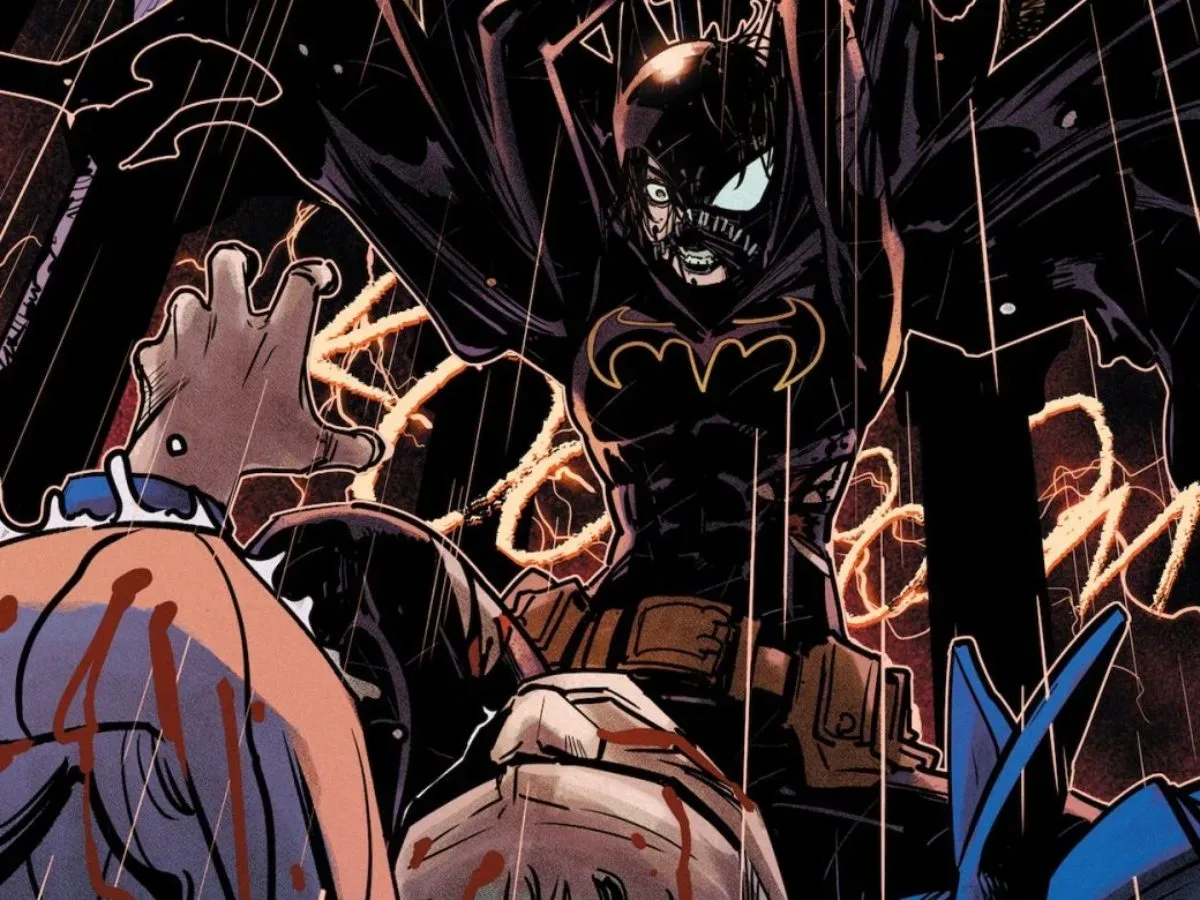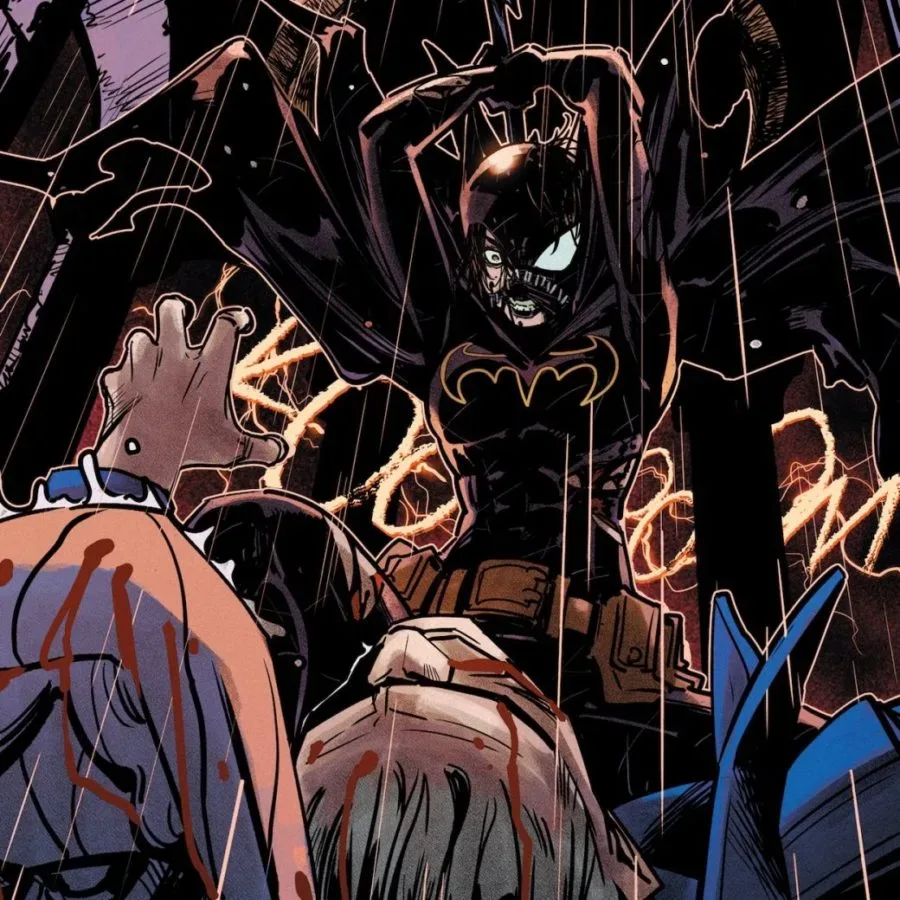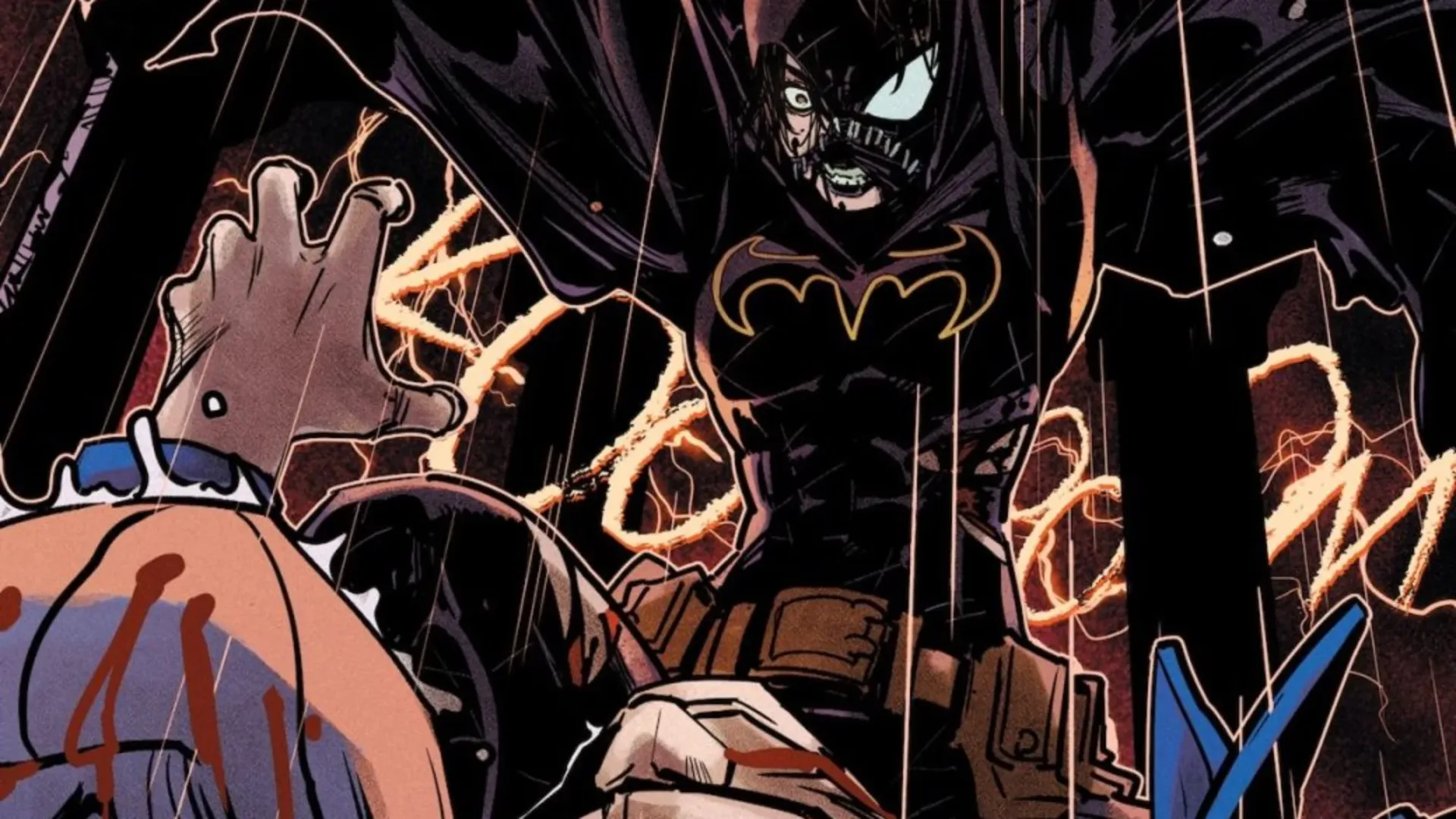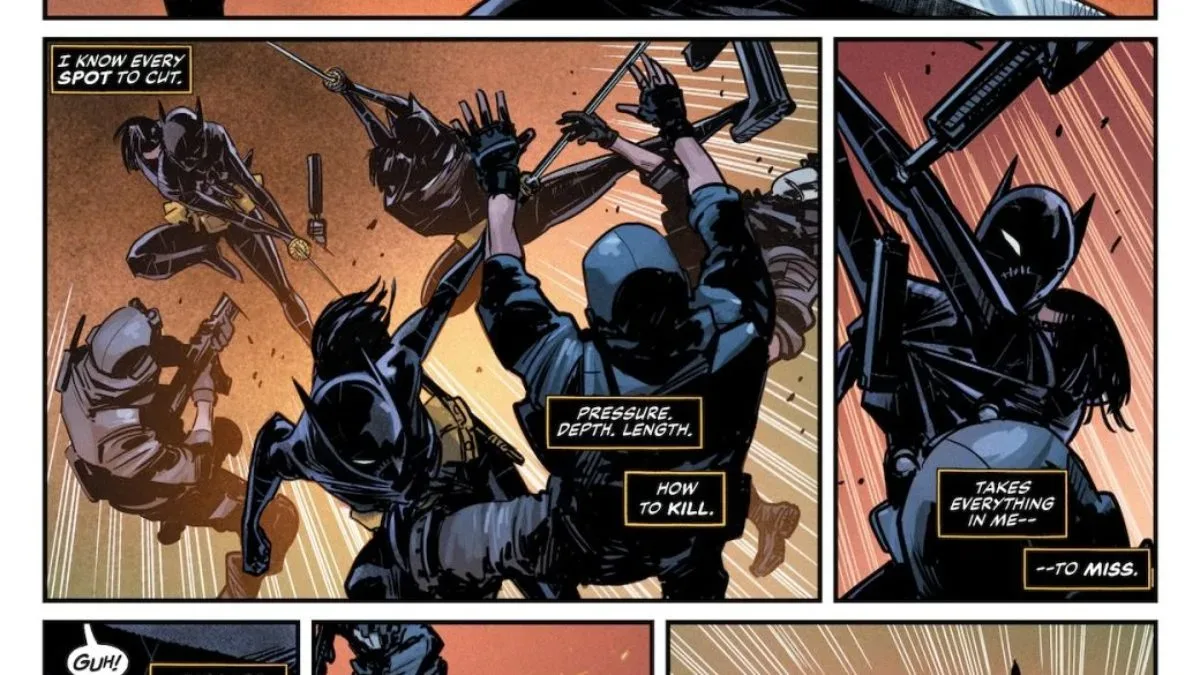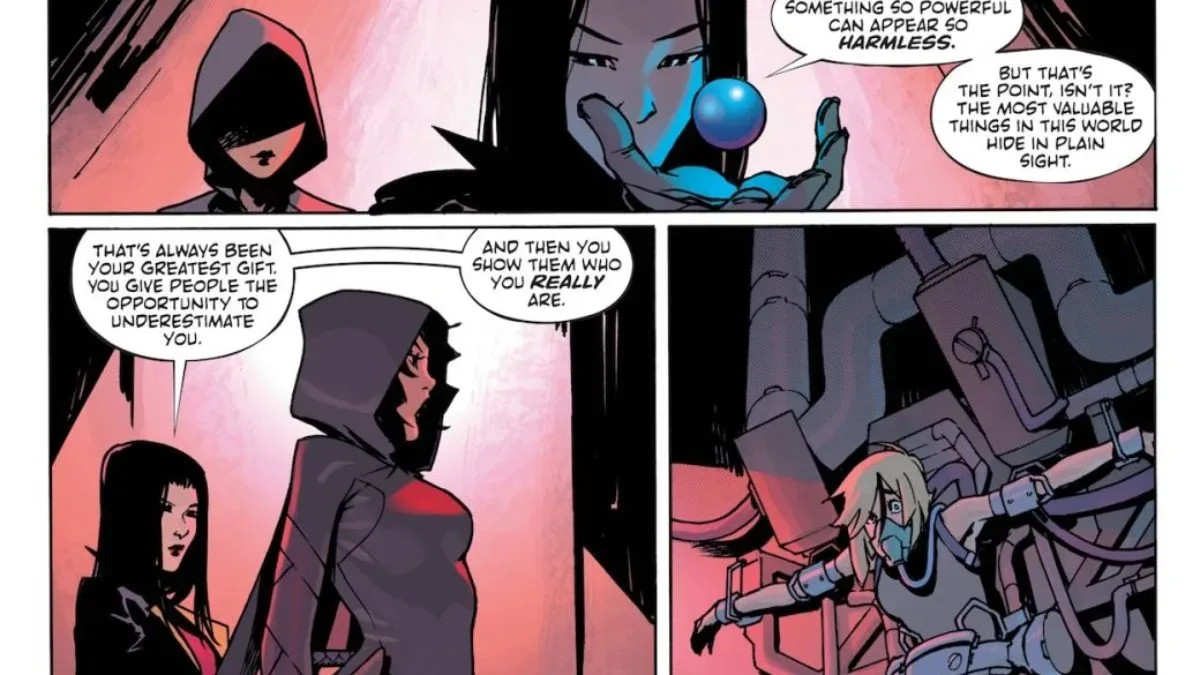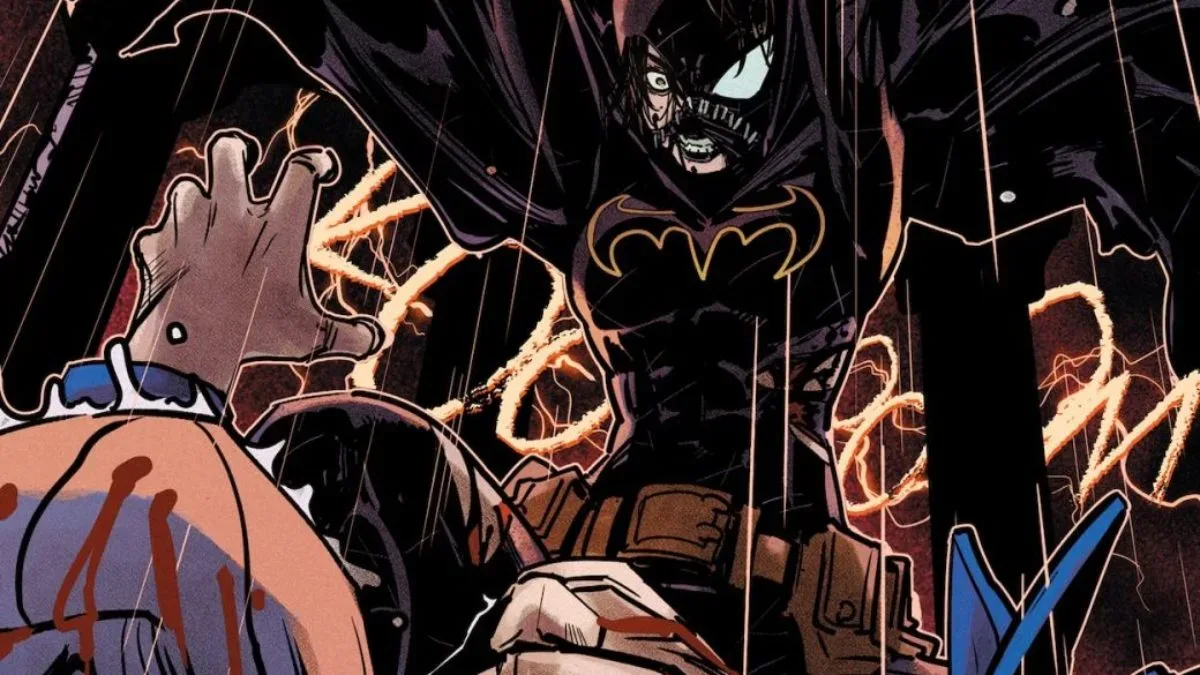
Batgirl #25 is designed as a celebration that may not stay celebratory for long. The oversized issue marks the 25th installment of Cassandra Cain’s current ongoing series, but its central hook is the return of David Cain—Cassandra’s father and a figure whose presence immediately turns a party premise into a personal confrontation.
The issue is scheduled for shops on November 4, 2026, with Tate Brombal writing and Takeshi Miyazawa and Damion Scott credited on art. David Talaski provides the main cover. A special backup story brings Scott back to a character he co-created, adding an extra layer of significance to an issue already built around a numerical milestone.
A milestone with an intentionally unstable premise
Comic-book milestone issues often make room for a larger format, a special guest creator, a major return, or all three. Batgirl #25 uses that familiar structure, but the available setup makes clear that the festivities are not meant to be calm. Cassandra is celebrating the series reaching issue 25, not a birthday, and David Cain’s reappearance is positioned as the event that disrupts the occasion.
That framing matters because it puts the emotional focus on Cassandra rather than treating the issue number as a detached publishing achievement. A returning family member can make a story feel consequential without requiring readers to assume that every aspect of the series is being reset. Here, the stakes suggested by the premise are personal: a celebration becomes vulnerable precisely because David Cain is part of Cassandra’s history.
Readers should also distinguish between what has been confirmed and what remains unknown. The issue description confirms the oversized format, David Cain’s return, the milestone celebration, and Scott’s backup. It does not disclose the full plot, explain David’s goals, or reveal where the encounter leaves Cassandra. Those unanswered questions are the primary reason the solicitation works as a tease rather than a complete synopsis.
Why David Cain’s return carries weight
David Cain is identified in the issue setup as Cassandra’s father and as an assassin. That is enough context to explain why his arrival is not presented as a routine family visit. In superhero storytelling, a parent’s return can function as a source of history, conflict and pressure all at once; when that parent is associated with assassination, the threat is not merely emotional.
The premise is especially direct in its contrast. Cake, candles and an issue celebration evoke recognition and community. David Cain introduces tension, unsettled history and the prospect of violence. The story appears to be using that collision deliberately: the happier the starting image, the more intrusive his entrance can feel.
Analysis: This is a practical way for a serialized comic to make a landmark issue inviting for two audiences. Continuing readers have a character-driven reason to see what David’s return means for Cassandra. Curious newcomers can understand the basic dramatic equation immediately: Batgirl’s milestone is interrupted by her dangerous father. That does not mean the issue will be a full entry point—the description does not make that claim—but it gives the installment a clear premise without needing a lengthy explanation before the first page.
Damion Scott’s backup is more than a guest credit
Damion Scott’s participation is one of the issue’s most notable details. He is described as a co-creator of Cassandra Cain, and his return for a backup story connects the anniversary-style format to the character’s creative roots.
A backup story is a shorter comic story printed alongside the main feature in the same issue. Its role varies: it can tell a self-contained vignette, broaden a theme from the lead story, revisit another corner of a character’s world, or provide a distinct visual and narrative perspective. The available information does not specify which approach Scott’s contribution takes, so readers should not presume that it is a flashback, an origin retelling or a direct continuation of the main plot.
Still, Scott’s involvement makes the oversized page count feel purposeful. Rather than simply enlarging the main installment, the format creates room for another creative voice closely linked to Cassandra’s history. For an issue centered on number 25, that pairing of the present series team with a co-creator is a sensible way to recognize the character as well as the current run.
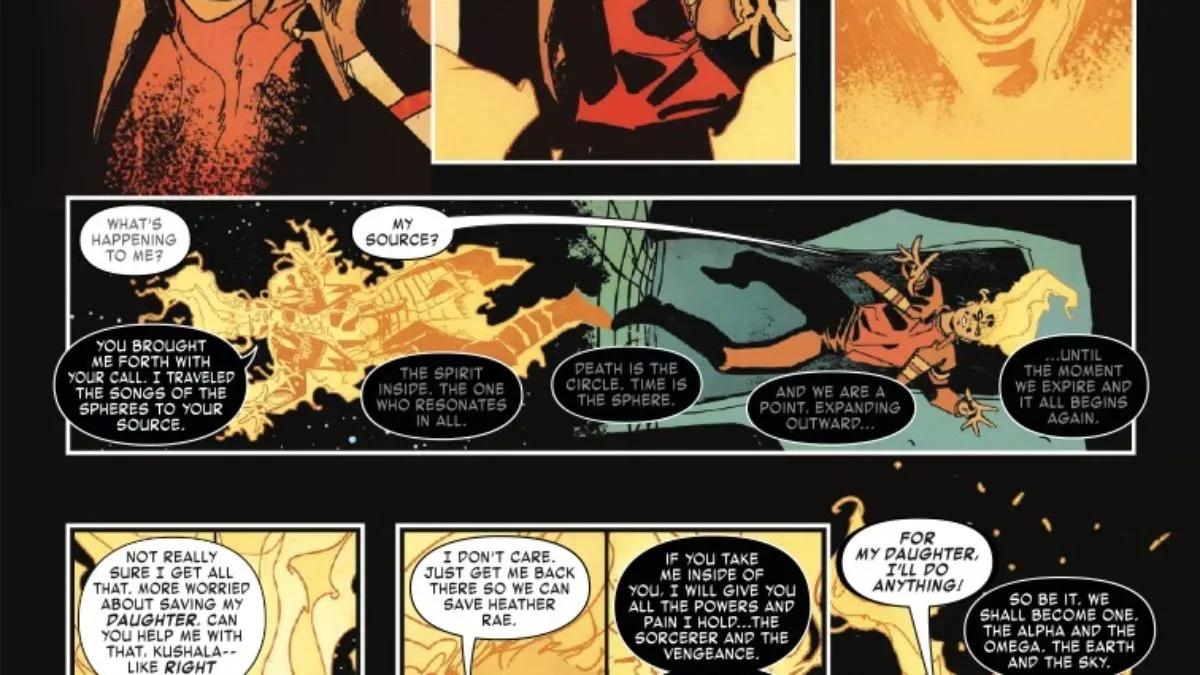
Anyone following other newly printed comic projects can also find a different character-focused release in Ghost Rider: Kushala #1, though it is separate from DC’s Batgirl series and has no stated story connection to this issue.
What the credits and covers tell readers
The credited creative lineup is:
- Writer: Tate Brombal
- Artists: Takeshi Miyazawa and Damion Scott
- Main cover artist: David Talaski
The standard edition has a suggested retail price of $4.99. Three named cover variants are also listed: a Mike Choi cover at $5.99, a Nogi San cover at $5.99, and a David Talaski cover at $7.99. The differing prices are useful purchasing information, but they do not by themselves establish different story content. Covers can be alternate editions of the same issue; nothing in the supplied listing says these variants contain exclusive interior material.
For readers who simply want the chapter, the standard $4.99 edition is the clearly identified baseline. Those choosing among the variants may want to check their local shop’s ordering and availability, since the listing establishes the editions and suggested prices but does not promise stock levels at any individual retailer.
What is confirmed for Batgirl #25
- It is the 25th issue of the current Batgirl ongoing series.
- It is an oversized issue.
- It is due in shops November 4, 2026.
- David Cain returns.
- Cassandra Cain’s issue celebration is interrupted by that return.
- Tate Brombal writes the issue.
- Takeshi Miyazawa and Damion Scott are credited on art.
- Scott contributes a special backup story and is a co-creator of Cassandra Cain.
The key question heading into release
The issue’s sales pitch is fundamentally about interruption. Cassandra’s series reaches a landmark, an oversized installment makes space for a special creative reunion, and David Cain arrives to make the moment messy. The unknown is how those elements connect: whether the celebration is simply the setting for a clash, whether the father-daughter conflict dominates the main story, and how Scott’s backup complements the lead feature.
That uncertainty is appropriate for a preview. What is clear is that Batgirl #25 is not treating its milestone as a pause in the series. It is using the occasion to bring Cassandra face to face with a defining family complication while also welcoming back one of the creators most closely associated with her. For a 25th issue, that is a much sharper proposition than a victory lap.