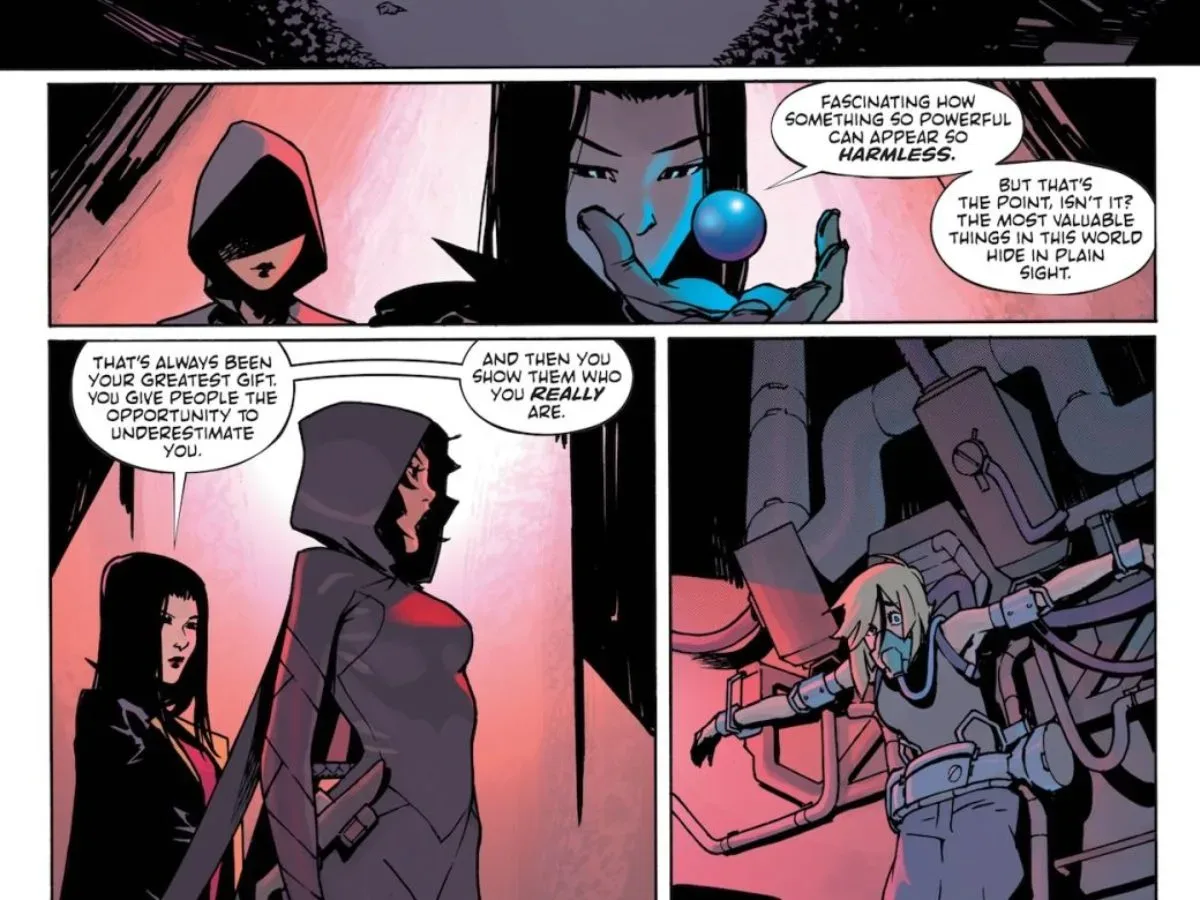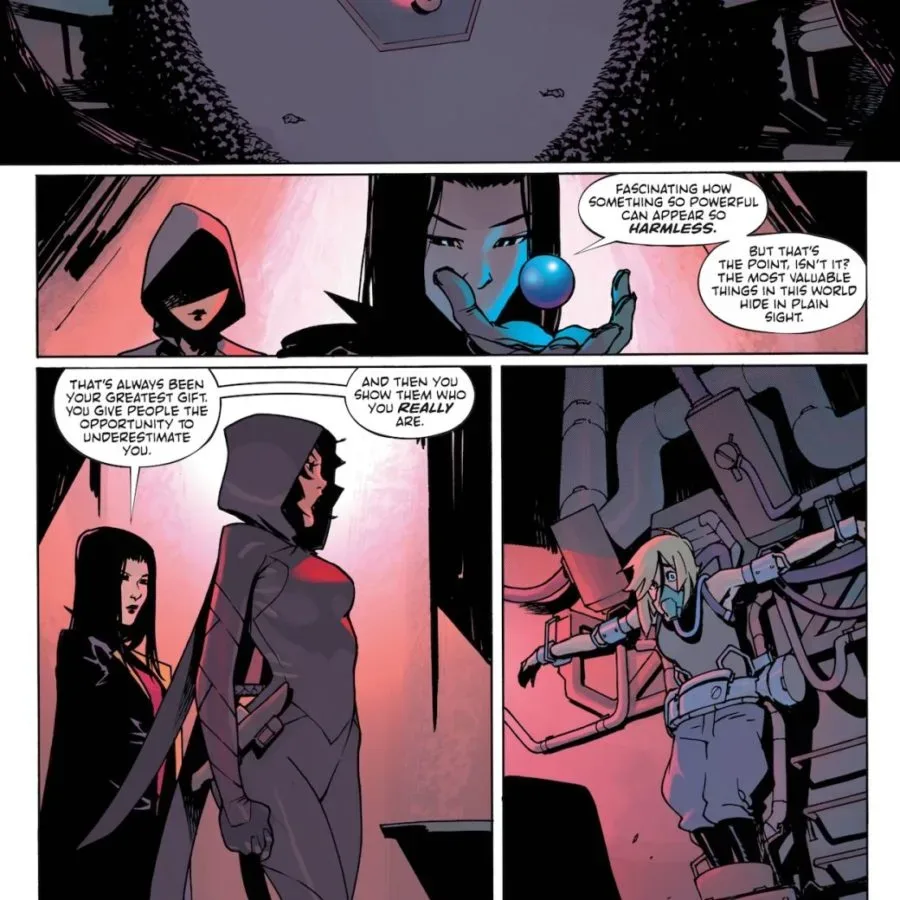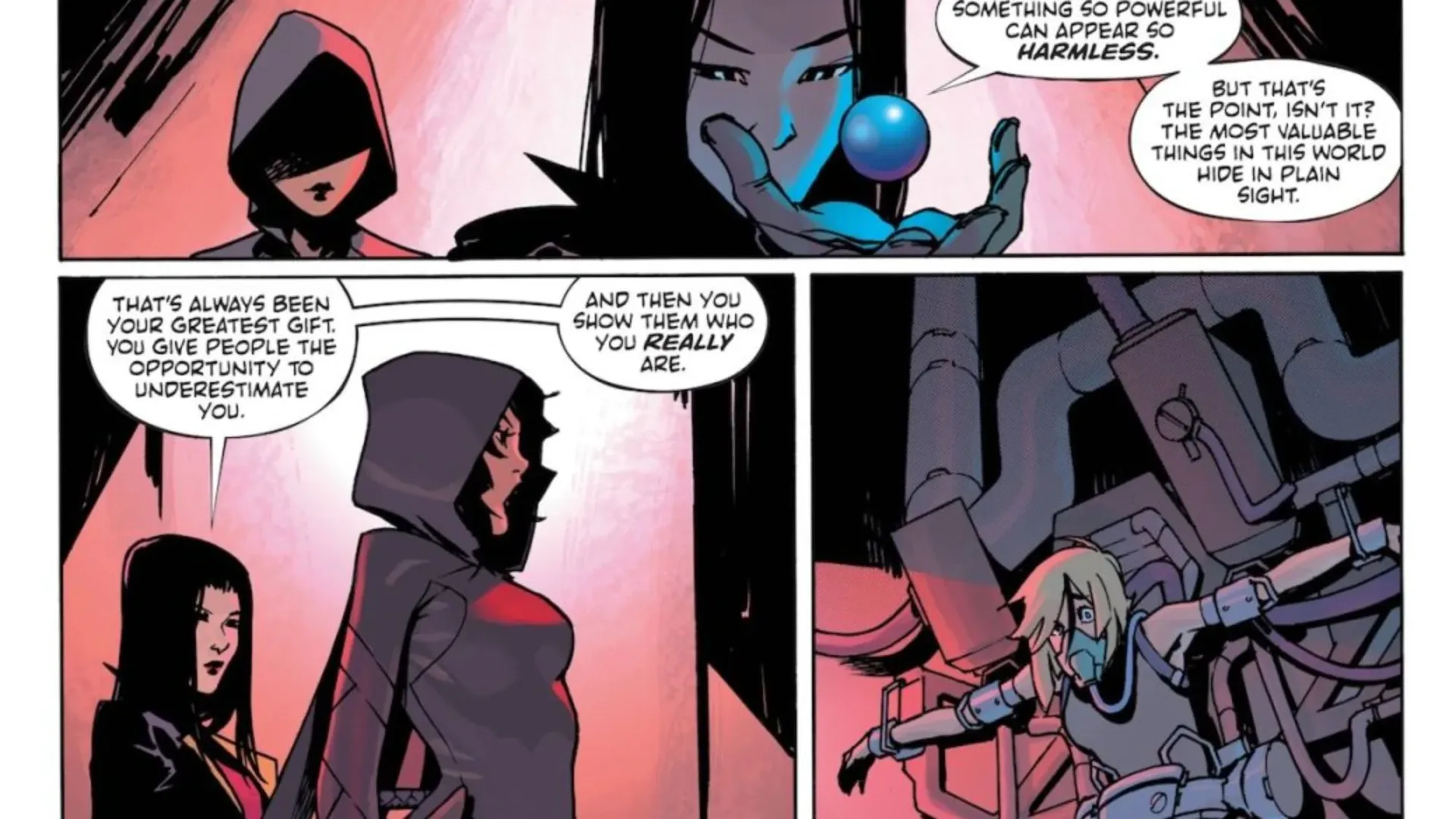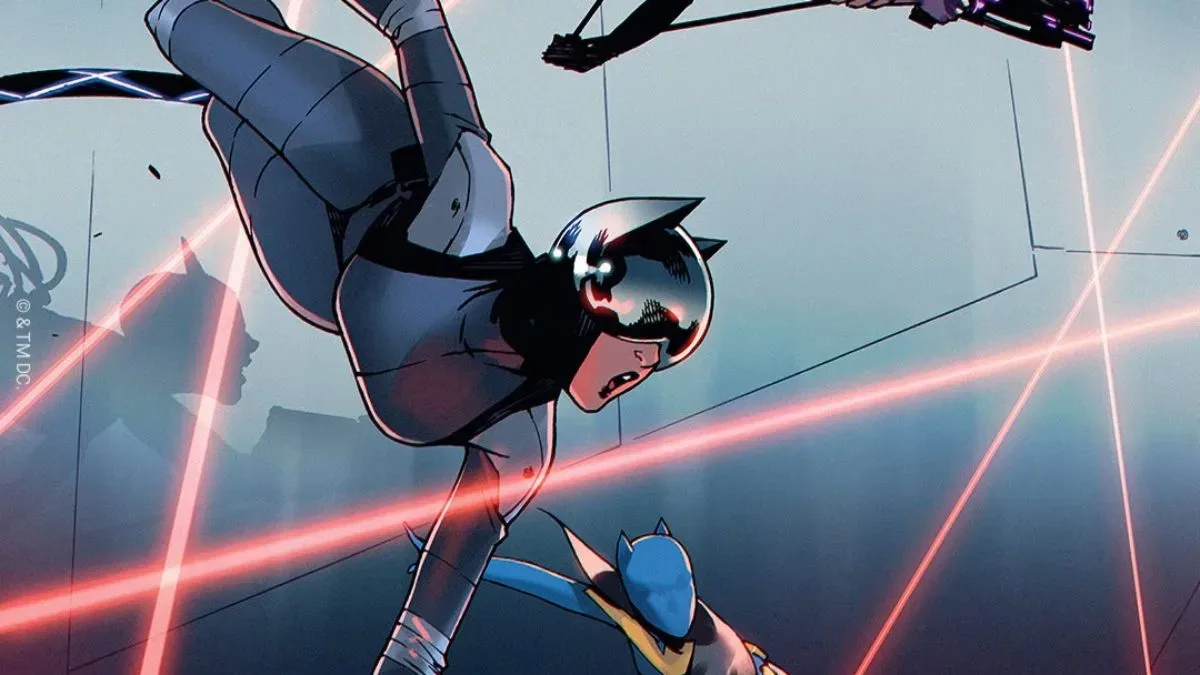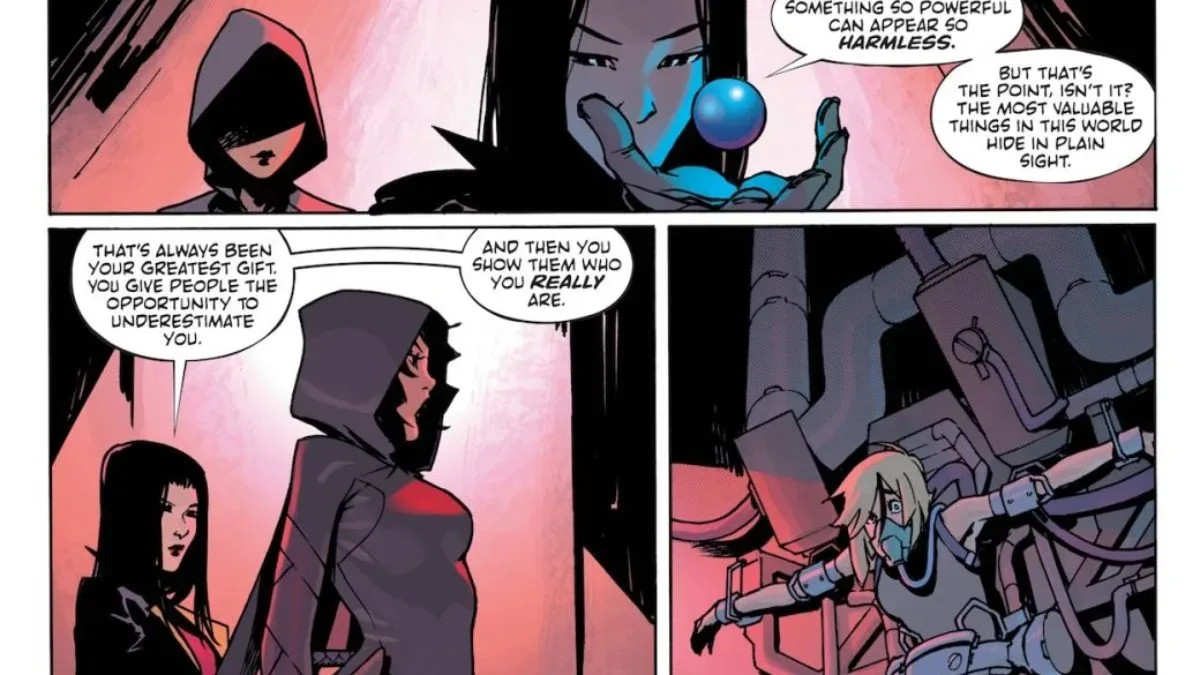
Absolute Catwoman #4 is positioned as a high-pressure heist issue, with Selina Kyle and the Calicos pursuing a machine called the Yarn while Cassandra Cain and the League of Shadows race for the same prize. DC’s issue information lists a November 4, 2026, shop date and a $4.99 suggested retail price for the standard edition.
The immediate premise is deceptively clean: two sides want the Yarn, described as the world’s most powerful supercomputer, and neither has much time to get there first. But the stakes extend beyond a conventional theft. Central City is said to be overrun with horrors, while Selina and the Calicos’ futures are on the line. That puts the issue’s crime-story engine inside a wider threat rather than treating the heist as a detached caper.
A heist with a machine at its center
In comic-book terms, a heist is a story built around obtaining a heavily protected target. The target may be money, information, an artifact, or—as in this case—a piece of advanced technology. Its importance is not merely financial; it creates a reason for rival groups to collide, forces characters to prepare around obstacles, and gives every betrayal or setback a concrete consequence.
The Yarn appears to fill that role in Absolute Catwoman #4. The provided setup does not explain what the supercomputer can do, who made it, or how it connects to the horrors in Central City. Those are meaningful gaps, not details to assume. What is established is that its status as the world’s most powerful supercomputer makes it the object of a contest between Selina’s crew and Cassandra Cain’s League of Shadows.
That distinction matters. A powerful device can be a simple prize in one story and a tool capable of changing the balance of power in another. The solicitation clearly signals that the Yarn matters enormously, but it does not yet define its precise capabilities. Readers looking for answers about its function will need to wait for the issue rather than treating the premise as a full explanation of the technology.
Selina Kyle and the Calicos take on one last job
The issue description calls this Selina and the Calicos’ “one last heist.” That phrasing adds finality to the mission without confirming what comes afterward. It could mean a final operation for this particular arrangement, the culmination of a current arc, or simply a job with consequences large enough to reshape the group. The available material does not settle which interpretation is correct.
What it does make clear is that specialized gear will not be enough. That is a useful signal about the kind of conflict readers can expect: preparation and equipment may be part of the plan, but they will not solve the central problem by themselves. In a heist narrative, this often shifts the emphasis toward judgment, teamwork, loyalty, improvisation, and the cost of competing priorities.
Selina’s placement at the center of the story also puts the series’ criminal-history angle in focus. Preview material reportedly includes scenes of Selina facing trial seven years earlier. The pages appear to be part of a flashback sequence, though the issue information does not explicitly confirm the structure or explain the case. Still, a return to an earlier trial suggests the current race for the Yarn may be framed alongside questions about Selina’s past and the route that led her to this moment.
Cassandra Cain and the League of Shadows are the opposing force
Cassandra Cain is named directly as a rival in the hunt for the Yarn, alongside the League of Shadows. This is more specific than a generic obstacle or anonymous security force: Selina and the Calicos are competing against an organized faction with a named character at its forefront.
There is no need to overstate what that guarantees. The available description does not detail Cassandra’s objectives, her relationship with the League of Shadows, or the methods the organization will use. It does establish a race, however, and races work differently from a straight confrontation. Both sides must make choices with incomplete information, and gaining ground can matter as much as winning a fight. The pressure comes from the possibility that the other team can claim the objective first.
Central City’s reported crisis raises the stakes further. If the city is genuinely being overrun, taking possession of the Yarn may be more than a victory for one crew. It could determine who is equipped to respond—or who gains leverage—while the threat unfolds. That is an interpretation of the setup rather than a confirmed plot answer, but it is the tension the premise is designed to create.
What the preview establishes—and what it leaves open
Previews and solicitations are promotional issue descriptions, not full plot summaries. They are useful for identifying the central conflict, credited creators, release details, and broad tone. They are much less reliable as a map of every reveal, because they are intentionally selective.
- Established: Selina Kyle and the Calicos are trying to find the Yarn before Cassandra Cain and the League of Shadows.
- Established: The Yarn is characterized as an exceptionally powerful supercomputer.
- Established: Central City faces an invasion or overrun involving horrors.
- Established: Selina’s earlier trial, set seven years before the apparent present-day action, appears in the preview material.
- Not yet established: what the Yarn specifically does, what created the Central City threat, and whether Selina’s group reaches the machine first.
Keeping those categories separate is especially worthwhile for a story built around a sought-after technological object. “Supercomputer” is an evocative description, but it is still a description, not a list of powers. Until the comic clarifies the Yarn’s role, readers should be wary of treating it as a confirmed weapon, surveillance system, reality-altering device, or anything else beyond what has been stated.
Creative team and edition details
Absolute Catwoman #4 is written by Scott Snyder and Che Grayson, with Bengal credited for the interior art and main cover. The issue is scheduled for comic shops on November 4, 2026.
The standard edition carries a $4.99 suggested price. Additional listed cover editions by Marcio Takara, Dustin Nguyen, and ISA WORKS are each priced at $5.99. A variant cover is an alternate cover treatment for the same numbered issue; it is not automatically evidence of different story content. Readers choosing between editions should therefore distinguish between the standard narrative purchase and the cover artwork they prefer.
The main appeal here is the collision of several story pressures at once: a supposedly unmatched computer, a city-scale emergency, an organized rival faction, and a past-facing Selina sequence that may provide context for the present-day operation. Whether the issue answers the Yarn’s biggest questions or saves them for the next stage of the arc is unknown, but its central objective is unmistakable: get to the machine before the other side does.
For more entertainment coverage beyond the comics shelf, see our latest pop-culture stories.