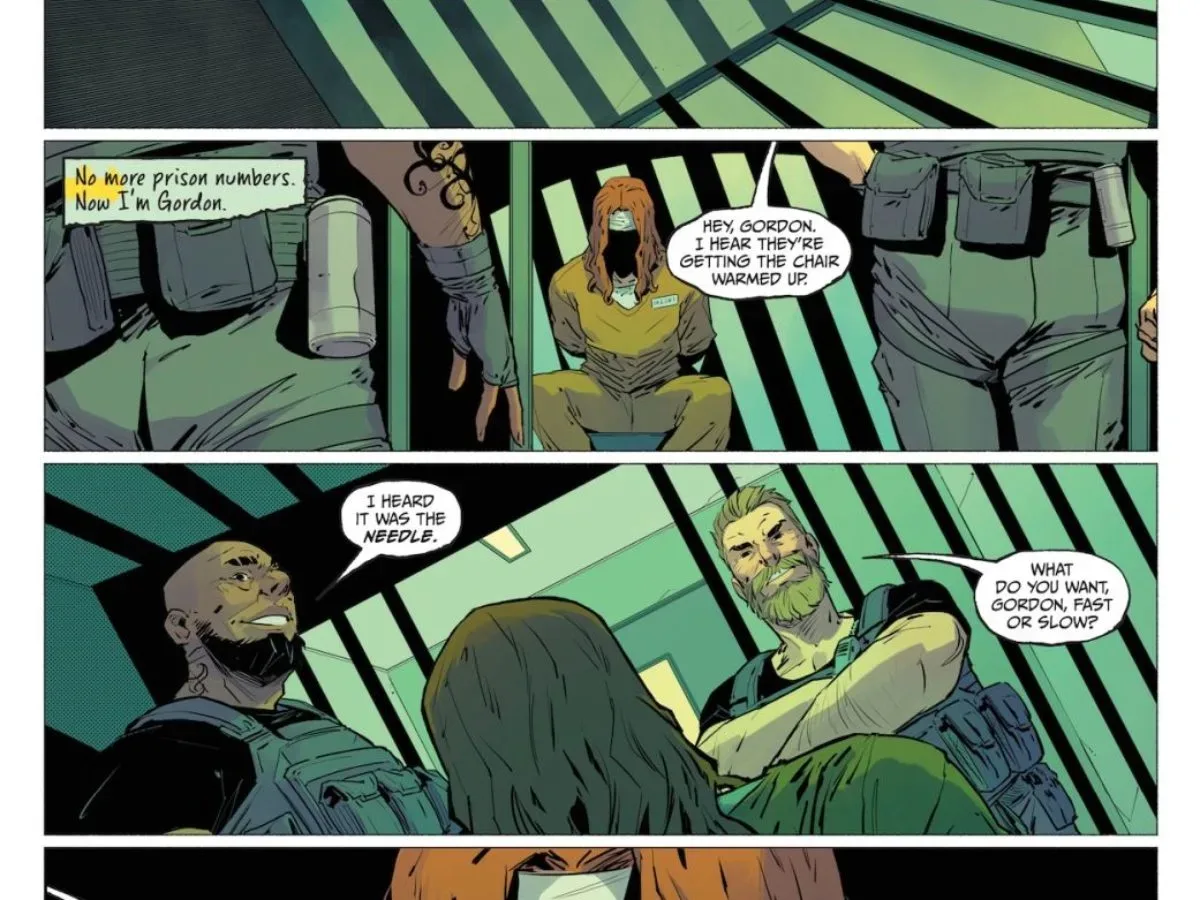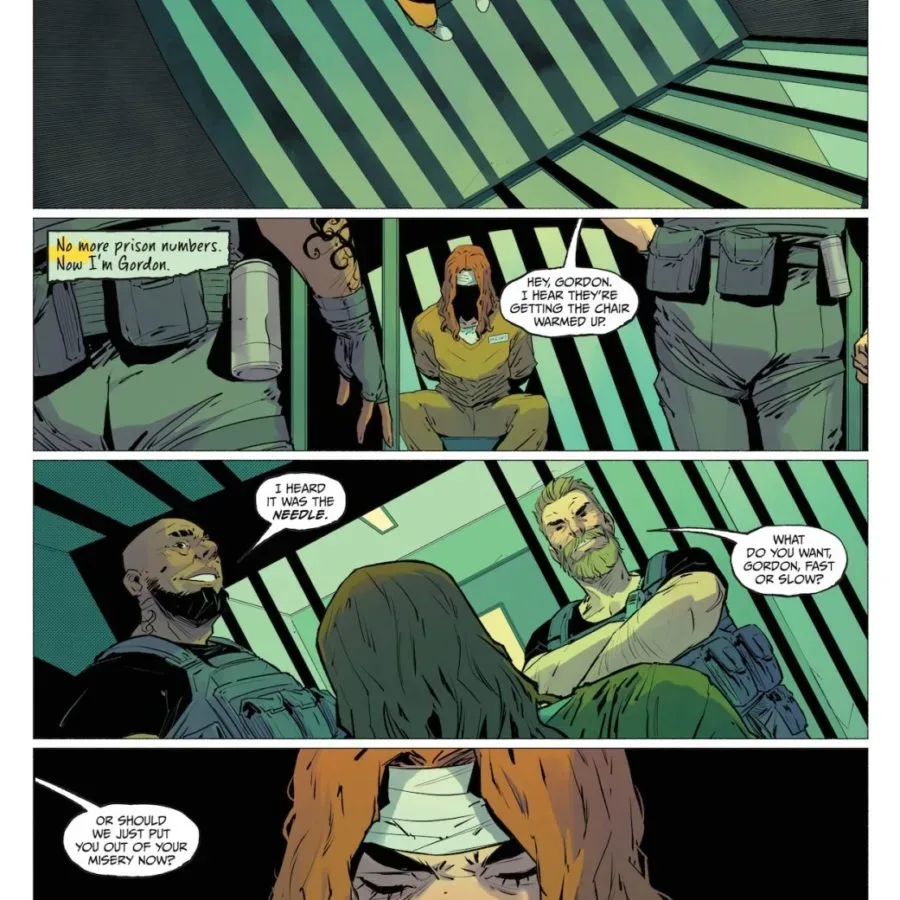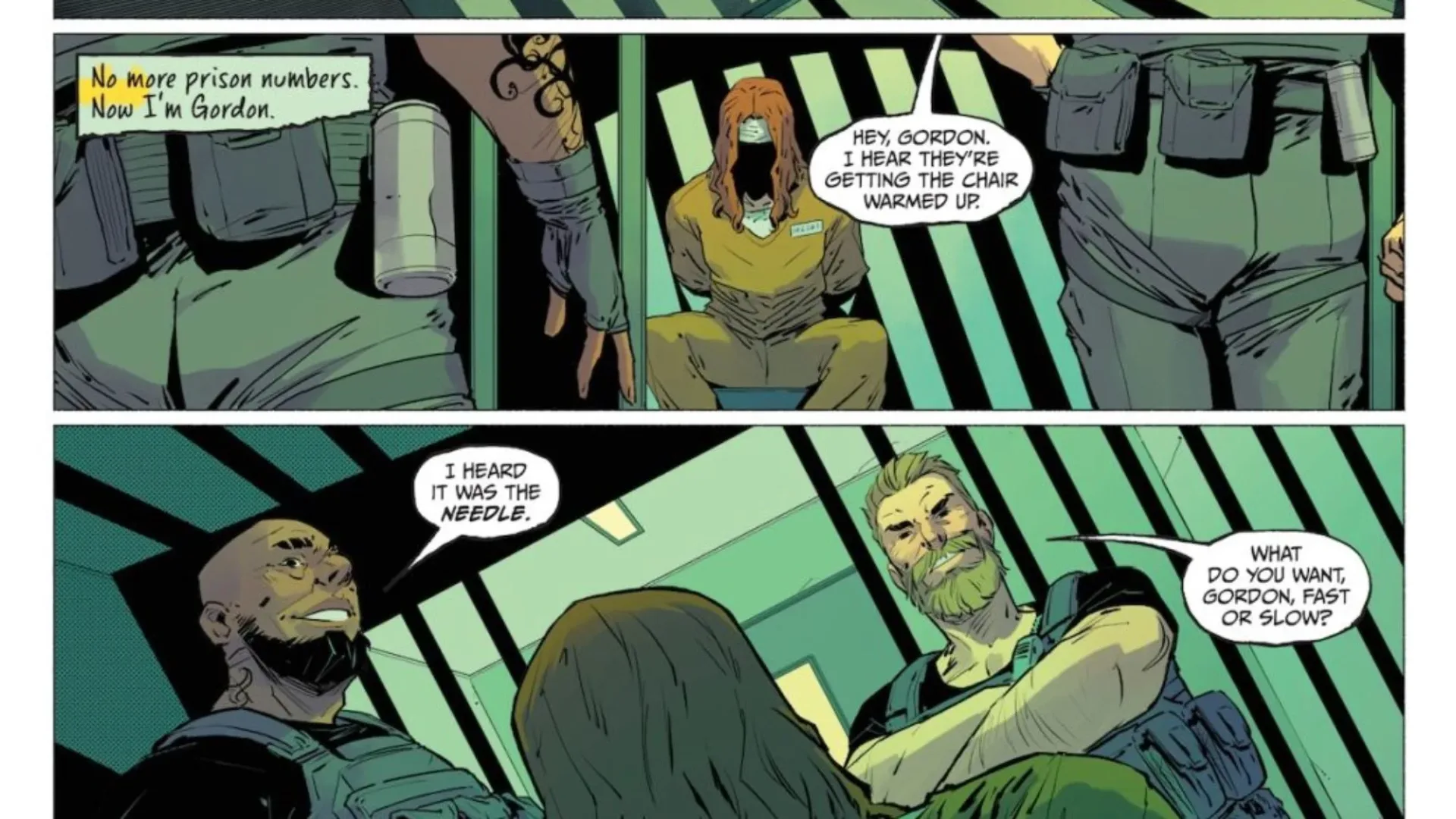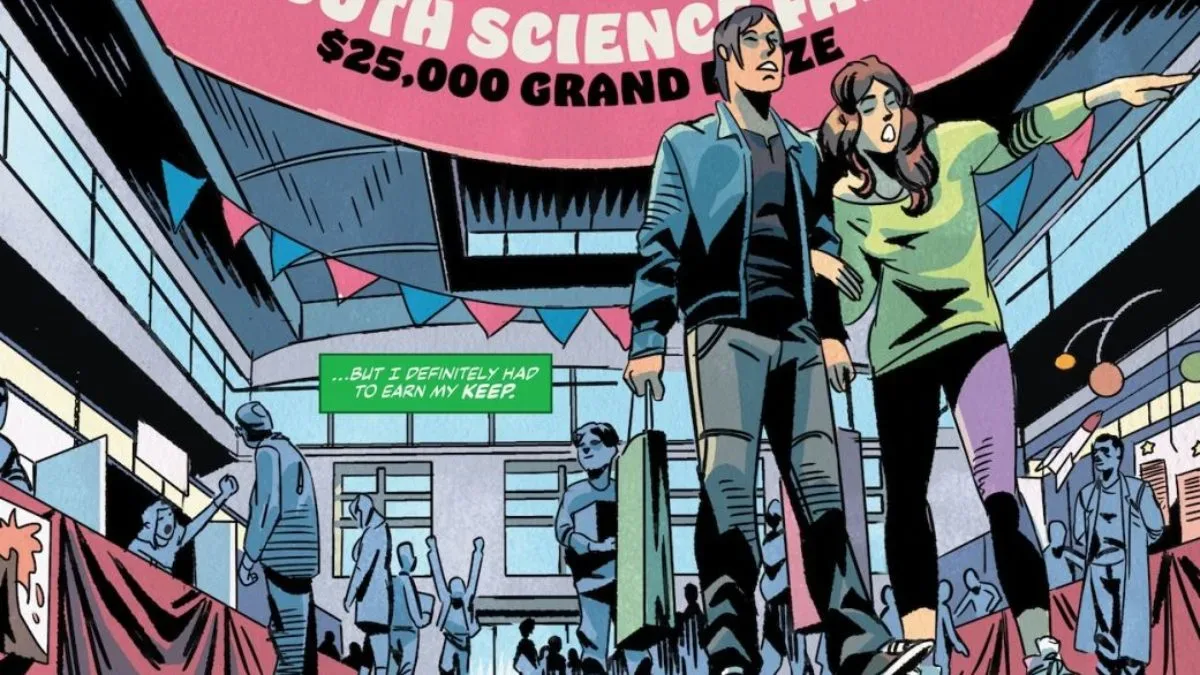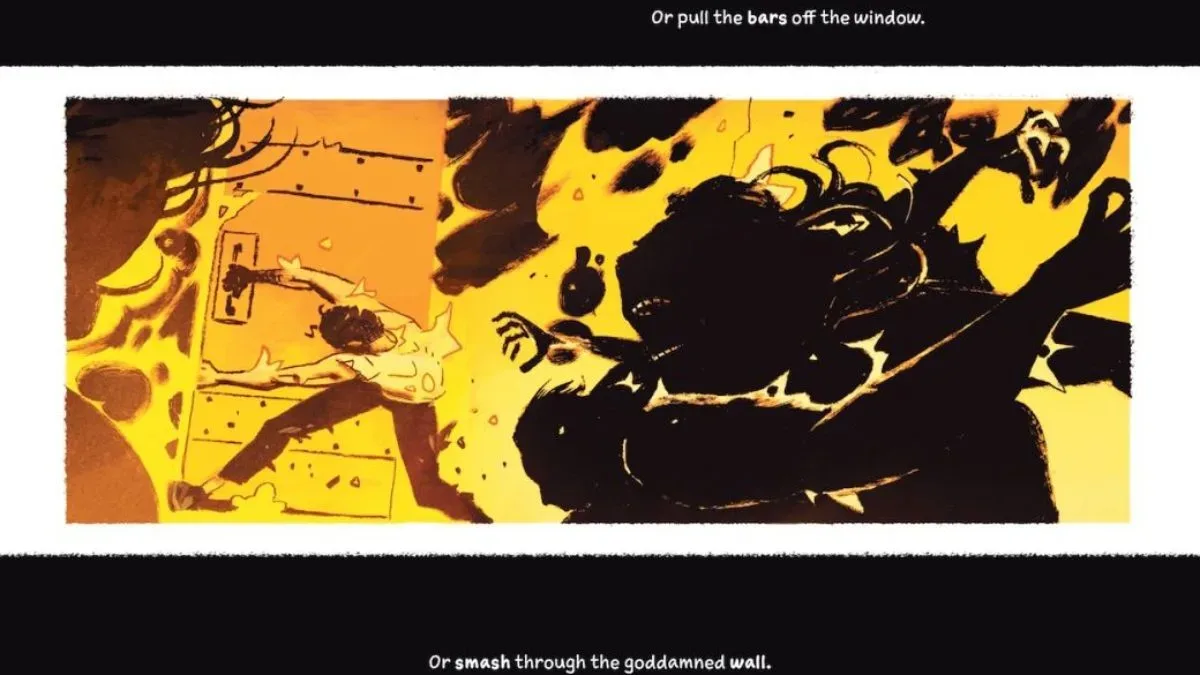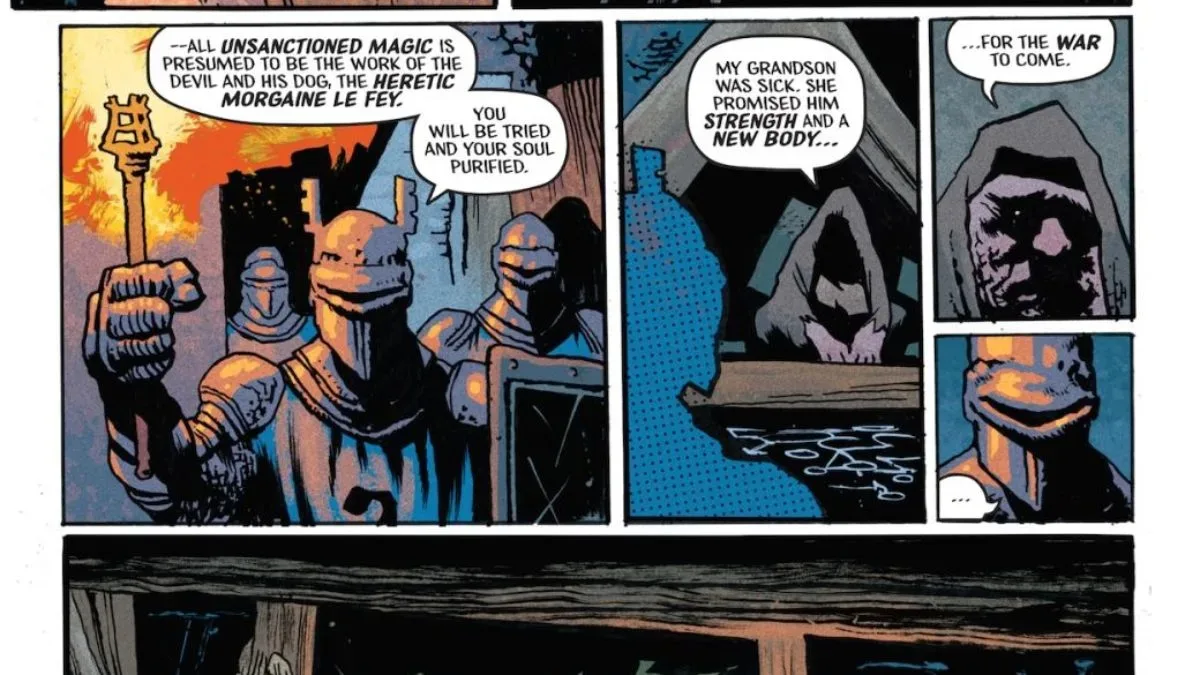
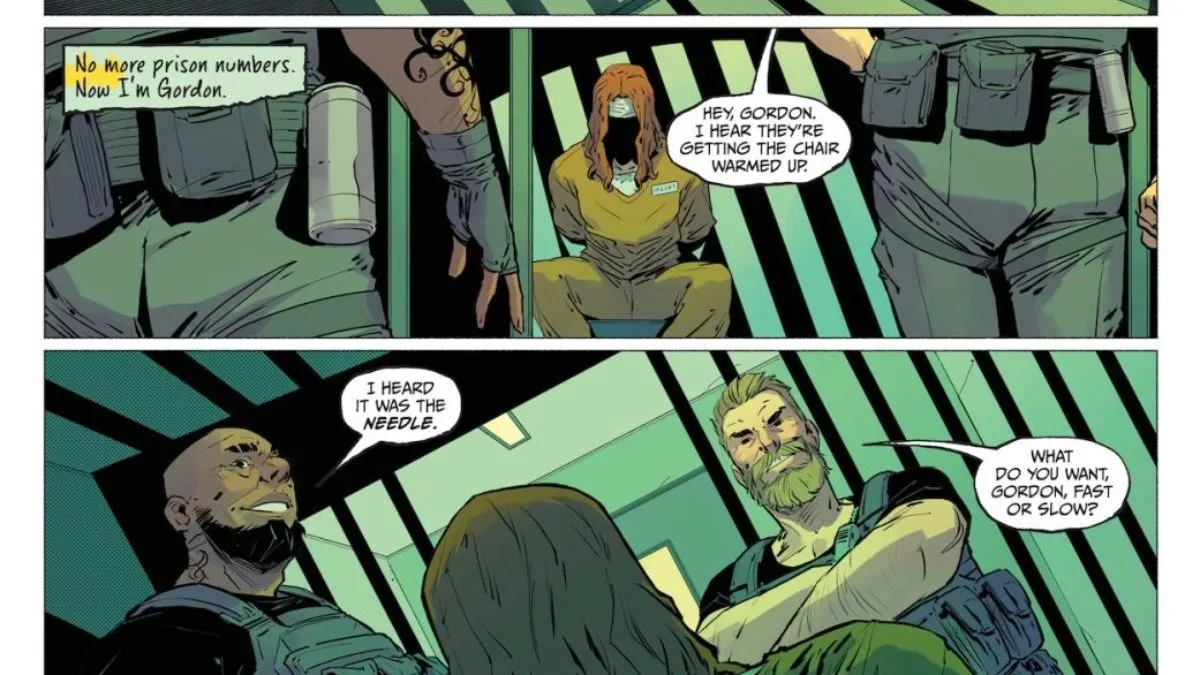
Barbara Gordon’s escape story is about to become a courtroom nightmare. Barbara Gordon: Breakout #7 places Babs in a Supermax trial overseen by Two-Face, turning one of Gotham’s most volatile villains into the person deciding her fate. DC lists the issue for comic shops on November 11, 2026.
The setup follows an unspecified twist in the previous installment. What is clear from the official premise is that Barbara is now directly in Two-Face’s crosshairs while he “holds court” inside Supermax, and that the fallout is expected to reach beyond the defendant alone. In a Gotham story, putting Harvey Dent in charge of legal proceedings is not simply a change of venue; it makes the concept of due process itself the immediate danger.
A trial where the judge is the threat
Two-Face is a particularly sharp choice for a story built around judgment. The villain’s identity is tied to duality and chance, most famously expressed through his coin. A conventional trial is meant to establish facts, weigh testimony and arrive at a reasoned verdict. A courtroom controlled by Two-Face replaces that promise of procedure with unpredictability. Even before readers know the full allegation against Barbara or the mechanics of this Supermax court, the premise makes the imbalance of power unmistakable.
Supermax is shorthand for a maximum-security prison environment. In narrative terms, it signals confinement, heightened control and a setting designed to keep dangerous people separated from the outside world. Here, that setting appears to have become the stage for a legal proceeding rather than merely the place where one happens. Barbara is therefore not just facing an enemy; she is confronting an institution that has been bent around that enemy’s rules.
The solicitation’s wording also stresses that “everyone” will face the consequences. That is deliberately broader than a simple question of whether Barbara walks free. It suggests that the verdict, the court itself, or the struggle around it could affect a larger group in Gotham. Readers should treat the exact scope as unresolved until the issue arrives, but the framing positions issue #7 as an escalation point rather than a self-contained detour.
What the issue confirms
- Title: Barbara Gordon: Breakout #7
- Publisher: DC
- Release date: November 11, 2026
- Writer: Mariko Tamaki
- Artist: Pablo M. Collar
- Primary cover artist: Jorge Fornés
- Standard cover price: $3.99
- Variant covers: Kyuyong Eom and Nogi San variants are listed at $4.99 each.
Those credits give the chapter a clear creative identity while leaving its larger plot deliberately guarded. Tamaki is scripting Barbara’s trial, Collar is handling the interior art, and Fornés provides the main cover. The available cover information reinforces the issue’s central image: Barbara being measured against the judgment of a figure who is fundamentally unfit to deliver it.
Why Two-Face changes the stakes
A rogue holding someone hostage is a familiar Gotham threat. Two-Face acting as judge changes the language of the conflict. The danger is not only physical captivity, but the attempt to dress arbitrary power in the appearance of authority. Courts, verdicts and sentencing all carry the implication that rules exist and will be applied. Under Two-Face, the issue’s premise asks what those concepts mean when the person at the bench is one of the city’s dangerous criminals.
That makes the story’s courtroom framing potentially useful on several levels. It can generate suspense through a looming ruling. It can isolate Barbara in a hostile setting. And it can give the conflict a moral dimension: a verdict may be presented as legitimate even when readers know the system producing it is corrupted. None of that confirms a particular outcome, but it explains why a Two-Face trial is a stronger hook than an ordinary prison confrontation.
The “Breakout” title adds another layer of tension. It naturally evokes escape, though the current premise does not confirm who might escape, how, or whether any breakout will occur in this installment. With Barbara on trial in a maximum-security setting, the word can also be read more broadly: escaping a prison, escaping a trap, or escaping a verdict engineered by someone else. The issue’s central question is not yet whether she is innocent or guilty of a named charge; it is whether any meaningful justice can exist under the conditions Two-Face has created.
A Barbara Gordon story built around agency
Barbara being placed on trial creates a different kind of pressure than an action sequence. A trial can make its central character appear temporarily powerless: someone else controls the room, sets the terms and claims the final word. That is especially potent in a Supermax setting, where every route out can seem closed off before the hearing even begins.
But the premise should not be mistaken for proof that Barbara will only be a passive defendant. The available material establishes the predicament, not her response to it. The dramatic opportunity lies in seeing how she navigates a situation designed to deny her choices. A courtroom led by Two-Face can become an arena of manipulation, negotiation, investigation or confrontation, but those are possibilities rather than announced plot details. The firm takeaway is that the story has put Barbara in a position where intelligence, resolve and control over the narrative of her case may matter as much as brute force.
For DC readers following other corners of the publisher’s lineup, the tension between personal history and larger stakes is also present in Action Comics #1104’s Clark Kent and Lex Luthor conflict. The two stories are distinct, but each uses a defining rival relationship to apply pressure to a familiar hero.
What to watch for on November 11
The key unanswered question is the nature of the prior issue’s twist. DC’s description identifies it as the event that leads into Barbara’s trial, but does not specify what happened. That omission is meaningful for returning readers: issue #7 is being positioned as a direct continuation, not a random procedural episode. Anyone approaching the series at this point should expect the immediate context to matter.
Readers can also watch for how literal the courtroom structure proves to be. “Two-Face holds court” could indicate a formalized mock trial, a criminal tribunal, or another version of justice warped to suit Gotham’s villainy. The solicitation does not settle that distinction. Similarly, the warning that everyone will suffer consequences establishes high stakes without revealing which characters will be pulled into the ruling’s aftermath.
For collectors deciding between editions, the listing identifies three cover options: the standard Jorge Fornés cover at $3.99, plus Kyuyong Eom and Nogi San variants at $4.99. No print-run, incentive-ratio or retailer-exclusive information is provided here, so the available facts support choosing by preferred artwork rather than making claims about scarcity.
The bottom line
Barbara Gordon: Breakout #7 takes its lead character into a Supermax courtroom where the supposed judge is Two-Face. That premise turns the issue into a question of justice under openly compromised authority, with an earlier twist feeding directly into Barbara’s predicament. With Mariko Tamaki, Pablo M. Collar and Jorge Fornés credited on the issue, DC’s next chapter arrives in shops November 11, 2026, for $3.99, alongside two $4.99 variant covers.