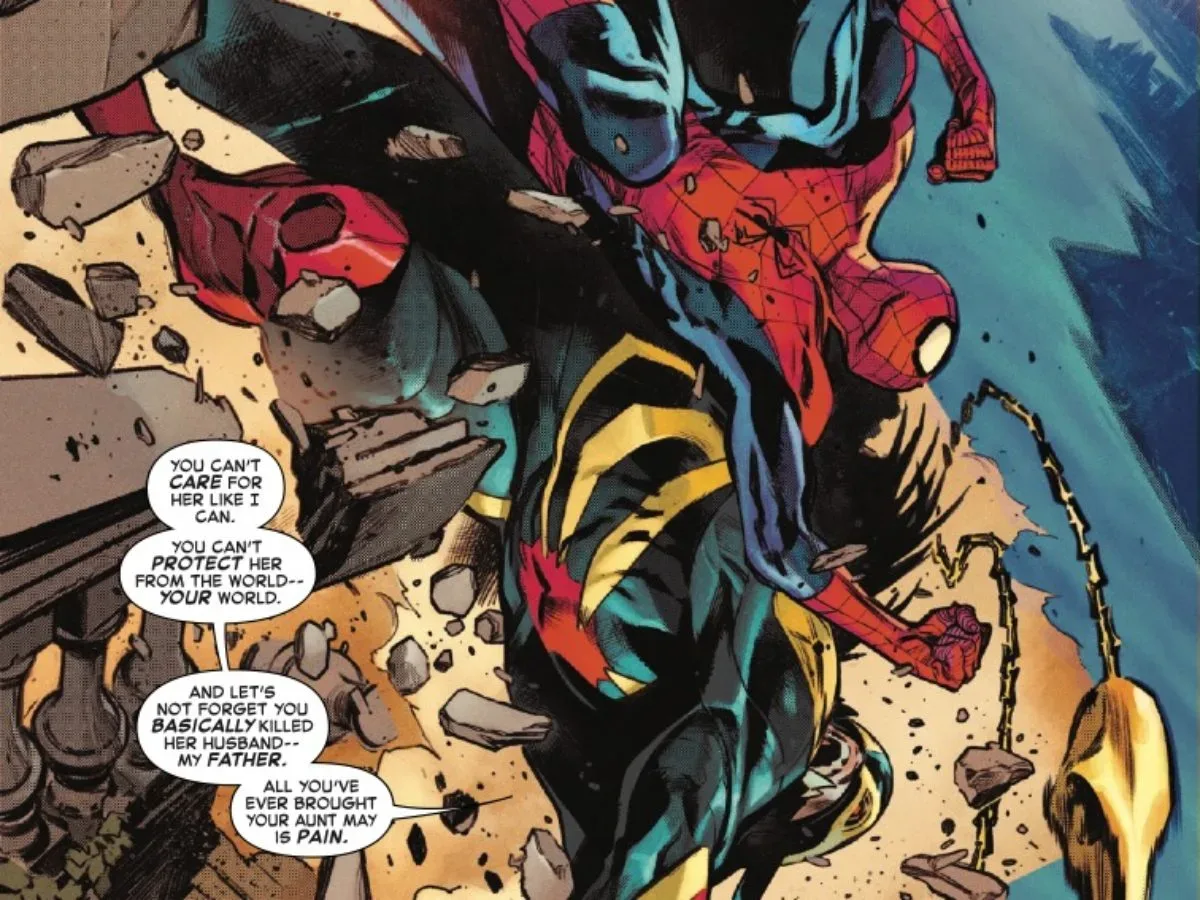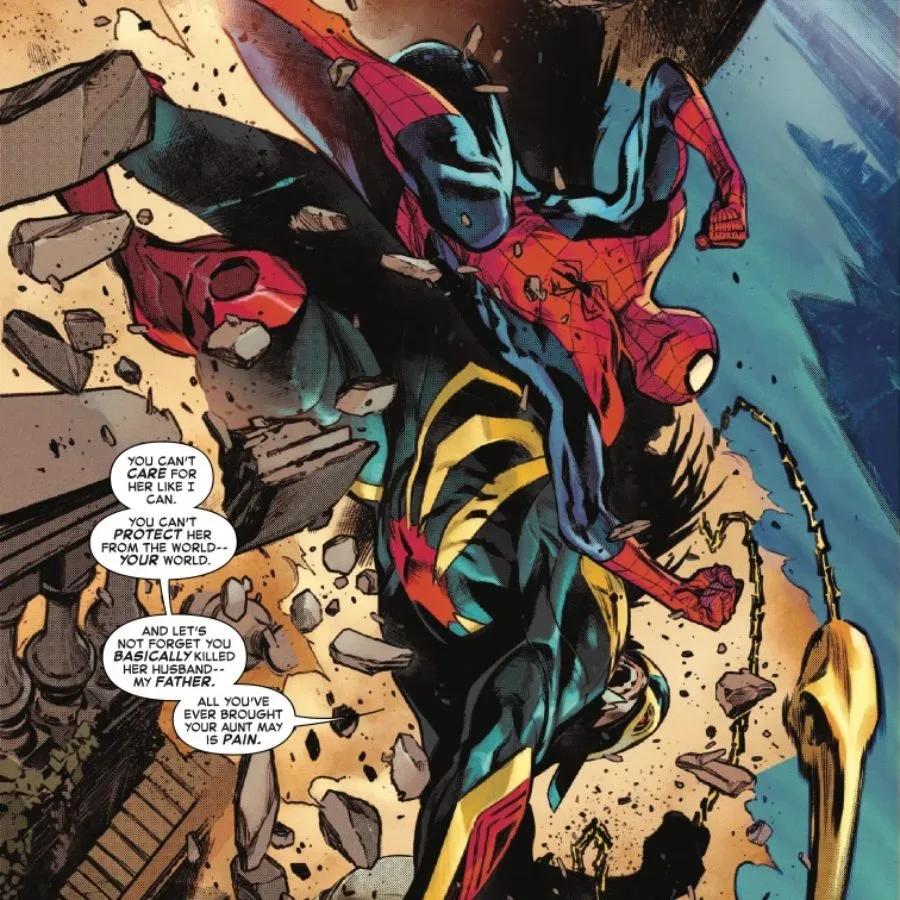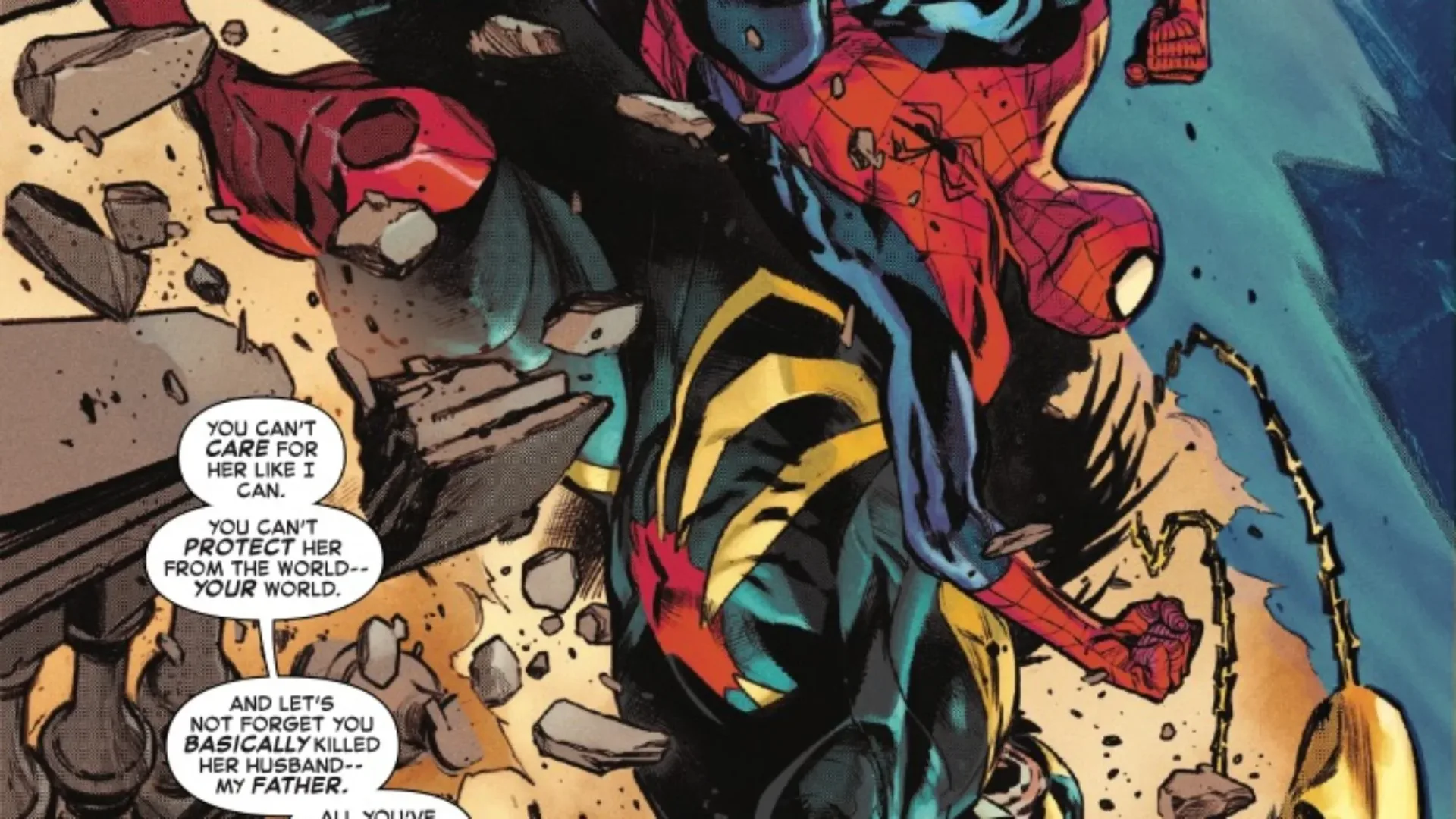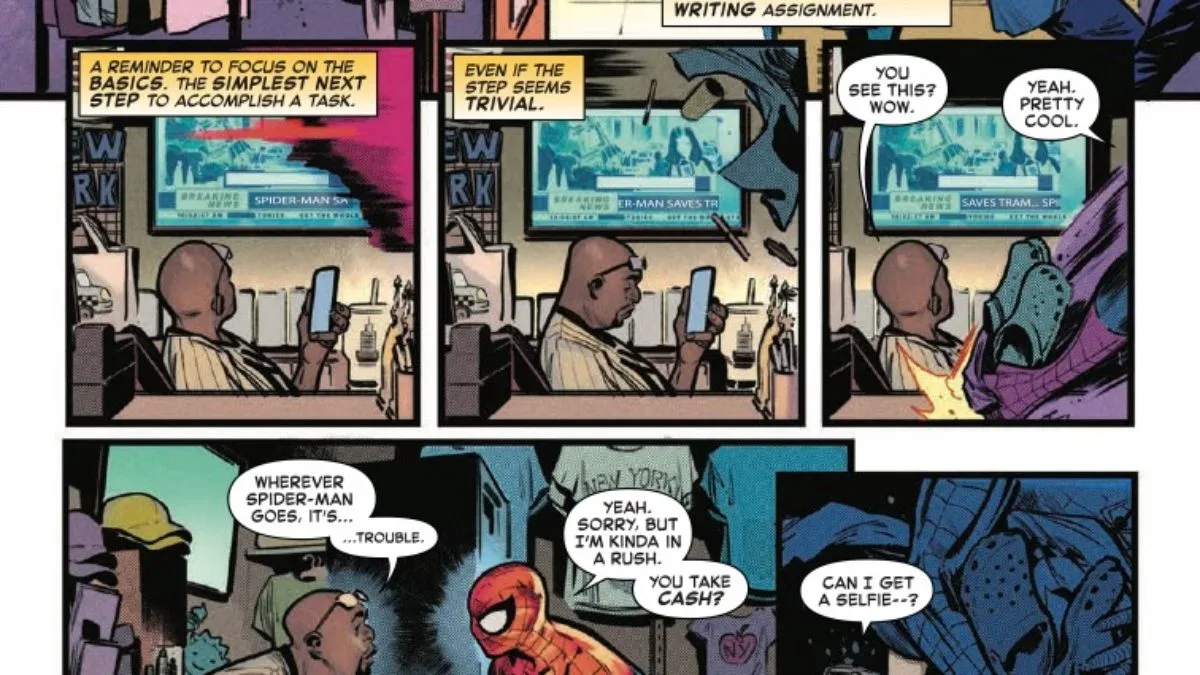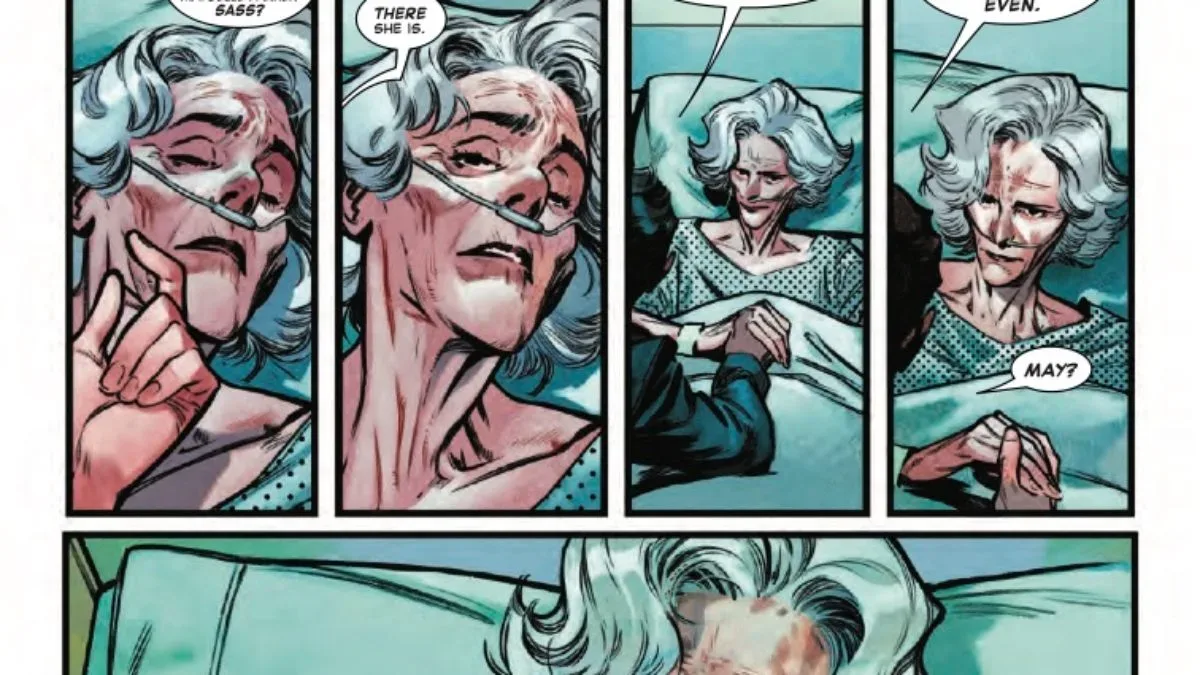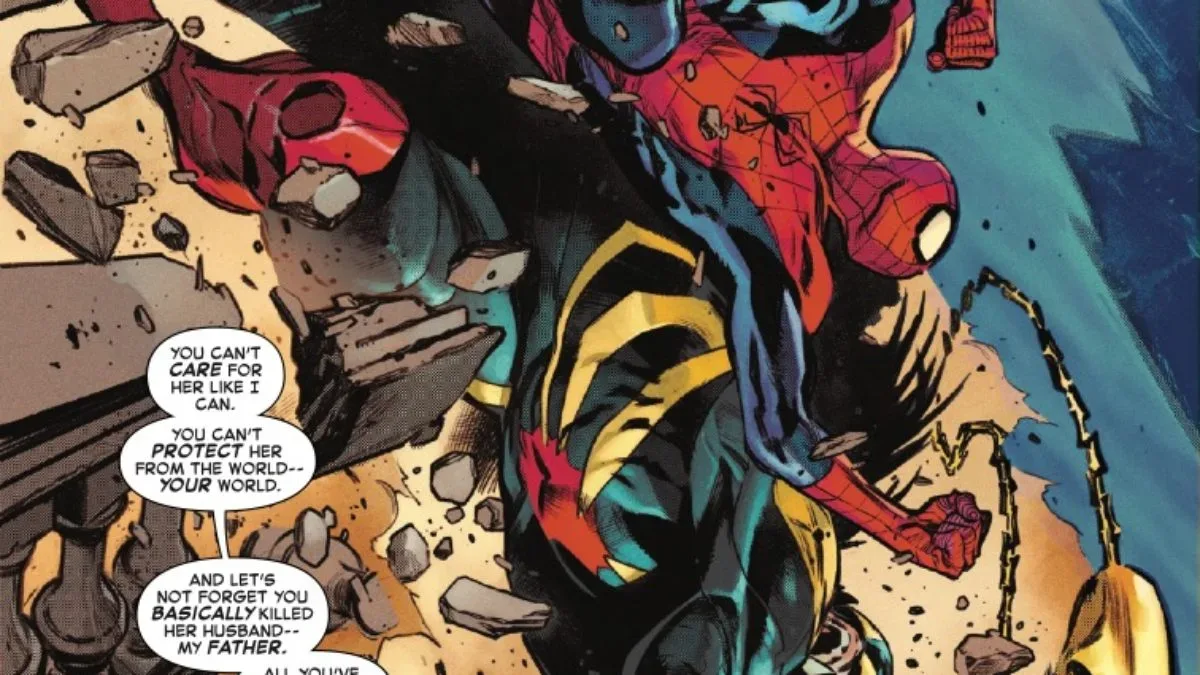
Spider-Man can dodge debris, bullets and apparently most reasonable bedtime schedules, but Amazing Spider-Man #1002 is sending Peter Parker toward the one thing even web-slinging cannot easily evade: an audit of his own legacy.
Marvel’s 32-page issue goes on sale October 28, 2026, continuing Spider-Man’s fight with Ravage into its third round. The central hook is not simply who wins the brawl. The solicitation says the conflict exposes significant clues about Ravage’s origins, forcing Peter to confront “the house that Spidey built.” In plain English: Peter may have to reckon with the possibility that his life as Spider-Man helped create, shape or enable the threat now standing in front of him.
That is a particularly pointed premise for a hero whose stories are so often powered by responsibility. The warning attached to the issue is equally ominous: even if Spider-Man defeats Ravage, the win may demand too much from Peter Parker personally.
Round three raises the stakes beyond a rematch
“Round three” establishes that the Ravage conflict is already underway rather than beginning in this issue. It also tells readers to expect escalation. In superhero comics, a rematch can mean a stronger punch, a new power, or a more inconvenient location for property insurance purposes. Here, the stated escalation is psychological and personal. Ravage’s background is positioned as the key that changes what the fight means to Peter.
The phrase the house that Spidey built is the issue’s most useful clue. It frames Spider-Man’s legacy as something constructed over time: a body of choices, relationships, interventions and consequences. The available details do not specify precisely what Peter did, or how Ravage connects to it, so readers should not assume a particular origin twist. What is clear is that the comic intends to make the connection central rather than incidental.
That distinction matters. A villain can blame a hero for almost anything; it is practically a supervillain employment requirement. But the setup here suggests Peter will encounter evidence substantial enough to make that accusation difficult to dismiss. The question is likely not whether Peter is responsible for every action Ravage takes—villains still make their own choices—but whether Spider-Man’s history left damage that Peter did not recognize.
What “legacy” means in this story
Legacy can sound like a grand museum word, all statues and solemn plaques. In a continuing superhero serial, it is more immediate: the accumulated effect of a hero’s past actions on the people and problems around them. A heroic legacy can include rescues, inspiration, alliances, enemies, trauma and unintended repercussions, all sharing the same crowded New York airspace.
For Peter Parker, that makes legacy unusually volatile. Spider-Man’s public identity and Peter’s private life are not cleanly separated in the emotional sense, even when they are concealed from the public. A threat tied to Spider-Man’s history can still hurt Peter’s relationships, his sense of purpose or his ability to continue doing the job. The solicitation’s emphasis on a cost to Peter Parker, rather than only Spider-Man, signals that distinction.
The premise also creates a sharper dramatic test than a standard strength-versus-strength showdown. If Ravage is connected to something Peter helped build, then a straightforward defeat may not resolve the underlying problem. Peter could stop an immediate danger while still being left to face what his earlier decisions set in motion. That does not make heroism meaningless; it makes the work of being a hero messier, which is where Spider-Man stories often find their bite.
Guilt is not the same thing as responsibility
The setup invites an important separation between two related ideas. Responsibility means recognizing an obligation to address harm, especially where one’s actions contributed to it. Guilt is the feeling that can follow when someone believes they have failed. Peter’s history makes him a character especially vulnerable to treating the two as inseparable.
That tension is fertile territory for Ravage. If the villain can turn every bad outcome into proof that Spider-Man causes more damage than he prevents, Peter’s greatest strength—his insistence on caring—can become a pressure point. The solicitation does not reveal whether Ravage’s claims are wholly accurate, partially true or manipulative. It does, however, establish that Peter will have to take the challenge seriously.
Readers looking for an uncomplicated victory lap should set expectations accordingly. This appears built as a consequence-driven installment: one where revelations about the antagonist are designed to test the protagonist’s self-understanding. The physical fight remains essential, but its narrative purpose may be to force a harder reckoning than a knockout ever could.
Joe Kelly and Pepe Larraz lead the issue
Joe Kelly and Pepe Larraz are credited on Amazing Spider-Man #1002, with Larraz also providing the main cover. The available solicitation does not break down the creative roles further, but the pairing places both the narrative and visual identity of this Ravage chapter at the foreground of the release.
Larraz’s main cover is joined by three listed variants. A variant cover is an alternate piece of cover art for the same interior issue; it is not a separate chapter or a required extra purchase to follow the plot. The announced options are:
- Ben Su variant
- Todd Nauck four-part connecting Legacy variant
- Michael Cho variant
The Todd Nauck option is specifically described as a four-part connecting cover. That means its artwork is intended to align visually with three other entries in the set, forming a larger image when the covers are placed together. The supplied listing identifies it as a “Legacy” variant, which makes it a notably apt companion to an issue preoccupied with what Spider-Man leaves behind. Beyond that designation, no details are provided about the other pieces in the connecting sequence, so collectors should avoid assuming which issues complete the image.
For readers, the practical choice is simple: the story itself is in the standard issue, while the variants offer alternate presentation. For physical comic collectors, the decision may instead come down to preferred art, a desire to assemble the connecting image, or the appeal of keeping a particular run visually consistent. Those are different goals, and #1002 accommodates each without changing the narrative contained inside.
Release details and what to know before buying
Amazing Spider-Man #1002 is rated T and carries a US cover price of $4.99. It is listed at 32 pages. The main issue’s item code is 75960623001300211.
- On sale: October 28, 2026
- Publisher: Marvel
- Format: 32 pages
- Rating: T
- US price: $4.99
- Main cover: Pepe Larraz
The issue’s main selling point is the Ravage storyline’s third confrontation, not a standalone origin recap. Anyone arriving specifically for this installment should be prepared for a chapter that assumes an ongoing dispute and advances it through new revelations. The solicitation gives no detailed recap information, so the most reliable preparation is to be aware that this is not presented as Ravage’s first encounter with Spider-Man.
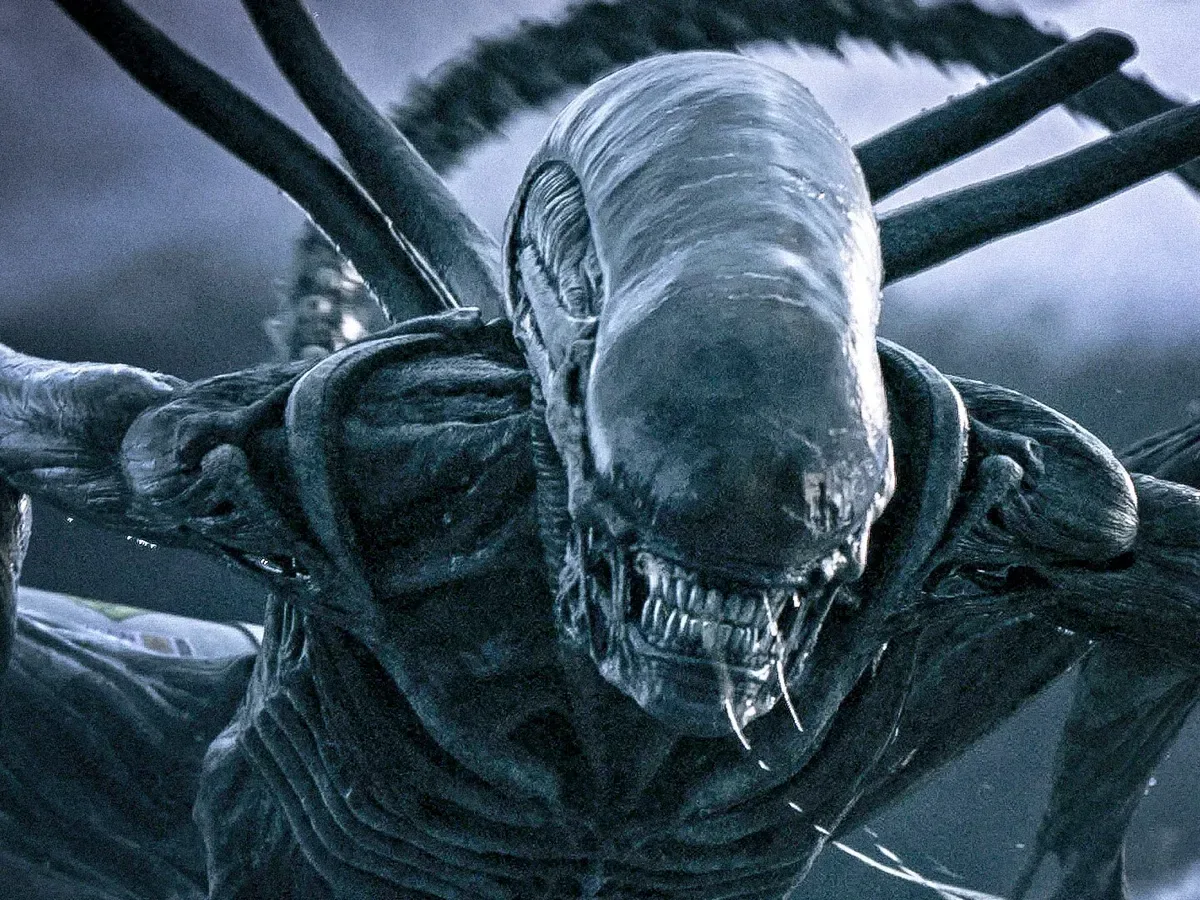
There is also a broader genre appeal in the premise. Stories about creators facing the consequences of what they have made can work especially well when the “creation” is not a machine or a laboratory experiment, but a reputation, a mission and years of choices. That same uneasy creator-and-consequence dynamic crops up in other genre storytelling, including discussion around David’s unfinished story in a potential Alien: Covenant follow-up. Spider-Man’s version is more personal: Peter is not confronting an invention so much as the human fallout of a heroic life lived in public.
A battle that may leave Peter with no clean exit
The strongest promise in Amazing Spider-Man #1002 is not that Ravage will be dangerous—superhero antagonists generally arrive with that clause pre-installed—but that the fight will make Peter examine what he has built. “Shocking clues” about Ravage’s origins could reframe the villain, while the hint of an excessive personal price gives the issue a built-in sense of danger even before a single punch lands.
There is a difference between making a hero suffer because the plot requires drama and asking a hero to confront a credible moral problem. The solicitation points toward the latter. It frames Ravage as a challenge to Spider-Man’s legacy and Peter’s self-image, leaving the exact truth of that challenge deliberately unresolved. Whether the issue finds Peter culpable, manipulated, or caught somewhere in the far more uncomfortable middle remains part of the draw.
For now, readers know the essentials: the Spider-Man-versus-Ravage clash enters its third round on October 28; Joe Kelly and Pepe Larraz are credited on the issue; and Peter Parker may discover that winning the fight is only the first part of surviving it.