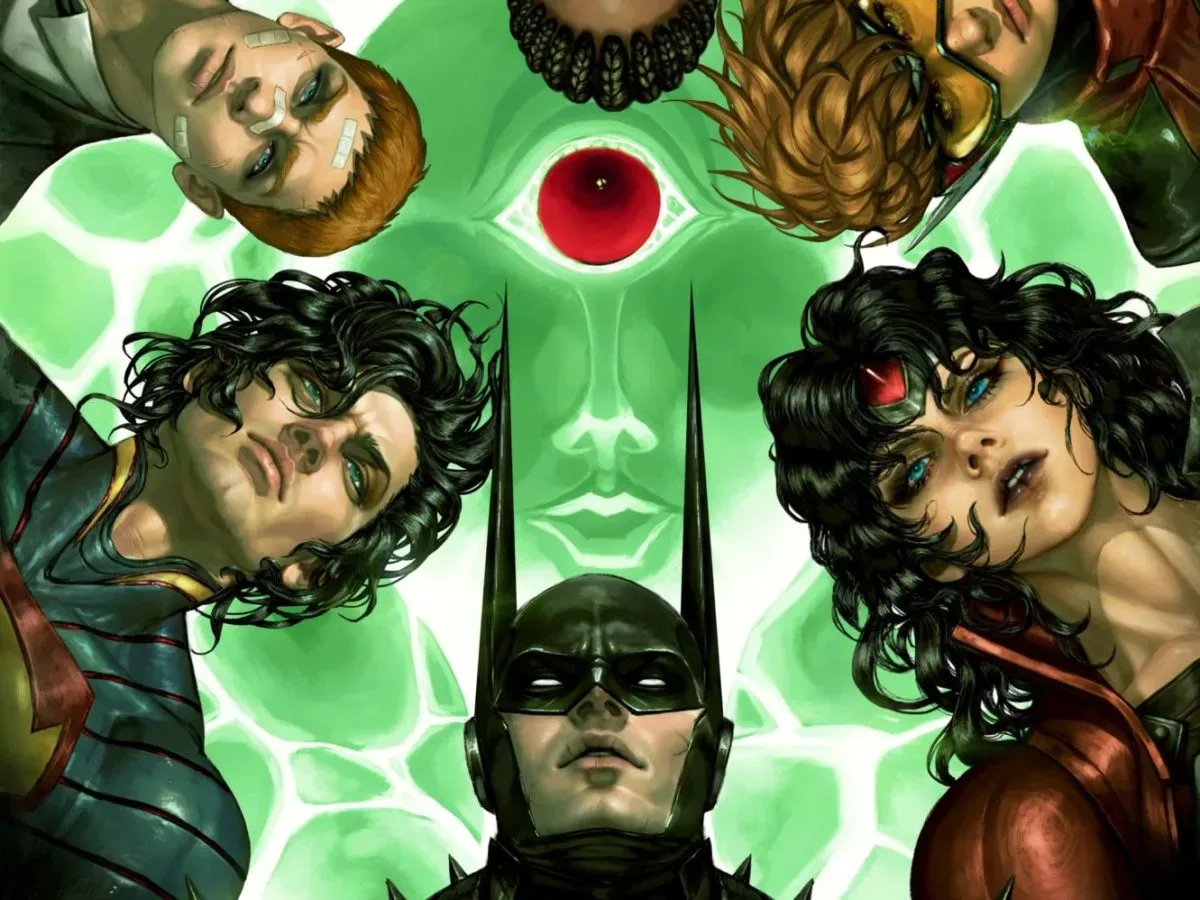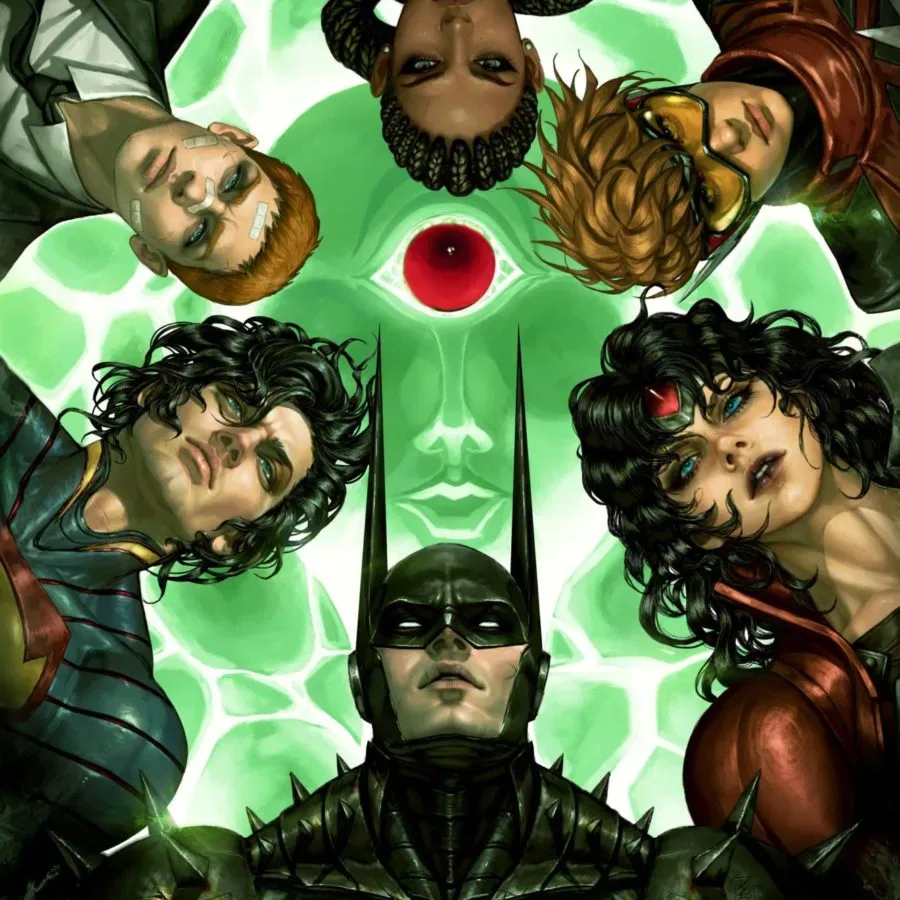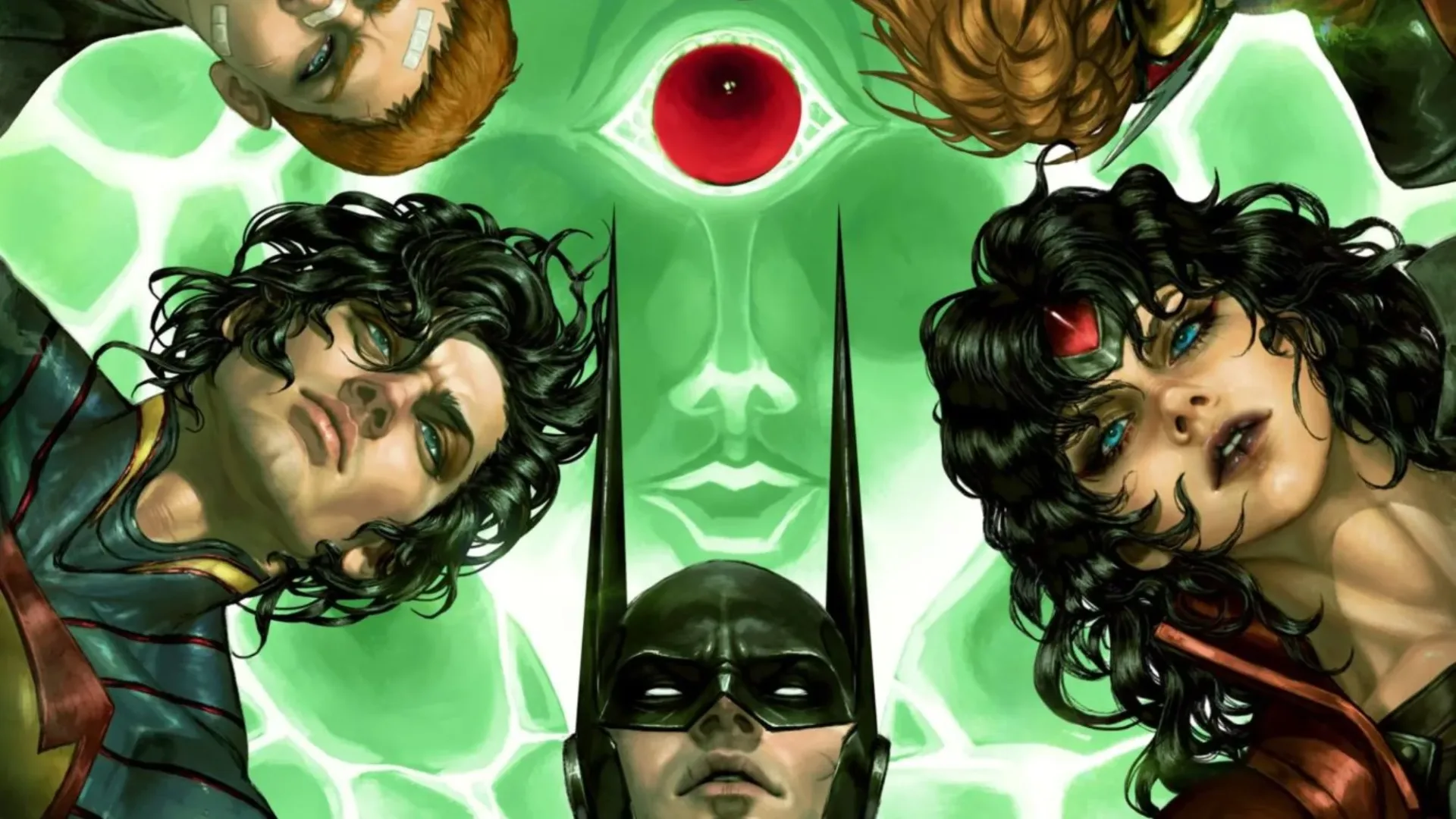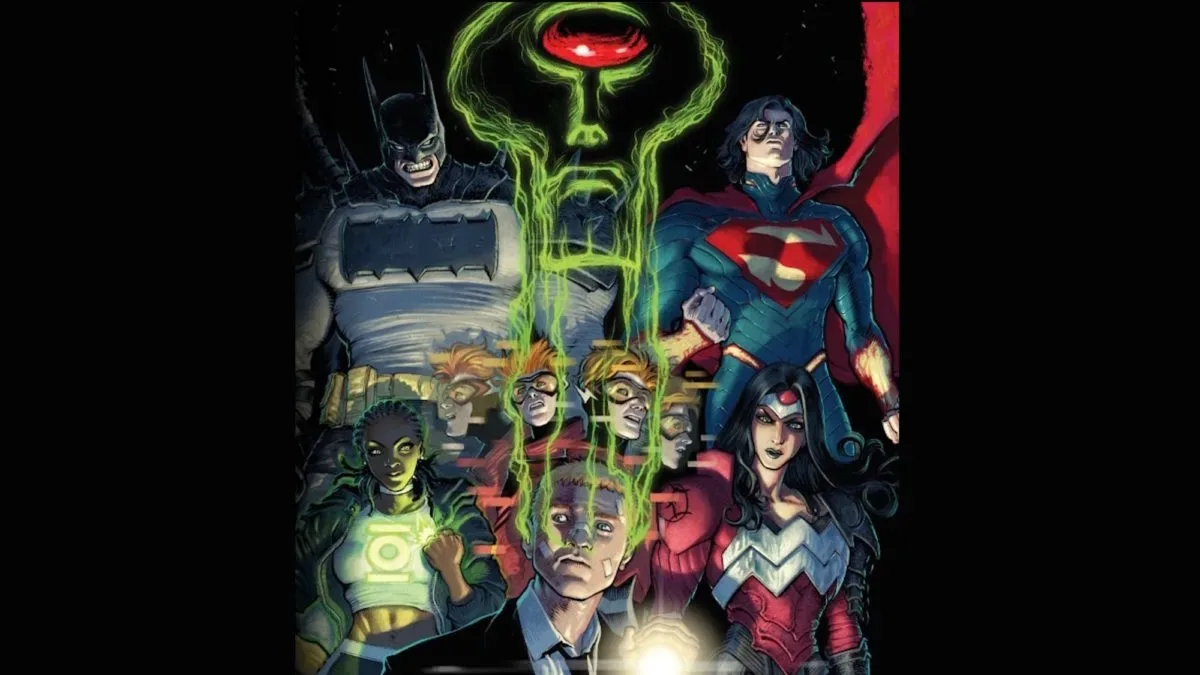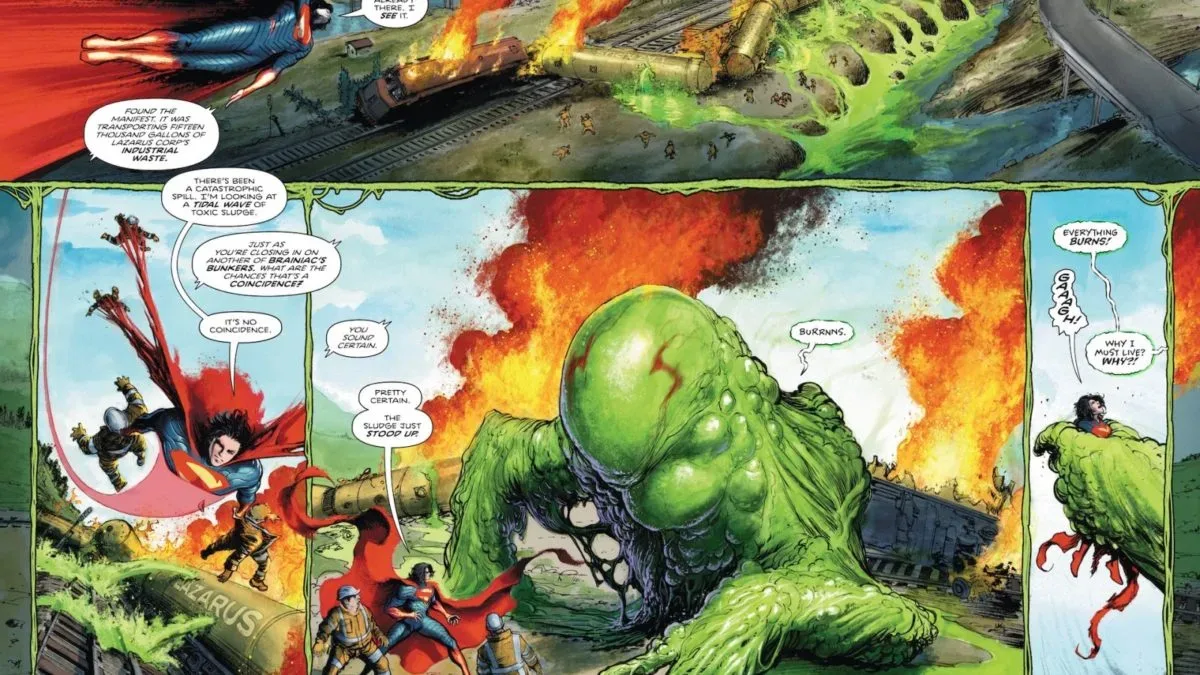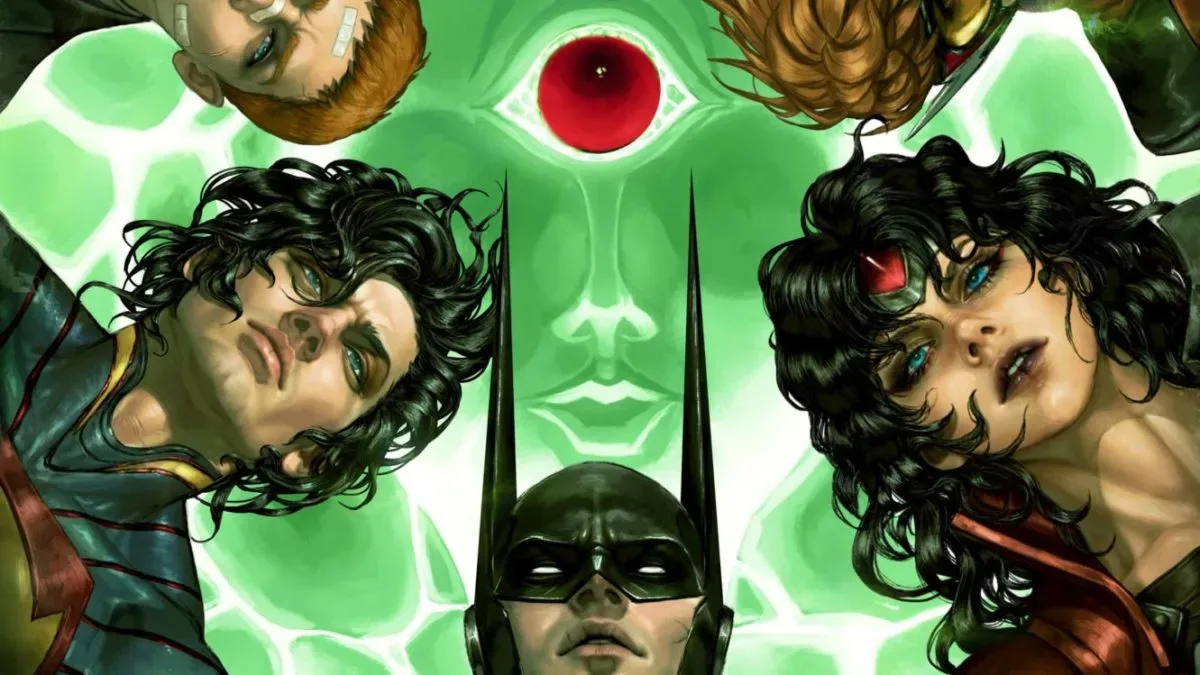
Absolute Justice #1 is set to open the first crossover event in DC’s Absolute Universe on April 7, 2027—and it will do so with a collector-focused wrinkle. Alongside the standard release and conventional variants, the 40-page issue will receive the line’s first blind-bag edition, priced at $9.99.
The event is a five-issue series written and drawn by Jason Aaron and Juan Ferreyra. Dialogue will also come from the writers responsible for the Absolute characters appearing in the story. The stated premise puts the universe’s heroes in their first united conflict, facing this setting’s Justice League, Darkseid, and a threat aimed at extinguishing the hope the heroes have created.
For readers, the central promise is relatively straightforward: the crossover is intended to be a self-contained five-part event. It is described as having no tie-in issues or crossover books required to follow its main plot. For collectors, the debut issue is much more layered, with retailer incentive variants, a character-design program, a glow-in-the-dark edition, and the randomized blind-bag release all attached to the same comic.
A crossover built around the Absolute Universe’s heroes uniting
Absolute Justice frames hope as the unusual and dangerous force at the center of this version of DC’s universe. The setting was created in Darkseid’s image, but its heroes have emerged as a counterpoint to that design. The billionaires and industrialists who rule the world see that growing hope as a threat, and they are identified as the Justice League.
That reverses the familiar symbolic role associated with the name “Justice League.” Here, the League is positioned against the solitary heroes of the Absolute Universe. The conflict escalates when the League calls on Darkseid, who responds by sending his angels to deliver an ultimatum: abandon hope. The heroes must consequently band together for the first time to fight forces presented as powerful enough to undo what they have accomplished.
The event’s language suggests a major line-wide status-quo story, but the available details do not establish precisely what lasting changes will occur or which individual heroes will appear in every issue. What is confirmed is the five-issue length, Aaron and Ferreyra’s principal creative roles, and the involvement of the other Absolute writers for character dialogue.
That “no tie-ins” structure may be meaningful for prospective readers. In comics publishing, a tie-in is a separate issue or series that connects to an event’s narrative. Tie-ins can add side stories, character perspectives, or plot material, but they can also make an event feel larger and more expensive to follow. Absolute Justice is being positioned as a story readers can obtain in its five core issues without being directed into additional crossover chapters.
It is a notable contrast with the large menu of cover choices planned for issue #1. The story itself may be contained, while the physical release is designed to give readers and collectors several different ways to buy the same debut.
What is in the Absolute Justice #1 blind bag?
A blind bag is a sealed, or polybagged, product whose specific contents are not known until it is opened. In this case, every $9.99 blind bag contains a comic with a foil cover that is exclusive to the program. The cover outcome is randomized.
The announced pool includes three full-color foil connecting covers by Jim Lee. A connecting cover is artwork designed so that separate covers can sit alongside each other to form a larger image. The details provided establish that Lee has three distinct full-color connecting covers, though they do not describe the completed image or how the covers are arranged.
Four more artists—Kaare Andrews, Mark Brooks, Dan Mora, and Álvaro Martínez Bueno—each have foil covers in the blind-bag lineup. Each artist’s design will appear in three treatments:
- full-color foil;
- rare silver foil; and
- ultra-rare gold foil.
“Treatment” refers to the production finish or version of an image, rather than necessarily a different illustration. Foil covers use reflective material to create a metallic sheen. The supplied details characterize silver versions as rare and gold versions as ultra-rare, but they do not provide print runs, pack odds, or a precise breakdown of how frequently any individual foil version will appear. That absence matters: shoppers can know the cover categories, but cannot calculate their chance of finding a particular silver or gold edition from the current information.
The rarest-sounding element is the group of more than 500 blank silver foil covers carrying artwork drawn directly on the cover. These one-of-one sketch covers will be randomly inserted in the blind bags. The artists are said to include creators from the Absolute Universe titles as well as Jim Lee.
A blank sketch cover normally leaves much or all of the cover art area open for an artist to draw upon. Here, the silver-foil blanks become original art pieces once illustrated. “One-of-one” means that each of those individually drawn covers is unique, not simply a numbered copy of a repeated printed cover. However, the announcement does not identify every contributing artist, assign an exact number of sketches to each artist, or state the total number of blind bags produced. It would therefore be premature to make claims about the odds of pulling a sketch, or the relative scarcity of a sketch by one contributor compared with another.
The non-blind-bag cover and variant options
Collectors who would rather know exactly what they are buying will have several identified alternatives. The regular Absolute Justice #1 will cost $5.99. Card-stock variants are also listed at $5.99. The issue will have variant covers by Stanley “Artgerm” Lau, Gabriele Dell’Otto, and Kyuyong Eom, along with a 1:25 Rafael Albuquerque variant and a 1:100 Lau variant. A blank sketch cover is also planned.
The “1:25” and “1:100” labels identify retailer incentive ratios. In practical terms, they indicate that a retailer must order a specified number of qualifying copies to be eligible to order one copy of that incentive variant: one incentive at the 25-copy level, or one at the 100-copy level. These are retailer ordering ratios, not direct statements of a book’s total print quantity. Availability to an individual buyer can therefore vary with a shop’s ordering decisions.
Eom’s glow-in-the-dark variant is listed separately at $8.99. Unlike the blind-bag edition, this is a named cover format with a known purchase price and identified artist, rather than a random foil outcome.
Every issue in the five-part series will also have a character design turnaround variant in two forms: a color open-to-order edition and a black-and-white 1:50 incentive edition. “Open to order,” sometimes abbreviated OTO, means retailers can order the variant without having to meet a ratio threshold. For issue #1, the design focus will be Hayden Sherman’s Absolute Wonder Woman turnaround.
A turnaround is a character-reference layout that commonly shows a figure from multiple angles, helping communicate details of costume, proportions, and design. In a cover program, it turns production art into a collectible presentation. It is especially fitting for a line with distinct character interpretations, because it foregrounds the design work rather than a conventional action scene.
A practical buying distinction: reading copy, chosen cover, or randomized chase
Absolute Justice #1’s release gives buyers three broadly different paths, and each serves a different goal.
- Readers focused on the story can look to the $5.99 standard issue. It is the least expensive stated route into the 40-page first chapter, and the event is intended to avoid requiring outside tie-ins.
- Collectors who want a particular announced image or format may prefer a directly identified variant, including the named artist covers, the glow-in-the-dark edition, the blank sketch cover, or the design turnaround program. That approach removes the blind-bag uncertainty, although incentive variants remain dependent on retailer allocation and availability.
- Collectors interested in surprise and chase formats can choose the $9.99 blind bag. The tradeoff is built into the format: the foil cover is exclusive to the program, but the specific foil—and any chance at an original sketch cover—is not selected at the time of purchase.
The distinction is worth keeping clear. A blind bag does not guarantee a rare silver or gold foil, a specific artist’s cover, or an original sketch. It guarantees an exclusive foil cover inside a sealed comic. The additional rarity tiers create the chance-based portion of the product.
For collectors of physical comics, condition is also an immediate practical consideration. A polybag can protect a comic from casual handling before opening, but opening a sealed bag is still a choice: it reveals the randomized cover while ending the product’s sealed state. The provided information does not assign a premium to unopened copies or indicate whether bags have any external identifying marks, so collectors should avoid assuming that the packaging itself confirms a scarce interior variant.
The broader appeal of the program is that it pairs a major narrative launch with multiple kinds of collecting. There are identifiable artist variants for buyers seeking a specific cover, incentive books for those pursuing lower-order editions, design turnarounds for fans of character art, glow-in-the-dark presentation, and randomized foils plus hand-drawn covers for blind-bag hunters. The common story content remains Absolute Justice #1; the collector experience changes depending on edition.
Release date and confirmed prices
Absolute Justice #1 arrives April 7, 2027. The core release details currently provided are:
- Standard issue: $5.99
- Card-stock variants: $5.99
- Glow-in-the-dark Kyuyong Eom variant: $8.99
- Blind-bag edition: $9.99
At launch, the issue will introduce both the crossover and the Absolute Universe’s first blind-bag program. Its story stakes revolve around heroes joining together against the Justice League and Darkseid; its retail strategy asks collectors to choose between certainty and surprise. For a useful contrast in how franchise storytelling can travel between formats, see our look at the still-limited discussion around a possible Blade Runner 2099 AAA game.