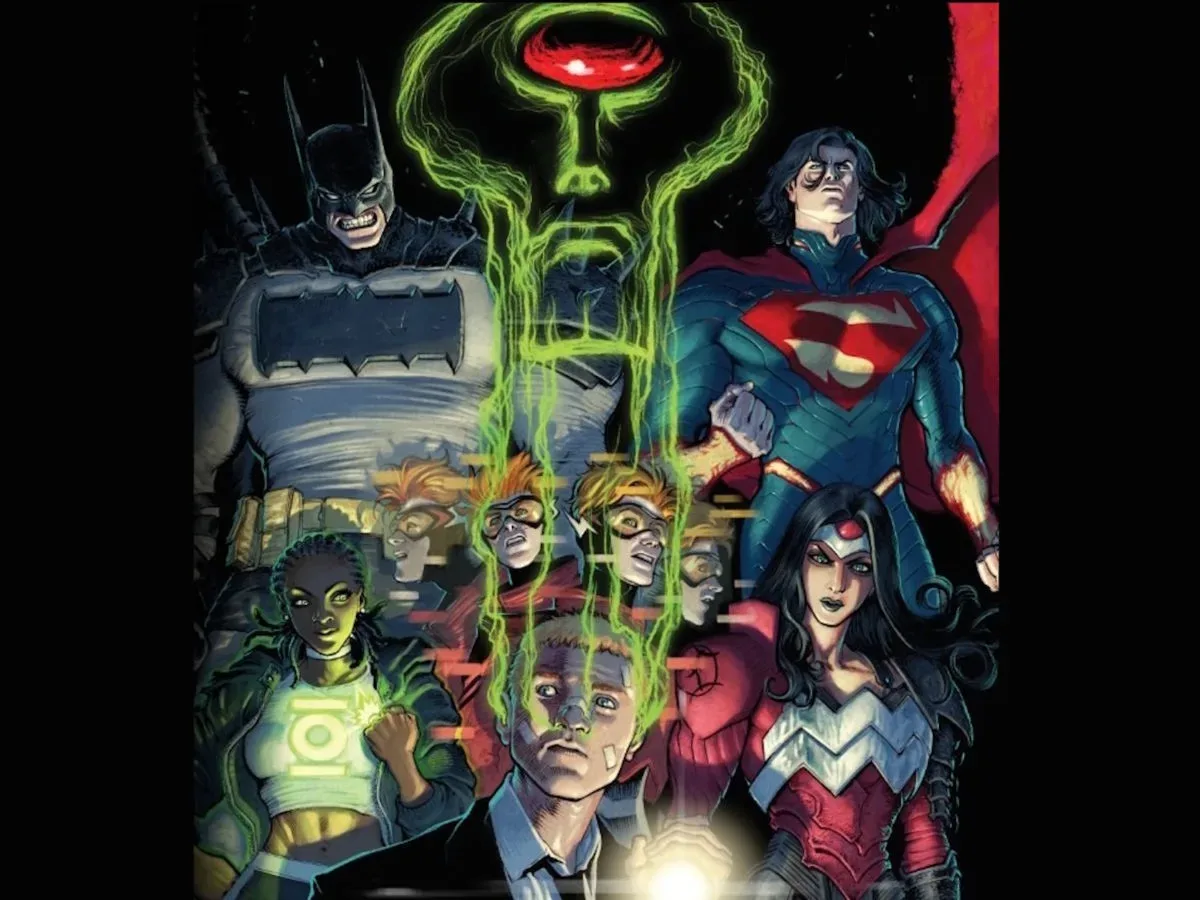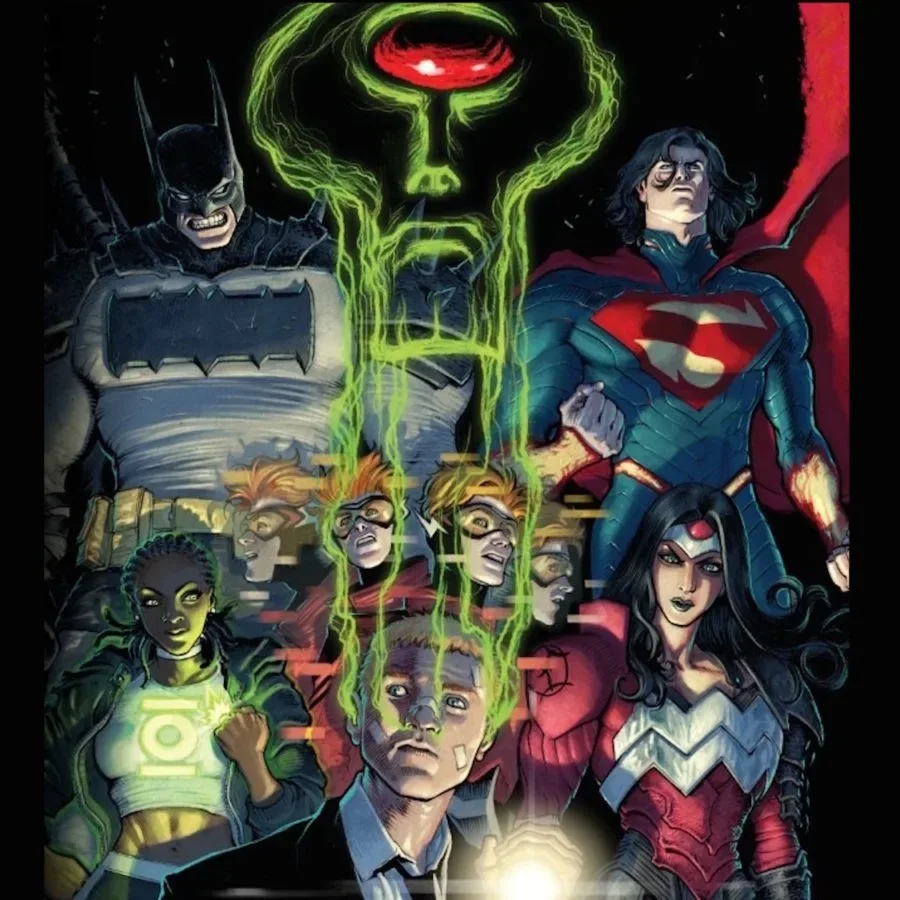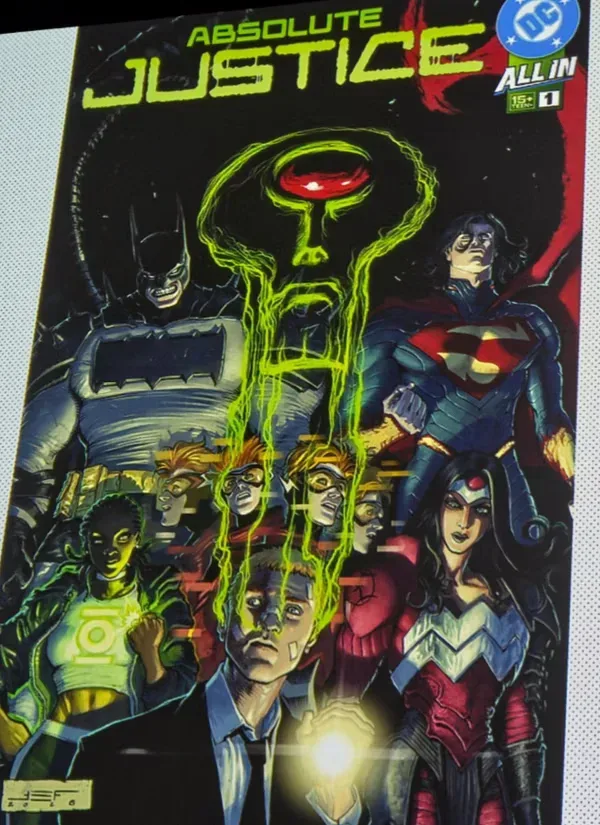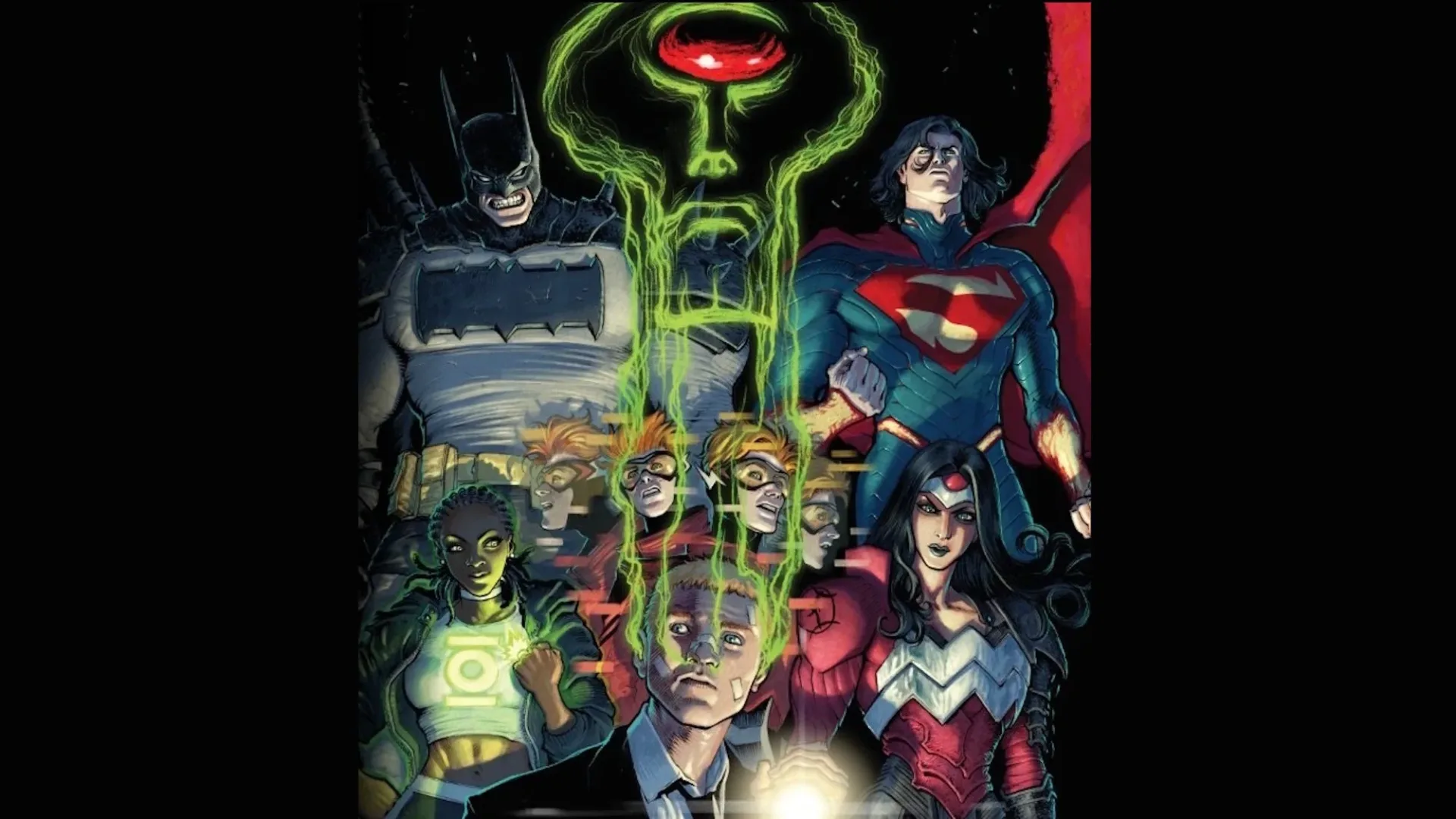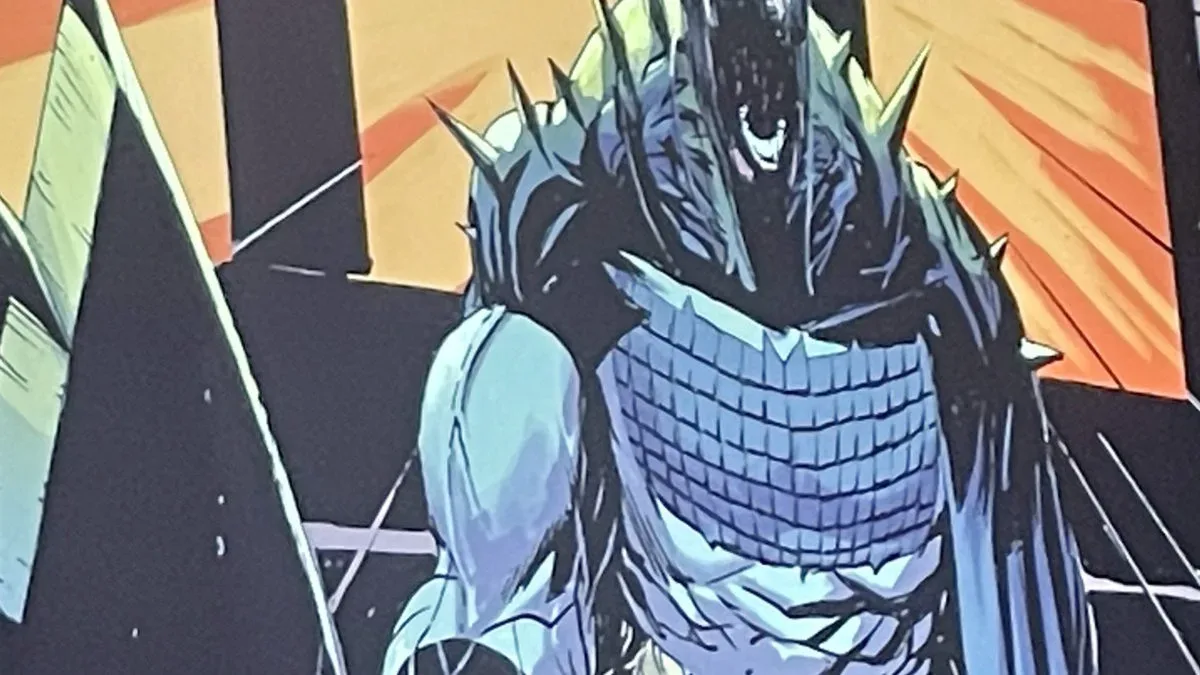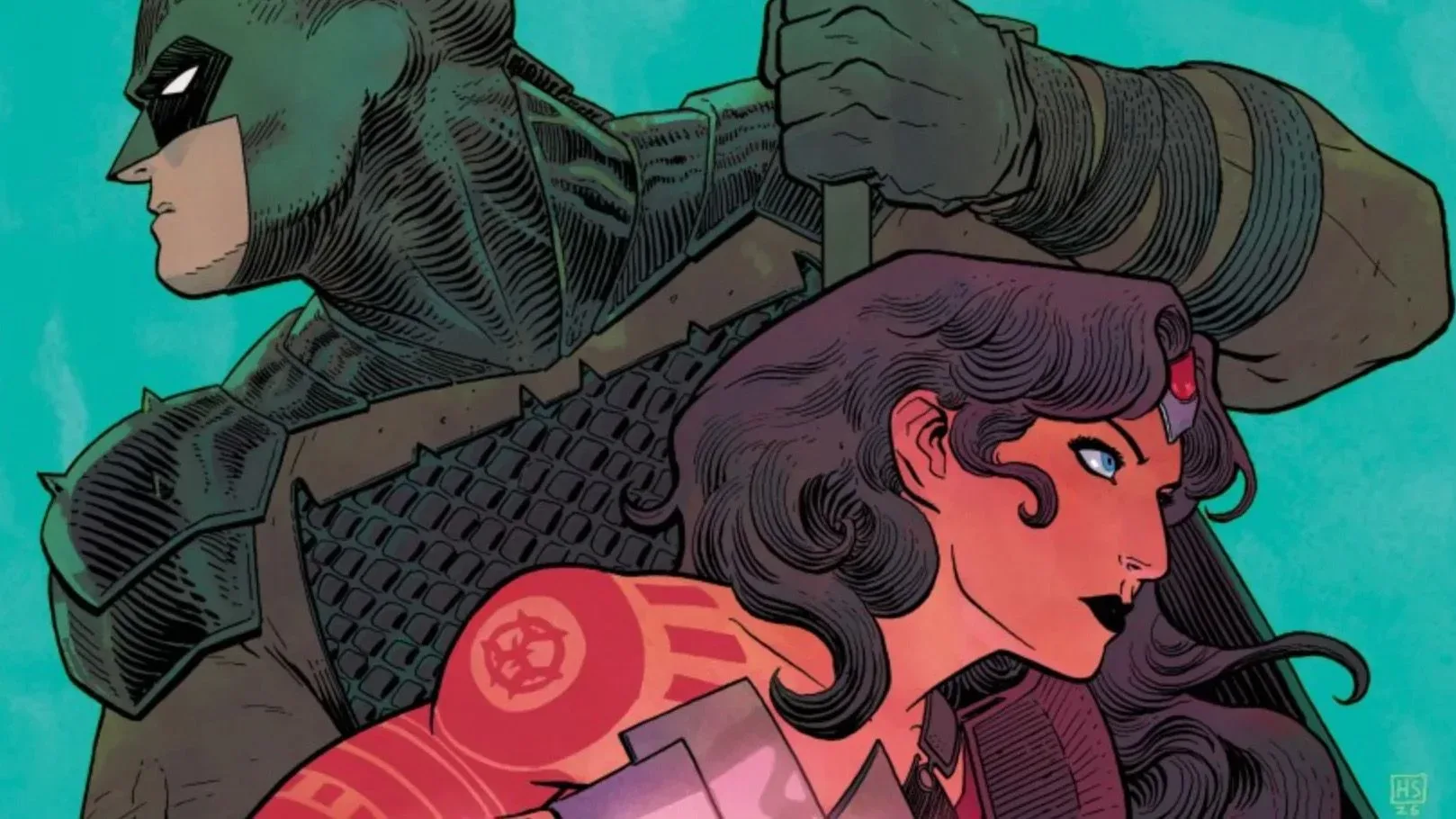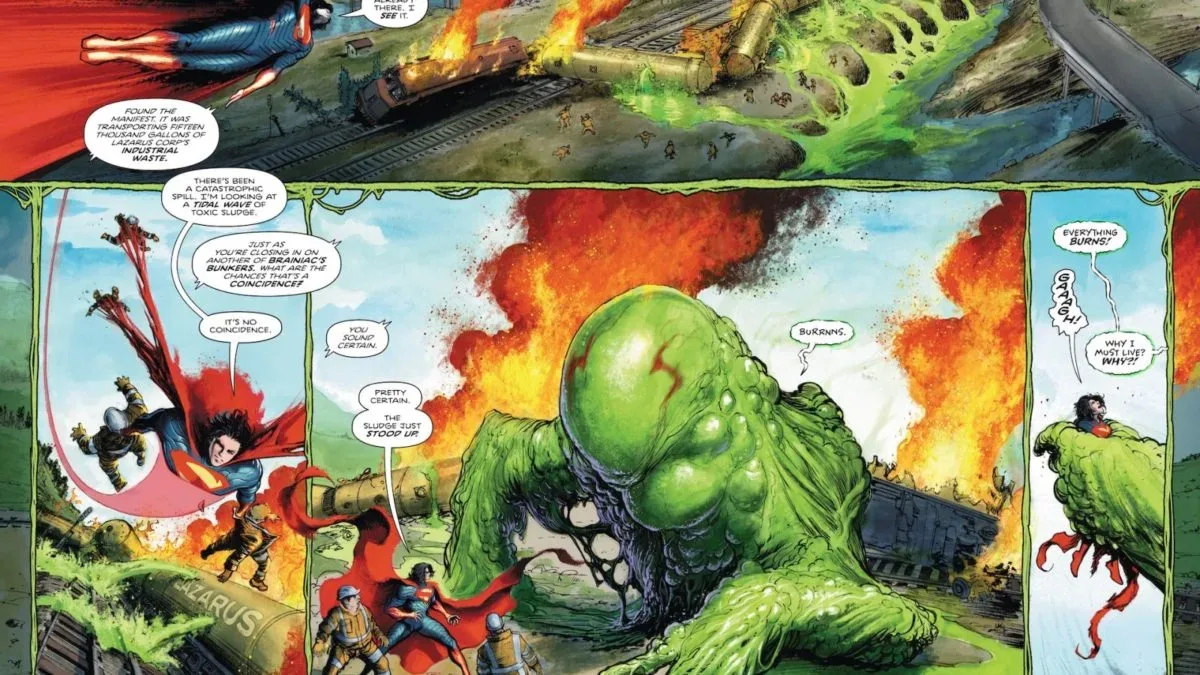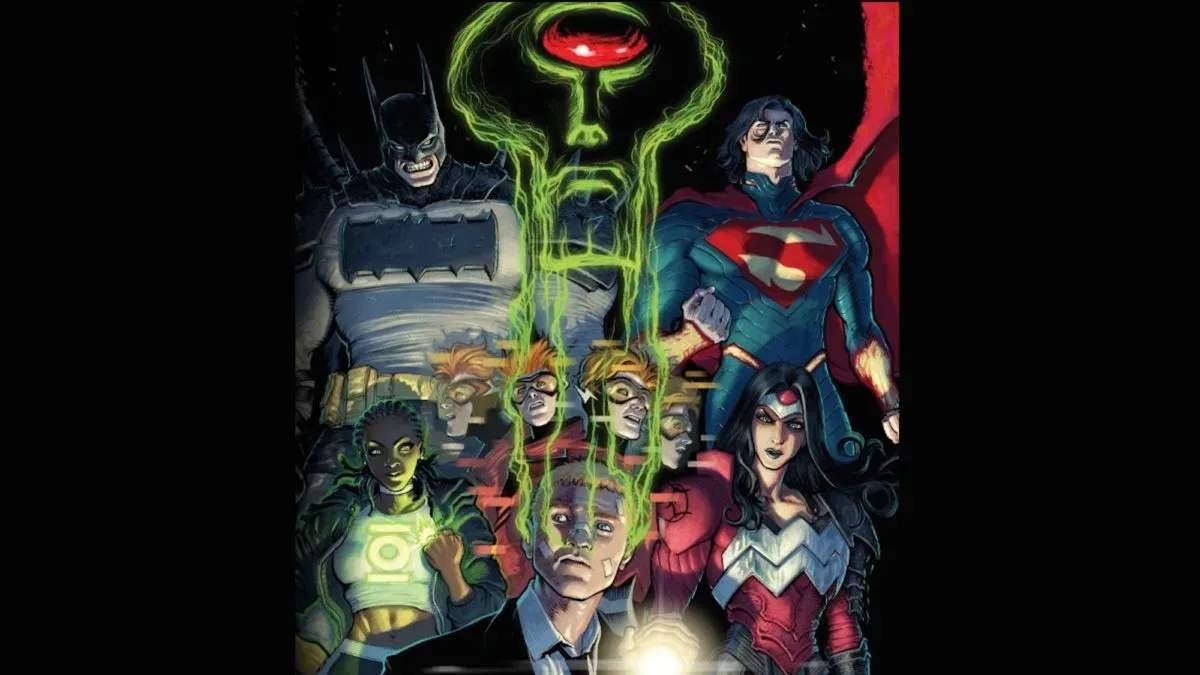
DC’s Absolute Universe is heading toward its first event miniseries with Absolute Justice, scheduled for April 2027. Jason Aaron is writing the crossover and Juan Ferreyra is attached as artist, while a newly shown trailer frames the story as a direct challenge to the very idea that the universe’s heroes can inspire hope.
The trailer’s central premise is blunt: heroes emerged from darkness and brought hope with them, but the world’s “true rulers” regard that hope as a mistake. Their demand is equally clear: abandon it. That establishes an appropriately high-stakes conflict without confirming which heroes, villains, locations, or individual plot turns will appear in the miniseries.
For readers keeping an eye on DC’s event slate, the important point is that this is presented as the first major crossover for the Absolute line—not merely another series sharing its setting. Yet the plan is also meant to be approachable for newcomers rather than a continuity maze that requires readers to reconstruct every prior issue before opening page one.
What Absolute Justice is confirmed to be
Absolute Justice is an Absolute Universe event miniseries written by Aaron with art by Ferreyra. It is due in April 2027. Scott Snyder has described the project as an exploration of deeper Absolute lore, and has characterized Aaron as effectively a co-architect of the wider line.
That language matters because “lore” can mean several things in a superhero setting: the history of the world, the forces that control it, the rules that shape its heroes, or secrets that earlier stories have deliberately held back. In this case, the trailer’s emphasis on hidden rulers and forbidden hope strongly suggests that the event will deal with the structure and power behind the setting, not solely a one-on-one superhero conflict.
However, the available material does not identify those rulers, lay out the event’s issue count, or provide a complete character roster. It is safer to treat the trailer as a thematic promise rather than a detailed story synopsis.
An event designed to avoid the usual crossover homework
At a retailer gathering earlier in the year, DC said its first Absolute Universe event would be easy to understand and easy to join. The stated aim was to build the universe without disrupting the ongoing stories. That is a meaningful distinction for a crossover.
In comics, a crossover typically connects stories across multiple titles, often through a central miniseries and related issues elsewhere in the line. The format can reward readers who follow every chapter, but it can also make a new reader wonder which books are essential and whether a favorite series has been diverted away from its own plot.
The stated approach for Absolute Justice is meant to reduce that barrier. Rather than requiring new Absolute readers to understand the mechanics of a traditional company-wide event, the series is intended to function as a readable entry point while still expanding the setting’s canvas. Whether it succeeds will depend on execution, but the strategy itself is clear: tell one substantial event story while preserving the identity of the books around it.
DC has also indicated that writers from other Absolute titles will provide dialogue for their respective characters. This collaborative structure can help a crossover maintain a consistent voice from book to book. Aaron remains the event’s writer, but character dialogue shaped by each ongoing creative team could make the shared story feel connected to the individual series rather than detached from them.
Why Jason Aaron and Juan Ferreyra are central to the pitch
The announcement puts Aaron and Ferreyra at the center of the project rather than treating the event as a brand-first proposition. Aaron’s role extends beyond scripting a standalone special: Snyder’s description of him as a co-architect positions him as a key creative voice in how the Absolute Universe is being constructed.
Ferreyra’s attachment is equally significant because event comics need visual clarity as much as narrative scale. A crossover may introduce unfamiliar factions, shift between heroes, and reveal major pieces of world-building at speed. The art has to make those changes legible while still delivering the visual impact readers expect from a large-scale superhero miniseries. Beyond the creative credits, though, no specific visual sequences or design details have been confirmed.
The project’s title also carries a deliberate contrast. “Justice” evokes the superhero ideal at the heart of DC’s best-known team stories, while the trailer argues that hope is being actively suppressed. The tension is not subtle: if the world is tilted against its heroes, as Snyder’s framing suggests, fighting becomes an act of defiance as well as survival.
From an unnamed Q4 plan to an April 2027 event
Earlier in the year, DC discussed an unnamed Absolute Universe event planned for the fourth quarter. The event now has a title, creative team, trailer, and April 2027 date. That means readers should view the prior Q4 reference as an earlier stage of the schedule rather than the current launch window.
The earlier discussion also pointed to the way DC sees events as a tool for growth. The publisher cited the ability of a smaller project to lead to a new ongoing book, using Absolute Green Arrow as an example of a series that followed a one-shot. A full event miniseries gives the line a broader platform: it can spotlight multiple characters, deepen the setting, and potentially create room for subsequent stories without insisting that every character receive the same treatment.
That does not confirm any spin-offs from Absolute Justice. It does explain why an accessible first crossover can be strategically important. If the series introduces new readers to the line, it can also make the Absolute Universe feel more like a connected setting with momentum beyond its individual monthly books.
What it could mean for the road to Absolute Crisis
DC has also pointed toward Absolute Crisis as a later destination, while noting that it may arrive later than previously expected. The names alone suggest escalation, but there are no confirmed story details connecting the two projects beyond their place on the broader Absolute Universe roadmap.
Still, Absolute Justice has a useful role before that next landmark. An initial event can establish how this universe handles its shared conflicts: which characters drive the narrative, how much the ongoing series intersect, and whether the setting’s biggest mysteries are answered in the central book or seeded across multiple titles. Those are practical questions for regular readers and potential jumping-on readers alike.
For now, the firm takeaways are limited but compelling. Absolute Justice arrives in April 2027; Aaron and Ferreyra lead it; the story will probe deeper Absolute lore; and its central conflict is built around a hostile world that wants hope removed from the equation. Readers interested in another major comics project with a clearly defined opening structure can also see how a separate publisher is launching a six-part James Bond comic storyline.
More concrete details—such as format, supporting cast, tie-ins, and the exact nature of the threat—remain unannounced. Until then, the trailer’s message is the event’s clearest statement: the Absolute Universe’s heroes are being asked to give up hope, and the crossover is about what happens when they refuse.