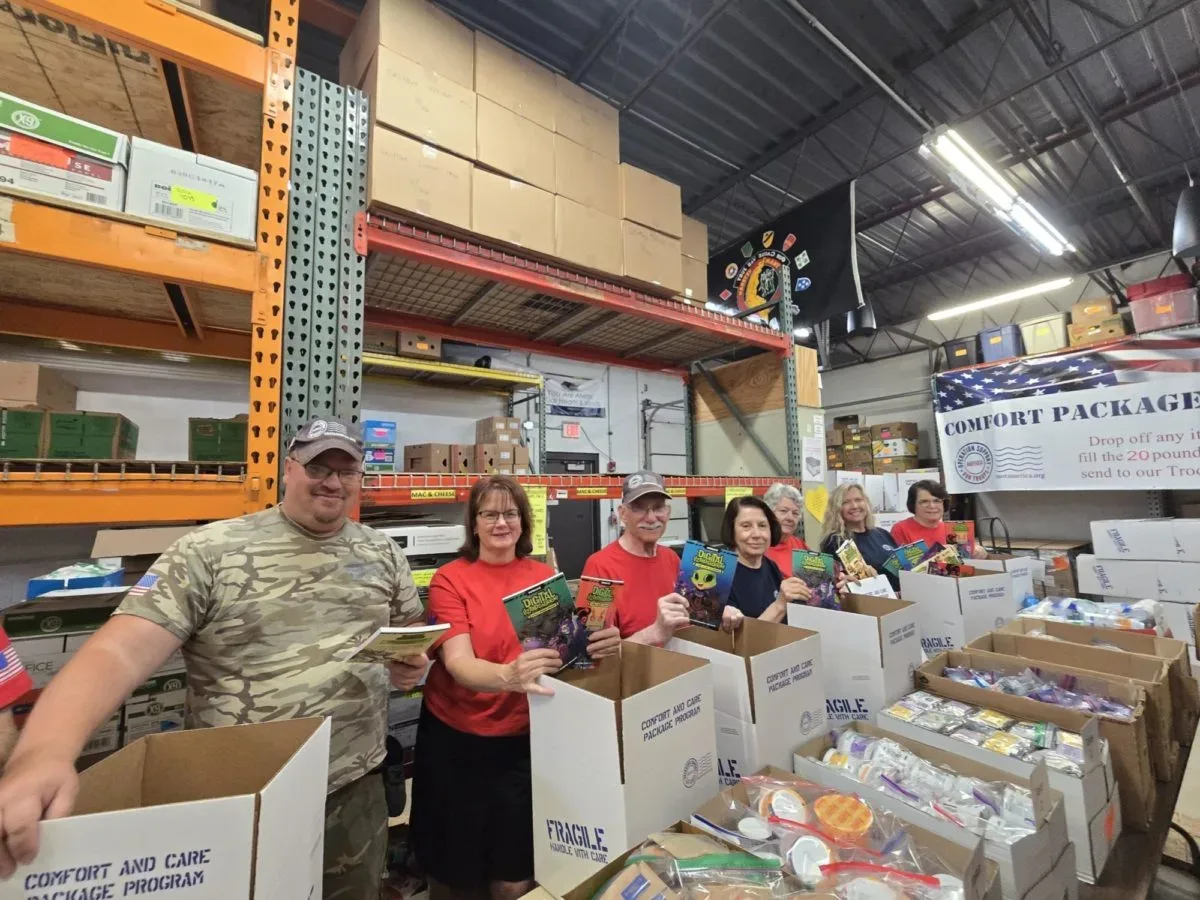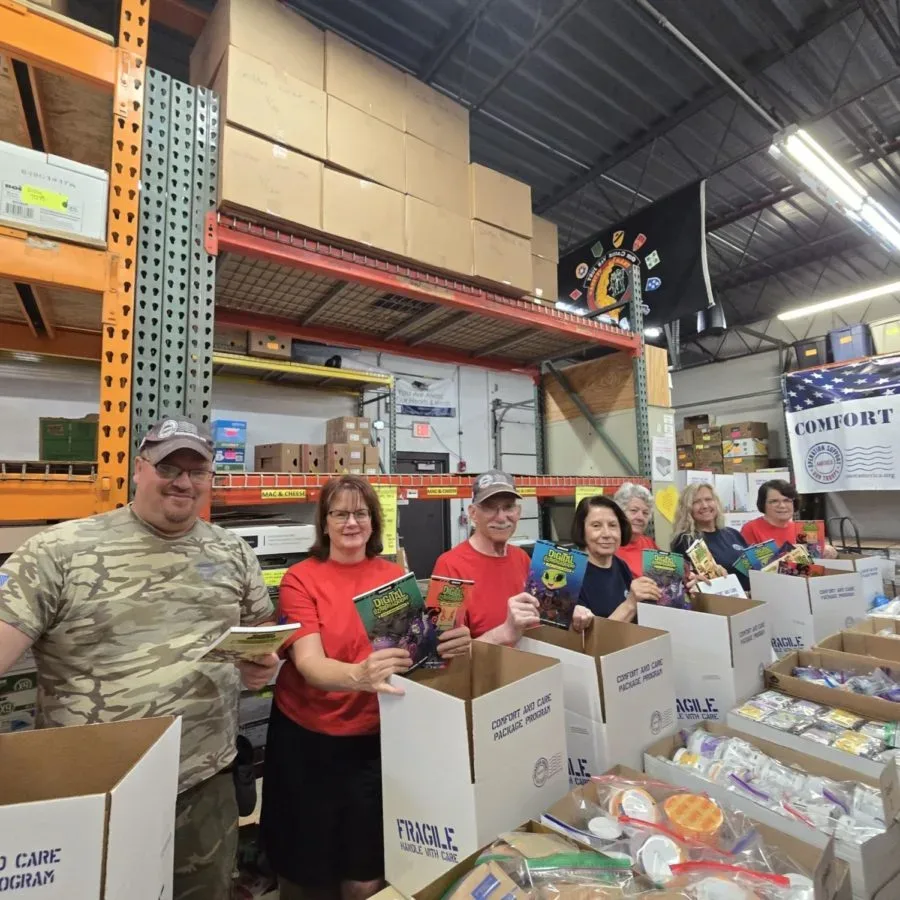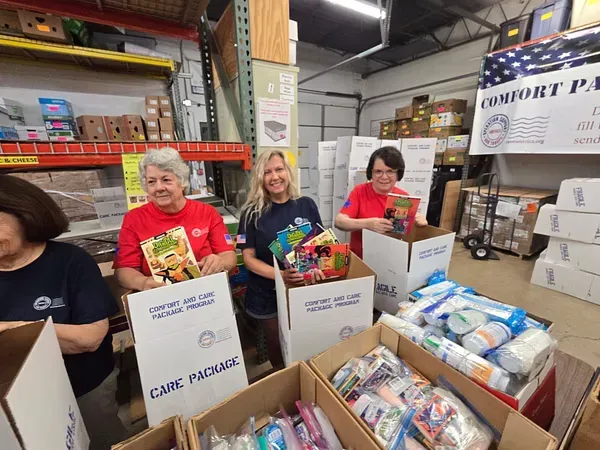
Somewhere between a cyborg cat pirate, an evil robot commander and a magical trickster called Pineapple Pete, a very real distribution effort has put 100,000 graphic novels into the hands of U.S. military families and support organisations.
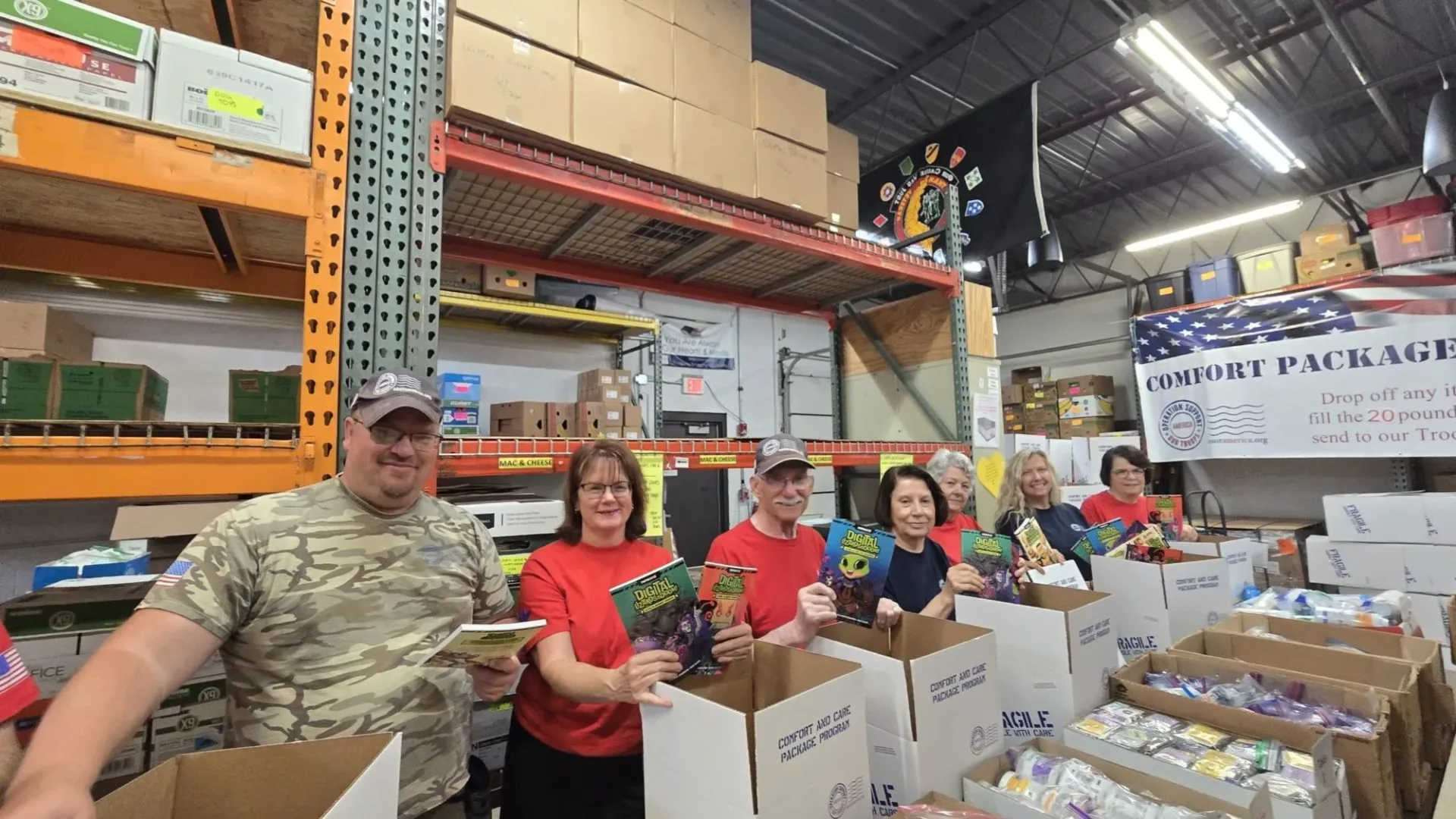
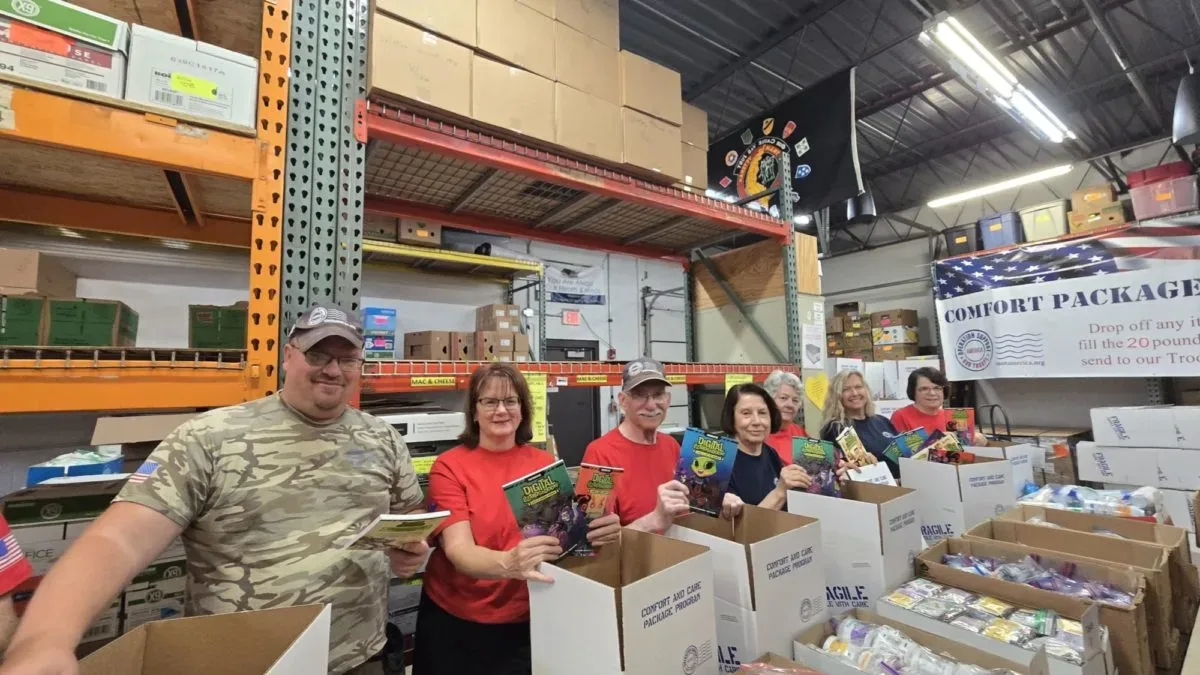
ComicBooks For Troops, the military-focused sister organisation of ComicBooks For Kids!, has completed a record-setting donation of Digital Lizards of Doom books. The 100,000 copies were divided equally across five distribution points, with 20,000 books delivered to each location. The books draw from Volumes 1 through 5 of Gabriel Valentin’s middle-grade series.
For the charity, this is a substantial jump from its previous largest single delivery of 20,000 books. More importantly, it is an attempt to supply an accessible recreational and educational reading option at scale for military children and families, whose lives can involve frequent moves and disrupted routines.
A 100,000-book delivery built around five locations
The donation was made possible by a collaboration involving Valentin, ComicBooks For Kids! and ComicBooks For Troops founder and president Mark Weiss, publisher Mad Cave Studios, and a private investor. Mad Cave Studios handled distribution and fulfilment. Planning took six months, and the news was held until every shipment had reached its destination.
The five recipient points are:
- Naperville, Illinois: Operation Support Our Troops-America, a volunteer-based organisation that provides comfort, resources and education for service members, veterans and their families.
- Ayden, North Carolina: North Carolina Support Our Troops, which provides care packages and support to deployed troops and their families.
- Colorado Springs, Colorado: Mt. Carmel Veterans Service Centre, which offers services including employment transition, behavioural health and wellness support for veterans and military families in Southern Colorado.
- Hampton, Virginia: Hampton Roads Peninsula Bases, active-duty installations serving service members and their families.
- Washington, DC: USO-Washington, which is coordinating distribution alongside the Hampton Roads bases.
At Mt. Carmel Veterans Service Centre, a September 11 celebration included copies being given to military families and a signing appearance by Valentin. That detail underlines a crucial distinction: the headline number represents inventory delivered through partner organisations, not a claim that one central event placed every book directly into an individual reader’s hands. The partner network is the practical mechanism that can move a large donation into communities.
Why this particular graphic-novel series?
Digital Lizards of Doom is a middle-grade graphic-novel series created and written by Valentin, aimed at readers roughly aged seven to 12. Published by Papercutz/Mad Cave and distributed by Simon & Schuster, it combines science fiction, fantasy, comedy and video-game logic.
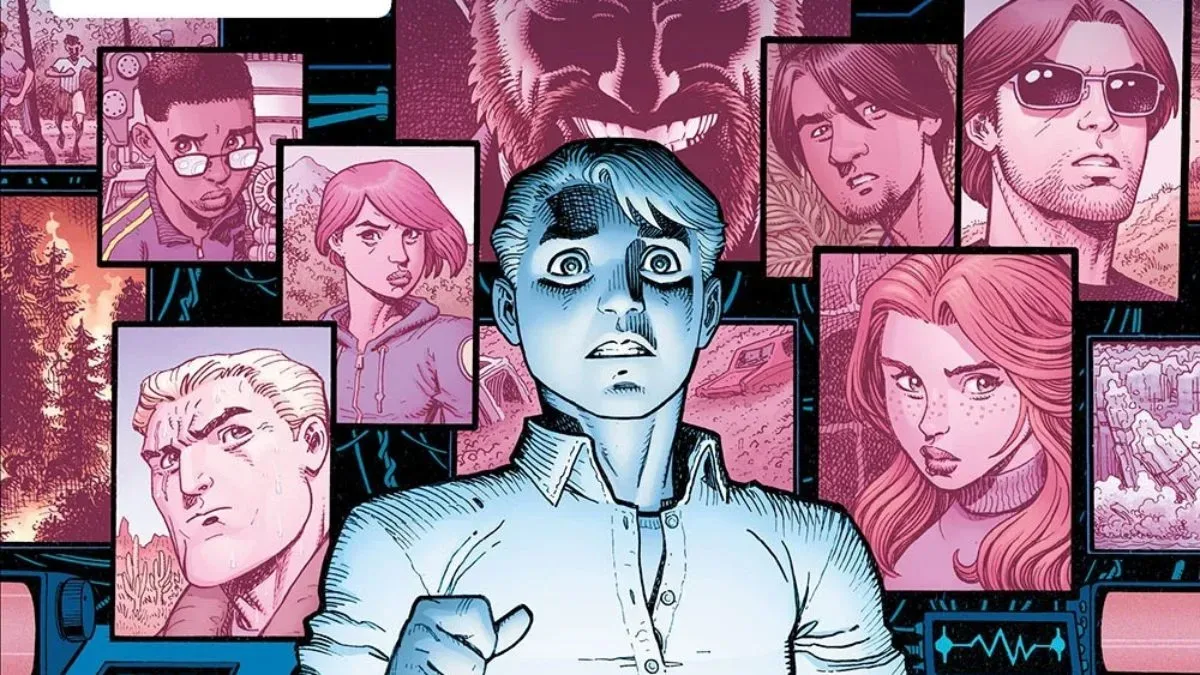
Its premise is intentionally maximalist in the way children’s adventure fiction can be at its most inviting: Pineapple Pete, a magical trickster, traps an entire universe inside a video-game world. Young lizard warrior Dizzy Doom must investigate what happened, make unexpected allies and face escalating dangers, including Commander E.K.O. Along the way are a mysterious ninja and Fat Cat Rogers, a cyborg cat pirate whose name has correctly identified that the world has room for both cybernetics and nautical nonsense.
The series’ format matters as much as its premise. Full-page illustrations sit beside more text-heavy pages fashioned to resemble group chats, including emoticons. That is a hybrid reading experience: it uses visual storytelling associated with comics while also asking readers to navigate prose and conversation presented in a familiar digital-social format.
Graphic novel is a publishing term for a book-length comic or comics-based narrative; it does not mean that a book must be read on a screen. In this case, “Digital Lizards of Doom” is the name of the series. The donated items are described as graphic novels. Similarly, “video-game logic” here describes the fictional setting and storytelling vocabulary—an adventure universe shaped by game-like ideas—not an announcement of a playable game adaptation.
Reading access, rather than a one-size-fits-all reading solution
The project began with a conversation at a ComicsPRO reception earlier in the year. Valentin raised the issue of fourth-grade reading performance, noting that 60 per cent of American fourth graders read below grade level. He also pointed to a challenge especially relevant to military households: families may relocate every nine to 12 months.
Weiss initially asked whether 20,000 books could be supplied. The scale of the discussion rose through 40,000 and 60,000 copies before a plan took shape. After the event, Weiss contacted Valentin with the intention of turning the idea into a practical donation. The final 100,000-copy total was not treated as an arbitrary stunt: Weiss said calls with organisations his group supports led the team to cap the project at that number.
ComicBooks For Troops selected the series after Weiss learned of a Johns Hopkins study concerning the books’ impact on students, including students who struggle with reading and learning, as well as a later pilot involving multiple schools. The available information does not specify the study’s methodology, findings or the design of that pilot. It would therefore be wrong to turn the mention of research into a claim that any comic can resolve reading difficulties, or that every reader will have the same outcome.
What can be said is more measured and still meaningful: the organisations chose a series they believed had a credible educational rationale alongside its entertainment appeal. A book that children want to pick up repeatedly can create more opportunities to read. The illustrations can provide context for dialogue and action, while the text-forward chat pages may encourage readers to move through written exchanges in an approachable form. Those are potential access points, not a replacement for educators, families, literacy services or individual support.
Why continuity can matter for mobile families
Frequent relocation can mean changing schools, libraries, friend groups and daily routines. The donation does not solve those pressures, but a multi-volume adventure offers one modest kind of continuity: a reader can follow a familiar cast and an ongoing world across more than one book.
That is also why the volume range is notable. Sending books from Volumes 1 to 5 gives distribution partners material from a continuing series rather than one isolated story alone. Readers can encounter Dizzy Doom’s world at different points, and families can potentially share a stack of books rather than receive a single standalone item.
The videogame-inspired frame may also be useful as a point of recognition. Many young readers are already fluent in the broad language of missions, team-ups, villains, rules and fantastical worlds. A graphic novel can meet them in that imaginative territory without requiring a device, a download, an account or a particular platform. The supplied details do not establish how the books will be allocated at each site, so families interested in availability should check with the relevant local partner rather than assume copies remain on hand.
The organisation behind the deployment
ComicBooks For Kids! was founded in 2017 by Weiss, a retired IT professional. It provides free comics, graphic novels and pop-culture items to children in hospitals and cancer centres. Weiss began after deciding to donate from his own collection and discovering that there was no established group designed to manage large-scale comic distribution to paediatric patients.
ComicBooks For Troops extends the charitable model to U.S. service members, veterans and their families, working domestically and overseas through support-group partners. The arrangement in this delivery illustrates why such partnerships are important. A publisher can facilitate fulfilment and a donor can help fund an enormous quantity of books, but local military-support organisations and installations are the routes through which material can be offered to the people the project is meant to serve.
There is a wider publishing question in the background, too: how does the industry help young people develop a lasting relationship with sequential art? The question is especially relevant as graphic novels compete for attention with games, streaming video and social apps while also borrowing some of their visual language. Recent discussion around graphic-novel growth and the next generation of comics readers shows why projects focused on young readers have significance beyond a single series.
This delivery is not a sales campaign disguised as philanthropy: the copies are being supplied free through support organisations. Nor is it proof that one format fits every child. It is, however, a concrete example of a publisher, a creator, charitable organisers and funding support using graphic novels as books first—stories made to be read, shared and circulated where families gather.
What the record actually represents
Big donation totals can become abstract quickly. In this case, 100,000 is also five carefully routed batches of 20,000 books, a six-month planning process, five volumes of a continuing middle-grade story, and a distribution network intended to reach military-connected families in several regions.
The scale makes the initiative unusual for ComicBooks For Troops, but the stated aim remains straightforward: place entertaining reading material in communities that can use it. Digital Lizards of Doom supplies the lizard warriors, trapped universe, group-chat pages and robot peril. The logistics supply the genuinely impressive part: getting a hundred thousand graphic novels to the places where young readers may actually find them.