Black Friday is still some distance away, but the first Magic: The Gathering price cuts are already doing their best impression of a surprise combat trick. That does not mean every early offer is an automatic buy. It does mean shoppers have a useful chance to learn which products are being discounted, what each box actually contains, and where a genuinely meaningful reduction is most likely to emerge as November gets closer.
For 2026, the early focus includes products connected to The Hobbit, alongside the broader spread of recent Magic releases that includes Lorwyn Eclipsed. The clearest theme is familiar: bundles and sealed booster products are appearing before the headline sale period, while Commander decks, older releases and large booster boxes are among the categories most likely to become more competitive when Black Friday lands.
Black Friday itself falls on November 27, 2026. The practical shopping window will probably begin earlier, around mid-November, and may continue into the Cyber Monday period and December. Those are expectations based on the usual retail pattern rather than a promise that every product will be cheaper later. The point is not to wait forever for a mystical 99% markdown guarded by Gandalf; it is to give early deals a fair comparison against the larger sale window.
What is on offer before Black Friday?
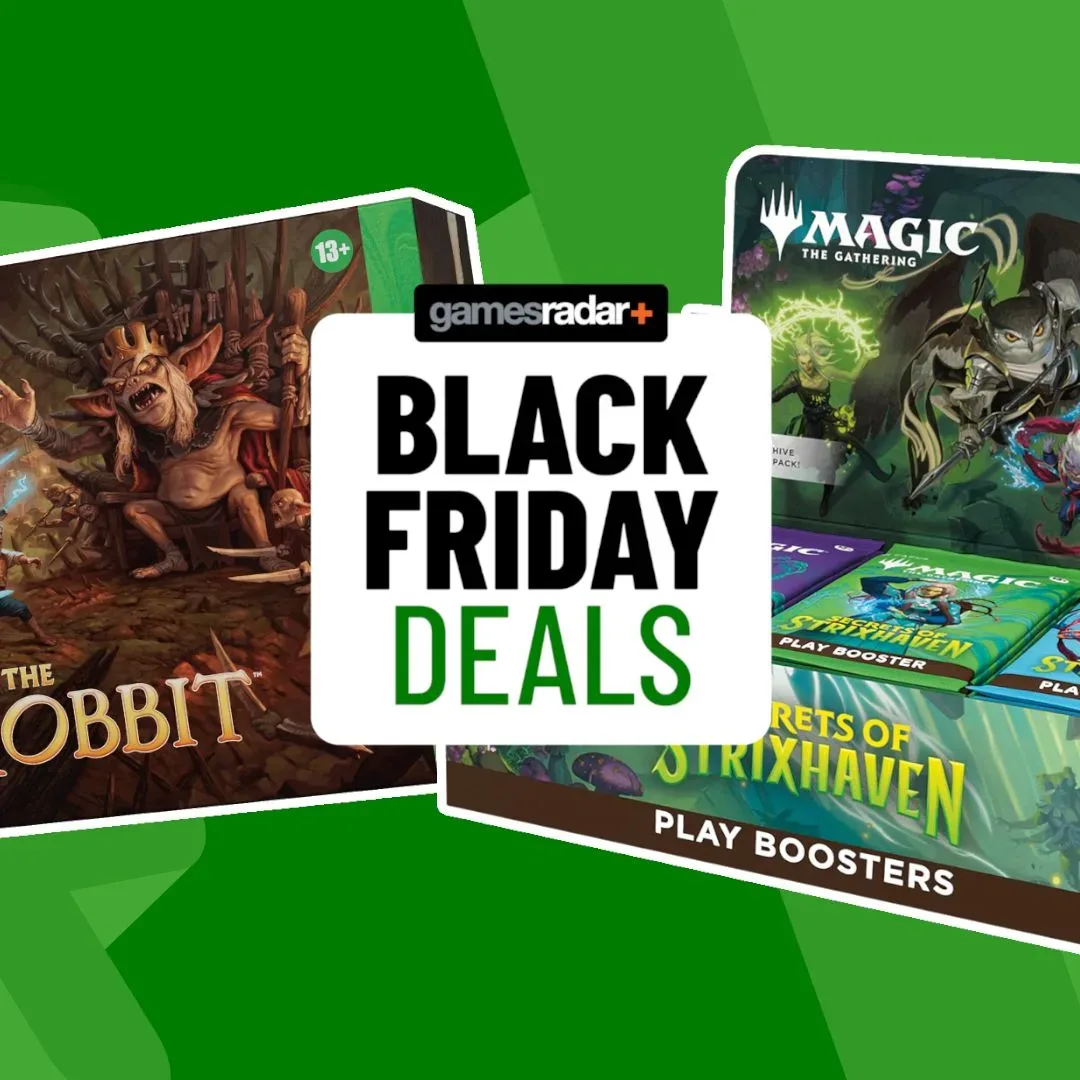
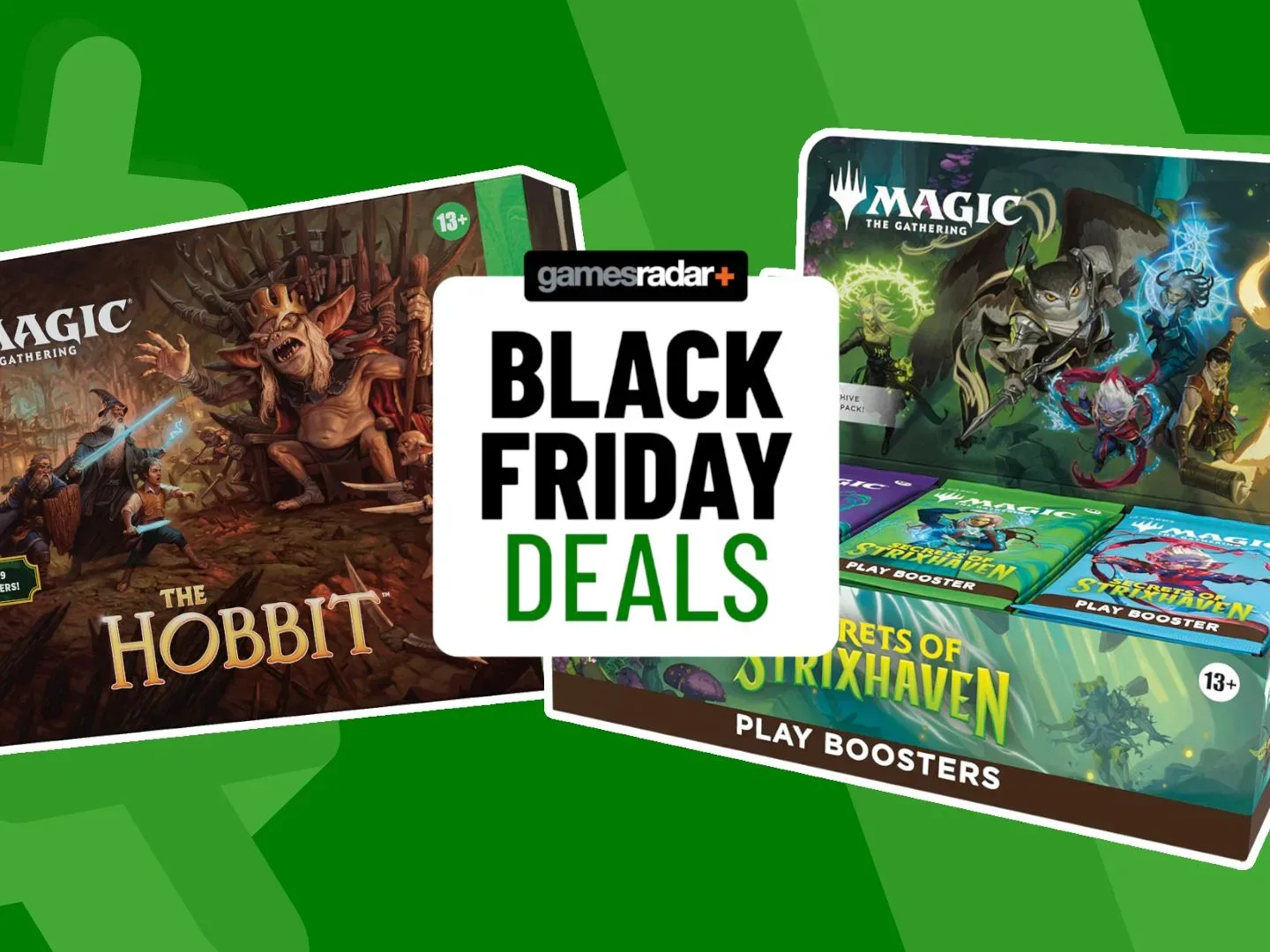
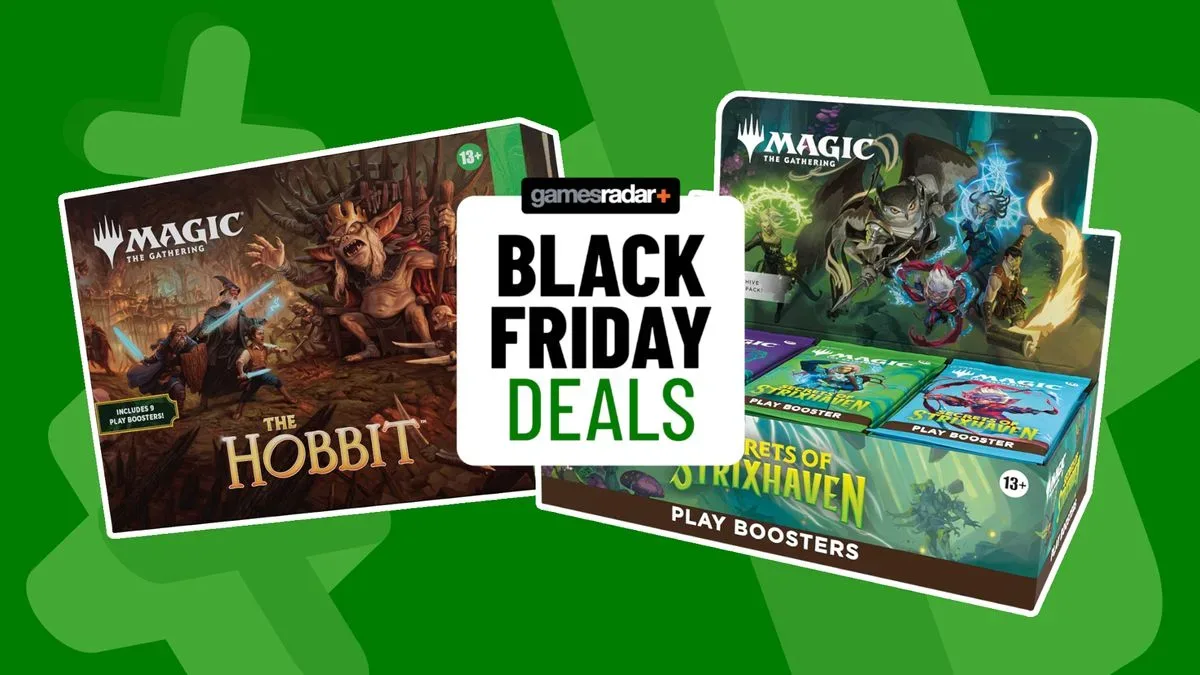
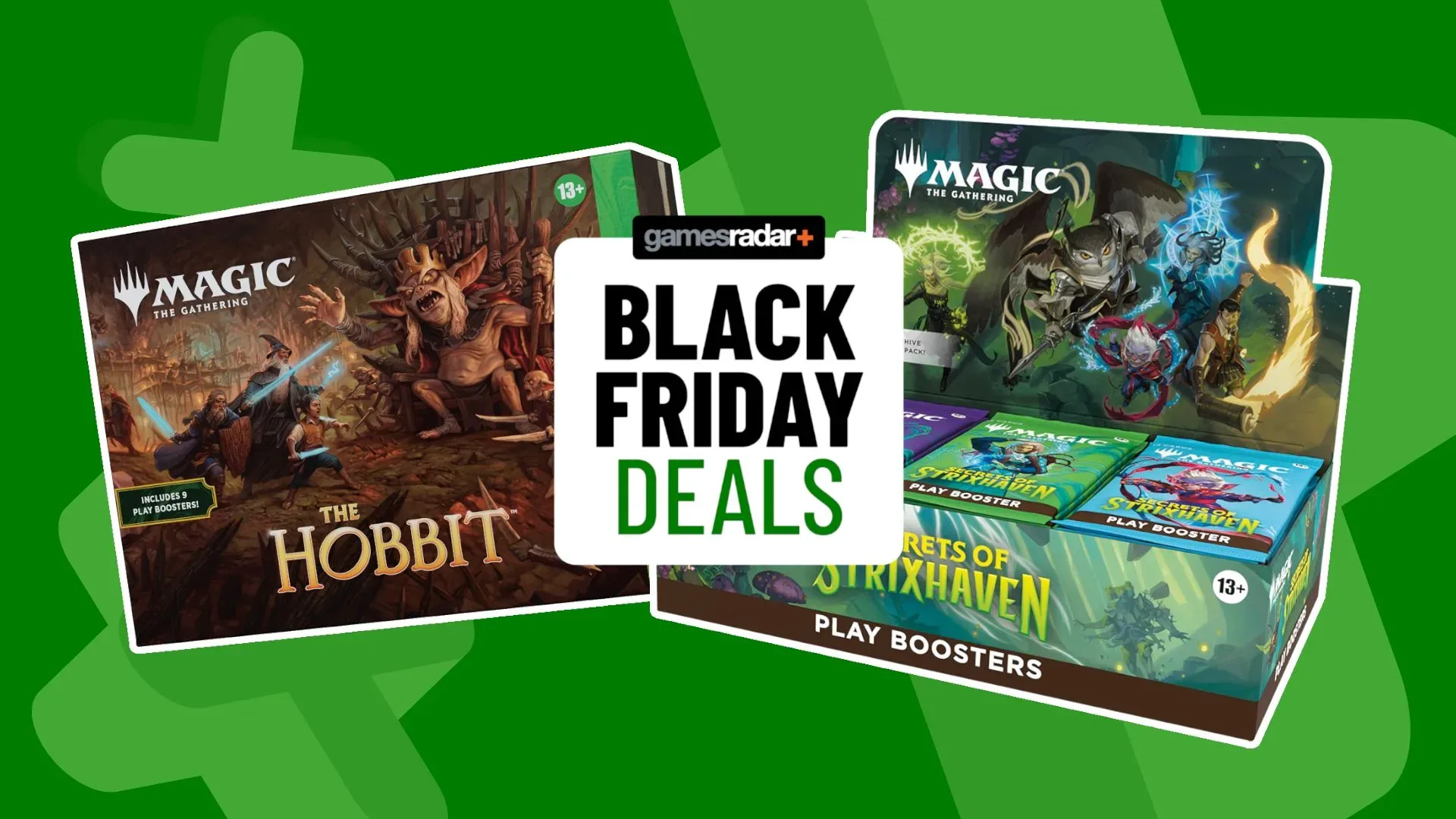
The early listings point to several different ways to buy into a set, and their contents matter more than the product name alone. One The Hobbit bundle is described as including nine booster packs, a storage box and a themed die. That makes it a mixed play-and-storage purchase rather than simply nine packs in a cardboard trench coat.
A Play Booster Box is also flagged at a price close to $189, described as a record low in the available price tracking and containing 30 Play Booster packs with 14 cards per pack. At face value, that is 420 cards before accounting for duplicates or the differing card treatments and rarities inside. It is a substantial sealed-product commitment, though, so the better question is whether a buyer wants that quantity for drafting, opening with a group, building a card pool, or keeping sealed—not merely whether the headline dollar discount looks dramatic.
Other early deals include a package with themed land cards, nine Play Boosters, one Collector Booster, promotional cards and a Spindown life counter. Another special-edition Gift Bundle is described as containing a storage box, unique die, one Collector Booster and nine Play Boosters. The latter has reportedly been seen more often around $88 to $90, making a lower current price notable even if it is not an all-time low.
That distinction is worth preserving. “Lowest price ever” and “good price compared with recent normal pricing” are not interchangeable claims. Both can help someone decide when to buy, but a temporary record low is stronger evidence that waiting may not improve the deal much. A price that merely sits below a typical range may still be perfectly reasonable—especially if the buyer wants the product now—but it leaves more room for a later Black Friday drop.
A quick guide to Magic sealed-product language
Black Friday listings can get confusing because Magic products frequently combine boosters, accessories and promotional cards. A little terminology helps cut through the festive packaging.
Related coverage includes Black Friday 2026 Magic: The Gathering Deals Are Already Taking Shape.
- Play Booster: A pack intended for opening and playing, including Limited formats such as draft and sealed play. The early Play Booster Box noted here holds 30 packs of 14 cards each.
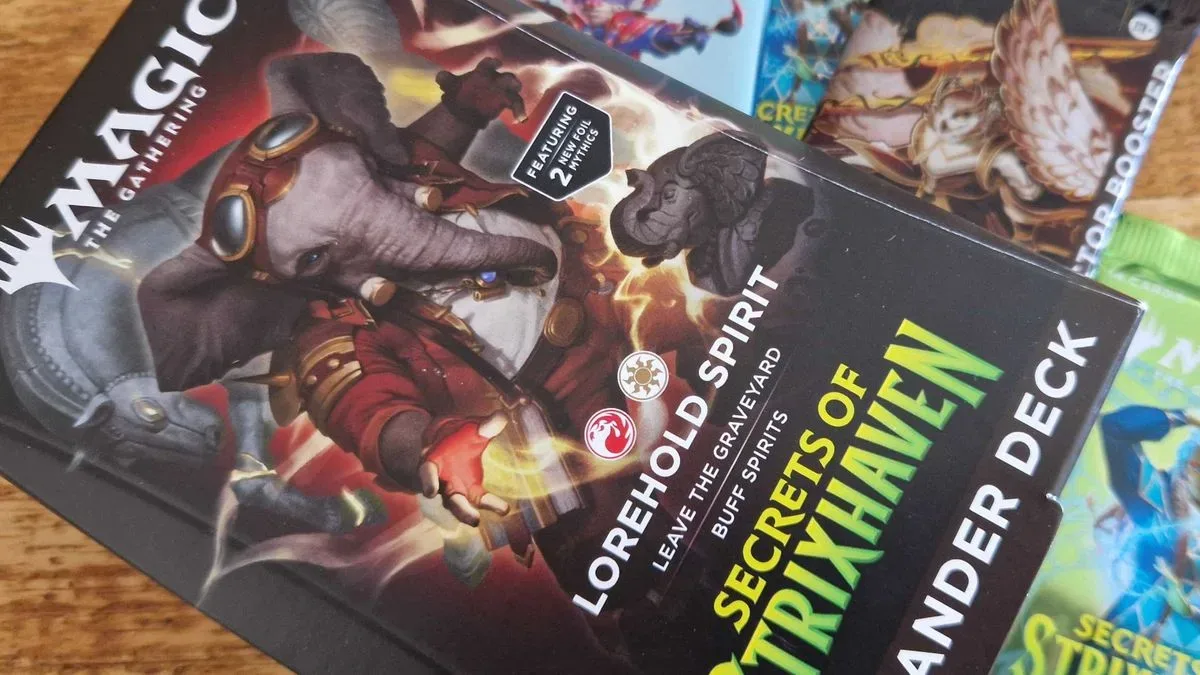
- Collector Booster: A premium-style booster product. In the packages listed so far, it appears as an additional pack alongside Play Boosters rather than a replacement for them.
- Bundle: A multi-item product that can combine boosters with items such as a storage box, themed die, land cards, promotional cards and a Spindown counter.
- Gift Bundle: A special-edition bundle format described here as including a box, die, one Collector Booster and nine Play Boosters.
- Spindown life counter: A die used to track a player’s life total. It is an accessory, not an extra booster or a guarantee of a particular card.
- Commander deck: A ready-made deck for Magic’s Commander format. These are separate products from booster boxes and bundles, and their sale patterns may differ.
Knowing the difference stops a common comparison error: treating every box as if it delivers the same kind of value. A storage box and themed die may be genuinely useful to a newer player or someone buying a gift. For somebody who only wants cards to play or trade, those accessories may not justify paying more than a comparable sealed booster option. Conversely, someone seeking an easy presentation-ready introduction to a setting may prefer the bundle precisely because it is not just loose packs.
Why Commander and booster boxes deserve extra attention
Commander is identified as Magic’s most popular format, and Commander decks are among the products expected to attract Black Friday discounts. The broad expectation is that decks a few months removed from launch could fall by around $10 from sticker price, with deeper reductions possible for older releases. This is a useful planning signal, not a guaranteed floor for every deck.
The logic is straightforward. A product that has had time on shelves is more likely to be included in seasonal promotion than something newly released. Brand-new sets can receive offers, as the current early examples illustrate, but buyers should be particularly cautious about assuming the first markdown will be the best possible price. Newness can keep demand high, while older inventory can become a stronger candidate for clearance-style competition.
Booster boxes could offer the largest headline savings. Savings of $40 or more are described as possible during the Black Friday period. That kind of reduction can materially change the value calculation for a 30-pack Play Booster Box, particularly for groups splitting a purchase for play. Still, “can” is doing important work in that sentence. A large discount on one set does not establish a rule for every set, and an expensive box after a $40 reduction is still an expensive box if it has no clear purpose in the buyer’s plans.
One practical approach is to write down the exact product, its contents, the current price and the price at which you would be comfortable buying. Do this before the retail countdown timers begin shouting in all caps. It makes it easier to recognize a real opportunity and harder to be nudged into a box you had not intended to purchase.
How to compare early offers without getting lost in the sale fog
Start by comparing like with like. A Play Booster Box should be compared with another Play Booster Box of the same set, not with a bundle that includes accessories. A Gift Bundle should be judged against its own usual selling range and on whether its specific extras matter to you. If a listing does not clearly identify the product configuration, pause before buying.
Next, separate the value of cards from the value of the experience. Opening boosters can be a social activity, a way to build decks, or a gift ritual. Those are legitimate reasons to choose sealed product. But they are different from buying a particular card. The available information notes that smaller independent stores may be competitive on individual cards, while large retailers commonly emphasize bundles, Commander decks and big booster boxes. In other words, the route to a specific card and the route to a pile of packs are not necessarily the same route.
It is also sensible to treat a claimed “record low” carefully. Price-tracking information can be useful context, but the shopper should still confirm the seller, product title, configuration and regional currency before checking out. A low price on a different bundle, a different number of boosters or a marketplace listing is not a clean comparison. Retail promotions have a talent for turning tiny product differences into big decision headaches.
More broadly, deal discovery tools can affect which offers shoppers notice at all. That is a theme beyond tabletop products, as seen in the discussion around personalized discounts and event feeds on Steam. For Magic buyers, the equivalent practical lesson is uncomplicated: do not rely on one storefront or one alert. A deal can be good without being universally advertised, and the most visible listing is not always the best fit.
Retailers to watch in the US and UK
In the United States, the relevant retailers include Amazon, Walmart, Best Buy, Miniature Market and Target. Their listed strengths vary: Amazon is positioned as a useful place to watch for bundles, Walmart for a surprisingly broad range, Best Buy for recent sets, Miniature Market for discounts and Target for Magic merchandise. Early reductions noted across these outlets range up to $15 at Walmart and up to $10 at Best Buy, while Amazon is associated with a $10 reduction on a Hobbit product.
For UK buyers, Amazon, Magic Madhouse, Wayland Games and Zatu are the names to keep on the watch list. The currently noted figures include savings up to £10 at Amazon, up to 10% off at Wayland Games and up to £12 off at Zatu. Magic Madhouse is highlighted as a destination worth checking for individual cards, while Zatu is described as a useful place to find single booster packs.
The retail split matters. Larger stores may be more convenient for widely distributed bundles and current sealed releases. Smaller independent sellers may be more relevant when the shopping list becomes precise: a specific individual card, a less prominent product, or a price that benefits from more aggressive competition. There is no single universal winner, only a reason to match the store to the purchase.
Buying checklist for the November rush
- Name the exact product. “Hobbit Magic thing” is a noble beginning, but distinguish between a bundle, Gift Bundle, Play Booster Box and Commander deck.
- Check the contents. Count the boosters and identify accessories before comparing prices.
- Decide the purpose. A gift, a group opening, deck-building, a storage solution and a hunt for one card lead to different purchases.
- Record the early price. It becomes a reference point when mid-November promotions begin.
- Watch the calendar, not just Black Friday day. Promotions are expected to appear before November 27 and can persist into Cyber Monday and December.
- Do not assume a discount is a historic low. The wording and product configuration matter.
- Compare retailers. Major stores and independent sellers may excel at different types of Magic purchase.
The early 2026 Magic discounts offer something more useful than a premature shopping frenzy: a baseline. The Hobbit bundles and Play Booster products now appearing give buyers concrete configurations and price points to watch. As Black Friday approaches, Commander decks and booster boxes look like the categories most likely to reward careful comparison. The safest strategy is not to chase every glowing red sale badge. It is to know exactly what is inside the box, what it normally costs, and whether it serves the way you actually want to enjoy Magic.
Shop the products
Check current price, model and availability at the retailer.
- View Magic: The Gathering The Hobbit Bundle on Amazon US on Amazon
- View Magic: The Gathering The Hobbit Play Booster Box on Amazon US on Amazon
- View Magic: The Gathering Teenage Mutant Ninja Turtles - Pizza Bundle on Amazon US on Amazon
- View Magic: The Gathering Marvel Super Heroes - Bundle: Gift Edition on Amazon US on Amazon