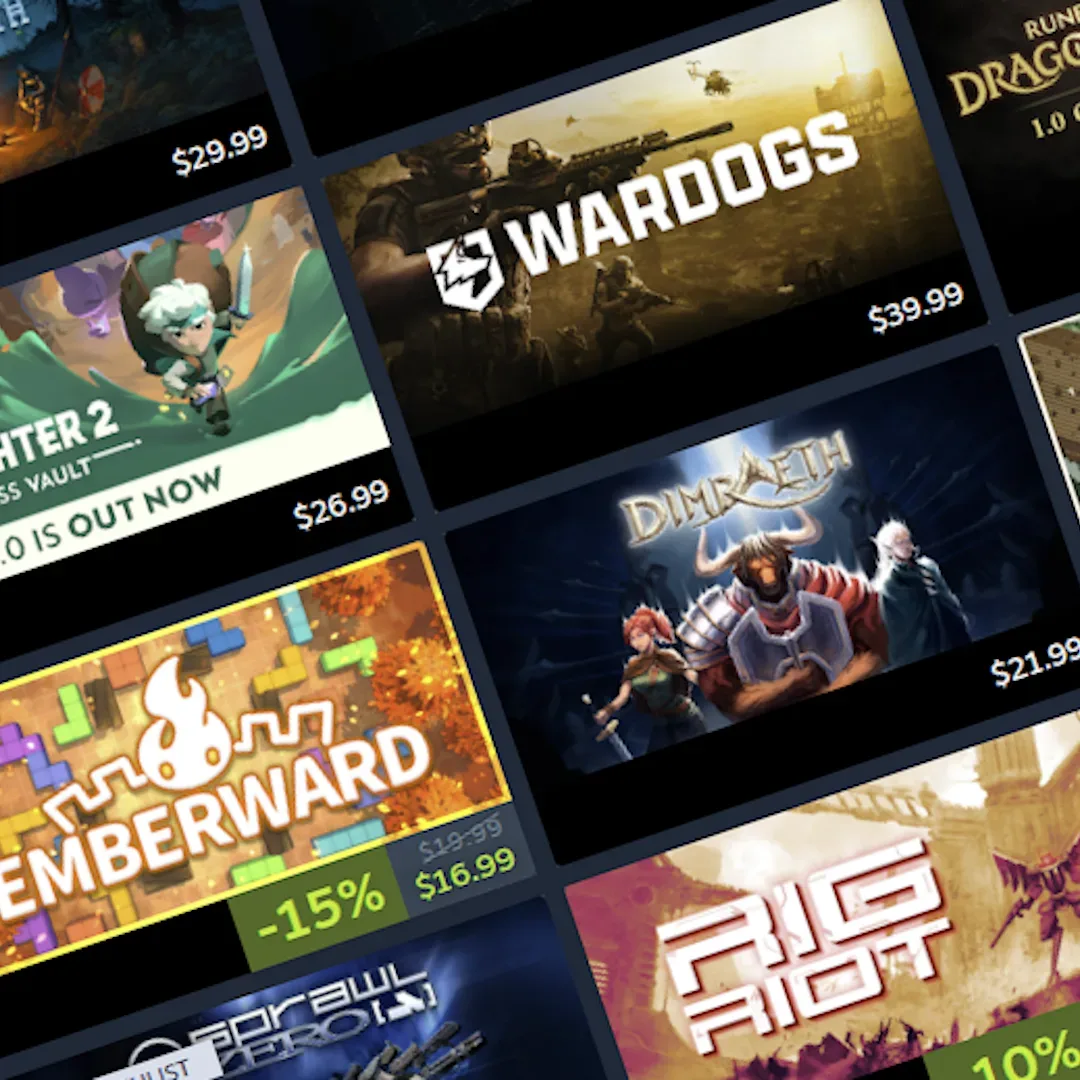
Steam discovery may be getting a meaningful, if quiet, assist for smaller games. Recent data shared by Tim Bender, CEO of strategy, simulation, and RPG publisher Hooded Horse, points to a sharp increase in traffic arriving through Steam’s prominent Discounts & Events homepage feed.
The apparent change is not a new storefront tab or a formal feature announcement. Instead, the important difference seems to be personalization: the feed is reportedly devoting more room to recommendations shaped by an individual player’s playtime, wishlist activity, and prior purchases, rather than emphasizing only the biggest sellers.
That is a small adjustment with potentially enormous stakes. A store page cannot sell a game to someone who never sees it, and Steam carries an immense volume of releases. For niche projects, simply appearing in a high-traffic homepage feed before the right audience can be more valuable than a broad but poorly matched impression.
One Hooded Horse title received 7,355 visits from Discounts & Events across six months, but 7,341 of those visits arrived in the most recent month. Using the prior five months as a baseline, that works out to roughly 2.8 visits per month beforehand and a jump of about 2,621 times in monthly traffic afterward. A second game grew from 6,000 feed visits over five months to 14,000 in one month.
Those figures are publisher-provided examples rather than a complete measure of Steam’s storewide performance. They do not establish how many visits became wishlists, purchases, or long-term players. Still, they offer a striking look at the difference recommendation placement can make for games that previously received little or no exposure through that part of the store.
Why Discounts & Events matters
In storefront language, discoverability is the chance that potential customers can encounter a product they might genuinely want. It is not the same thing as marketing, review score, or quality. A game may be excellent and still struggle if it does not reach players likely to care about its genre, setting, mechanics, or release timing.
Steam’s Discounts & Events feed matters because it sits on the homepage, a location with far more opportunity for passive browsing than a specific search result. A player looking for a particular game already knows where to go. The greater discovery challenge is serving something unexpected but relevant to a person who has not searched for it by name.
A personalized feed attempts to do that matching work. A player whose library, playtime, and wishlists lean toward tactical systems, older computer RPGs, or simulations may see more of those games. In Bender’s own browsing, the feed reportedly included smaller indie releases and rereleased Gold Box Dungeons & Dragons games from the late 1980s and early 1990s, even where the Steam versions had comparatively few reviews.
Related coverage includes Steam's Personalized Discounts & Events Feed Is Giving Smaller Indies a Major Visibility Boost.
That example helps explain why raw popularity is not the only useful signal. A game with fewer than a few hundred reviews is unlikely to compete for attention with an all-purpose bestseller if a feed is organized mostly by mass appeal. But it may be exactly what a particular player wants to see. Personalization can make room for that kind of match.
A potential shift from popularity to relevance
There is an important distinction between a feed that promotes what is broadly popular and one that promotes what is individually relevant. Best-selling releases will always have clear reasons to be visible: lots of players are buying them, talking about them, and often looking for them. The issue for the long tail of smaller games is that a universal ranking can become self-reinforcing. Already-visible games collect attention, while games outside that group have few chances to prove they deserve it.
More tailored recommendations do not erase the advantage of major releases, and there is no evidence that Steam has stopped featuring them. The reported change instead suggests that the homepage may be reserving more opportunities for games that fit a player’s established interests, including titles without blockbuster review counts.
For publishers and developers, that changes the practical value of a store page. If a recommendation gets the right player through the door, the page still needs to make its case: clear genre information, an understandable pitch, useful screenshots and video, accurate tags, and a visible release or update context. The feed can create an introduction; it cannot guarantee a sale.
For players, the upside is less abstract. Better targeting could mean fewer homepage slots occupied by games they already know about, and more chances to encounter an overlooked strategy game, simulation, RPG, or older rerelease that suits their tastes. Steam’s personal calendar has also been highlighted as a helpful recent tool, adding another way for users to keep track of games relevant to them.
Players interested in tactics-heavy PC releases can see the broader kind of catalog this discovery problem affects in Infinity: HexaDome Tactics’ Steam launch, where a distinct pitch still needs to reach people who are predisposed to enjoy it.
Traffic is not the same as revenue
The size of the reported traffic increase is notable, but it needs careful interpretation. A page visit means a user arrived at a game’s Steam page from the feed. It is a valuable early signal of attention, but it is not automatically a sale. Visitors can leave immediately, add a game to a wishlist for later, follow an event, or purchase at a different time.
That does not reduce the importance of the change. For projects that had essentially no previous traffic from a highly visible homepage surface, moving to thousands of visits creates opportunities that did not exist before. It also gives developers more meaningful feedback on how their page converts interested viewers into wishlists or purchases, even though no conversion information has been shared here.
The other caveat is scale. The examples come from a publisher with a particular focus on strategy, simulation, and RPG games. They are compelling evidence that some niche titles are benefiting, but they cannot by themselves prove every genre, price point, or launch stage is receiving the same lift. Recommendation systems are designed to vary from player to player, so an improvement for one audience may not look identical for another.
Steam’s growth problem is also its discovery problem
The backdrop makes any improvement to relevant recommendations consequential. Valve disclosed earlier this year that nearly 6,000 games earned more than $100,000 on Steam during 2025. That is a substantial number of games reaching meaningful revenue, and it undercuts the idea that success is limited to a tiny handful of releases.
At the same time, the lower end of the market remains harsh. An estimate for 2025 suggested that more than 5,000 Steam releases did not earn enough to recover the $100 fee required to put a game on the storefront. Both facts can be true: Steam can offer major upside to thousands of projects while still presenting a punishingly crowded environment for countless others.
The volume of releases is not slowing, with generative-AI assistance adding to concerns around an already busy marketplace even as many developers say they do not want to use generative AI. More listings mean more options for players, but also more competition for attention and a greater risk that clones or confusingly similar games crowd out the work they resemble.
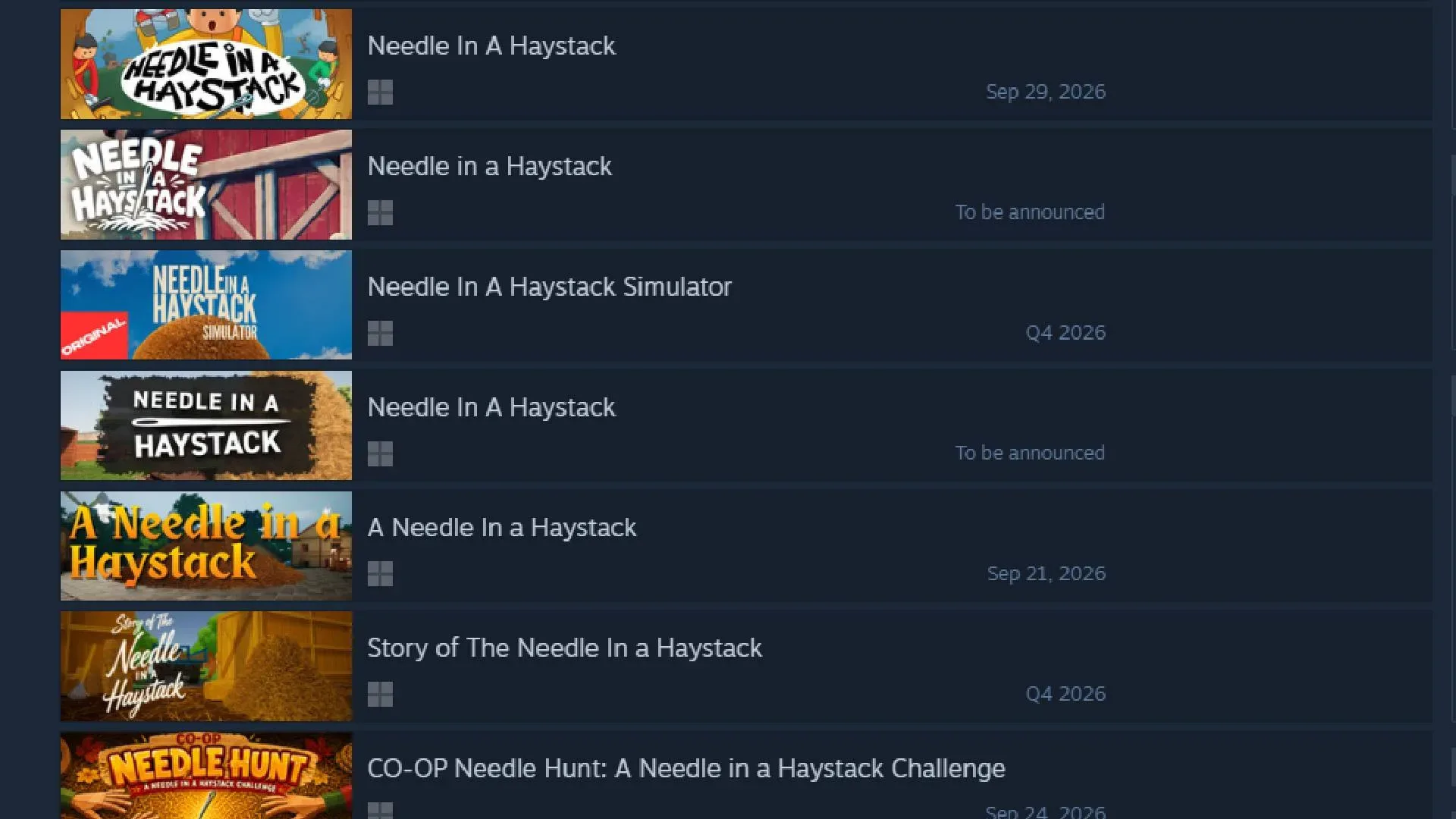
That risk is visible in the case of Needle In A Haystack Simulator, which has faced eight copycats before release and has added the word “original” to distinguish itself. A recommendation system cannot solve every issue caused by imitation, but better matching can at least increase the odds that players see a legitimate niche game they are likely to value rather than only the most aggressively imitative listing.
What the reported change could mean next
The central claim is not that discovery has been solved. Bender’s point is more measured: discovery is inherently difficult when a store holds so many games, but the storefront experience appears to be improving for smaller developers as well as customers.
That framing is useful. No single feed can ensure that every worthwhile game finds its audience, nor should page-visit spikes be treated as proof of commercial success. Yet a system that surfaces smaller games to people with a demonstrated interest in them is addressing the problem at its most practical level: not by promising universal exposure, but by improving the quality of individual recommendations.
If the traffic patterns continue, Discounts & Events could become a much more consequential channel for niche PC games than it was previously. For developers, it raises the value of presenting their store pages and events clearly. For players, it may make the Steam homepage feel less like a parade of familiar chart-toppers and more like a useful map through a very large library.