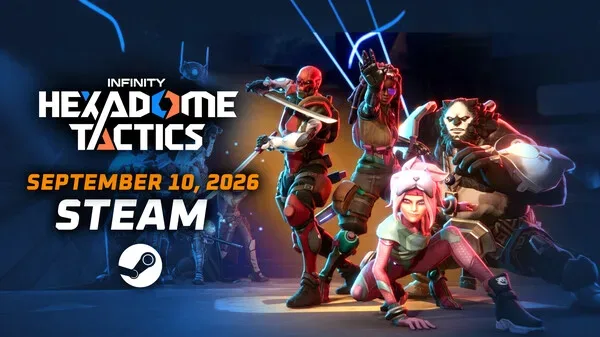
Infinity: HexaDome Tactics has officially launched on Steam. Developed by Blindspot Games, the 1v1 turn-based tactics title is the first PC game set in the Infinity sci-fi board game universe, reframing that setting as a compact arena competition where champions fight beneath the spectacle of a futuristic combat show.
The central change accompanying the official launch is especially notable for tactics players: dice rolls have been removed from combat following community feedback. Attacks now always hit, making the game’s battles deterministic rather than chance-driven. In plain terms, players can plan around known outcomes instead of having a pivotal action succeed or fail on a roll.
That decision puts the focus squarely on positioning, roster construction, timing and the interaction between champion abilities. It also gives the game a distinct identity within the broader field of PC strategy games, where systems of accuracy, evasion, critical hits or probability can often shape a match as much as a player’s tactical plan. Players following other PC gaming news may find HexaDome Tactics a very different kind of competitive experience: one built around reading a small board and executing an exact sequence of plays.
A small arena with several routes to victory
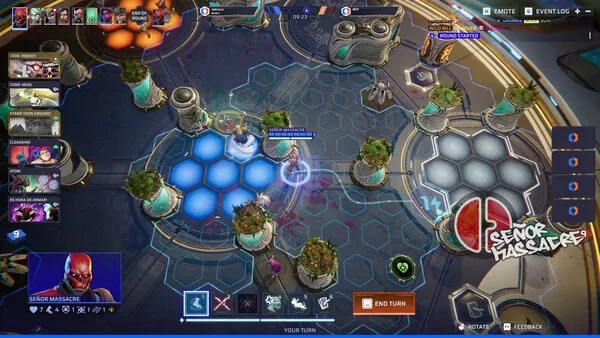
Infinity: HexaDome Tactics is built around fast-paced matches on a compact hex-grid arena. A hex grid is a battlefield made of six-sided spaces rather than squares. For turn-based tactics, that layout matters because each position has multiple neighboring directions, making movement lanes, surrounding pressure and control of key spaces important parts of every turn.
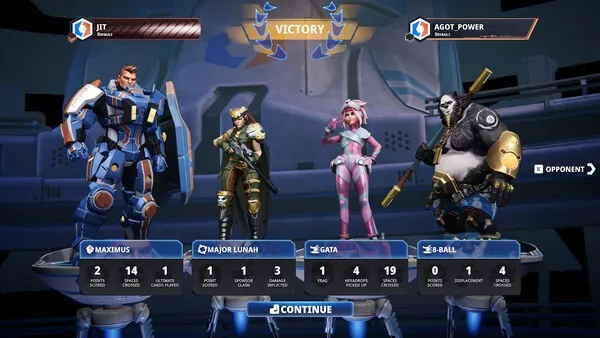
The game is not presented as a simple elimination contest. Defeating opposing champions is one path toward a win, but matches also involve capturing zones, completing sponsor objectives and working the crowd. Those goals imply that a player who commits every unit to direct combat may leave valuable scoring opportunities open for the opponent.
That multi-objective structure is potentially the heart of the game’s strategic tension. Zone capture generally asks players to physically occupy or contest a particular part of the board. Sponsor objectives add another layer of match-specific incentive, while crowd-related actions fit the game’s arena-show framing. The result is a match structure where board control should matter alongside damage output.
Crucially, the supplied launch details do not specify exactly how each objective is scored, how long matches last or how crowd support changes a game. Players should therefore treat those systems as central stated features, rather than assume particular point values or bonuses. What is clear is that the game asks competitors to account for more than the health bars of the champions standing across the arena.
What deterministic combat changes
Deterministic combat means that an action resolves predictably when its requirements are met. In HexaDome Tactics, the practical stated rule is straightforward: attacks always hit. Removing dice rolls does not mean every decision is automatically easy, nor does it mean every champion has identical results. Instead, it removes hit-or-miss uncertainty from attacks and shifts responsibility toward the choices made before an attack is launched.
For a player, that can make several parts of a turn easier to evaluate:
- Threat calculation: If an attack is available, the player does not need to account for a miss chance before deciding whether the move is worthwhile.
- Positioning: With reliable attacks, placing a champion within range can carry a more dependable payoff, increasing the importance of safely reaching the right hex.
- Resource and turn planning: A planned sequence can be evaluated as a sequence of known combat outcomes rather than a best-case scenario dependent on favorable rolls.
- Opponent reading: Players can more confidently identify what an opponent can threaten on their next turn, assuming they understand the available abilities and board positions.
The trade-off is that errors may be more visible and more punishing. When an attack cannot miss, leaving a vulnerable champion exposed is less likely to be rescued by chance. Likewise, a player who spots a forced or decisive line can execute it without a failed roll interrupting the plan. This gives the game’s stated emphasis on “pure strategy” a practical meaning: the decisive questions become where champions stand, which abilities they use, what objectives they prioritize and how they order their actions.
There is still no reason to assume that every element of the game is fully predetermined beyond attack accuracy. The launch information specifically says dice rolls were removed and attacks always hit; it does not outline every interaction, status effect, ability condition or scoring rule. The safest interpretation is that combat accuracy is reliable, not that every possible match state has been fully described.
Champions, roles and synergies
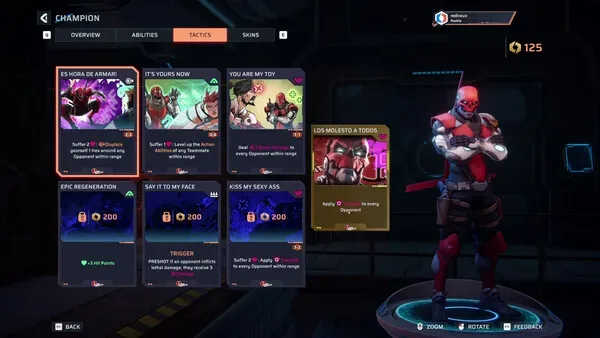
Players assemble a roster of champions, with each champion bringing individual abilities, a role and potential synergies with teammates. “Synergy” is a common tactics term for an interaction where units become more effective together than they would be as isolated pieces. That could mean one champion creates an opening another can exploit, one role supports another’s positioning, or a sequence of abilities produces a stronger combined result. The specific combinations have not been detailed here, but the roster-building premise makes those relationships a core part of the game’s strategy.
Roles are equally important because they signal that champions are not merely cosmetic variations. A well-rounded lineup may need to handle several demands at once: contesting zones, pressuring rivals, pursuing sponsor goals and responding when the opposing roster forces an awkward engagement. In a compact arena, the ability to cover different tasks can matter as much as the ability to deal damage.
The game also features chained turns for decisive plays. While the available information does not define the precise mechanic, the phrase suggests that turn sequencing is intended to create momentum and combination opportunities. In a deterministic system, chaining actions can be especially significant: a player can map a line of play with confidence that an early successful attack will not unexpectedly fail and derail the rest of the sequence.
This creates a natural strategic question for every roster: is its plan best served by immediate pressure, objective control, or patiently setting up a larger chain? The answer will depend on the champions selected, their abilities and the live state of the arena. Because victory incorporates several goals, a chain that wins a key zone or completes an objective may be as valuable as one that simply targets an opponent.
PvE and PvP modes
HexaDome Tactics includes both PvE and PvP modes. PvE, or player-versus-environment, places the player against game-controlled opposition. PvP, or player-versus-player, is the competitive mode in which another human player is the opponent. The launch details do not provide a breakdown of the content, progression or rule differences for those modes, but their inclusion gives the game two stated ways to approach its tactical core.
For players learning the board, champion roles and objective priorities, a PvE option may be a useful setting in which to understand the game’s systems. That is an inference from the mode type rather than a claim about its exact structure; no particular tutorial, campaign or difficulty option has been announced in the provided details. PvP, meanwhile, is where the deterministic combat model could most directly reward knowledge of threats, spacing and available turn chains.
The 1v1 format should also keep the strategic picture focused. Rather than coordinating a team of separate human players, each competitor controls a roster and bears full responsibility for its positioning and decisions. That makes champion selection and action order especially meaningful, because there is no teammate to compensate for a missed opportunity or an exposed route to an objective.
The Infinity setting enters PC tactics
The launch represents the first PC title set in the Infinity sci-fi board game universe. The game retains a science-fiction arena framing but is not described as a literal board-game conversion. Instead, its presentation centers on a future combat show, with sponsor objectives and crowd appeal embedded directly in the win conditions. That framing gives the tactical match an additional layer of theatrical stakes without changing the basic promise: two players maneuver champions across a hex-based battlefield.
For existing Infinity fans, the PC release offers a new format for engaging with the setting. For players with no prior familiarity, the announced structure is legible on its own: choose a champion roster, manage roles and synergies, take control of the arena and use turns efficiently. The game’s dice-free launch rules may also make its pitch particularly clear to players who prefer tactical games where attacks resolve reliably.
Infinity: HexaDome Tactics is available now on Steam. Its defining proposition is not merely that it is turn-based or set on a hex grid; it is that it combines those familiar tactical tools with several competing objectives and dependable attacks. The arena may be compact, but the intended decisions span roster composition, positioning, scoring priorities and the timing of a potentially match-changing chain of turns.