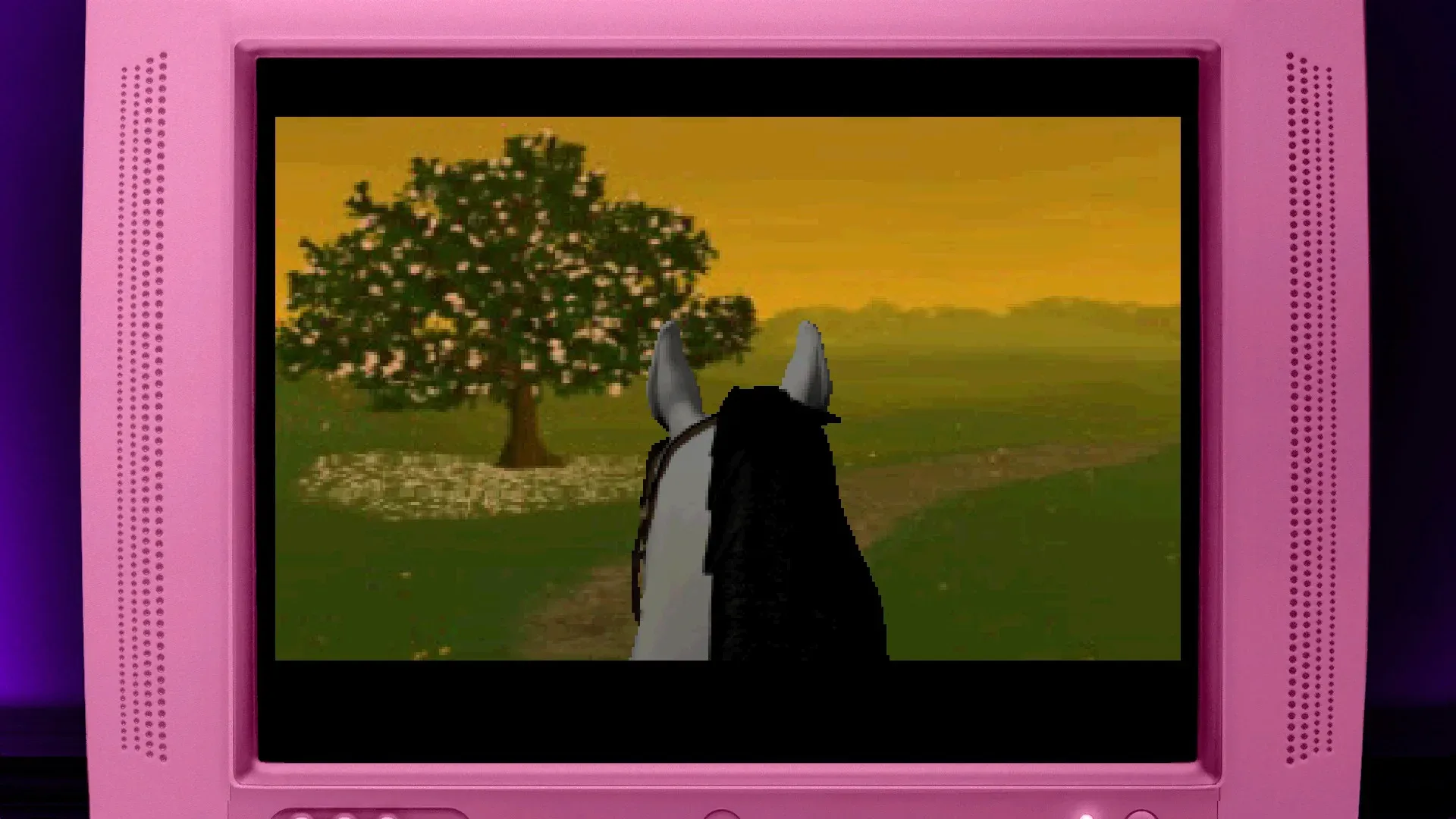

Some platform games make their case in the first screen with a memorable mascot, a catchy opening tune or an immediate parade of enemies. Woody’s World takes a different route. Its appeal is in the space around the player: large connected levels, out-of-the-way routes, hidden platforms and chest-filled corners that invite a closer look.
Developed by Paul Andrews, whose Amiga work also includes Seek and Destroy, Overkill and Roadkill, Woody’s World sits in a curious place. It has the colour, movement and visual confidence expected of a major 1990s platformer, but it has not remained one of the Amiga’s most routinely discussed games. That is worth correcting—not because it is flawless, but because its best ideas reward exactly the sort of patient, inquisitive play that retro games can still offer.
The game’s fundamentals are recognizable. Woody runs, jumps, finds health, collects occasional power-ups and can acquire new costumes. Yet the structure gives those ordinary actions more purpose. The immediate objective is to collect chests placed around each level. Players need only 50% of the chests to open the route forward, rather than every single one. That small rule is doing a great deal of work: it lets a player progress while preserving an incentive to hunt for more.
In other words, completion is not an all-or-nothing demand. A missed chest does not automatically turn an adventure into a dead end, but a player who sees an unreachable ledge or suspicious stretch of scenery has a concrete reason to return, experiment and search.
A platformer that makes room for exploration
Woody’s World has around 20 worlds, with three substantial stages in each, and those worlds are interconnected. There is no in-game map screen to reduce the process to a quick checklist. That absence is important: navigation becomes part of the challenge. A level is not merely a line from its entrance to its exit. It is a place to learn.
Hidden platforms, difficult jumps and trap-lined passages frequently lead to secrets. This is the game’s central design strength. Many platformers use collectibles as decorations placed along the obvious route; here, the chests are tied to the act of looking beyond it. The game asks players to read terrain, test their movement and remember which obstacles might become manageable after finding an upgrade.
That approach has clear practical implications for anyone returning to the game. A first trip through a stage is likely to be reconnaissance rather than a definitive clear. When a route appears beyond normal reach, it can be more useful to mark it mentally and keep moving than to assume it is impossible. Some bonus areas and progress routes depend on advanced movement, including super jumps that require an upgrade. The early learning curve is therefore less about raw reflex alone and more about understanding what Woody can do at a particular moment.
The overall tone sits somewhere between several familiar platform traditions: the playful, item-rich feel associated with James Pond 2: Robocod, the momentum and movement expectations of Sonic-style games, and the secrets-and-platform precision associated with Mario. Woody’s World is not simply a copy of any one of them. Its defining character comes from combining broad environments with a completion system that permits selective exploration.
Related coverage includes Woody's World Deserves a Second Look as an Ambitious Amiga Platformer.
Freedom, with a clock hovering over it
There is one major tension in that design: the timer. A game built around hidden routes and large environments naturally encourages players to slow down. The timer pushes in the opposite direction, placing constant pressure on the same player who is being asked to notice details and make careful jumps.
That does not erase the value of the exploration. It does, however, change its rhythm. Rather than treating every stage as a leisurely search for every chest, players may need to make choices: pursue a tantalizing side path now, or preserve time and come back with a better understanding of the route. Extra lives are reportedly common enough that running out is not the dominant obstacle, but the timer can still turn hesitation into a meaningful cost.
This is where the level-code system matters. Large stages and a multi-world journey can be daunting if all progress depends on a single uninterrupted session. Level codes reduce that pressure by allowing players to resume rather than start over. For a game whose layouts reward familiarity, that is more than a convenience. It makes revisiting difficult areas and learning their shape much more practical.
Bonus stages add another dimension. Some lean into familiar platforming ideas, while others emphasize very high speed, demanding jumps and specialized movement. Their limited-life stakes make them feel distinct from a casual diversion. They are not simply an excuse to throw rewards at the player; they ask for precision at a different pace from the exploratory main stages.
Why the sparse enemy placement makes sense
Players expecting dense combat may find Woody’s World unusually quiet. Enemy types are relatively limited, and opponents are often separated rather than packed into continuous formations. There are also no large boss battles to punctuate the journey. Those are genuine omissions for anyone who wants a platformer to escalate through increasingly extravagant combat encounters.
But the sparse enemies make more sense when considered alongside what the game prioritizes. Its stages are large and colourful, its movement is supported by smooth multi-layered eight-way scrolling, and the environments include moving platforms, visual effects and rotating sections described as Mode 7-style.
Eight-way scrolling means the view can move in every cardinal and diagonal direction as the character travels, rather than being locked to a simple left-to-right camera. That is particularly useful in a game with routes above, below and beside the most obvious path. Multi-layered scrolling, meanwhile, refers to visual layers moving at different speeds, creating depth as foreground and background scenery slide past one another.
The “Mode 7-style” label is an analogy, not a statement that the game uses Super Nintendo hardware. It describes a rotation-like visual effect associated with the SNES technique: a flat area can appear to turn or shift in perspective. In Woody’s World, those rotating platform sections help vary the visual language of a game already trying to make its spaces feel more elaborate than a single scrolling strip.
The result is a sensible trade-off. Instead of using its resources on crowds of foes, the game invests in traversal, scale and presentation. Fewer enemies can mean less constant friction while exploring, even if it also means less combat spectacle. Whether that is a compromise or a benefit depends on what a player wants from a platformer, but it is a coherent one.
An Amiga 500 showcase without the expansion requirement
The technical side is one of the strongest reasons Woody’s World deserves attention. It runs on a standard Amiga 500 and does not require memory expansion, despite box information indicating 1MB. It is reported to function with less. For a game combining big environments, smooth directional scrolling, music and sound effects at the same time, that is a meaningful achievement.
Terms such as Chip RAM and Fast RAM matter here because they describe different kinds of memory used in the Amiga ecosystem. Chip RAM is shared with custom hardware responsible for graphics and audio, while Fast RAM is additional memory principally available to the CPU. More memory could help developers pursue bigger or more demanding games, and titles of comparable ambition often called for ECS support, more Chip RAM, Fast RAM, or a mixture of these.
Woody’s World’s ability to deliver its particular package on a baseline Amiga 500 makes it accessible to players using original hardware close to the common configuration, rather than only upgraded machines. It also helps explain some of the game’s choices. The lower enemy density is not necessarily a missing idea; it may be part of the balancing act that allows the sprawling stages and graphical flourishes to function together.
For players rebuilding an old setup or considering classic-compatible hardware, the wider landscape can be confusing. Our guide to retro gaming hardware, controllers and classic-inspired builds offers a broader look at the kinds of equipment often considered for older games. Woody’s World, though, is a reminder that an original-spec machine can still have plenty to show off.
What to expect from the physical release
Woody’s World was published by Kompart rather than Acid Software or Mindscape, both associated with several other Paul Andrews games. Kompart had become a secondary publishing and distribution label for Richard Holmes’ Black Legend Software, later fading from the market. That limited publishing footprint may be relevant to why the game is difficult to encounter on the used market, although the available evidence cannot establish its sales performance.
The original big-box package is straightforward: a manual and three floppy disks. There is little in the way of elaborate pack-ins, but that simplicity has its own appeal for a floppy-era release. Collectors should be aware that the slipcase-style box can be vulnerable to shelf wear, especially at the edges and seams. A complete copy can therefore look substantially rougher than its contents might suggest after decades of opening, closing and shelving.
There is also an unresolved visual oddity. The disk-label art is notably unlike both the cover and the manual illustrations. It may simply be a separate design choice, but it creates a curious disconnect within the package. It is the sort of small production detail that makes physical releases interesting without proving any larger backstory about their creation.
Who should revisit Woody’s World?
Woody’s World is best suited to players who enjoy learning a game’s geography. Its pleasures are not limited to reaching the end of a stage; they come from seeing a suspicious gap, discovering that a platform exists where none seemed visible, acquiring the movement needed for an earlier obstacle, and deciding whether the clock leaves enough room for a detour.
Players who want frequent bosses, sustained combat pressure or unrestricted time to comb every screen may be less convinced. The timer, sparse enemy roster and lack of major boss set pieces are substantial qualifications. Still, they do not outweigh the game’s strengths for the right audience. The movement systems, optional chest threshold, interconnected layouts and unusually capable Amiga 500 presentation create a platformer with a clear identity.
Woody’s World is not merely an overlooked curiosity because it is obscure. It is worth revisiting because it uses exploration as the engine of its platforming, and because it pairs that ambition with technical features that remain impressive on standard Amiga hardware. Give it time to teach its routes, upgrades and jumps, and its overlooked status starts to look much less deserved.