A retro fighting game can make a surprisingly effective motivational poster, even if it cannot replace a martial-arts class. That is the charming premise behind AskJapan’s latest videos: the 52-year-old Japanese creator has begun looking at Tekken 3 not just as a game to revisit, but as a personal prompt to begin pursuing karate.
The inspiration came from much closer to home than the arcade. AskJapan says his 10-year-old son has trained in karate since age five and now holds a brown belt. After watching one of his son’s recent demonstrations, he decided he did not want to keep putting the idea of learning karate off for some vague future date. He wanted to begin in some form that same day.
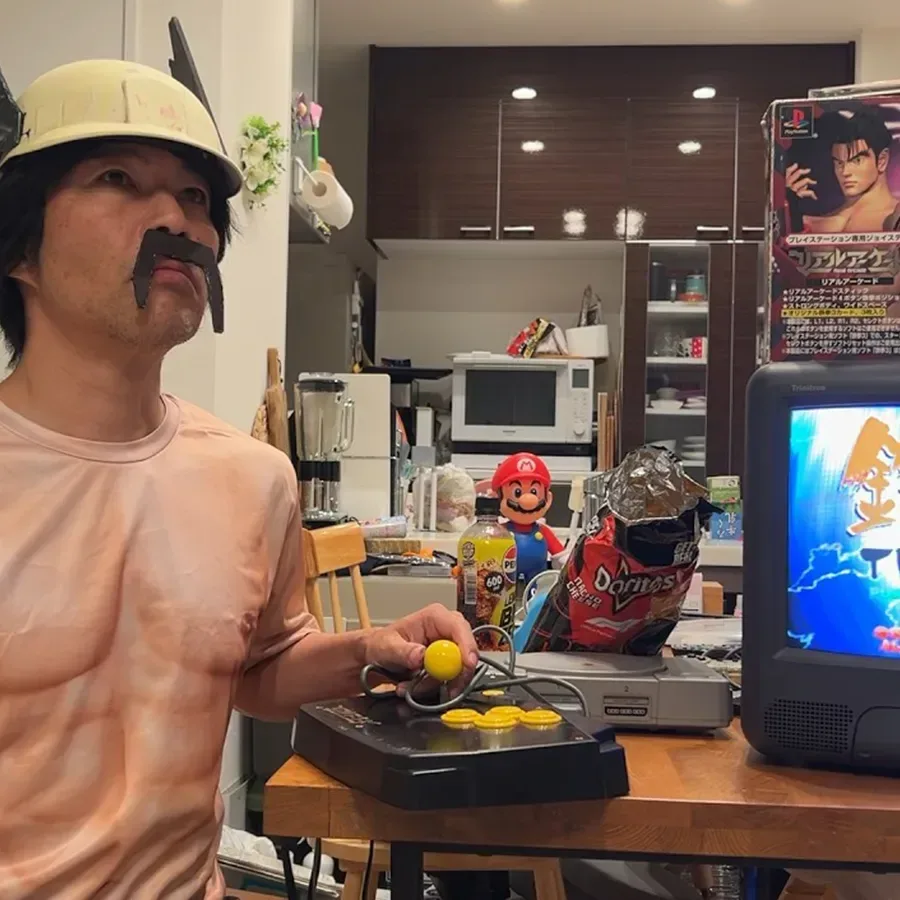
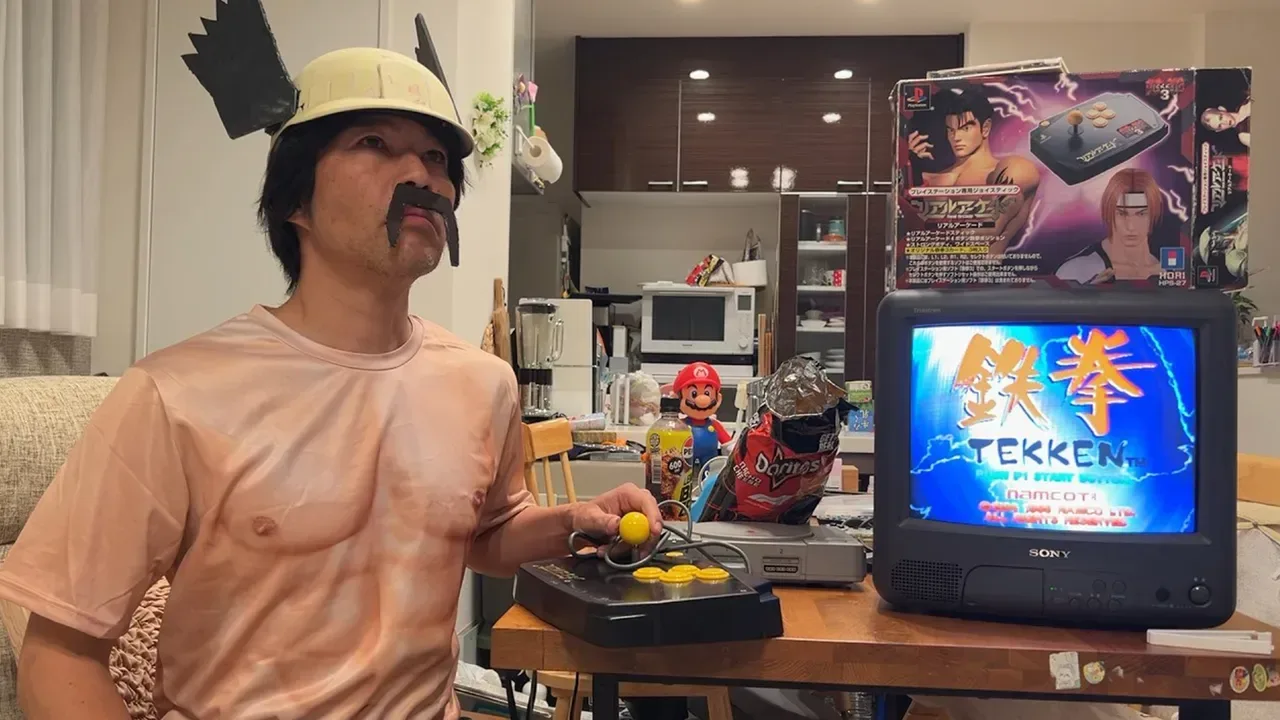
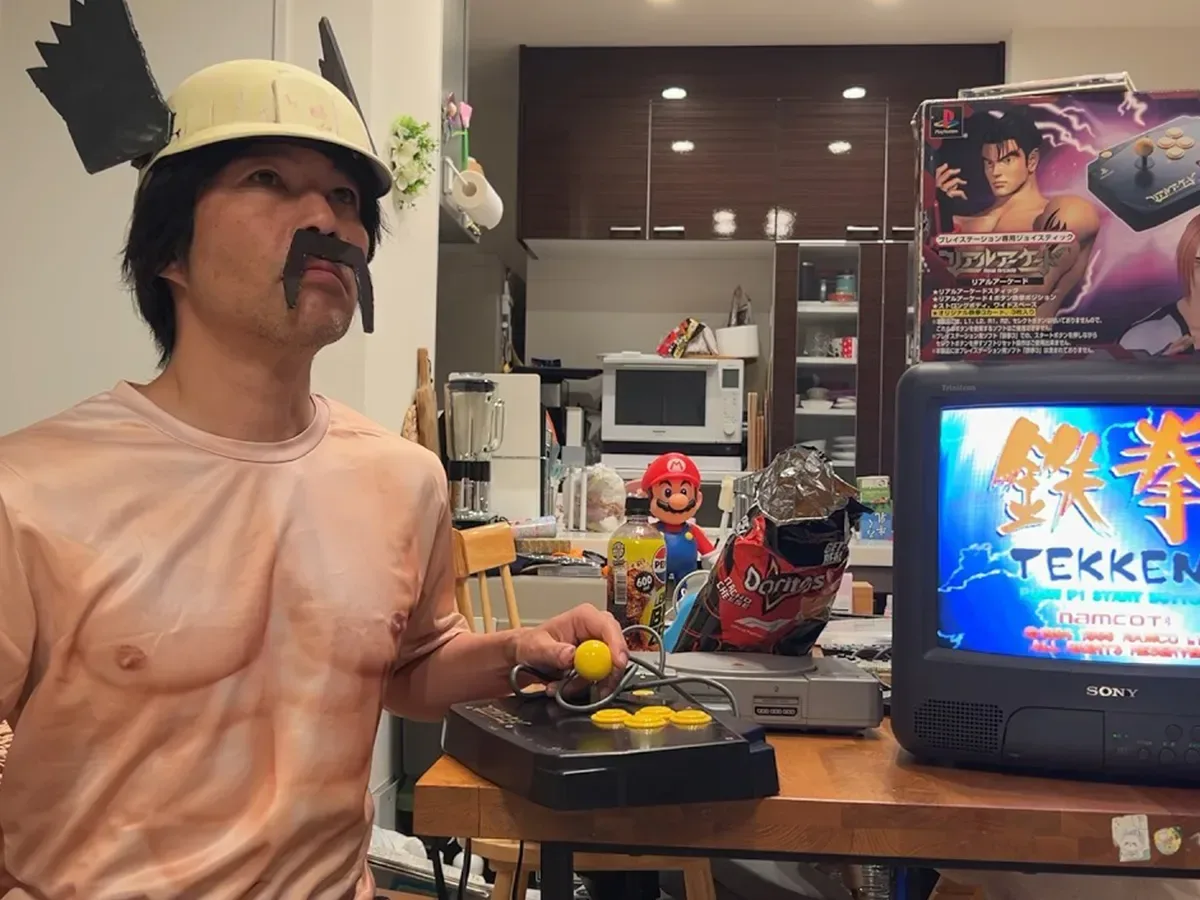
His initial method is unconventional, intentionally low-budget, and completely on-brand for a creator known for retro-game videos, casual chats and homemade character costumes. Instead of presenting himself as an instant martial artist, he sat down with Tekken 3, watched its characters’ movements, took notes, and played on an arcade-style setup fashioned from cardboard.
It is a small story, but one that captures a useful truth about games: sometimes their value is not in teaching a real-world skill directly. Sometimes they provide the nudge, vocabulary and sense of play that gets someone interested enough to take a real first step.
A son’s demonstration becomes a father’s starting point
AskJapan framed his decision as an answer to a familiar internal bargain: the idea that a person might start something “someday.” Watching his son perform appears to have changed that calculation. The performance gave him the motivation to ask why he could not begin at 52, rather than treating age as a reason to avoid beginning.
“Why not start today, and practice with Tekken?” he said while explaining his decision.
That phrasing matters. He is not represented as claiming that a fighting game is formal karate training, nor has he announced a completed transformation into a karate practitioner. The documented goal is more modest and more relatable: use a game he enjoys to create momentum toward a new interest.
There is also a family dimension that makes the experiment more meaningful than a novelty challenge. His son’s years of work and recent demonstration helped make karate visible as an active part of their household. For a parent, taking interest in a child’s discipline can be a way to share enthusiasm without pretending to match the child’s existing experience.
Related coverage includes Japanese YouTuber Starts Karate Journey by Studying Tekken 3 With His Son as Inspiration.
The age gap does not erase the connection; it gives it a different shape. The son has years of karate practice behind him, while the father is at the curiosity-and-commitment stage. That contrast is precisely what makes the story resonate with viewers who have encouraged both the martial-arts ambition and the ongoing effort to improve at Tekken.
Why Tekken 3 fits the bit so well
Tekken 3 is a fighting game, meaning its action is built around one-on-one matches and command inputs that trigger attacks, throws and movement. A player is usually thinking in terms of timing, spacing, defense, character-specific moves and the sequence of buttons needed to execute an attack. Those are game systems designed to create readable, competitive matches—not a substitute for physical instruction.
But fighting games are exceptionally good at making movement memorable. Character stances, kicks, punches and evasive animations are deliberately expressive because a player needs to recognize what is happening on screen. That creates an easy bridge for somebody who has been inspired by martial arts: the game gives him a library of dramatic poses and motions to inspect, imitate playfully and talk about.
For AskJapan, Tekken 3 also makes sense as part of his broader retro-game routine. He has recently spent time with fighting games including Street Fighter II, so his choice is not a random attempt to attach a viral premise to an unrelated hobby. He is using a game category he already enjoys as a motivational frame for an interest that has suddenly become personal.
The cardboard arcade cabinet reinforces that spirit. It turns the activity into a project rather than a passive session: there is the game, the imitation of an arcade setting, the note-taking and, later, the costume. The result is less like a tutorial and more like an enthusiast creating his own tiny retro-gaming event at home.
That kind of handmade play remains part of why older games endure. Their appeal is not limited to original hardware or perfect preservation; people continually build rituals around them, from recreating arcade atmosphere to sharing a favorite title with family. The larger business conversation around physical and digital games may be different, but physical games still retain a meaningful place in the market, as seen in Nintendo’s continuing physical-game share alongside digital sales. AskJapan’s cardboard setup is a more personal version of that same instinct to make gaming tangible.
From move lists to real movement: an important distinction
The funny and endearing part of this story is that AskJapan calls the game his way of practicing karate. The important practical distinction is that studying animated attacks and learning karate are not the same activity.
A video game can encourage observation. It can lead someone to notice a stance, remember a character’s animation, become curious about martial-arts terminology, or commit to a routine because it makes the process feel fun. It may even help a newcomer understand the broad idea that different characters have different styles and approaches to combat.
It cannot, on its own, provide the feedback that real instruction is for. A game cannot tell a beginner whether their balance is unsafe, whether a joint is being placed under strain, whether an imagined strike is controlled correctly, or whether their posture needs correction. Its combat is also shaped by design priorities: visual impact, character identity, responsiveness and competitive balance. Those priorities are not identical to safe physical practice.
That does not diminish AskJapan’s approach. It clarifies what makes it useful. His videos are best understood as motivation and entertainment at the beginning of a possible learning journey, not as a martial-arts lesson viewers should reproduce. The sensible next stage for anyone inspired by the same idea would be qualified instruction and an environment built for supervised training, rather than trying to force game animations into real techniques at home.
What the game can genuinely contribute
- Motivation: a familiar hobby can reduce the emotional barrier to starting something new.
- Routine: returning to a game can create a recurring reminder of a goal.
- Curiosity: stylized characters can prompt someone to learn what real-world disciplines involve.
- Connection: games can give family members a shared language around an interest, even if they have very different experience levels.
That is a healthier takeaway than claiming a controller teaches combat. The game is the spark; responsible practice, if he chooses to pursue it, would be the work that follows.
The Heihachi challenge adds a second kind of training
AskJapan’s next Tekken 3 outing doubled down on the playful side of the project. He made a Heihachi costume using a helmet and cardboard, then attempted to unlock the boss character by clearing the game’s arcade mode. The attempt did not succeed, but failure is part of what gives the video its appeal.
In fighting games, “arcade mode” generally refers to a structured run of computer-controlled opponents. Finishing such a run can be a challenge because it asks a player to maintain performance across successive matches rather than win a single round against one opponent. The details of unlock conditions can vary by game and character, but the basic appeal is clear: it turns a roster and match system into a personal ladder to climb.
For someone already using Tekken 3 as a self-improvement metaphor, an unsuccessful run is hardly a contradiction. It actually reinforces the theme. He is a learner in two connected senses: a player working through a difficult classic fighting game and a father taking his first motivational steps toward a new physical pursuit.
The homemade Heihachi costume also avoids the polished, overly serious tone that can surround self-improvement content. There is no evidence here of an expensive training setup, an elaborate production or a claim of expert authority. There is cardboard, a helmet, an old fighting game and a willingness to look a little ridiculous while trying something. That combination is likely why viewers have responded so warmly.
A reminder that “starting late” is still starting
The most enduring part of AskJapan’s story is not an arcade unlock or a particular Tekken 3 move. It is the decision to treat inspiration as a reason to begin now. His son’s karate demonstration was impressive enough to move him, and he translated that feeling into an activity he already understands: playing retro games, making a costume and documenting the attempt.
There is plenty of room for the journey to remain lighthearted. Not every hobby has to become mastery, and not every first step needs to look conventional. If his game sessions lead him toward formal karate training, the videos will have served as a memorable opening chapter. If they remain a playful father-and-son-adjacent ritual built around retro fighting games, they will still have done something worthwhile.
Either way, AskJapan has found an answer to the intimidating question of how to begin. He began with what was already in front of him: a son he admires, a game he loves, a cardboard cabinet and the willingness to press start.