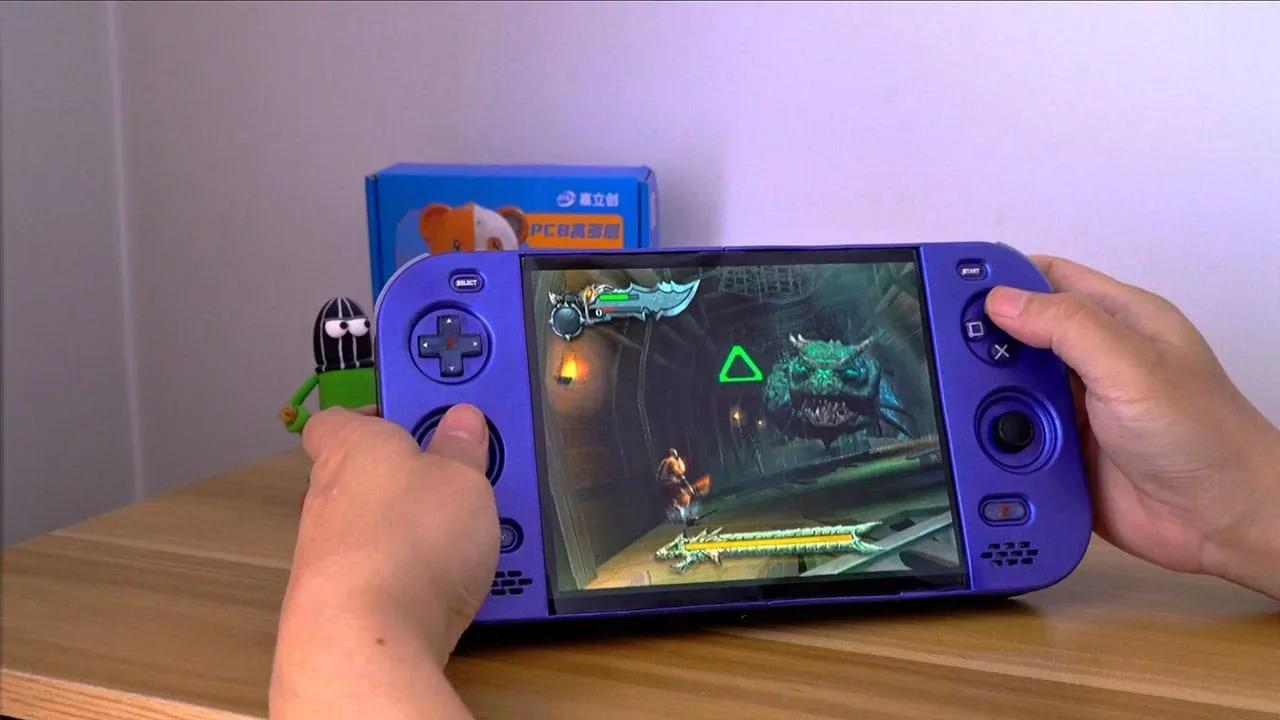
A PlayStation 2 was never designed to disappear into a bag like a clamshell handheld. That has not stopped a maker known as LCLDIY from pursuing exactly that idea: a folding portable console assembled from the remains of three broken PS2 systems.
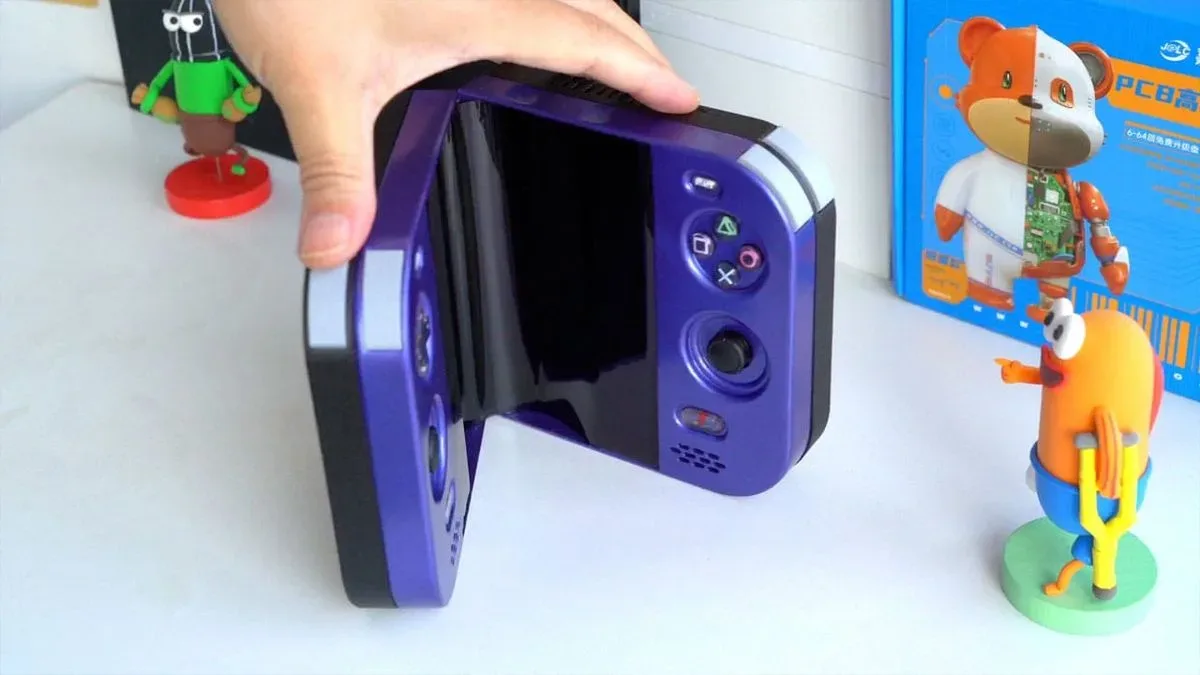
The result is being called the PlayStation 2 Duo, and its appeal is obvious before getting into the difficult bits. It is a real PS2 hardware project in a compact, hinged format, built to play PlayStation 2 games rather than merely evoke the look of the era. The machine folds around its display, uses dedicated physical controls, and can also work with a wireless controller for a more traditional setup away from home.
It is a particularly striking kind of retro-gaming project because it does not treat the original hardware as a sealed historical object. Instead, it treats damaged donor consoles as raw material for a new form factor. That approach has a cost: the build requires board work, custom electronics, enclosure design and careful mechanical planning. But it also makes the finished device more than a novelty shell around a familiar logo.
Three broken PS2 consoles become one portable system
LCLDIY reportedly bought three non-working PlayStation 2 consoles at a flea market for $20, then cut down their motherboards to create a version suitable for a handheld. That detail is central to what makes the project compelling. The build is not presented as an off-the-shelf portable console with PS2 styling; it begins with original PS2 boards that have been physically reworked to fit a far smaller housing.
A motherboard is the primary circuit board that connects and supports a device's major components. In a standard console, its dimensions are dictated by the original case, cooling layout, ports and internal hardware arrangement. A portable conversion faces the opposite problem. Every millimetre matters, and the builder needs to identify which sections can be removed or rearranged while preserving the connections the machine needs to operate.
That is why a project like this is substantially different from dropping a small PC or emulation device into a custom 3D-printed case. The visual result may be immediately understandable, but the route to it is deeply technical. Hardware trimming means altering a component that was not made to be altered, then accommodating power, controls, screen output and physical protection in a package that can survive opening and closing.
The PlayStation 2 Duo is therefore best viewed as a hardware modification and fabrication project first, with a portable PS2 as the end result. Its greatest trick is not that it can show God of War, Grand Theft Auto: Vice City or Shinobi on a smaller screen. Its greatest trick is fitting the underlying console architecture into a foldable device at all.
A folding screen introduces a second engineering challenge
The screen is not simply mounted to the front of a single-piece handheld shell. LCLDIY uses a foldable LCD arrangement and special hinges to make the unit close in a clamshell-like fashion. That brings a practical benefit: the display can be protected when the machine is carried around. It also creates one of the build's most demanding design problems.
An LCD, or liquid-crystal display, is the panel that produces the image. In a hinged portable system, the display assembly must remain secure while the two halves repeatedly move. The hinge must provide the desired opening range, hold the screen in a useful position and make room for whatever cable connections are needed between screen and console. A loose screen, pinched cable or poorly positioned hinge would undermine the entire concept even if the PS2 electronics worked perfectly.
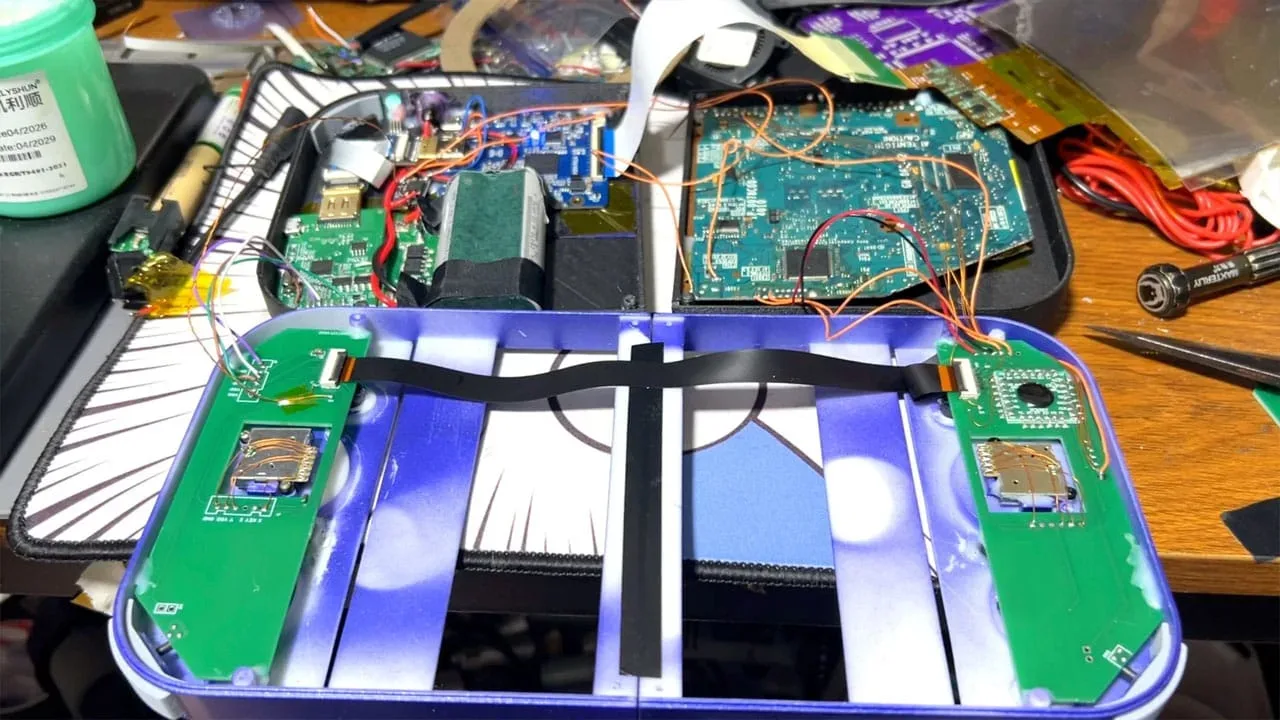
The project documentation includes a walkthrough that shows the interior components rather than hiding all the complexity behind the completed casing. That matters because finished custom hardware can often look deceptively simple. Seeing the circuitry, display mounting and internal packaging makes clear that a clean outer shell is only the final layer of the work.
The enclosure itself was designed with 3D modelling software and produced with a 3D printer. In practical terms, 3D modelling lets a maker establish the exact dimensions and internal supports for components before creating the physical parts. 3D printing then makes it possible to iterate on those parts without requiring industrial tooling. For a one-off project, that flexibility is essential: an opening that is slightly too narrow, a mounting point that misses its target or a button seat with the wrong tolerance can be revised in the digital model and printed again.
Custom controls are about more than fitting buttons into plastic
The console also has a custom circuit board for its control sections. A PCB, short for printed circuit board, is the board that mechanically holds electronic components and provides the conductive pathways allowing them to communicate. Here, that work supports the handheld's buttons and helps turn a reduced PS2 board into something that can be operated like a self-contained portable.
LCLDIY also created buttons that slot into the case to retain a PS2-like feel. That choice is important. Controls are where an ambitious portable concept can quickly become unpleasant to use: buttons need the appropriate placement, travel and resistance, while the casing needs to prevent them from wobbling or binding. A system can boot games flawlessly and still fail as a handheld if its controls feel cramped, vague or fragile.
There is no claim here that a bespoke portable necessarily duplicates the ergonomics of the original console's controller. A full-size pad and a compact clamshell have fundamentally different space constraints. But the effort to preserve familiar-style controls signals that the project is aimed at actual play, not solely at making an eye-catching piece of workshop art.
The wireless-controller option pushes that point further. With a compatible wireless controller connected, the folded device can serve as a small portable PS2 setup for a visit to a friend's house or a trip. That does not replace its handheld controls; it broadens the ways the screen-and-console unit can be used. The machine becomes both a compact personal device and a tiny display-equipped console base.
Why shared files are a major part of the story
Perhaps the most valuable part of the project for technically confident builders is that LCLDIY has shared related PCB files and 3D-printing enclosure data. The availability of those resources does not make this a beginner project. Working with cut-down console boards, electronics and soldering equipment carries obvious risks, and a file set cannot substitute for the knowledge required to diagnose an issue or safely assemble a device.
Still, sharing the design information changes the project from a single impressive build into something more useful to the modding community. It offers a starting point for people who want to study the layout, adapt the enclosure or attempt a similar conversion. In hardware circles, that distinction matters. A finished device proves an idea can work; reusable files help others understand the path taken to make it work.
There is a wider creative lesson in that openness. Current game projects keep finding new ways to revisit old formats and genres—see, for instance, the browser-based strategy ambitions of PROJECT MEGAPOP. The PlayStation 2 Duo takes a parallel route on the hardware side: it revisits a familiar platform not by reproducing its original shape, but by proposing a different way it might have been carried and used.
What the PlayStation 2 Duo does—and does not—represent
It would be easy to call the PlayStation 2 Duo the “world's first” foldable portable PS2 and leave the matter there. The more meaningful, supportable takeaway is that it is a documented custom build that combines trimmed PS2 motherboards, a folding LCD, bespoke controls, hinges and a 3D-printed housing into one coherent device.
It is not evidence that compact foldable PS2 hardware is suddenly a consumer category, nor is it a plug-and-play recommendation for every player with an old console in a cupboard. This is specialist maker work. The donor systems were broken, the boards were modified, and the project depends on skills and tools far beyond ordinary console use.
But that limitation is also the point. The PlayStation 2 Duo celebrates the unusual intersection of repair, reuse, electronics and game culture. Instead of letting three faulty machines remain unusable, LCLDIY turned their hardware into a portable form nobody could have bought when the PS2 was new. For anyone who enjoys seeing old gaming hardware given an imaginative second life, that is more memorable than a standard console restoration.