The Nintendo DS RPG library is broad enough to include traditional turn-based adventures, tactical strategy games, action RPGs, dungeon crawlers, monster collecting and experimental hybrids. This ranking uses that wider definition while excluding visual novels, puzzle collections and games where role-playing systems are only incidental. Ace Attorney and Final Fantasy Fables: Chocobo Tales may contain progression, investigation or fantasy elements, but neither belongs in a strict top ten of Nintendo DS role-playing games.
The ranking weighs combat depth, party or character development, story and setting, exploration, replay value, DS-specific design and how well each game works as a Nintendo DS release. Regional availability also matters. North American releases are the main access point, with European, Japanese or later-edition limitations noted where they affect the recommendation. These are editorial selections rather than objective scores, and the order favors variety as well as excellence.
10. Golden Sun: Dark Dawn
Golden Sun: Dark Dawn is an approachable traditional RPG with a strong sense of place and a useful connection between exploration and character abilities. Its party fights through turn-based battles with weapons, spells and Djinn, while Psynergy abilities open paths, move objects and solve environmental puzzles. Djinn can also support summons, giving battles a second layer of preparation beyond choosing ordinary commands.
The result is an inviting entry point for players who enjoy classic party RPGs but do not want an especially severe difficulty curve. Its world has colorful towns, elemental themes and a clear adventure structure. The weakness is that Dark Dawn often feels safer and more talkative than the earlier Golden Sun games. Long stretches of dialogue and a straightforward campaign can dilute the momentum, while returning players may find its ideas familiar rather than revolutionary. Choose it for accessible exploration, puzzle-solving and party customization, not for the most demanding combat in the library.
Dark Dawn was released for Nintendo DS in North America, Europe and Japan, and it is a genuine DS installment rather than a remake. Nintendo’s own material emphasizes its new generation of heroes, Psynergy-based exploration, Djinn collection and optional touch-screen commands. Those systems make it a defensible choice even though the adventure does not push the hardware as aggressively as the top entries on this list.
- Best for: players who want a friendly traditional RPG with environmental abilities.
- Tradeoff: generous systems and lengthy conversations make the adventure less challenging and less brisk than the series’ strongest moments.
9. Final Fantasy IV
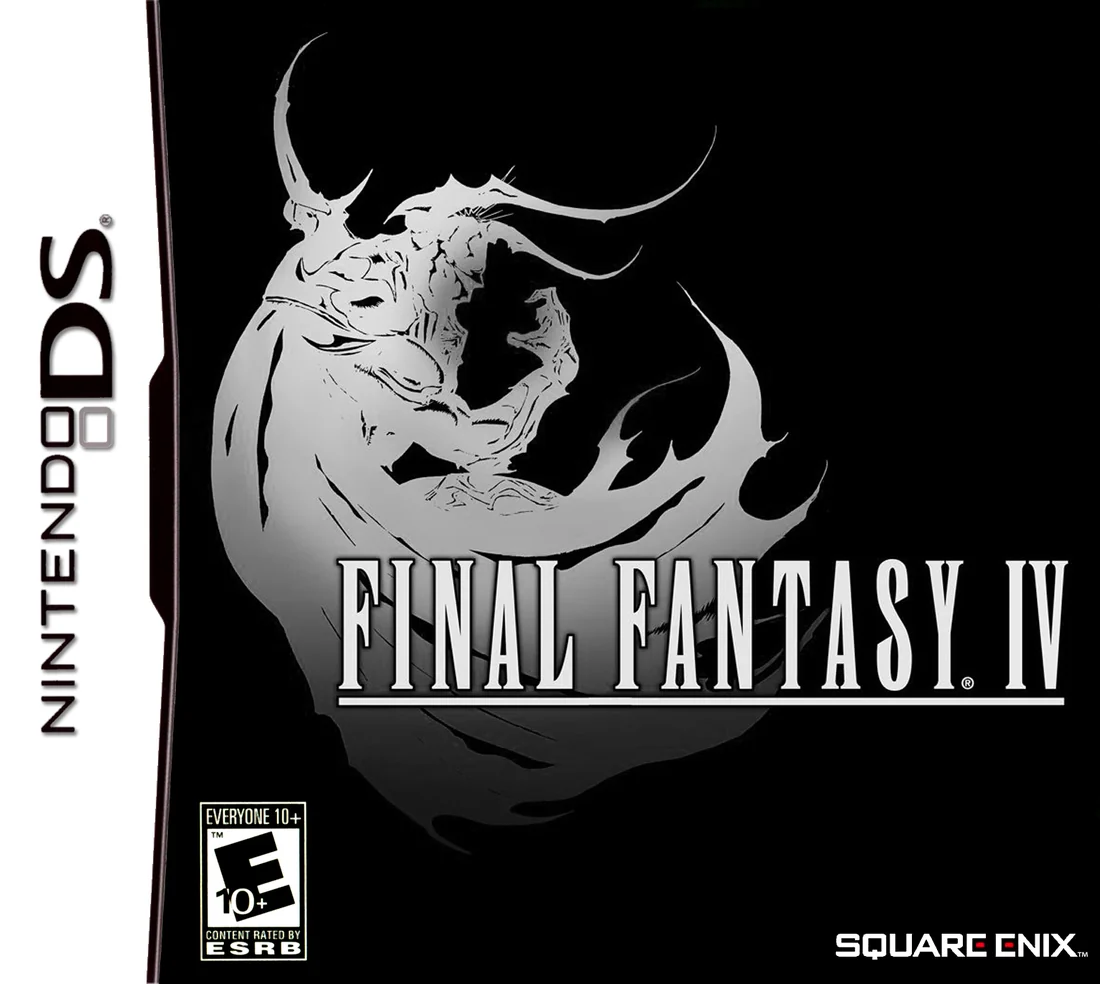
Final Fantasy IV on DS is a substantial three-dimensional remake rather than a simple presentation upgrade. It retells the story of Cecil and his companions with a fixed cast, dramatic character changes and the series’ Active Time Battle structure. Because party members join and leave according to the story, team-building is less flexible than in a job-based Final Fantasy, but the limitation gives the campaign a strong authored rhythm.
The remake’s battles ask more of the player than many versions of the original, and equipment, ability selection and timing can matter when enemies punish careless preparation. The 3D presentation gives the world a new texture, although its visual style and demanding encounters will not appeal to everyone. The DS edition also adds voice work, redesigned presentation and the Augment ability system, which gives players some control over the skills characters retain during the campaign.
This is a good choice for players who prefer a focused cast and classic melodrama. It is less suitable for anyone seeking open-ended builds, extensive optional exploration or a relaxed difficulty curve. The North American and European DS releases are both available in English, but regional release dates and packaging differ, so collectors should distinguish this remake from the original Super Famicom, PlayStation and later mobile versions.
- Best for: fans of story-led, traditional Final Fantasy with a fixed party.
- Tradeoff: linear progression and a comparatively demanding balance leave little room for improvising the entire team.
8. Mario & Luigi: Bowser’s Inside Story
Mario & Luigi: Bowser’s Inside Story makes its role-playing systems inseparable from comedy and timing. Mario and Luigi operate through one perspective while Bowser’s route unfolds elsewhere, creating a campaign built around contrasting abilities, locations and battle styles. Ordinary fights use timed button commands, so success depends on recognizing attacks and responding rather than simply selecting the strongest menu option.
The giant Bowser encounters provide a major change of scale and use the DS presentation to make those confrontations feel different from standard battles. In those sequences the system is held sideways, and stylus-driven actions give the encounters their own physical rhythm. Equipment, badges and level growth give the adventure enough customization to qualify as a full RPG without burying its playful personality.
Its comic writing remains the main attraction, but the split structure can create uneven pacing, and repeated battle rhythms may wear on players who prefer a more strategic system. The original 2009 DS game should not be confused with the later Nintendo 3DS remake, Mario & Luigi: Bowser’s Inside Story + Bowser Jr.’s Journey, which adds content and changes the presentation. Choose the DS version for lighthearted RPG design that makes the dual screens part of the joke and the spectacle.
- Best for: players who enjoy timed attacks, humor and frequent changes in perspective.
- Tradeoff: the strongest jokes and encounters are surrounded by stretches that can feel repetitive.
7. Pokémon Platinum Version
Pokémon Platinum is a complete monster-collecting RPG built around team construction, turn-based battles, exploration and a revised Sinnoh campaign. Its appeal comes from the decisions made across the whole journey: which creatures to train, how to cover weaknesses, when to evolve a team member and how to balance reliable choices against unusual ones. The adventure also gives familiar locations and encounters a different shape from Pokémon Diamond and Pearl.
The formula is dependable because its progression is easy to understand but still supports experimentation. A well-built team can reflect a player’s preferred tactics, whether that means status effects, weather, speed control or straightforward power. Platinum also improves the Sinnoh experience with a revised regional Pokédex, altered encounter availability, new story emphasis and the Distortion World sequence.
The opening portion can feel slow, and the game’s foundations remain intentionally familiar rather than radically DS-specific. Platinum belongs here because its team-building depth and revised campaign provide a strong standalone edition, not because every Pokémon release should automatically occupy a list slot. It is also important to count Platinum as one distinct game rather than treating Diamond, Pearl and Platinum as a single combined entry.
- Best for: players who want approachable party-building with long-term team decisions.
- Tradeoff: the early adventure is deliberate, and the core structure changes less than the strongest experimental RPGs.
6. Final Fantasy Tactics A2: Grimoire of the Rift
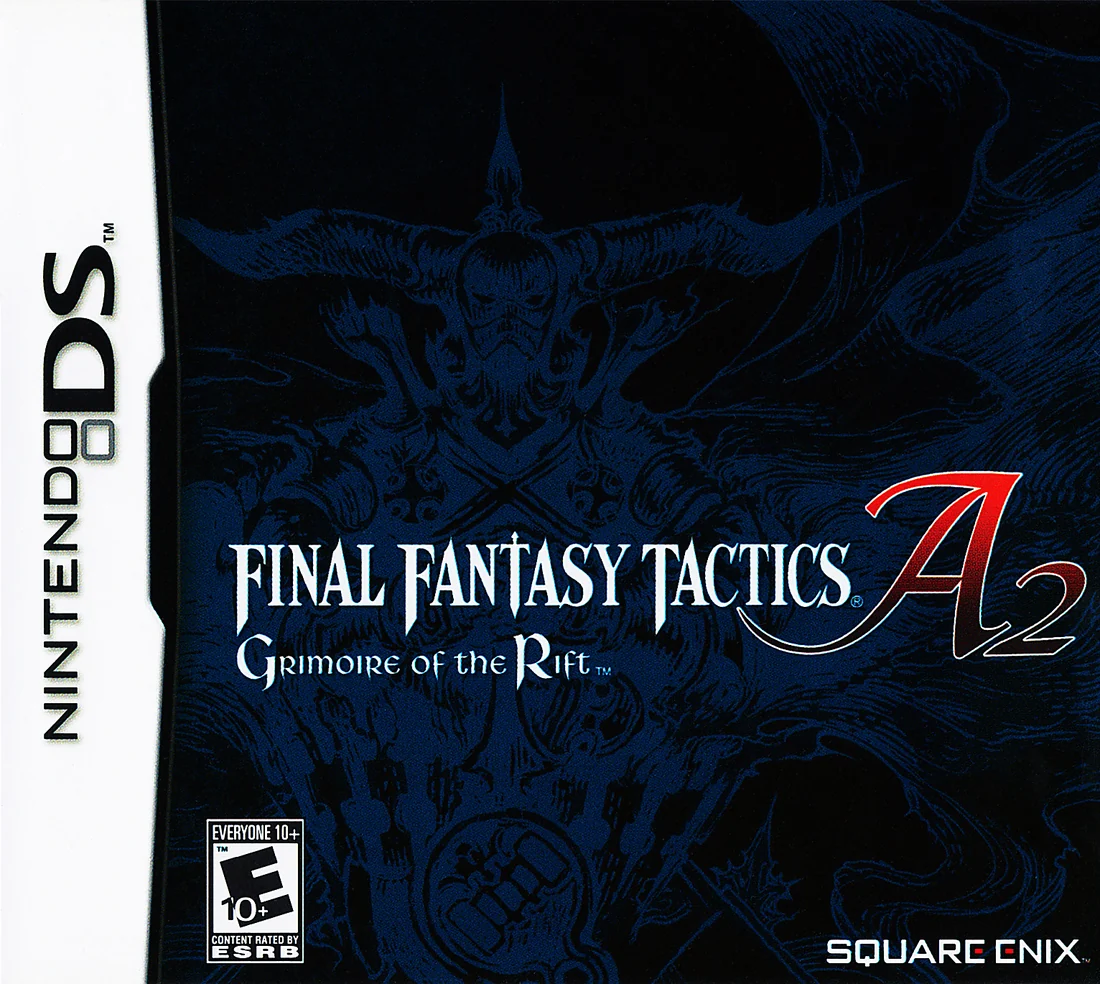
Final Fantasy Tactics A2 offers one of the Nintendo DS’s deepest character-development systems. Units can be recruited into different races and jobs, learn abilities through equipment and be reshaped as the player experiments with roles. Battles take place on compact tactical maps, while a large mission catalog provides a steady stream of objectives, rewards and opportunities to test a new formation.
The Judge system adds restrictions to many encounters, encouraging players to think about legal actions rather than treating every fight as a damage race. That structure can make battles more interesting, although it can also feel restrictive when a rule conflicts with a preferred strategy. The game’s job system is especially strong for players who enjoy building unusual combinations, since equipment and learned abilities create reasons to rotate characters instead of relying on a single fixed party.
A2’s story is lighter and less emotionally intense than some tactical RPGs, and its huge number of missions may overwhelm anyone who wants a tightly authored campaign. The North American version launched in 2008, while Europe received a localized release under the same title. It is an excellent recommendation for players who value job flexibility, collection and tactical tinkering above dramatic storytelling.
- Best for: strategists who want extensive jobs, recruitable units and repeatable missions.
- Tradeoff: the broad content structure can feel diffuse, while Judge rules sometimes limit obvious solutions.
5. Shin Megami Tensei: Devil Survivor
Devil Survivor combines grid-based tactical battles with demon recruitment, fusion and a story governed by time-sensitive events. Instead of treating demons as a fixed set of party members, it asks the player to assemble teams, inherit abilities and make choices about which strengths to combine. Battles therefore involve both positioning on the map and preparation in the demon-management systems outside combat.
The countdown structure gives ordinary conversations strategic weight. Choosing where to go and whom to help can influence later events and routes, making the campaign feel more reactive than a linear tactical RPG. Its battles are organized around teams that move across a grid but resolve attacks through smaller turn-based encounters, creating a hybrid between strategy RPG positioning and traditional Shin Megami Tensei weaknesses.
Its difficulty can spike, particularly when a team is poorly prepared or a battle exposes a weakness. The original Nintendo DS release should not be confused with the expanded Nintendo 3DS edition Devil Survivor Overclocked, which adds story material and other features. Choose the DS game for tense planning, branching consequences and demon customization, but expect to spend time learning its systems. The title was released in North America and Japan, while its regional availability was more limited than that of Nintendo’s major RPG franchises.
- Best for: tactical RPG players who enjoy branching stories and deep party construction.
- Tradeoff: timed decisions and sharp difficulty increases can punish casual preparation.
4. Shin Megami Tensei: Strange Journey
Strange Journey turns dungeon exploration into a demanding first-person expedition through hostile environments. The player maps routes, manages resources, negotiates with demons and fuses them into more capable allies. Alignment choices affect both the protagonist’s identity and the available strategic possibilities, so the party is shaped by decisions as much as by experience levels.
Its science-fiction setting gives the dungeon-crawler format a distinctive mood, and demon negotiation creates a different relationship with enemies than ordinary turn-based RPGs. The game expects patience: maps can be austere, navigation can become difficult and battles punish teams that ignore elemental weaknesses or enemy behavior. Its combat rewards careful party construction, while the demon compendium creates an ongoing reason to revisit the fusion and negotiation systems.
Strange Journey is less immediately welcoming than Pokémon or Dragon Quest, but its systems interlock unusually well. The original Nintendo DS version was released in Japan and North America; the later Nintendo 3DS version, Strange Journey Redux, adds new content, a new character, additional story material and other changes. Those versions should not be treated as identical products. This ranking is specifically for the original DS game.
- Best for: players who want first-person dungeons, demon fusion and serious atmosphere.
- Tradeoff: demanding maps, resource management and an austere presentation create a steep entry point.
3. Dragon Quest IX: Sentinels of the Starry Skies
Dragon Quest IX turns character creation and vocation changes into the center of its adventure. Players can develop heroes across different roles, recruit a party and adjust abilities as new challenges appear. Its traditional turn-based combat is readable and reliable, but the appeal lies in the long-term process of improving a group and deciding how much specialization each member needs.
The game was designed with multiplayer-oriented systems in mind, yet it remains playable as a solo RPG. Its world supports extended exploration, optional objectives and post-story activity for players who enjoy continuing to refine a party. Character appearance customization, vocation progression, equipment collection and treasure-map content give the game a much longer tail than its main quest alone suggests.
That breadth comes with familiar Dragon Quest tradeoffs: some players will enjoy the slower pace and occasional grinding, while others may find the progression too patient. North American and European releases arrived in 2010. Historical online distribution, downloadable quests and communication features should not be assumed to function today, but none of them is required to complete the main solo adventure. Pick Dragon Quest IX for a long, customizable journey rather than a tightly paced single-player story.
- Best for: players who enjoy vocation systems, exploration and extended character development.
- Tradeoff: grinding and older multiplayer-oriented features are less appealing if you want a compact campaign.
2. Radiant Historia
Radiant Historia gives its RPG structure a rare organizing idea: the player can move between timelines to confront different outcomes and repair the course of history. Choices are not merely dialogue decoration; they determine which branches open and how characters, locations and conflicts connect. The result is a story that encourages comparison between possible paths without losing sight of its central political and personal stakes.
Its turn-based combat complements the narrative concept. Enemies occupy positions on a three-by-three grid, and the player can manipulate their arrangement to group targets and create more effective attacks. That turns ordinary battles into small spatial puzzles without abandoning familiar commands, skills and equipment. Moving an enemy into the path of an area attack or stacking several enemies for a powerful strike gives the combat a clear tactical identity.
Radiant Historia’s visual presentation is restrained, and the original DS game had more limited availability than major Nintendo releases. It received a North American release, while the later Nintendo 3DS edition Radiant Historia: Perfect Chronology expanded the original with additional story material, presentation changes and new gameplay options. Those editions should be identified separately. The original DS release remains one of the system’s most focused and inventive RPGs.
- Best for: story-focused players who want branching timelines and tactical turn-based combat.
- Tradeoff: limited availability and understated presentation may make it less immediately accessible than larger franchises.
1. The World Ends With You
The World Ends With You is the Nintendo DS RPG that most completely treats the handheld’s two screens as part of its identity. Combat divides attention between the protagonist on the lower screen and a partner on the upper screen, while touch controls activate psych pins, movement and attacks. The system is unusual, but it creates a genuine multitasking challenge rather than using the second display as a passive map or menu.
Its setting, music and fashion systems give progression a strong personality. Pins, equipment and partner abilities allow players to tune the combat experience, while the story’s urban setting and themes of isolation, trust and personal change give the adventure an identity beyond its mechanics. Players can also use the microphone for certain attacks, although the touch-screen systems form the core of the DS experience.
The learning curve is real: controlling both battlefields can feel awkward before the player understands the rhythm, and some touch interactions demand patience. Even so, the game combines combat experimentation, character growth, memorable presentation and DS-native design more successfully than any other RPG on this list. The original DS version was released in North America, Europe and Japan. Later versions on mobile, Switch and other platforms change the control scheme and add or alter content, so they should not be assumed to reproduce the original dual-screen experience exactly.
It is the essential choice for players who want to see what the hardware could do beyond reproducing older console formulas. The World Ends With You earns the top position not because it is the most traditional RPG here, but because its combat, story, progression and presentation are inseparable from the Nintendo DS itself.
- Best for: players seeking the most inventive dual-screen combat and a highly stylized story.
- Tradeoff: unusual controls and simultaneous screen management take time to learn.
The best Nintendo DS RPG depends on the kind of decision-making you want. Choose Final Fantasy IV or Golden Sun: Dark Dawn for traditional party adventures, Pokémon Platinum or Dragon Quest IX for long-term team development, and Final Fantasy Tactics A2 or Devil Survivor for tactical planning. Strange Journey is the strongest fit for dungeon pressure and demon fusion, while Radiant Historia is the story-first alternative.
The World Ends With You earns the top position because it makes the DS itself part of the RPG design rather than simply hosting a portable version of a familiar formula. Its controls are not universally comfortable, but the combination of dual-screen combat, customization, music and setting remains unusually specific to the system. Players who prefer a more conventional starting point should begin with Pokémon Platinum, Final Fantasy IV or Dragon Quest IX; those seeking the most unusual DS-specific experience should start with The World Ends With You.