Apple’s newly revealed iPhone Duo has immediately raised an excitingly specific question for retro players: what happens when a phone that folds open is paired with a system designed around two screens? Delta, the iOS emulator known for its support of classic Nintendo hardware, is preparing a dedicated answer. The app’s lead developer, Riley, has confirmed that Delta is planned to receive support tailored to the iPhone Duo, although an exact release date has not been announced.
That matters most for Nintendo DS emulation. The original DS was not simply a handheld with a second display bolted on as a novelty. Its games were built around the relationship between screens: maps on one panel and action on the other, inventories that could be checked without pausing, touch-driven puzzles, vertically staged worlds, and menus that felt like part of the hardware rather than an interruption. A modern foldable phone is not identical to Nintendo’s clamshell, but it creates a much more natural physical canvas for that software than a conventional single-screen handset.
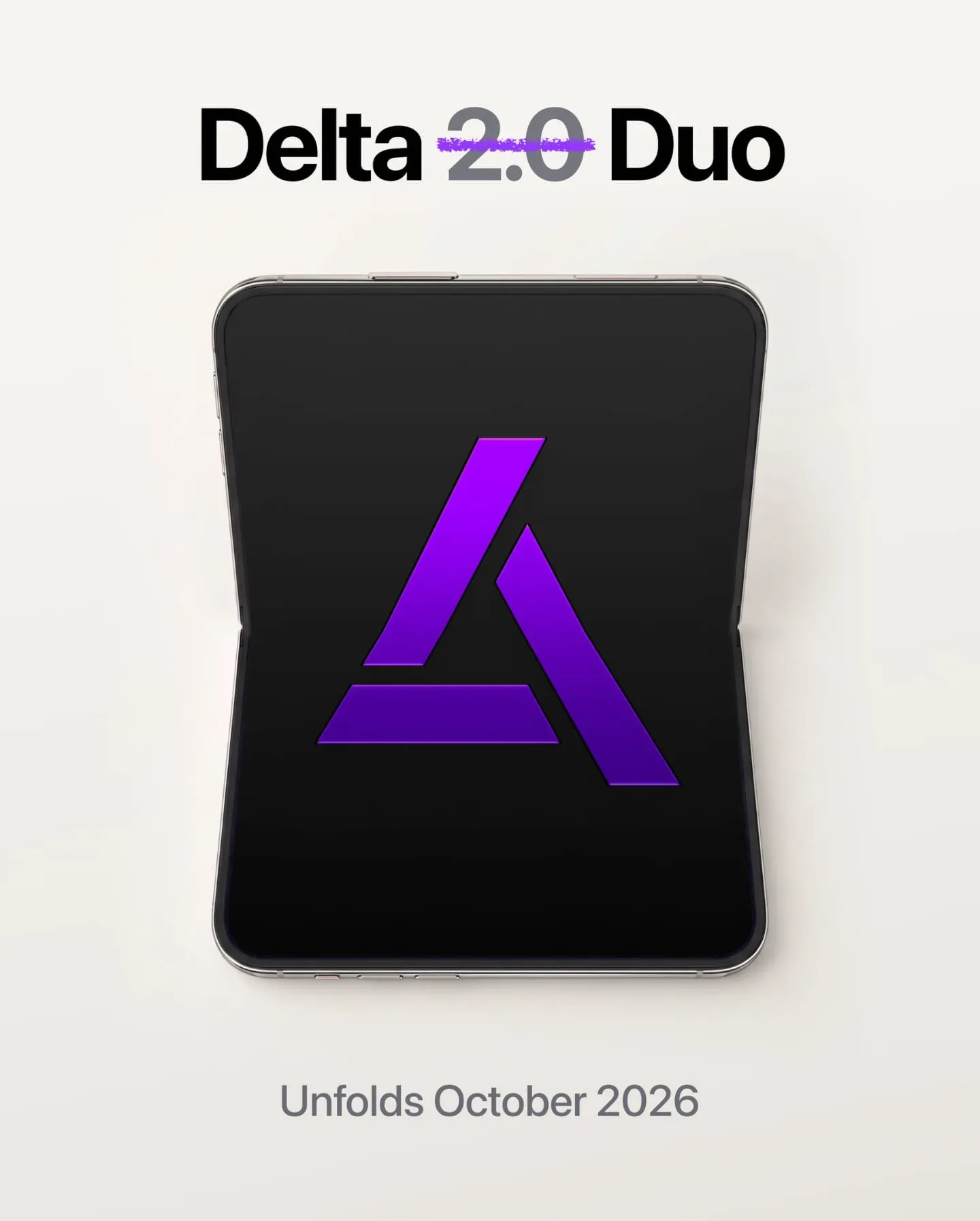
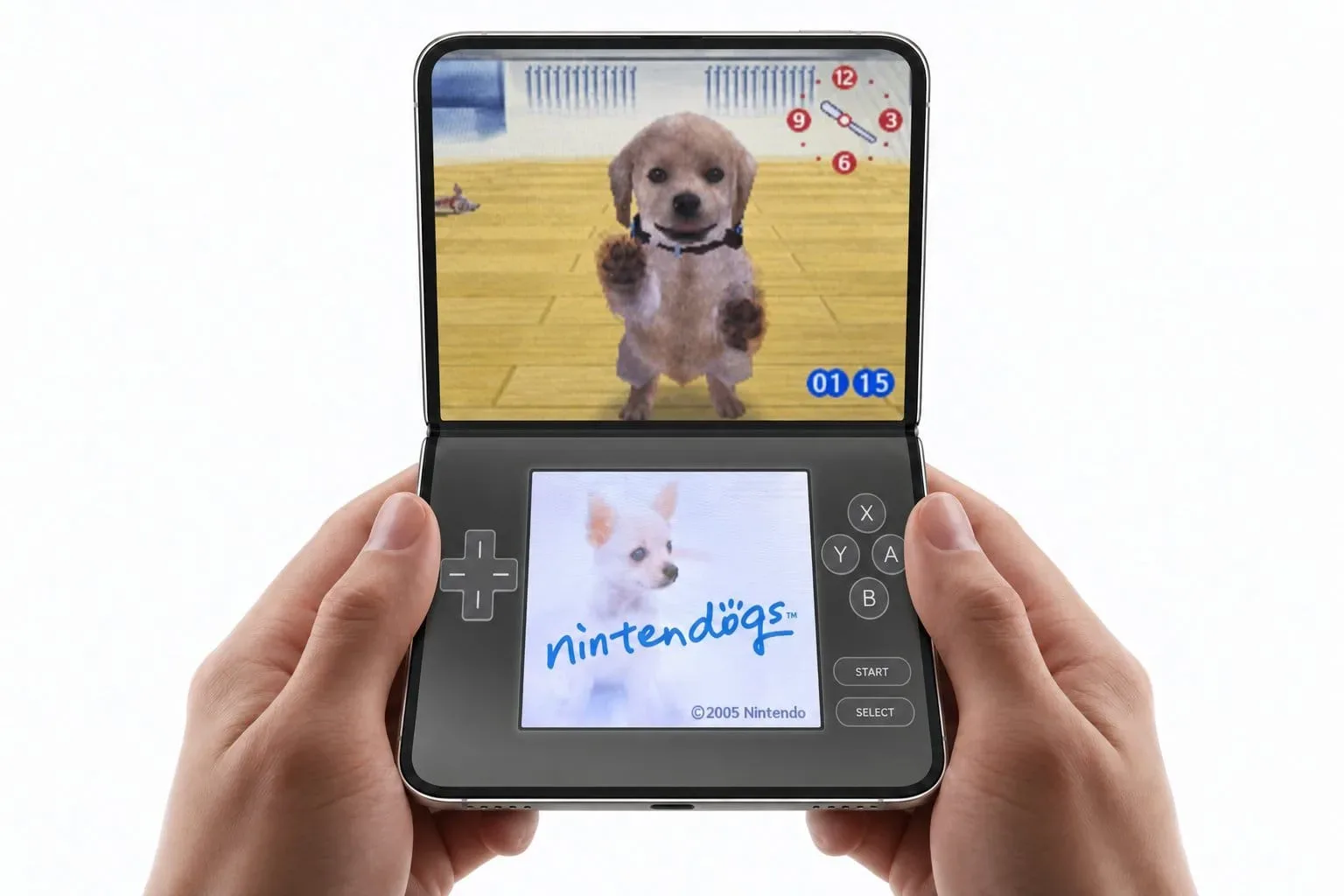
Delta has already shown an image teasing the forthcoming iPhone Duo work, and the prospect is easy to understand. Instead of asking players to make do with two virtual DS displays crammed into one rectangle, a foldable layout could place each screen in its own half of the device. That is the basic visual arrangement people associate with a DS, even if details such as aspect ratios, the fold itself, controller placement, and touch behavior will determine how close the finished experience feels in practice.
Why DS games are a particularly good fit for a foldable
Emulation is often discussed as though running the original software is the whole job. For a single-screen console, performance and controls may indeed be the biggest hurdles. DS software poses an additional presentation problem. Players need to see both displays, decide which one deserves more visual emphasis, and still have access to touch controls when a game needs them. On a standard phone, that can mean tiny screens, frequent layout changes, or an unavoidable compromise between visibility and usable on-screen buttons.
The iPhone Duo’s folding form factor potentially changes the conversation. A book-like open configuration suggests an obvious top-and-bottom or side-by-side presentation, depending on how Delta ultimately chooses to use the available display space and device orientation. It could make a game’s two-screen information easier to read at once, while giving touchscreen-focused titles more room to breathe. That does not guarantee an ideal recreation of every game, but it is a meaningful improvement in the kind of layout flexibility DS emulation needs.
Custom skins are another reason the update could attract attention. Delta already allows users to alter the visual treatment around its controls and screens. With a new folding display to work with, designers will have a much less ordinary frame in which to create DS-inspired skins. Some may chase the familiar appearance of classic Nintendo handhelds; others will likely treat the Duo as its own distinct object. Either way, the physical split between the two portions of the screen gives skin creators an opportunity that flat phones have not offered.
Earlier iPad work may do a lot of the heavy lifting
Riley’s confirmation included an important technical clue: Delta’s prior work on resizable windows and multi-window support when Stage Manager arrived for iPadOS has proven relevant to the Duo. That is encouraging because it suggests the project is not beginning from zero. Software that has already had to respond gracefully to changing window sizes and different display arrangements is better positioned for an unusual mobile form factor than an app designed only around one fixed phone shape.
Dedicated Duo support is planned for Delta, but there is no official launch date yet; the team’s existing resizing and multi-window work is expected to carry over in useful ways.
Related coverage includes Delta Plans Dedicated iPhone Duo Support for Nintendo DS Emulation.
That phrasing is worth reading carefully. It confirms intent, not a feature checklist. There is no confirmed list of layouts, no public promise of a particular control scheme, and no stated date for an update. The teased material points to a substantial Delta update described as version 2.0, but players should avoid assuming every imagined foldable-friendly option will arrive at launch. The useful news is that dedicated support is in development, rather than the app merely hoping its current interface scales acceptably.
There is a broader lesson here for emulator interfaces. Device screens have become more varied, from tablets and desktops to phones with changing orientations and now foldables. An emulator that treats its interface as responsive software rather than a fixed image has more ways to preserve the logic of the original hardware. For DS games, that flexibility is not just a visual luxury. The arrangement of displays is part of how players interpret information and interact with many titles.
A timely moment for dual-screen nostalgia
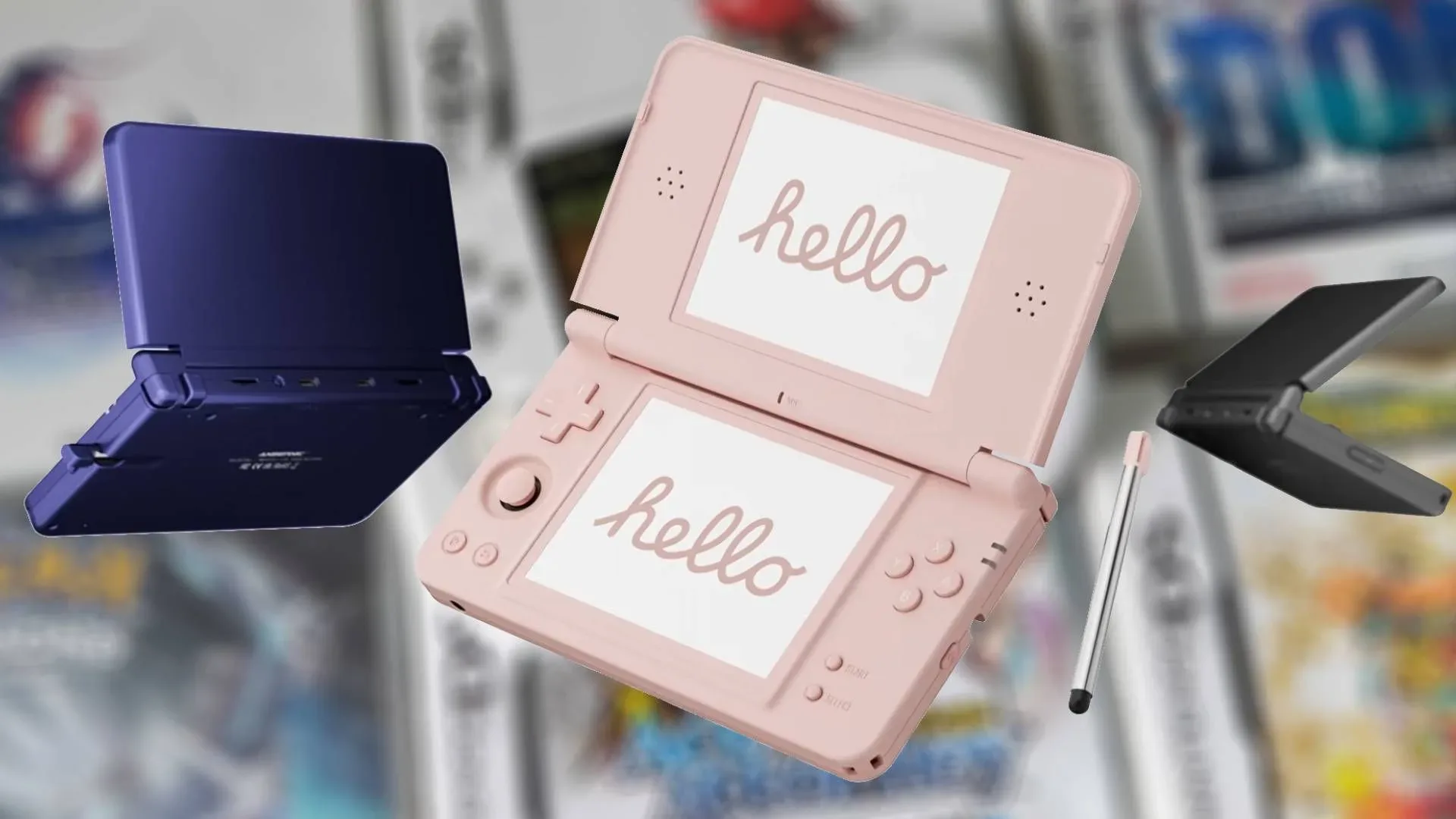
The timing also arrives amid visible interest in DS-style portable hardware. Devices including the ANBERNIC RG DS Plus, Retroid Pocket Duo, and Yoniq Duo have helped keep discussion of dual-screen gaming active this year. Each approaches the idea from its own angle, but the appeal is consistent: the DS library contains games that are awkward to translate to a single display and especially satisfying when their original two-part design is respected.
Apple’s iPhone Duo offers a different route. Rather than buying a dedicated retro device, an owner could potentially use the same foldable phone for everyday tasks and a more sympathetic DS emulation layout. Whether that is a practical choice for any individual will depend on the phone’s eventual cost, preferences around physical controls, and how much a player values the dedicated feel of specialized hardware. Delta’s planned work does not erase those trade-offs. It does, however, make the Duo more interesting to a particular corner of the retro-gaming audience.
There is also an appealing connection between DS emulation and the long history of adapting old game experiences to newer hardware. The challenge has never been solely about making code run. It is about translating the relationship among screen, controls, accessories, and player habits. Readers interested in another chapter of that wider history can explore how Action Replay evolved from freezer cartridges into cheat and save-customization tools. The hardware changes, but the impulse remains familiar: finding new ways to revisit games while preserving what made their original design distinctive.
What remains unknown before version 2.0
An October release for the iPhone Duo has been suggested by promotional imagery, and that timing has fueled speculation that Delta’s update could land around the device’s debut. At present, though, that connection remains unconfirmed. Riley did not provide a release date, and the teaser should be treated as evidence of ongoing development rather than a calendar commitment. It is reasonable to be optimistic given the reusable iPadOS groundwork, but it is not yet possible to say when people will be able to download the dedicated Duo version.
Several practical questions are similarly unanswered. It is not known exactly how Delta will divide screens across the fold, what default skins will look like, or how users will customize the presentation. There is no confirmed information on external controller behavior in Duo-specific modes, nor details on whether different DS games will receive special presets. Those are the sorts of details that will decide whether the update feels merely compatible or genuinely designed around Apple’s new hardware.
Still, the central announcement is compelling on its own. Delta is not overlooking the most obvious gaming use case for a dual-screen foldable. Its developers are actively planning dedicated iPhone Duo support, drawing on prior work that made the app more adaptable on iPadOS. For fans of Nintendo DS games, that means the arrival of Apple’s foldable could bring a fresh way to revisit a library whose defining design idea was always two screens working together.
Until a release date and feature breakdown arrive, the sensible expectation is simple: Delta 2.0 appears positioned to make the iPhone Duo a more purposeful home for DS emulation, while leaving room for the community’s custom skins and creative layouts to make the format their own.