Action means more here than simply having battles. The games below make direct movement, combat, reflexes or real-time interaction the center of play. That leaves out visual novels, traditional role-playing games, tactics games and puzzle adventures, even when they include memorable confrontations.
The ranking balances control quality, mechanical identity, level or world design, meaningful use of the two screens and touch input, replay value, and accessibility for a modern player. Release availability varied by territory, so the regional notes identify notable differences without treating a later port or remake as proof that the original DS edition had identical features. Local wireless, Download Play and Nintendo Wi-Fi Connection are also separate features: Nintendo’s original online service ended on May 20, 2014, while offline and local functions remain part of the original hardware experience. The games are ranked as editorial selections, not objective scores.
10. Okamiden
Okamiden is the most story-forward game on this list, but its action foundation is clear. Chibiterasu explores connected areas, fights monsters in real time and uses the Celestial Brush to cut, repair, ignite and reshape parts of the environment. Drawing directly on the touch screen makes ordinary progression feel like a conversation with the world rather than a detached menu command.
That interaction gives Okamiden a strong identity among DS action games. The brush is not merely a novelty: it can alter combat situations, reveal solutions and change the shape of obstacles. The colorful presentation also suits the hardware better than a more realistic visual style might. Its main limitation is pacing. Dialogue, travel and environmental problem-solving frequently interrupt combat, and players seeking constant pressure may find it gentle. Choose it for expressive exploration and a warm adventure, not for a relentless arcade tempo. Okamiden launched in Japan and received localized releases in North America and Europe, with the European release arriving on March 18, 2011.
- Best for players who want action-adventure with drawing-based abilities.
- Expect a slower rhythm than Contra 4 or Ninja Gaiden: Dragon Sword.
- The Celestial Brush is central to the DS version’s design, not an optional flourish.
9. Sonic Rush
Sonic Rush translates speed into a two-screen spectacle. Sonic and Blaze race through fast 2D stages that occasionally expand into large vertical sequences, while the lower screen helps communicate the scale of a jump or drop. The Boost system rewards players who maintain momentum, but the game still asks for platforming judgment: landing safely, finding routes and reacting to hazards matter as much as moving quickly.
The two playable characters are not simply cosmetic alternatives. Their movement styles and special abilities change how a stage feels, giving repeat runs a useful point of comparison. The best sections create a satisfying chain of running, tricking, boosting and launching. The tradeoff is precision. Speed can hide hazards, and a missed landing may feel like the result of limited visibility rather than a meaningful mistake. Sonic Rush is a strong choice for players who enjoy replaying stages to improve routes, while cautious platformers may prefer New Super Mario Bros. The DS release was available in Japan, North America and Europe.
- Best for high-speed platforming and route improvement.
- Blaze provides a meaningful second style rather than a simple palette change.
- Expect occasional camera and visibility friction during the fastest sequences.
8. New Super Mario Bros.
New Super Mario Bros. is the most immediately approachable game in the ranking. Its basic loop is wonderfully legible: run, jump, stomp enemies, use power-ups and search each stage for secret routes and Star Coins. The DS hardware adds a second screen for information and displays, but the essential action remains readable and dependable. That clarity makes it an excellent starting point for someone who has not played a 2D platformer in years.
Its strength is consistency rather than radical invention. The game steadily introduces familiar hazards, moving platforms, underwater movement and alternate paths without burying the player in complicated systems. Star Coins give experienced players a reason to revisit levels, while the ordinary route remains manageable. Some players will find its safest path less demanding than harder platformers, and the touch-screen minigames are peripheral to the main adventure. It ranks below the more distinctive games here because it uses the DS competently without making the hardware as central as Phantom Hourglass or Dragon Sword. North American, European and Japanese versions were released, with language options varying by edition.
- Best entry point for accessible 2D platforming.
- Collect Star Coins when you want extra exploration and replay value.
- Do not mistake its welcoming difficulty for a lack of mechanical polish.
7. Aliens: Infestation
Aliens: Infestation takes the exploration structure associated with side-scrolling action-platformers and gives it a tense science-fiction setting. The player moves through hostile facilities, searches for routes and uses firearms against creatures that make every corridor feel dangerous. A rotating crew of Colonial Marines adds an important layer: losing a character changes the emotional texture of the expedition and makes progress feel less disposable than a standard health-bar system.
The game works best when atmosphere and navigation reinforce each other. Rooms are memorable enough to build a mental map, and the threat of losing crew members gives backtracking more weight. The official European description identifies 20 recruitable Marines, varied weapons and tools, exploration, stealth missions and races to rescue captured comrades. It is also a relatively compact experience, which helps its focus but limits the sense of a huge campaign. Combat can become repetitive, and players wanting elaborate upgrades or broad character customization may find the structure restrained. It is a particularly good pick for someone who wants Metroid-style exploration with firearms and a darker tone. The DS release was published in North America and Europe, although language support should be checked for a particular cartridge.
- Best for atmospheric exploration with guns and crew management.
- The rotating cast gives failure more consequence than a simple checkpoint reload.
- Choose another game if you want extensive character progression or weapon customization.
6. Kirby Super Star Ultra
Kirby Super Star Ultra is less a single campaign than a generous action anthology. It remakes and expands the Super NES structure with several modes, copy abilities, helper characters and short touch-screen diversions. That variety makes it easy to play in different moods: a player can enjoy straightforward platforming, experiment with an ability, summon a helper or move into a more demanding challenge without leaving the same cartridge.
Kirby’s copy system remains the star. Absorbing an enemy and turning its trait into a new attack encourages experimentation, while helpers make the action unusually forgiving and occasionally chaotic. The official Nintendo material describes the game as a remake of the 1996 Super NES classic, with added adventures, rendered story scenes and Touch Screen minigames. The downside is cohesion. Because the game is divided into distinct adventures, it lacks the continuous sense of escalation found in Dawn of Sorrow or Phantom Hourglass. Some modes are brief, and the easygoing structure may not satisfy players seeking a single tightly tuned campaign. It earns this place through breadth, responsiveness and its ability to welcome both beginners and experienced platformers. The DS game received releases across Japan, North America and Europe.
- Best for varied action in short or medium sessions.
- Use helpers when you want a relaxed run; experiment with copy abilities when you want depth.
- Its anthology structure is a feature for variety but a weakness for narrative momentum.
5. Metroid Prime Hunters
Metroid Prime Hunters is an ambitious first-person shooter built around hardware that was never designed like a conventional dual-stick system. Movement uses the directional controls while aiming relies on the stylus, creating a direct relationship between hand movement and the reticle. The result is unusual but purposeful: scanning, turning and firing feel distinct from console shooters, and the DS screen can support a surprisingly readable first-person view.
Its single-player Adventure mode provides exploration, weapons and distinct enemy encounters, while the historical multiplayer component supported wireless matches for up to four players. That distinction matters today. Nintendo Wi-Fi Connection service ended on May 20, 2014, so the original online feature is not an active modern service. Local wireless functionality belongs to the period hardware experience and should not be confused with online availability. The campaign can feel slow between major encounters, and the stylus controls demand a grip some players will dislike. It remains essential for anyone curious about how a handheld adapted first-person shooting. North American, European and Japanese editions exist, with regional differences in language and release timing.
- Best for players interested in handheld first-person controls.
- Treat the original online multiplayer as a historical feature, not a currently supported service.
- The stylus aiming scheme is innovative but not universally comfortable.
4. Ninja Gaiden: Dragon Sword
Ninja Gaiden: Dragon Sword commits to touch controls more completely than almost any other DS action game. The stylus directs movement, attacks and Ninpo techniques, while the vertically held system presents the action across two screens. Slashing, jumping and drawing attack paths create a fast rhythm that feels built for the DS rather than reduced from a button-based console design.
That commitment is also the game’s largest barrier. Players accustomed to a conventional directional pad and face buttons may find the touch-first control scheme imprecise or tiring, especially when several actions compete for the stylus. Yet the design produces energetic encounters and a clear mechanical identity. Dragon Sword is not simply a portable version of another Ninja Gaiden; it is a stylus action game with its own priorities. It suits players willing to learn a different vocabulary of movement and attack. The game was released in Japan, North America and Europe, although title screens, manuals and language options vary by edition.
- Best for touch-first action and stylus experimentation.
- Hold the system in the orientation intended by the game for its vertical presentation.
- Expect less conventional button control and more dependence on stylus precision.
3. Contra 4
Contra 4 brings the series’ run-and-gun formula to the DS with speed, weapon switching, jumping, crawling and relentless enemy pressure. Its most memorable structural idea is the use of both screens as one extended combat space. Enemies can arrive above or below the character, and the player must read the full vertical field while moving through hazards and bosses. That makes the hardware layout part of the challenge rather than a decorative display choice.
The game rewards memorizing patterns, controlling panic and preserving useful weapons. It is demanding by design, and that difficulty gives every successful stage a strong sense of accomplishment. It can also be unforgiving for players who want a forgiving portable action game, especially when a mistake sends them back through a sequence they have only just learned. Contra 4 is the clearest recommendation here for someone who wants concentrated arcade intensity. WayForward developed it and Konami published it for Nintendo DS. It received releases in North America and Europe, while regional packaging and language support may differ.
- Best for high-difficulty run-and-gun action.
- Watch both screens; the upper display can contain active threats, not background information.
- Choose it for pattern learning and repetition, not a relaxed first playthrough.
2. The Legend of Zelda: Phantom Hourglass
Phantom Hourglass turns the DS interface into the control scheme for an action-adventure. The stylus moves Link, aims items and interacts with objects, while the player can annotate the map with notes. Dungeons frequently ask the player to interpret visual clues, draw paths or use an item in a way that would feel less natural with ordinary buttons. The result is a Zelda game whose puzzles and movement are unusually connected to the screen beneath the action.
The structure balances exploration, combat and puzzle-solving effectively. Touch-directed boomerangs and other tools make familiar Zelda ideas feel newly physical, and map annotation is genuinely useful rather than a novelty. Nintendo’s contemporary playtest described stylus movement, traced boomerang paths, interactive map notes, touch-driven dungeon puzzles and local or online Battle Mode. Its main limitation is control friction. Players who strongly prefer button-based movement may dislike steering Link with a stylus, and some repeated tasks can feel slower than their console equivalents. Phantom Hourglass is the best recommendation for players who want the DS itself to shape an action-adventure, not merely host one. It was released in Japan, North America and Europe, with localized editions differing in language and launch timing. Its original Nintendo Wi-Fi Connection Battle Mode is no longer available online, though local play is a separate historical feature.
- Best for stylus-driven exploration, puzzles and item use.
- Use map notes as an active puzzle-solving tool rather than a passive record.
- The touch movement is central, so button-first players should approach cautiously.
1. Castlevania: Dawn of Sorrow
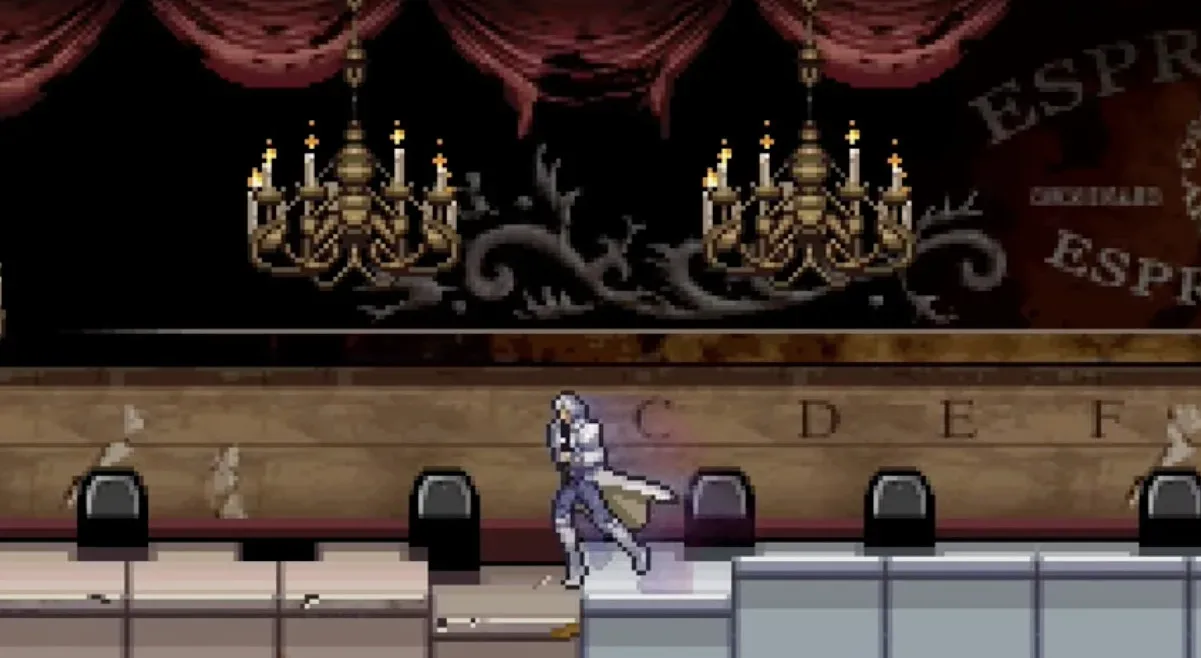
Dawn of Sorrow takes the strongest overall action package on the DS. Its side-scrolling combat is quick without becoming shallow, and its interconnected castle rewards players who pay attention to routes, abilities and environmental clues. Enemy souls add customization: defeating foes can provide attacks, movement options or useful passive effects, encouraging experimentation instead of locking every player into the same loadout. Konami’s official history describes the game as a 2D side-scrolling adventure built around Soma Cruz, enemy-soul abilities and boss encounters.
The game also uses the DS in meaningful ways. The second screen supports status and map information, while the touch screen appears during specific interactions, including the Magic Seal system. That system is memorable but uneven. Drawing seals during boss conclusions can interrupt an otherwise smooth combat rhythm, and the touch requirement feels more like a hardware-era experiment than an improvement in every encounter. Even so, the combination of exploration, responsive fighting, atmosphere and build variety gives Dawn of Sorrow the most complete action identity here. It was released for Nintendo DS in Japan, North America and Europe; regional editions should be distinguished from later collections and other versions. The original game also included local wireless item trading, which should not be confused with the discontinued Nintendo Wi-Fi Connection service.
- Best overall for exploration, combat and character customization.
- Experiment with enemy souls instead of treating one loadout as mandatory.
- The touch-screen Magic Seal encounters are a notable limitation, especially for players who prefer uninterrupted combat.
The right starting point depends on the kind of action you want. Choose New Super Mario Bros. or Kirby Super Star Ultra for approachable platforming, Sonic Rush for speed, Contra 4 for concentrated difficulty and Metroid Prime Hunters for an unusual handheld shooter. Aliens: Infestation and Dawn of Sorrow are stronger choices when exploration matters as much as combat.
For DS hardware experimentation, Phantom Hourglass, Ninja Gaiden: Dragon Sword and Okamiden make the touch screen central to play. None is universally comfortable, but each demonstrates why the system’s best action games were not simply miniature versions of console releases. Regional editions and discontinued online features deserve attention, but the mechanical ideas in these ten games remain the reason to seek them out.