The NES did not have a single, settled Metroidvania formula. Instead, its exploratory games experimented with different ingredients: maps that loop back on themselves, items that open previously unreachable paths, characters with distinct abilities, towns that connect dangerous regions, and power growth that changes how familiar spaces feel. Some of these games are obvious ancestors of the modern genre. Others are hybrids that borrow only part of the formula but use it with unusual confidence.
This ranking considers more than whether a game has side-scrolling combat. Each choice needed a verified NES release, a meaningful exploration structure, and progression that affects movement, access, route choice or the usefulness of returning to earlier areas. The order weighs the strength of that exploration loop, the importance of upgrades, the clarity and personality of the world, mechanical identity and historical importance. It does not treat every action-adventure or action-RPG as a Metroidvania, and it focuses on the NES editions where versions differ.
10. Gargoyle’s Quest II
Gargoyle’s Quest II is an unusual late NES interpretation of exploratory action design. Firebrand can move through side-view stages, while overhead map sections connect the broader journey. That shift gives the game a different rhythm from a conventional platformer: the player is not simply clearing a line of levels, but moving through a world whose hazards and routes are shaped by Firebrand’s growing abilities.
The game earns this place through movement upgrades and semi-nonlinear progression. New capabilities alter which spaces are practical to cross and make earlier locations worth reconsidering. Its structure is more approachable than the deliberately obscure mazes elsewhere on this list, yet it still asks the player to understand how movement powers relate to the world. It is not the deepest NES example, and its NES edition should not be confused with the Game Boy game’s distinct release history, but it shows how Capcom could combine perspective changes, mobility and adventure progression without abandoning action-game precision.
9. The Battle of Olympus
The Battle of Olympus follows a mythological journey through linked regions inspired by ancient Greece. Its side-scrolling areas are connected by a broader travel structure, and progress depends on finding items, reaching new locations and overcoming threats that are not always solved by simply moving to the next screen. The result is recognizably related to Zelda II, though its own identity comes from mythology, equipment and a more direct action-adventure flow.
Its limitation is also important. The game does not build character development around as many player-driven choices as some other entries here, and its progression can feel more like a sequence of destinations than a densely interlocking labyrinth. Still, the world has enough continuity for revisiting and route progression to matter. It is a defensible borderline inclusion because exploration is central rather than decorative. Players who want a readable mythological adventure may prefer it to more cryptic NES designs, while those seeking a tightly layered map will find its structure comparatively simple.
8. Legacy of the Wizard
Legacy of the Wizard turns exploration into a family problem. Several playable characters bring different movement, combat or traversal capabilities, so choosing who enters a particular section is part of solving the game. The enormous maze is intentionally difficult to parse, with rooms, hazards and routes that can make progress feel like an archaeological expedition rather than a straightforward campaign.
That opacity is both the game’s greatest strength and its largest tradeoff. The world has a strong sense of scale, and character-specific abilities make access feel meaningfully systemic. A route that is useless for one family member may become viable for another, creating a genuine connection between roster choice and map knowledge. However, the game often withholds clarity, and its maze can turn discovery into confusion when visual clues are too subtle. It ranks below the more elegant entries because its world design is ambitious but not always communicative. For players who enjoy decoding a hostile structure, it remains one of the NES’s boldest experiments.
7. Rygar
Rygar’s NES version is not simply the arcade game transferred into a home setting. It reworks the concept into an exploratory adventure with a broader world, power growth and areas that become more manageable or accessible as the hero develops. That difference matters: judging the NES release by the arcade version’s linear action would miss the reason it belongs in this discussion.
The game’s central pleasure comes from watching an initially vulnerable hero become capable of crossing and surviving places that once seemed impractical. Revisiting is part of the design, even when the game does not present a modern map or neatly announce every gate. Power-ups and equipment influence combat and travel, while the overworld gives the adventure a persistent sense of geography. Rygar can be rougher and less explicit than later genre examples, and not every improvement creates a new route. Even so, its NES identity is built around transformation, return trips and an adventure world rather than isolated arcade stages.
6. Faxanadu
Faxanadu presents exploration through the framework of an action RPG. The hero moves through a broad side-scrolling world connected by towns, equipment, experience and an ongoing journey through Eolis. Towns are not merely safe pauses between levels: they provide context, services and a sense that the surrounding regions belong to one continuous place.
Its progression is more equipment- and story-oriented than Metroid’s ability-gated maze, but the world still encourages the player to understand how regions connect and how preparation affects movement through them. Weapons, armor, magic and experience change the practical relationship between the hero and the road ahead. Faxanadu’s biggest weakness is friction. Its directions and progression cues can be obscure, and the balance between exploration and combat may feel demanding for players expecting a more transparent action game. It ranks highly because its atmosphere and persistent world give the NES an unusually substantial journey, even though its route design is closer to an action RPG than a pure platform-exploration game.
5. Clash at Demonhead
Clash at Demonhead may be the NES’s strangest open-ended action map. Instead of forcing the player through one fixed chain of stages, it uses a branching route structure where decisions about direction, money and equipment affect the journey. Shops and cash collection make exploration economically meaningful, while items such as the diving suit and jetpack expand the range of places the hero can reach.
That structure gives the game a distinctive exploration loop. A detour may provide a useful purchase, reveal a new route or make a later obstacle less troublesome. The world feels less like a carefully stacked labyrinth than a network of roads with multiple possible approaches, but that is precisely its appeal. Clash at Demonhead also demonstrates that ability gating does not need to imitate Metroid’s permanent power-room pattern. Equipment can instead change route choice and encourage experimentation. The game’s presentation and logic can be eccentric, and its branching design may feel less focused than the top entries, yet its willingness to make navigation, commerce and movement part of the same system earns it a high position.
4. The Guardian Legend
The Guardian Legend is the list’s clearest hybrid. Its main exploration structure uses an overhead perspective as the player navigates the interior of the planet Naju, while dedicated vertically scrolling shooter stages interrupt the journey. Those action stages are not incidental bonus material: they are a major part of the game’s identity and create a sharp contrast with the slower work of finding routes and managing the larger world.
That contrast makes The Guardian Legend difficult to classify, but not difficult to appreciate as an exploration experiment. The player moves through a connected structure, discovers destinations and gains access to areas through progression, then faces demanding shooter challenges that test a different skill set. Its world design is less intimate than Metroid’s and less purely traversal-focused than Blaster Master’s, but its two genres reinforce the sense that Naju is both a place to explore and a machine to defend. Players seeking an uncomplicated Metroidvania may find the shooter sections disruptive. Players who enjoy hybrids will find one of the NES’s most inventive combinations.

3. Zelda II: The Adventure of Link
Zelda II combines an overworld map with side-scrolling combat zones, towns, palaces, experience points and new abilities. Nintendo’s own description emphasizes that blend of side-scrolling adventure, overworld travel and role-playing elements, and that combination explains its lasting importance to exploratory action design. The player is not simply moving through a row of dungeons: travel, leveling, spell use and palace progression all contribute to the shape of the journey.
Its abilities matter because they change what Link can do in the world. New techniques open routes and alter combat, while the overworld gives the adventure a meaningful sense of distance between major locations. The game is not as densely interconnected as Metroid, and experience grinding can sometimes overshadow discovery. Its towns and encounters also create a different kind of pacing from a continuous maze. Nevertheless, Zelda II expands the NES adventure into a hybrid of action, role-playing and route planning. It ranks third because its structure is influential and unusually broad, even when its individual systems do not always produce the smoothest exploration loop.
2. Blaster Master
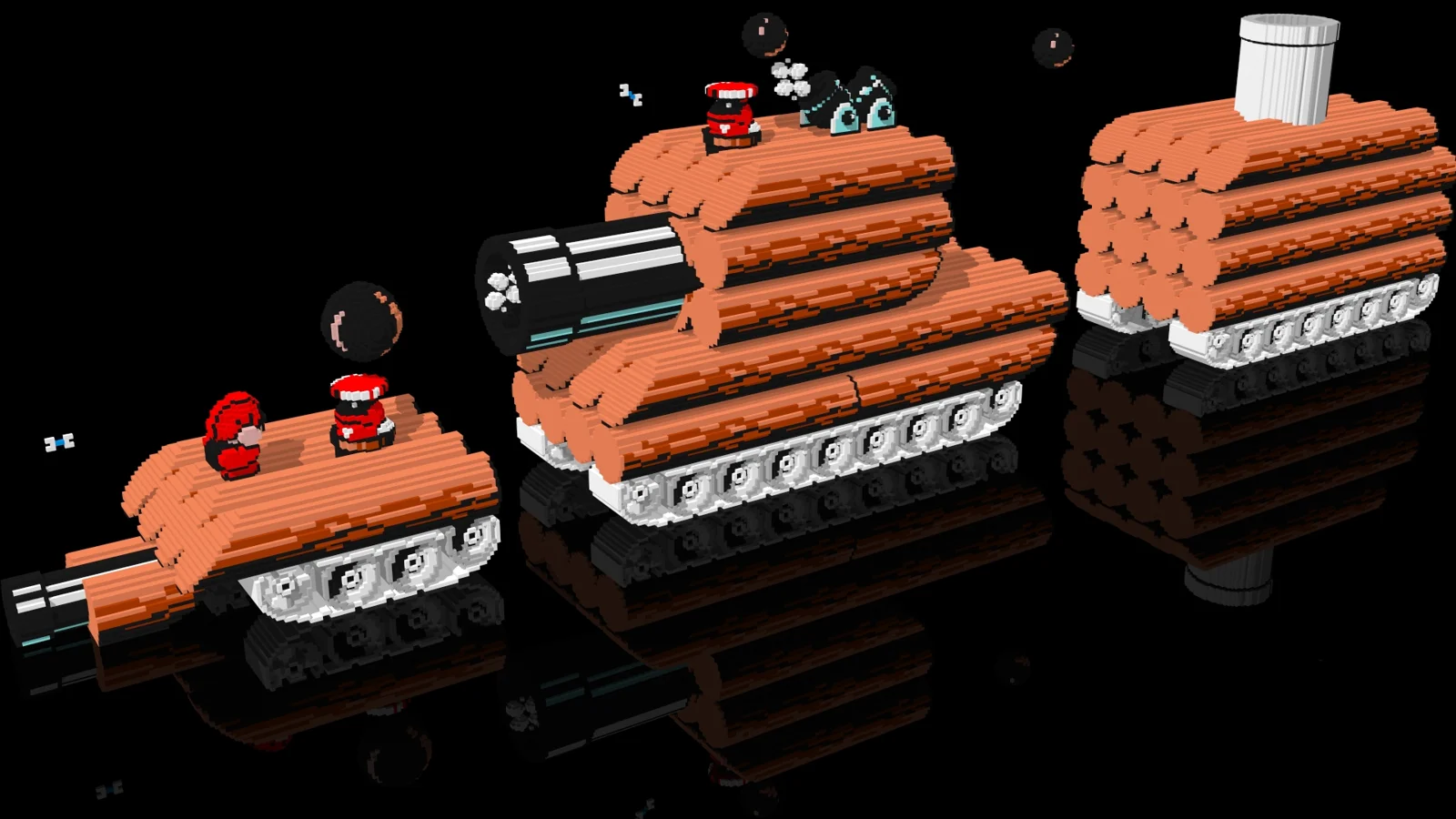
Blaster Master builds exploration around two forms of play. Jason travels on foot through side-view areas, while the SOPHIA tank provides a larger and more powerful way to traverse the world. Overhead sections further complicate the structure, creating a game that shifts perspective without losing its central sense of place. The tank is not merely a weapon upgrade. Abilities such as swimming, wall driving and hovering change which routes are possible and reshape the player’s relationship with areas already visited.
That makes Blaster Master’s progression unusually tangible. A new capability can open a route, improve survival or reveal that a previously intimidating space was designed to be approached differently later. The world is not always easy to read, and difficulty can make backtracking feel more dangerous than rewarding. The perspective changes can also divide the experience rather than seamlessly connect it. Still, the game has a powerful exploration premise: a vehicle, its pilot and the surrounding world develop together. It ranks second because its upgrades are physical, visible and structurally important, not just numbers attached to a stronger character.
1. Metroid
Metroid remains the clearest NES expression of exploration-led progression. Its world is built around connected regions, hidden passages, environmental danger and upgrades that expand Samus’s movement and combat vocabulary. The player is encouraged to remember spaces, test suspicious walls and return with new capabilities. Progress is not simply awarded for reaching the next numbered stage; it emerges from learning how the world fits together.
The game’s restraint strengthens its atmosphere. It provides limited explanation and leaves much of the discovery to observation, experimentation and memory. That can also make navigation demanding, especially when visually similar rooms blur together or a newly acquired ability does not immediately reveal its best use. Yet the underlying loop is remarkably clear: explore, find a tool, reinterpret the world and push farther. Metroid establishes the foundation that later games would make more explicit with maps, larger inventories and more generous guidance. It takes the top spot because exploration, ability gating and world identity are not separate features here. They are the same design idea working from beginning to end.
These ten games show that NES exploration design was never limited to one template. Metroid offered a compact atmospheric labyrinth; Blaster Master tied progression to a vehicle; Zelda II connected side-scrolling combat to an overworld and experience; Clash at Demonhead treated route choice and shopping as part of navigation; and The Guardian Legend fused exploration with shooting stages. The remaining entries found their own answers through mythological travel, maze-solving, action RPG systems, character abilities and arcade reinterpretation.
The modern word Metroidvania is useful here only if it remains flexible. A game does not need every familiar feature to matter. The strongest NES examples understand that discovery becomes more satisfying when a new ability changes the meaning of an old place, and when the world feels like something the player gradually learns rather than a sequence of disconnected screens.