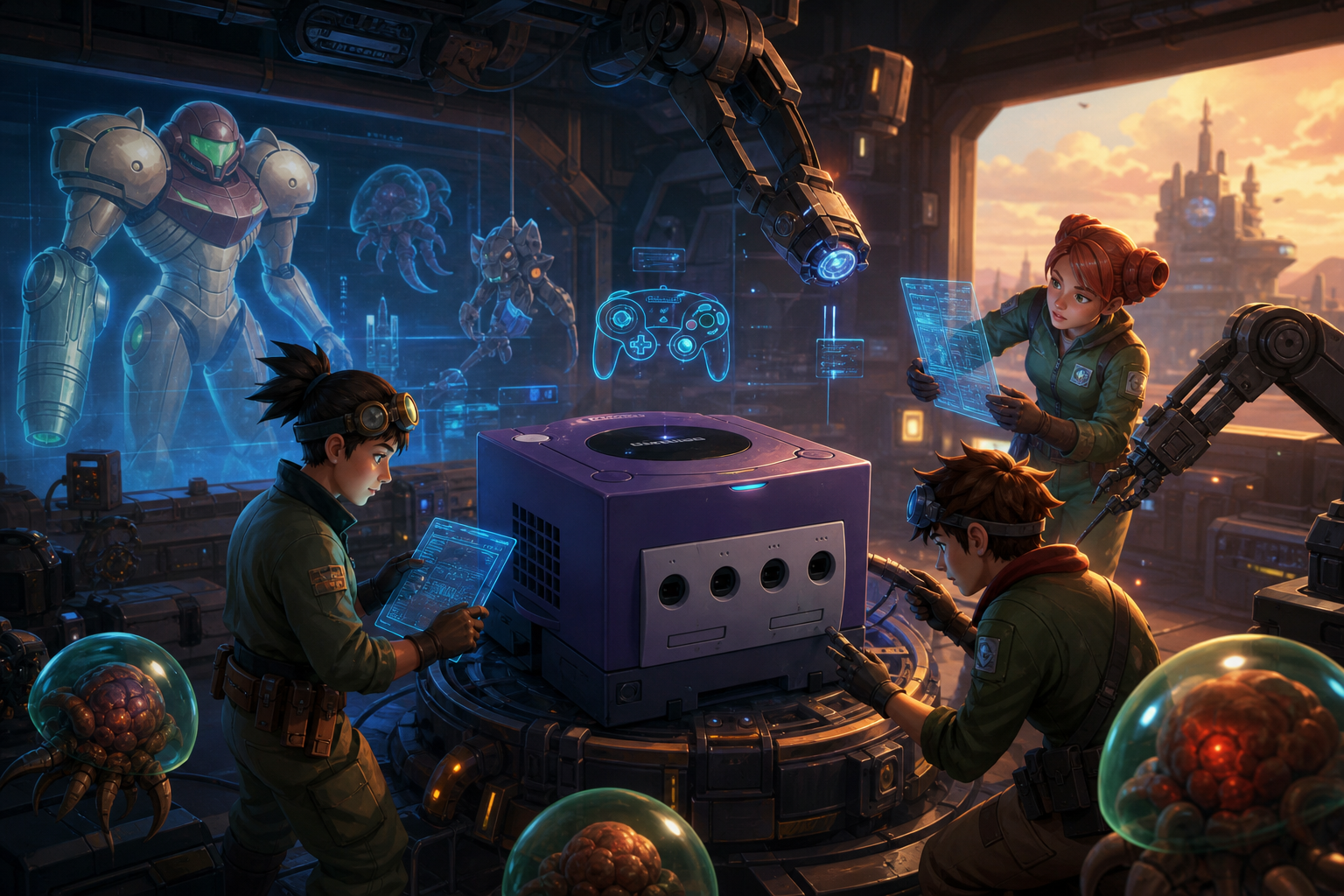
Nintendo’s GameCube is often remembered through its software: Luigi’s Mansion, Pikmin, Metroid Prime, Super Smash Bros. Melee and The Legend of Zelda: The Wind Waker. Those games mattered, but they were also evidence of a larger manufacturer strategy. After the Nintendo 64, Nintendo needed more than additional processing power. It needed a machine that outside developers could understand, tools they could use and hardware partnerships that could deliver a balanced platform without abandoning Nintendo’s distinctive design priorities.
The result was a compact optical-disc console shaped by IBM, ArtX, Rambus, Matsushita and Nintendo’s own Technology Development organization. This was not a total rejection of the Nintendo 64. Nintendo kept its preference for specialized hardware and tightly integrated software, but it tried to remove obstacles that had made the previous generation less attractive to publishers working across several systems.
The GameCube strategy therefore deserves to be examined as an engineering and organizational reset. Its architecture solved some serious problems, while its disc format, controller and continued reliance on Nintendo’s own software strengths introduced new tradeoffs. The machine did not restore Nintendo’s third-party dominance by itself, but it gave the company a more practical foundation for the experiments that followed.
The problem Nintendo carried out of the Nintendo 64
The Nintendo 64 was technically ambitious, but its strengths did not automatically translate into an easy platform for outside studios. Cartridge-based distribution limited storage compared with the CD-based PlayStation, while the console’s architecture placed demanding technical requirements on teams trying to bring large, complex games to it. Nintendo’s first-party groups could build around those constraints, but publishers supporting several consoles faced a different calculation.
Nintendo’s own Japanese GameCube concept material later acknowledged the problem directly, describing the Nintendo 64 as powerful enough to feel like a challenge to creators and linking that perception with the increasing complexity of software development. Nintendo’s 2002 annual report made the commercial objective even clearer: GameCube was designed to make it easier for creators to express their ideas than it had been on Nintendo 64.
That wording matters because it shows that Nintendo understood developer experience as a platform issue. The company needed more accessible tools, predictable performance, affordable manufacturing and a storage format larger than a cartridge. At the same time, it wanted to preserve control over the platform’s hardware identity instead of simply copying the full-size DVD strategy used by PlayStation 2.
GameCube was therefore not framed merely as a specification upgrade. Nintendo was trying to change the conditions under which games were produced.
Project Dolphin starts with a new coalition
Nintendo announced its next home console at E3 in May 1999 under the Project Dolphin name. The announcement paired Nintendo with IBM for a PowerPC-based processor and Matsushita for optical-disc technology. Nintendo of America’s historical material also records the planned use of IBM’s PowerPC microprocessor and Matsushita’s optical-disk technology.
The eventual hardware coalition included IBM’s Gekko processor, ArtX’s Flipper graphics processor, Rambus memory technology and Matsushita’s optical hardware. These partners addressed different parts of the system, but the goal was not simply to collect the most impressive individual components. GameCube was designed as a coordinated machine in which the processor, graphics hardware, memory and data paths could deliver dependable results together.
That approach reflected Nintendo’s position in the sixth-generation market. PlayStation 2 arrived with a major brand and built-in DVD playback, while Microsoft’s Xbox would emphasize PC-derived power, hard-drive storage and conventional media. Nintendo instead pursued a smaller machine centered on games. That choice reduced some costs and kept the platform visually distinctive, but it meant Nintendo had to make balance and ease of development part of its pitch.
Project Dolphin was the beginning of a new way for Nintendo to manage hardware: specialized outside partners, a clearer division of technical responsibilities and a stronger effort to make the pieces behave as one platform.
Nintendo Technology Development becomes the bridge
Hardware partnerships do not automatically solve a development problem. Someone still has to translate engineering decisions into tools, documentation and practical support. Nintendo Technology Development, or NTD, helped fill that role by assisting with software technologies, hardware tools and development kits for external developers.
Former Rare engineer Paul D. Hollis worked with the Project Dolphin effort in 1999, contributing feedback on hardware design, the operating system and developer documentation. Howard Cheng was identified as NTD’s first employee. The group was based in the United States and helped connect Nintendo’s Japanese hardware work with the needs of Western development teams.
The importance of NTD should not be overstated. It did not make every GameCube project effortless, and it could not erase the commercial disadvantages of supporting a Nintendo platform. Its contribution was structural. Nintendo was treating documentation, examples, tools and communication with developers as part of the console’s product design rather than as material to be delivered after the hardware was finished.
The organization also helped Nintendo coordinate the work of IBM, Rambus and ArtX. That coordination was essential because a platform can be difficult even when each individual component is capable. The processor, graphics system, memory and operating environment must work together in ways that game teams can understand.
This is what makes the GameCube story more interesting than a list of chip specifications. Nintendo was rebuilding the organization around the hardware as well as rebuilding the hardware itself.
Predictable performance over headline numbers
GameCube’s architecture emphasized predictable memory behavior and efficient movement of data between components. The Gekko processor provided the PowerPC foundation, while the graphics processor handled rendering functions and related system tasks. Nintendo’s architecture documentation describes embedded memory inside the graphics processor for texture and frame-buffer operations.
That embedded memory addressed a specific problem. Texture filtering and rasterization can create irregular access patterns, while rendering repeatedly requires fast access to frame-buffer and depth information. Nintendo’s architecture guide explains that embedded texture memory reduced bottlenecks during texture access and that the embedded frame buffer provided fast random access for rendering operations.
For developers, predictable behavior can be more useful than a theoretical peak that is difficult to reach consistently. A game engine needs to budget time for animation, collision detection, graphics effects and sound. If the system’s data paths behave in a reasonably stable way, teams can spend less effort designing around unpredictable bottlenecks.
This did not mean GameCube automatically outperformed every competitor in every situation. It meant Nintendo chose a form of engineering discipline. The machine’s appeal was the way its parts worked together, not a single headline number that could settle every comparison.
The result was a console that tried to be understandable as a system. Nintendo was not eliminating technical complexity; it was attempting to make that complexity more consistent and usable.
The SDK was part of the platform, not paperwork
Nintendo’s developer-facing strategy becomes clearer when the SDK is considered alongside the hardware. The GameCube Architecture Guide lists compiler and debugger suites, operating-system libraries, graphics tools, audio tools, demonstration libraries and texture-conversion utilities. It also describes development hardware intended to provide accurate hardware emulation, rapid program changes and debugging sessions at a reasonable cost.
The guide’s Character Pipeline section is especially revealing. Rather than attempting to provide a ready-made converter for every graphics package used by game studios, Nintendo supplied libraries and tools that allowed developers to build their own converters. That was a practical response to the variety of tools used by external teams.
This approach reduced one category of platform friction. Developers still had to understand GameCube’s graphics formats and memory behavior, but they were given software components, examples and conversion tools intended to shorten that learning process. The SDK was not merely an instruction manual. It was the teaching layer that made Nintendo’s hardware philosophy usable.
The arrangement also gave Nintendo a way to communicate preferred data flows. If the hardware rewarded particular memory strategies or graphics formats, the SDK could demonstrate those patterns. Documentation and examples helped translate architecture into production habits.
The results were not uniform across the industry. Different studios had different engines, budgets and experience, and GameCube still required platform-specific work. But Nintendo had identified the correct problem: developer friction could affect a console’s library just as surely as raw performance could.
The optical-disc compromise solved one problem and created another
Nintendo moved away from cartridges for GameCube, but it did not adopt the standard full-size DVD used by PlayStation 2. The console used an 8-centimeter proprietary optical disc with approximately 1.5GB of capacity. Matsushita’s system was related to DVD technology, but Nintendo used a different physical format and proprietary protections.
This decision gave Nintendo substantially more storage than a cartridge while supporting a small machine and a controlled software format. It also helped distinguish GameCube from a living-room DVD player. Nintendo was still selling a dedicated game console rather than positioning the hardware as a general multimedia device.
The tradeoff was important for outside publishers. A game designed around a larger disc could require compression, multiple discs or asset changes when brought to GameCube. Direct ports were therefore less convenient than they might have been on a platform using full-size DVDs. The disc format addressed Nintendo 64’s cartridge limitations, but it did not remove every obstacle to multiplatform development.
The architecture guide also shows that optical media brought its own programming considerations. Disc access was much slower than mask ROM access, making file layout, streaming and data organization important parts of development. The SDK included a dedicated optical-disc file system with support for named files, variable-sized files and blocking or non-blocking access methods.
This is a useful example of Nintendo’s reset being selective rather than absolute. The company replaced a serious limitation without abandoning its preference for compact, proprietary hardware. That produced a cleaner physical identity, but it left third-party publishers with another platform-specific consideration.
A small machine with a controller that made a statement
GameCube’s compact form was part of the same strategy. Nintendo prioritized a relatively small, inexpensive machine rather than competing primarily through a numerical performance race. The system’s handle, compact discs and bright industrial design made it unlike the larger consoles arriving alongside it.
The controller followed Nintendo’s preference for hardware that could influence play. Its large central A button, surrounding face-button arrangement and asymmetrical layout were immediately recognizable. Nintendo wanted the controller to make the principal action obvious and to give its own games a particular physical rhythm.
That design was effective for some genres and less convenient for others. The unusual face-button arrangement could make certain multiplatform adaptations less straightforward, especially when games had been designed around more conventional layouts. A controller can therefore be both a creative tool and a compatibility problem.
Nintendo’s broader lesson was that hardware should not be invisible. GameCube was intended to shape the way games felt, not simply to run familiar software. That philosophy helped Nintendo create distinctive first-party experiences, but it also meant outside developers had to make deliberate adjustments when moving established control schemes to the platform.
The console was compact and approachable, but it was not neutral. Its physical design expressed Nintendo’s priorities as clearly as its processor and graphics hardware did.
Launch software demonstrated several kinds of hardware ambition
Nintendo used its own software to show why the new machine existed. Luigi’s Mansion presented a compact, character-focused adventure built around lighting, atmosphere and a suction device. Pikmin turned the console into a real-time management playground in which the player directed small units through environmental hazards. Super Smash Bros. Melee demonstrated fast local multiplayer with a large cast and a controller layout built around immediate physical actions.
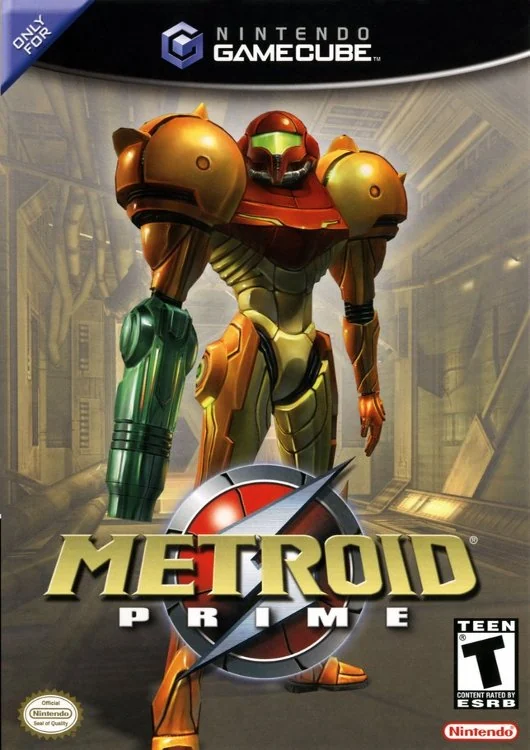
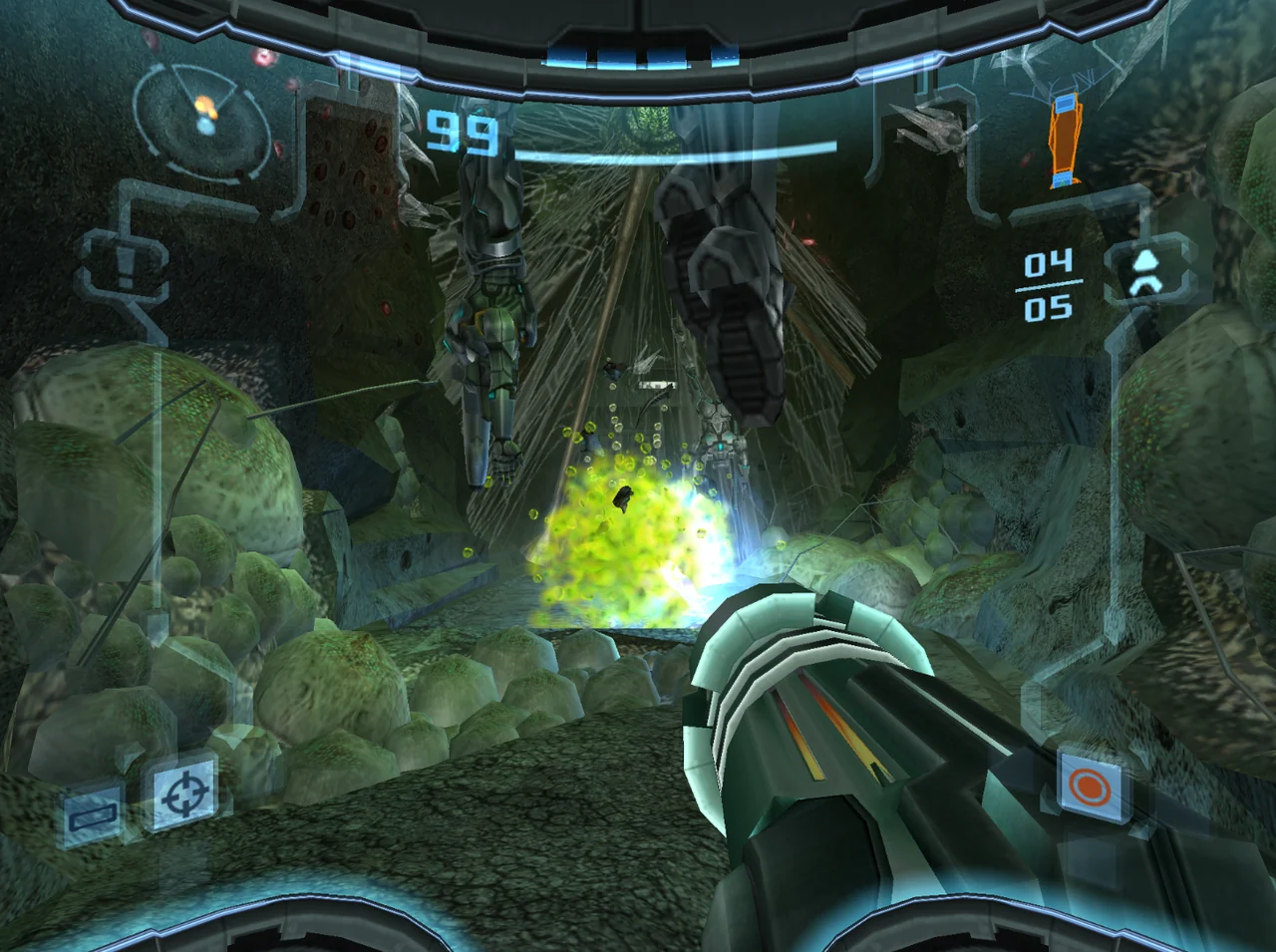
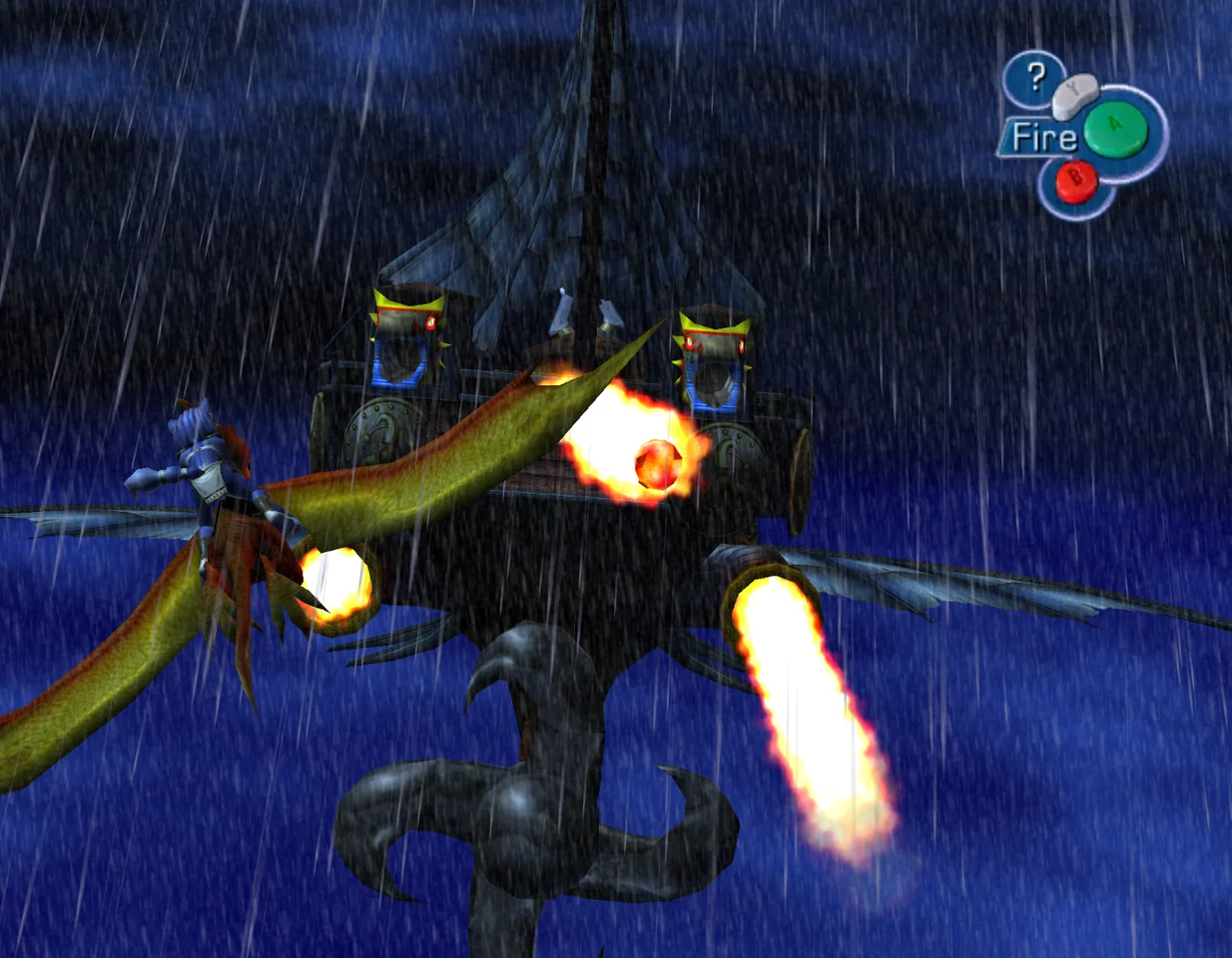
Metroid Prime showed that a first-person adventure could carry the exploration, scanning and environmental storytelling associated with the Metroid series. The Legend of Zelda: The Wind Waker then used a deliberately stylized visual direction rather than treating new hardware as an obligation to pursue realism.
These games did not prove that every developer found the system effortless. They showed how Nintendo’s tightly integrated hardware and software teams could exploit predictable performance, controller identity and the company’s willingness to build around unusual premises.
The GameCube also received major outside support, including Capcom’s Resident Evil remake and Resident Evil 4. Those releases mattered strategically because Nintendo was trying to repair relationships with major publishers, not merely produce another strong internal lineup. Capcom’s exclusivity push, which also included Viewtiful Joe, demonstrated the effort, even though the arrangement did not remain fully exclusive.
A first-party showcase could demonstrate possibility. Outside software was needed to make the platform broadly persuasive, and GameCube’s history shows that Nintendo did not fully solve that problem through engineering alone.
Connectivity extended the strategy beyond the console
Nintendo did not treat GameCube as an isolated box. The company promoted GameCube and Game Boy Advance connectivity as a new type of play, using examples such as Animal Forest+ and the e-Reader. Nintendo’s 2002 annual report described the connection between the two systems as a new kind of interactive experience.
This approach gave Nintendo a way to connect its strongest long-term asset—the handheld business—to its home-console strategy. A Game Boy Advance could act as a map, inventory, controller or secondary screen in selected games. That created forms of asymmetry that were difficult to reproduce with a television and four conventional controllers alone.
The Game Boy Player, released in 2003, extended the relationship in a different direction by allowing Game Boy and Game Boy Advance software to be played on a television through GameCube hardware. Nintendo of America’s company history identifies the accessory as part of the GameCube era.
The idea was not universally convenient. Connectivity could require extra hardware, compatible software and multiple players with the appropriate devices. That made it a specialized feature rather than a universal replacement for ordinary local multiplayer.
Still, the experiment revealed Nintendo’s preferred direction. Instead of making GameCube a general-purpose entertainment hub, Nintendo looked for ways to make its hardware families interact. The company was testing whether the value of a console could increase through relationships with other Nintendo devices.
What the reset fixed—and what it did not
GameCube improved Nintendo’s development environment, created a more balanced architecture and gave internal teams a flexible foundation for distinctive games. Nintendo reported 2.7 million systems shipped by December 2001, with 95 percent sold through at that point, and worldwide GameCube hardware sales of 3.8 million by March 31, 2002. Pikmin, Super Smash Bros. Melee and Luigi’s Mansion each passed one million sales by the end of Nintendo’s 2002 fiscal year.
Those figures show that Nintendo had built a credible early software base. They do not show that the company had restored its third-party position. Proprietary discs complicated some ports, the controller was not equally convenient for every genre and Nintendo was competing against platforms with strong publisher relationships and broader multimedia ambitions.
The reset did not eliminate every consequence of Nintendo 64-era decisions. It made Nintendo’s own creative work easier to express and gave external developers a more coherent platform, but it could not erase the advantages held by Sony and Microsoft or guarantee that publishers would prioritize GameCube.
Its longer legacy is visible in technical continuity with Wii, including the shared PowerPC lineage and broader design relationships. That should not be reduced to a single-cause story. Wii pursued a different market and a different control philosophy. Yet GameCube established a more disciplined hardware foundation from which Nintendo could continue experimenting.
The company had corrected part of the problem: hardware and tools were no longer being treated as separate from the software ecosystem. The remaining problem was commercial. A developer-friendly machine still needed enough users, storage flexibility and publisher confidence to become the industry’s preferred platform.
The GameCube was Nintendo’s attempt to make hardware strategy more practical without making it ordinary. Its compact optical media, balanced architecture, embedded graphics memory, developer-focused SDK and Technology Development organization all addressed weaknesses exposed by the Nintendo 64. Nintendo was trying to reduce the distance between a creative idea and a finished game.
The company did not solve every platform problem. Storage limits, controller differences and uneven third-party support remained meaningful tradeoffs. But the GameCube reset gave Nintendo a clearer engineering process and a stronger base for experiments involving handheld connectivity and later console design.
Its lasting importance is not that it won a specification contest or reclaimed the entire market. It is that Nintendo learned to treat developer experience as part of the hardware itself. GameCube was a commercial compromise, but it was also a crucial step toward the more deliberate hardware-and-software strategy that shaped Nintendo’s next generation.