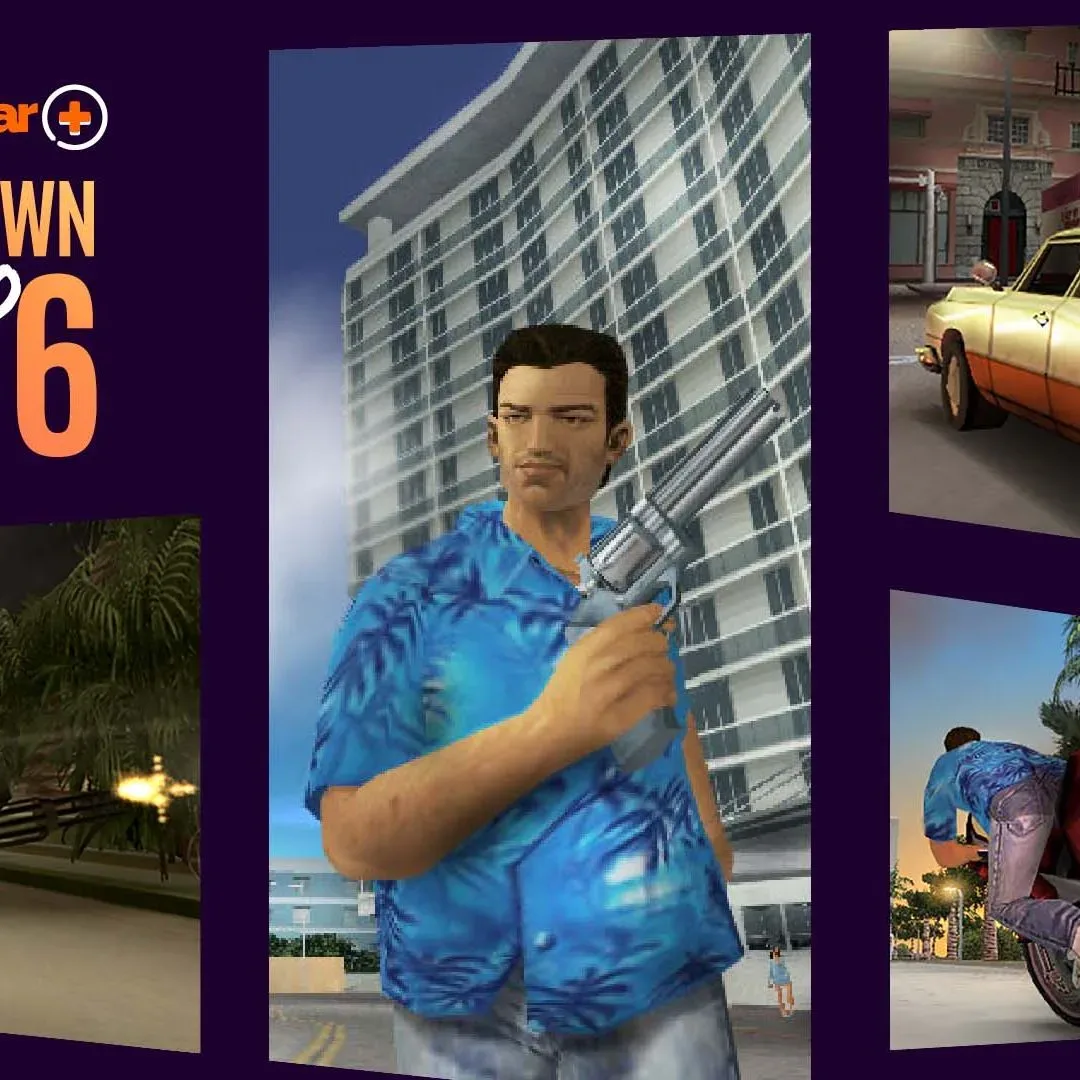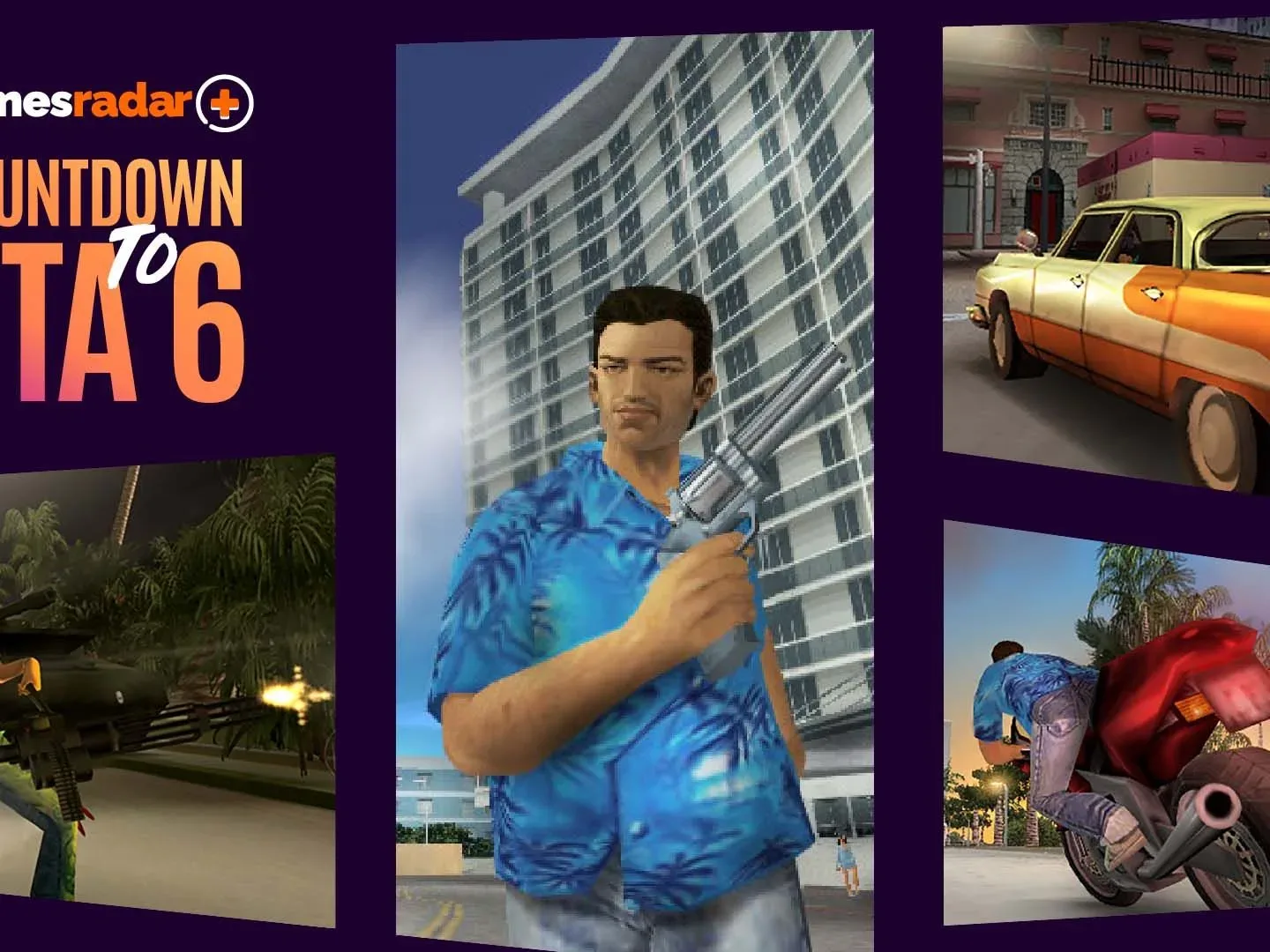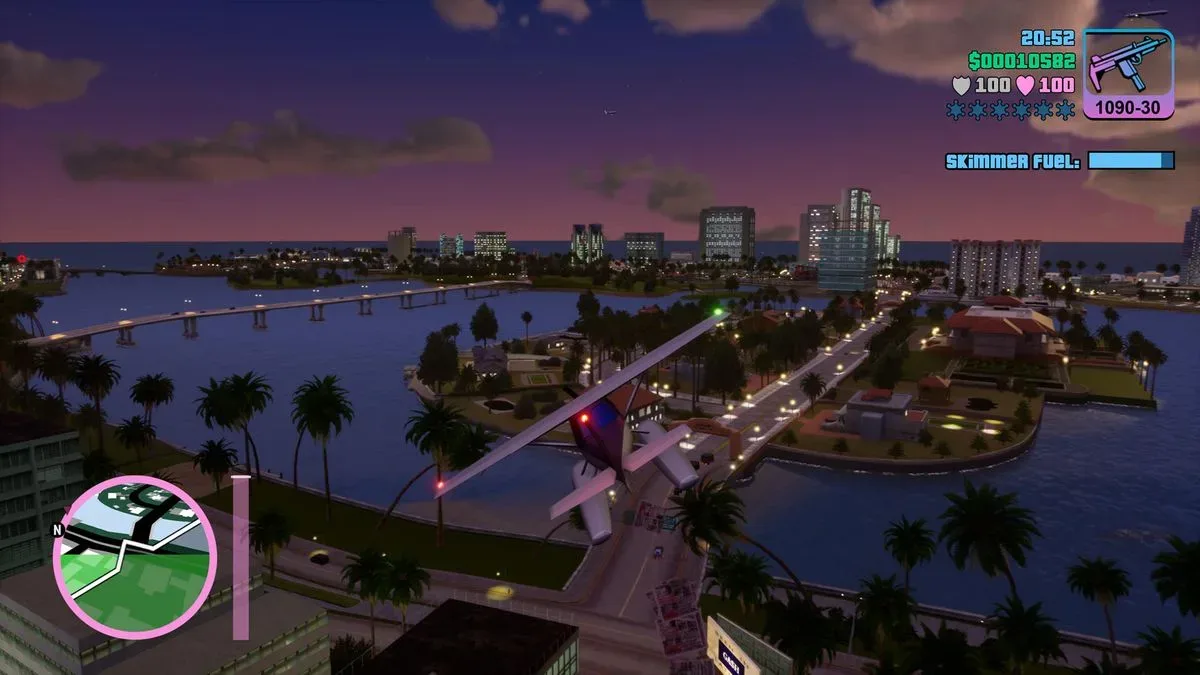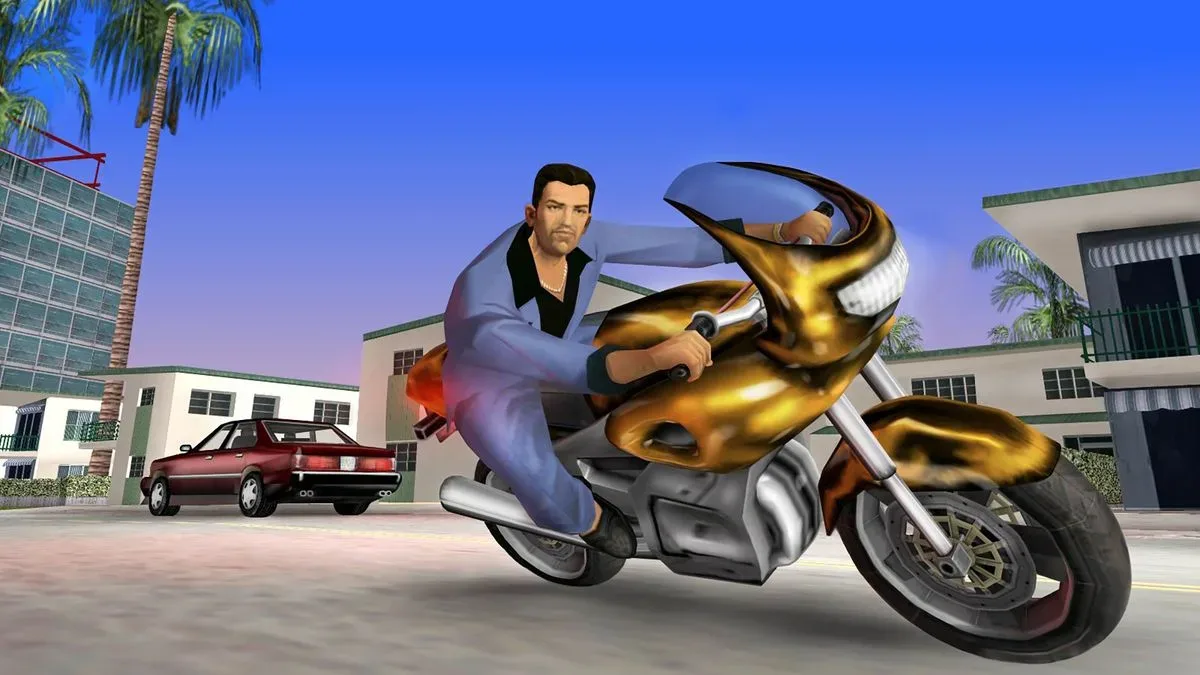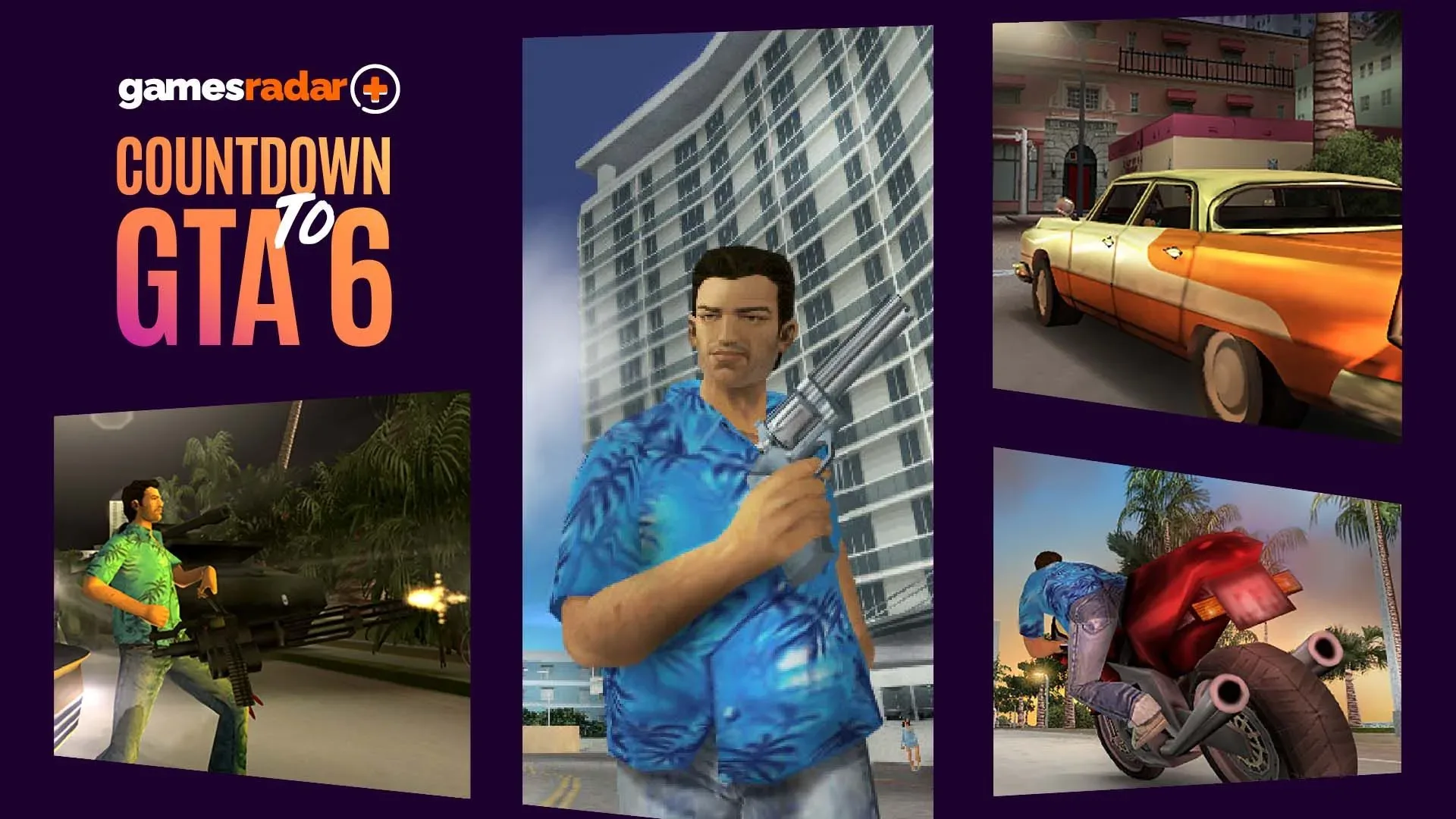
Grand Theft Auto: Vice City arrived only 13 months after Grand Theft Auto 3, but its ambitions were immediately easier to see from the ground. Where Liberty City could feel forbidding, constrained and half-glimpsed behind locked doors, Vice City presented a brighter, more accessible fantasy: a sun-drenched, Miami-inspired criminal playground with motorbikes, helicopters, seaplanes, purchasable businesses, clothing changes and considerably more places to enter.
Nearly a quarter-century later, though, its most valuable contribution is not that it added more vehicles or let players get airborne properly. It is that Vice City understood a crucial open-world principle that remains easy to lose: a map feels expansive when its spaces have identity, purpose and a relationship to the player’s journey. More acreage alone cannot accomplish that.
Vice City is not mechanically comprehensive by modern standards. Its driving, shooting and mission framework remain close to GTA 3, and its activities often still follow the series’ foundational rhythm: travel somewhere, cause trouble, take or destroy something, then escape or return. It also lacks abilities that would later seem ordinary, including swimming, wall climbing and moving while crouched. But its limitations help reveal how carefully its priorities were chosen. The game invests in texture, place and momentum rather than treating raw feature count as the sole measure of an open world.
From a city you visit to a city you inhabit
GTA 3 established the major leap: a 3D city that functioned as an open crime-game playground. Yet its Liberty City has an intentionally harsh and closed-in quality. Its Dodo aircraft can get off the ground, but its restricted flight performance makes it an apt symbol of a game reaching toward possibilities it could not fully deliver. The city suggests a reactive urban life while often holding the player at a distance, particularly when it comes to interiors.
Vice City changes the emotional contract. Helicopters, a seaplane and an Apache attack helicopter make vertical movement feel less like a teasing exception. Motorbikes diversify street-level travel. More importantly, locations are not merely scenery passed at speed between mission markers. The Malibu Club, Pole Position, shopping malls, Pizza Stack restaurants, hotels, apartments and acquired businesses give the city an interior life.
That does not mean every building becomes a fully simulated space, nor that every interaction is deep. The point is experiential. When players can enter recognizable social, commercial and leisure spaces, the city stops reading purely as a stunt course or a series of combat arenas. It gains the suggestion of ordinary life around the crime story. This is an early example of verisimilitude: the design practice of making a fictional world feel believable through persuasive details, even when it is plainly stylized and incomplete.
In Vice City, verisimilitude comes from little signals as much as from major systems. A change of clothes, a shop visit, an optional encounter, or a venue that has a distinct social atmosphere can make the player feel like they are occupying a place rather than merely operating inside a level. These additions may sound modest today. At the time, particularly for a console open-world game outside fantasy role-playing conventions, they helped make roaming feel rewarding in itself.
Atmosphere is not a superficial extra
It is tempting to frame Vice City as GTA 3 with a louder soundtrack, bigger celebrity cast and a more cinematic visual wrapper. There is truth in that reading. The game drew heavily on 1980s popular culture, includes a licensed music selection, and invokes the imagery of Scarface, including a recognizable mansion and climactic confrontation. Its central gameplay systems did not receive the kind of wholesale reinvention that later sequels would bring.
Related coverage includes Grand Theft Auto: Vice City Still Shows Open Worlds How to Be Memorable.
But calling atmosphere superficial misunderstands what atmosphere does in an open world. An open world asks players to repeatedly inhabit spaces between formal objectives. The tone of those intervals matters. It influences whether a drive feels like dead travel or an invitation to linger, whether an area becomes memorable or interchangeable, and whether players can form personal associations with a location.
Liberty City’s concrete, smoke and bleakness suit GTA 3’s grim criminal mood. Vice City’s pastel architecture, heat-haze sensibility and coastal brightness create a radically different kind of fantasy. Its violence is still central to the game’s action, but the world offers another register alongside it: a drive around Ocean Beach in a convertible, a visit to a nightclub, or a mission aboard Colonel Cortez’s yacht. These moments do not replace the mayhem. They broaden what the player can remember the game being about.
That distinction helps explain why a game with familiar mission structures can still feel singular. Aesthetic direction is not decoration pasted onto mechanics; it shapes the meaning of those mechanics. Driving through an area framed as decayed and hostile produces a different sensation from driving through a district designed to feel glamorous, playful or aspirational. Vice City’s setting turns traversal into part of the fantasy.
Its radio is particularly important to this effect. The licensed 1980s soundtrack makes the act of moving through the city feel curated rather than incidental. The player is not just traveling from point A to point B; the game gives that trip an audiovisual identity. As Grand Theft Auto continues to make music a major part of its worldbuilding, that connection remains relevant. For a look at one current piece of the series’ musical conversation, see GTA VI’s release of Justice’s “Pusher” ahead of its original-score album.
Density beats map sprawl
The strongest lesson from Vice City is about density. In game-design terms, density does not simply mean packing a map with icons. It means giving areas enough distinguishing features, practical functions and visual character that players can understand where they are and why they might care about being there.
Vice City builds this through local landmarks and useful geography. Downtown has its Ammu-Nation and helipad. Ocean Beach has hotels and a multi-storey car park. Little Havana is associated with the airport and a rocket-launcher pickup nearby. These details are small in isolation, but together they turn the map into something players can mentally navigate rather than merely consult.
This is a matter of spatial legibility: how easily a player can read, recognize and remember the layout of a game world. A legible world does not need to be simple. It needs districts with enough contrast that travel develops a sense of direction. Vice City’s neighborhoods have names, visual roles and practical associations. Missions also push the player through them, giving those distinctions time to register.
That approach differs from an open-world model in which a huge map is covered with loosely related errands. More activities can mean more choice, but choice becomes less compelling when it lacks context. Vice City’s map is carefully contained, yet it feels substantial because each part of it has been made to count. The player is less likely to experience the city as empty connective tissue between attractions.
There is a useful practical takeaway here for players evaluating older open-world games. Technical age does not automatically equal a smaller sense of place. A compact game can deliver a stronger feeling of discovery if it has well-defined neighborhoods, meaningful interiors and reasons to revisit locations. Conversely, an enormous world may feel slight if its content does not establish a durable identity for its regions.
Business ownership gives freedom a narrative role
Vice City’s latter half provides another reason its freedom remains memorable. Players can buy assets and front businesses, then pursue their related mission chains. This could have been a detached economic layer: purchase property, collect income, tick off an activity. Instead, the ownership structure largely supports Tommy Vercetti’s larger objective of building a criminal empire.
This is an early form of what can be called narrative integration. Optional or semi-optional activities are narratively integrated when they reinforce the protagonist’s goals and the game’s central premise rather than existing only as extra hours of play. Vice City gives players latitude in the order in which they approach businesses, but preserves a clear dramatic throughline. The freedom is bounded, and that boundary is useful.
Open-world design often faces a tension between authored storytelling and player agency. An authored story is deliberately paced and arranged by designers; player agency is the ability to choose actions, routes or priorities. Vice City does not erase that tension. Its missions can be rigid, and the empire-building structure does not turn the whole game into a flexible simulation. What it does is connect its available choices to an intelligible ambition. Buying a business and completing its work makes sense within Tommy’s rise.
This gives side content a stronger justification than mere completion. The player may still be motivated by rewards or curiosity, but there is also an answer to a basic question: why is the character doing this? Modern open worlds sometimes overwhelm that question with an abundance of diversions. Vice City’s restraint makes its activities feel more like facets of the same story.
An instructive kind of incompleteness
Vice City should not be treated as flawless simply because it is influential. Many of its advancements were incremental, and its design has obvious limits. It can feel primitive next to later games with more elaborate movement, combat, systemic reactions and role-playing depth. Its cinematic confidence occasionally outstrips its toolset. In that sense, it is a game still figuring out the language of the 3D crime sandbox.
Yet that unfinished quality is part of its appeal as a design case study. Vice City demonstrates that a game can lack systems now considered standard and still feel unusually whole. Its world has a coherent mood; its districts have recognizable character; its interiors and incidental activities encourage wandering; and its asset missions tie freedom back to a protagonist’s goal. Those decisions form a clear authorial hand.
“Authorial hand” does not mean the player is denied freedom. It means the game’s creators visibly shape the experience through tone, sequencing, landmarks and the reasons attached to activities. Vice City is not trying to make every possibility equally available at every moment. It guides the player through a place constructed to be memorable.
That may be why it remains a useful reference point for a genre often preoccupied with sheer scale. GTA: Vice City made itself feel bigger than its predecessor through new vehicles, air travel, businesses, music and a richer urban texture. With distance, however, its lasting achievement is clearer: it recognized that an open world becomes convincing not when it is endless, but when its individual streets, buildings and detours feel deliberately placed.