Nintendo GameCube strategy games rarely receive the same attention as the system’s platformers, racers and adventure games, but the catalog is more varied than its reputation suggests. The console hosted turn-based tactical RPGs, real-time strategy experiments, squad-command action games, resource-management adventures and hybrids that would be difficult to classify on another platform.
This ranking uses a broad but defensible definition of strategy. Each selection had to make planning, command, positioning, resource use or campaign decisions central to play. The order weighs tactical variety, command clarity, campaign depth, replay value, accessibility and how distinctly each game expresses its idea on GameCube. That means this is not a list of only traditional mouse-driven RTS titles, and it does not treat every game with combat as a strategy game.
The list also separates different kinds of decision-making. Fire Emblem and Gladius ask players to plan turns and develop units over a campaign. Pikmin turns logistics and population management into real-time environmental problem solving. Battalion Wars puts squad orders inside direct action, while Odama turns voice commands and pinball physics into battlefield tools. The result is a ranking of games that make strategy central, even when their interfaces and rhythms differ dramatically.
10. Yu-Gi-Oh!: The Falsebound Kingdom
Yu-Gi-Oh!: The Falsebound Kingdom is the most overtly licensed and structurally unusual entry here. Its strategy does not primarily come from card duels. Instead, players move commanded troops across campaign maps, capture and fortify towns, and develop facilities such as armories and infirmaries before committing units to battles. The result is a hybrid in which territory, preparation and combat formation matter alongside the familiar Yu-Gi-Oh! cast and monsters.
That structure makes it a useful starting point for players who enjoy strategy wrapped in a strong fictional theme. The anime presentation gives the campaign an immediate identity, while the separate movement and battle layers create more to consider than a straightforward arena game. Players must think about where to send units, which locations to secure and how to prepare before the next engagement.
The tradeoff is that anyone seeking a clean, self-contained tactical ruleset may find the licensed framework more prominent than the underlying strategy. It is also not a conventional card game despite its branding. It earns this place because its campaign-map movement, troop management and fortification systems are genuine strategic mechanics rather than decorative additions to a character-driven adventure.
- Best for players who want campaign-map strategy with a recognizable anime license.
- Expect a hybrid RPG structure rather than a conventional card battler.
- Choose it for territory and troop management, not for traditional Yu-Gi-Oh! dueling.
9. Future Tactics: The Uprising
Future Tactics: The Uprising approaches turn-based combat from an angle that separates it from grid-focused tactics games. Its battlefields are three-dimensional, and projectile trajectories give attacks a physical quality. Positioning is therefore about more than counting squares: elevation, line of fire and the shape of the environment can influence how a turn unfolds.
That design gives the game a distinct tactical identity and makes it appealing to players who find traditional grids too rigid. The battlefield feels like a physical space to manipulate, with attacks requiring attention to angles and obstacles rather than only movement ranges. The turn-based structure still gives players time to examine the situation and plan a response.
Future Tactics sits below the more substantial campaign systems on this list because its appeal is concentrated in the combat model rather than a particularly broad strategic layer. It is best understood as a tactical battle game with a strong physical presentation, not as a base-building or grand-campaign experience. Choose it when you want turn-based encounters that feel closer to manipulating a miniature landscape than arranging units on graph paper.
- Best for players who want turn-based combat without a conventional square-grid presentation.
- Look for value in projectile planning and battlefield geometry rather than base management.
- Its appeal comes from combat experimentation more than a deep economy or large strategic map.
8. Goblin Commander: Unleash the Horde
Goblin Commander translates real-time strategy into a compact console format. Players gather resources, build a horde and direct distinct goblin forces while also taking more direct control of selected units. Its premise is deliberately immediate: instead of managing an enormous war machine, the player learns to keep a small, aggressive force moving, growing and attacking.
That focus gives it a clear advantage for GameCube owners who want an RTS without the scale or interface burden associated with many PC examples. The player has to balance expansion, unit selection and battlefield momentum while dealing with the limitations of a controller-based interface. The distinct goblin factions also help the campaign avoid feeling like one interchangeable army.
The limitation is equally clear: this is a streamlined console RTS, not a replacement for a sprawling computer strategy game. Its smaller scale is part of the appeal, but players wanting layered diplomacy, extensive economic systems or large battlefields should look elsewhere. Goblin Commander ranks above more conventional adaptations because its controller-first identity is part of the design rather than something hidden behind a simplified menu system.
- Best for players seeking a compact, controller-friendly real-time strategy game.
- Its smaller strategic scope is a tradeoff for immediacy and accessibility.
- Choose it when direct unit control matters as much as base and resource decisions.
7. Army Men: RTS
Army Men: RTS turns the miniature-soldier setting into a recognizable base-building and resource-gathering strategy framework. Players establish a base, collect supplies and direct units across battlefields that make the toy-war theme more than a cosmetic wrapper. The scale helps communicate the relationship between infrastructure, production and battlefield pressure.
The GameCube version is especially useful as an example of how a computer-oriented strategy structure could be adapted to a console audience. Its campaign is organized around collecting plastic and electricity, then spending those resources on buildings, vehicles and troops. That gives each mission a readable rhythm: secure the materials, establish production and use the resulting force to overcome the opposing army.
Its strongest quality is approachability. The game offers a recognizable RTS loop without demanding that players learn an enormous number of systems immediately. Compared with Goblin Commander, Army Men: RTS is more conventional in its military structure, but it also provides a clearer introduction to the familiar build-and-expand rhythm. Players looking for stranger factions or more experimental battlefield rules may prefer higher-ranked entries, but newcomers can appreciate its straightforward strategic foundation.
- Best for newcomers who want a recognizable base-building strategy loop.
- Choose it for clarity and theme; choose Goblin Commander for a stranger, more characterful RTS structure.
- Its resource economy and unit production provide the clearest traditional RTS framework on this list.
6. Odama
Odama is one of the boldest strategy experiments on the GameCube because its battlefield is also a pinball table. Players launch and redirect a massive ball through historical war scenarios, damaging defenses and opening routes while issuing commands to troops. The central challenge is balancing physical momentum with military intent: a successful hit can create an opportunity, but the battlefield still demands attention to positioning, objectives and troop safety.
The GameCube Microphone is not merely an optional novelty in the original design. Voice commands are a central part of directing soldiers, and the instruction manual explains how the microphone connects through the console’s memory-card slot and is activated with the controller. That makes Odama a notable example of a game whose command system depends on a distinctive piece of GameCube hardware.
The result is not the safest recommendation for someone wanting a clean tactical interface. Voice recognition, pinball physics and military objectives all compete for attention, and the presentation can feel demanding rather than immediately comfortable. Originality matters in this ranking, however. Odama demonstrates that strategy can emerge from controlling space, timing impacts, protecting troops and coordinating forces even when the game does not resemble a board, grid or standard RTS.
- Best for players who value experimental mechanics over familiar strategy conventions.
- The GameCube Microphone is central to the command system, not simply an optional extra.
- Treat the pinball layer as part of the battlefield logic rather than a separate minigame.
5. Battalion Wars
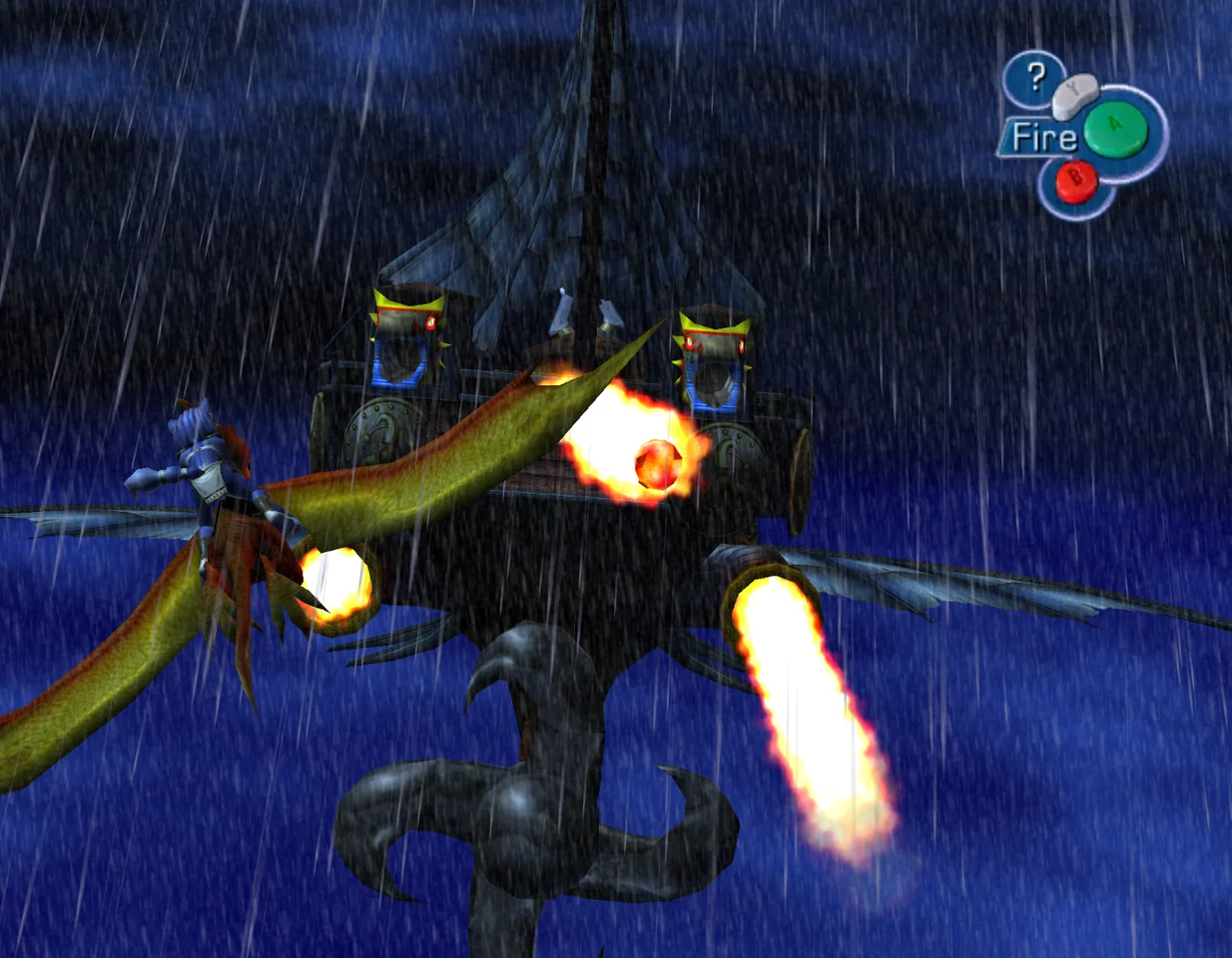
Battalion Wars blends third-person action with real-time squad command. The player directly controls a battlefield soldier while ordering allied units, operating vehicles, capturing bases and responding to changing objectives. That combination creates decisions at two levels: where to move and fire personally, and when to redirect the wider force.
The game’s mission structure gives that combination room to develop. Different objectives ask the player to attack, defend, capture or move through contested areas, while vehicles alter how encounters should be approached. A tank, infantry group or other unit is not simply another weapon; each changes the player’s priorities and the way the battlefield must be read.
Battalion Wars ranks above the dedicated RTS entries because its command system is integrated into moment-to-moment play rather than separated into a distant overview. The player can be active in the fighting without losing sight of the squad’s role, and personal movement is constantly connected to the condition of the larger force. Players who want deliberate turns may find its pace less comfortable, but it is one of the GameCube’s clearest examples of strategy and action reinforcing each other.
- Best for players who want to command squads without giving up direct battlefield control.
- Its real-time pace rewards quick prioritization rather than long turns of analysis.
- Choose it when vehicles, objectives and squad orders should share the same battlefield.
4. Pikmin
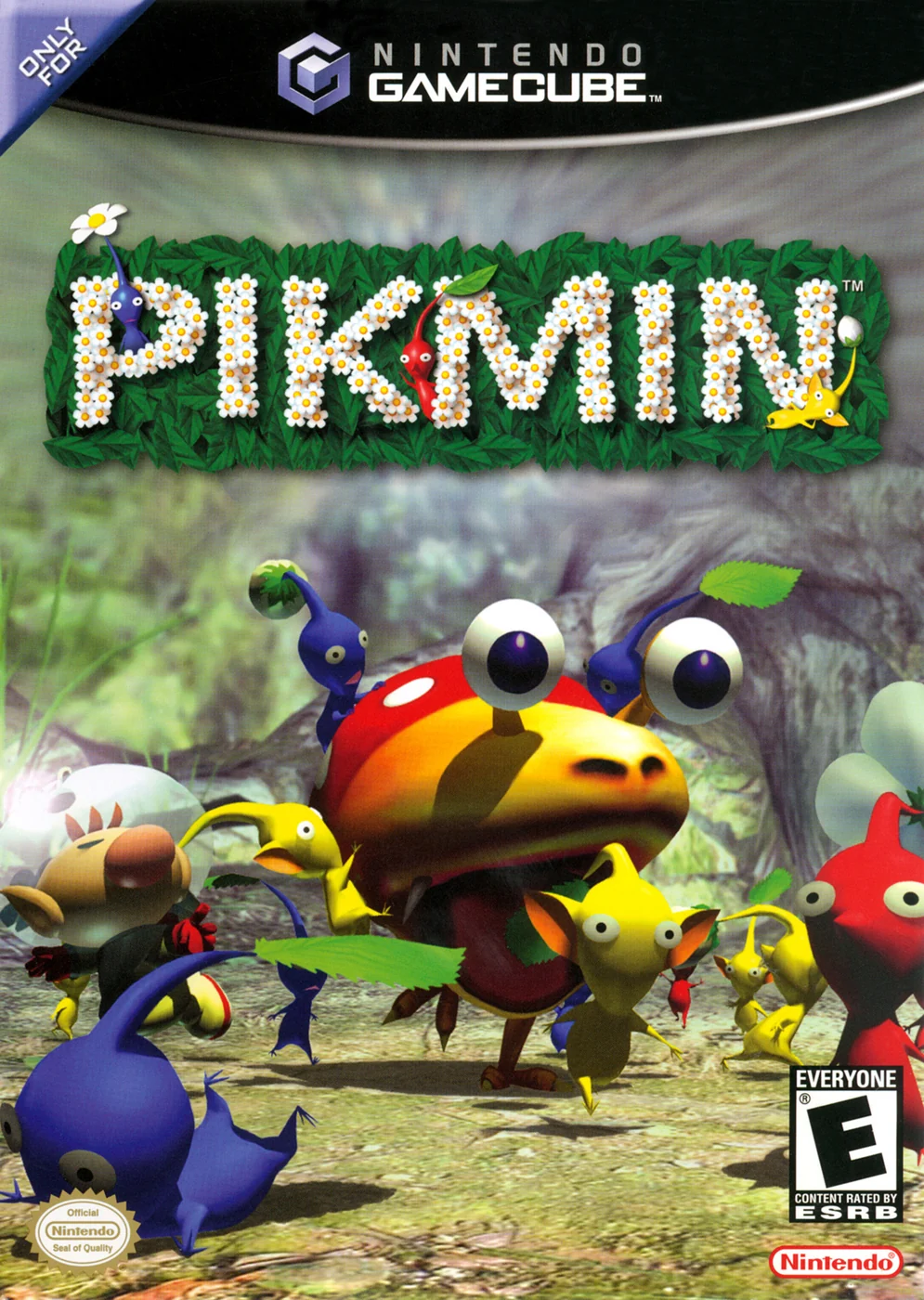
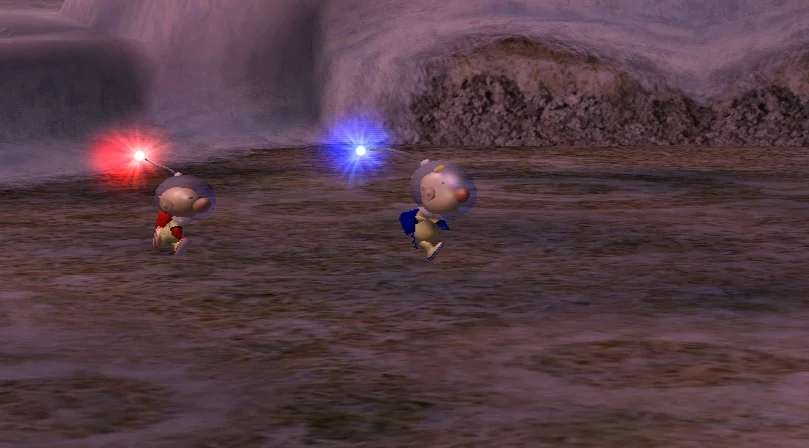
Pikmin looks gentle, but its strategy loop is disciplined. The player directs groups of creatures with different abilities, assigns them to environmental problems, carries objects, fights enemies and manages a limited population. Every decision involves opportunity cost: a group sent to transport something cannot simultaneously clear another route, and a poor encounter can reduce the workforce needed for later tasks.
The original game’s time pressure gives its planning a sharp edge. Routes must be learned, jobs must be prioritized and the player has to judge when a risky detour is worth attempting. Nintendo classifies Pikmin as an action-strategy game, which is a useful description: the player gives direct orders in a real-time world, but progress depends on logistics, specialized units and careful allocation of limited resources.
The game’s three original Pikmin colors also create a clear command language. Red Pikmin resist fire, blue Pikmin can operate in water and yellow Pikmin interact with hazards such as bomb-rocks. These differences are easy to understand but produce increasingly complex choices as the environment combines them. Pikmin is an excellent entry point for players who do not normally seek strategy games because it teaches planning through movement, logistics and environmental problem solving rather than dense menus.
- Best for players who want accessible strategy with deadlines and environmental puzzles.
- Do not mistake its cheerful presentation for a low-consequence command system.
- Choose it over Pikmin 2 when sharper time pressure and tighter route planning sound appealing.
3. Gladius
Gladius is the GameCube’s strongest choice for players who want a substantial tactics RPG outside Nintendo’s own series. Its premise centers on building a gladiator school, recruiting fighters, developing them through experience and taking them into turn-based arena battles. The structure supports a wide range of decisions: which fighters to cultivate, how to position them, when to use abilities and how to shape a team for the next contest.
The arena setting gives the campaign a useful sense of progression. Battles are not isolated puzzles; they contribute to a longer effort to improve a roster and expand the school’s reputation. Recruiting and developing different fighters encourages experimentation, while the turn-based encounters allow players to study the battlefield before committing to a move.
The GameCube version also supports one to four offline players, giving its combat systems a local multiplayer dimension that many tactics RPGs lack. That does not make multiplayer the whole reason to play, but it adds a meaningful way to revisit the battle rules with other people. Gladius does not have Fire Emblem’s same emphasis on a single dramatic campaign cast, but its recruitment and arena framework offers broader roster experimentation. It is the pick for players who want to build a fighting stable and test formations repeatedly.
- Best for players who enjoy party development, arena battles and repeatable tactical encounters.
- Choose it over Fire Emblem when roster-building matters more than a tightly authored war campaign.
- The GameCube edition supports up to four offline players.
2. Pikmin 2
Pikmin 2 expands the original’s command language without abandoning its central appeal. Additional Pikmin species create more specialized solutions, while randomly generated underground areas introduce a different kind of planning from the fixed outdoor environments. Two-player modes also broaden the game’s replay value, letting the core systems operate outside the main solo campaign.
Nintendo specifically describes Pikmin 2 as removing the original’s time limits. That does not remove tactical pressure: enemies, hazards, population losses and route choices still matter, but players have more room to experiment and recover. The change makes Pikmin 2 a more flexible recommendation than the first game, especially for players who want to study an area rather than race every decision against a hard schedule.
The additional species expand the number of ways to approach a problem, and the caves create a contrasting rhythm built around exploration, combat and treasure recovery. Those systems give Pikmin 2 a wider range of strategic situations than its predecessor. It ranks second because it combines accessibility with a deeper range of command problems, although some players may prefer the original’s tighter urgency and more concentrated campaign structure.
- Best for players who want Pikmin’s strategy with more exploration, experimentation and recovery time.
- Choose the first Pikmin for sharper deadlines; choose Pikmin 2 for broader replay and lower schedule pressure.
- Its two-player modes and randomly generated dungeons add variety beyond the main campaign.
1. Fire Emblem: Path of Radiance
Fire Emblem: Path of Radiance is the GameCube’s most complete strategy game because its tactical decisions operate at several levels at once. Battles revolve around positioning, terrain, unit roles and timing, but every move also affects a developing roster of characters. Permanent unit loss gives mistakes lasting weight, while skills, character growth and the inclusion of laguz units expand the number of ways a battle can be approached.
That combination makes the campaign feel consequential without reducing strategy to punishment. Players must think about the immediate objective, the survival of valuable units and the shape of the force they want to carry forward. The 3D maps provide a readable battlefield for those choices, while the character-focused structure gives the campaign an emotional and strategic through-line.
Path of Radiance also benefits from a strong contrast between unit roles. Beorc characters and laguz do not simply provide interchangeable statistics, and the campaign asks players to understand how different fighters contribute to a formation. Skills and growth create longer-term planning, while permanent loss means that reckless decisions can reshape the roster rather than merely costing a few resources.
Other games on this list are stranger, faster or more accessible, but Path of Radiance best unites tactical clarity, long-term investment and meaningful consequences. It is the strongest starting point for anyone who wants the GameCube’s most traditional and fully developed strategy experience. Players who dislike permanent-loss systems may prefer Gladius or Pikmin 2, but for campaign stakes and tactical structure, Fire Emblem is the clear top selection.
- Best for players who want turn-based tactics, character investment and lasting consequences.
- Its permanent-loss system rewards careful planning and makes each campaign decision matter.
- Choose another entry if you want real-time commands, lower pressure or a more experimental ruleset.
The GameCube’s strategy catalog is valuable precisely because it does not settle on one formula. Fire Emblem offers battlefield discipline and character consequence, Pikmin turns logistics into a bright environmental puzzle, Gladius builds tactics around an evolving roster, and Battalion Wars places squad decisions inside direct action. Even the stranger choices have a clear reason to exist: Odama makes momentum part of command, while The Falsebound Kingdom turns a license into a territory-and-facilities campaign.
For a first game, start with Fire Emblem: Path of Radiance if you want classic turn-based tactics, Pikmin 2 if you prefer accessible real-time planning, Gladius if you want arena progression, or Battalion Wars if direct control should remain central. Army Men: RTS is the clearest introduction to traditional console RTS structure, while Future Tactics is the best fit for players who want turn-based battles built around physical space.
If novelty matters most, Odama is the GameCube strategy experiment least likely to be confused with anything else on the system. It also requires the most specific hardware arrangement because its voice-command design depends on the GameCube Microphone. Taken together, these ten games show that the system’s strategy identity was not defined by one genre template, but by the many ways it turned planning into play.