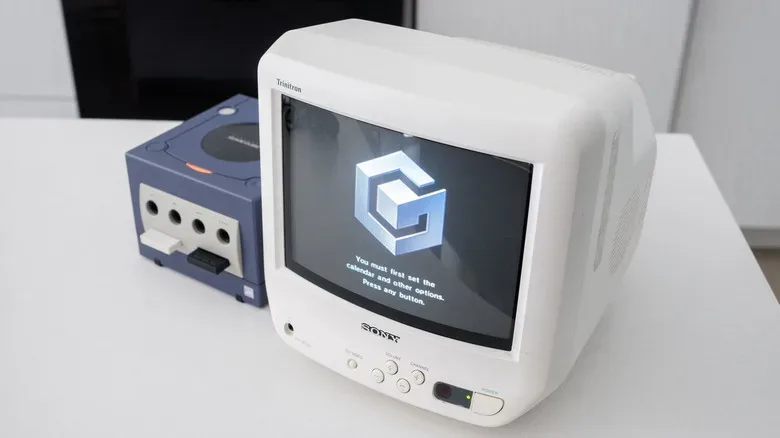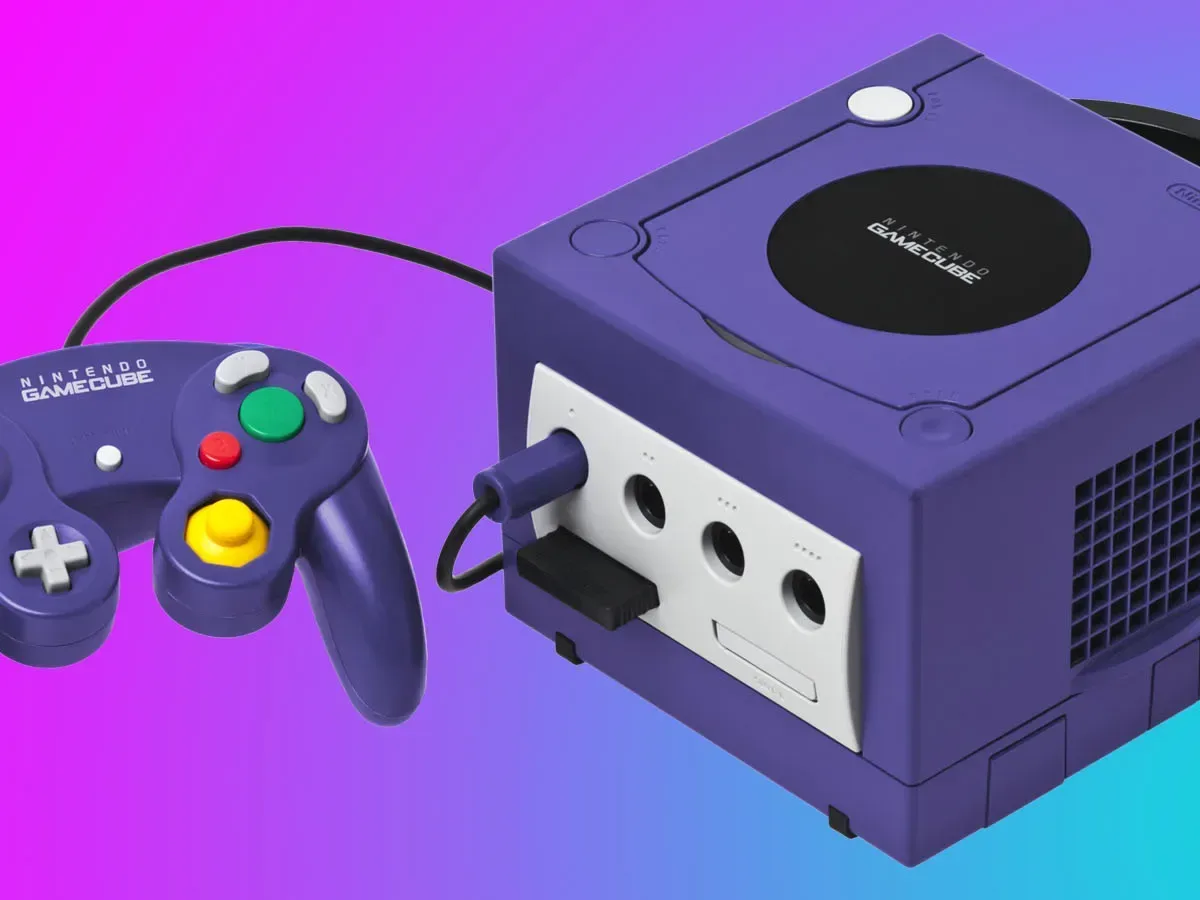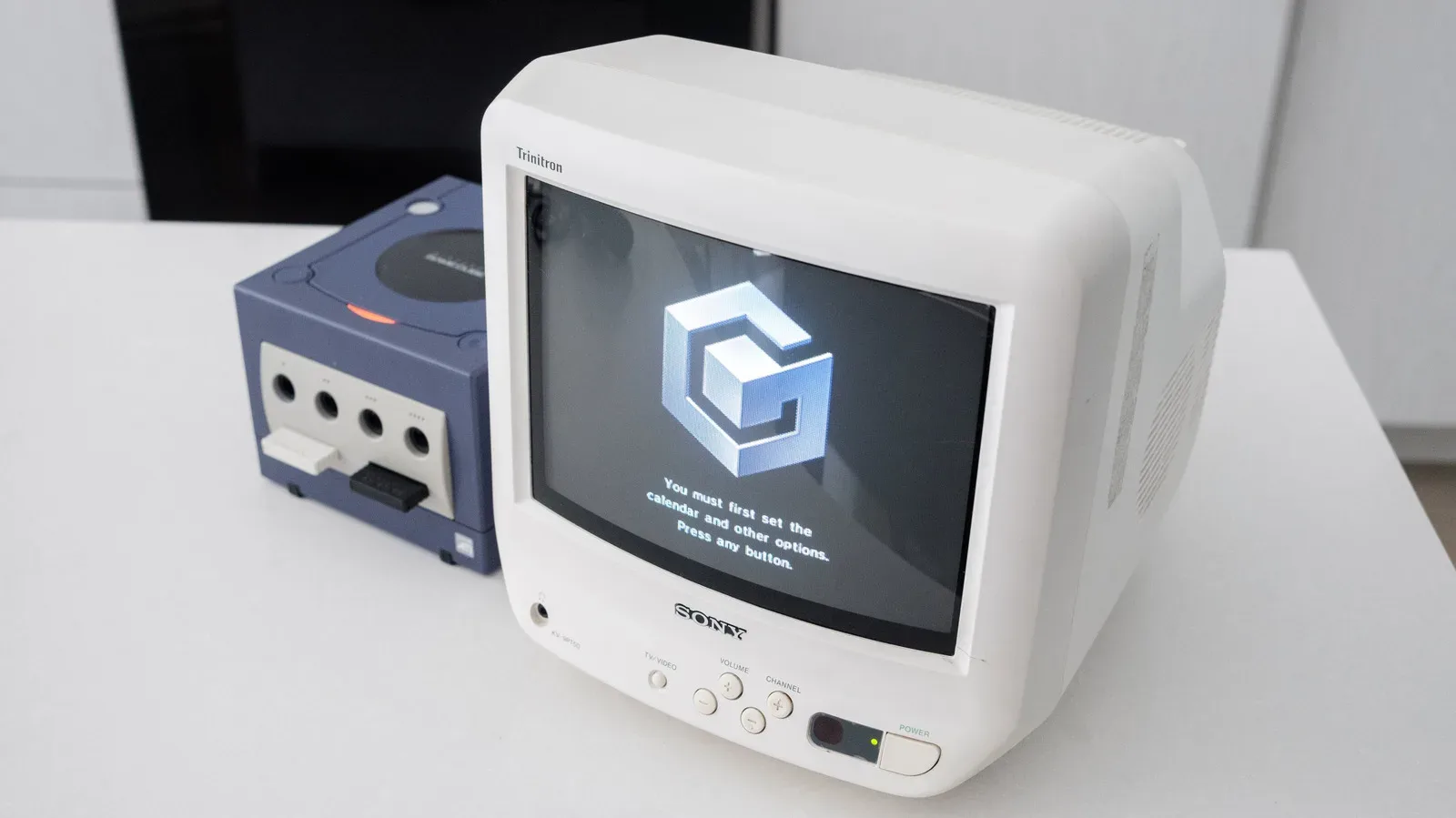
In 2001, the console race looked brutally straightforward. Sony’s PlayStation 2 had already established itself as a huge force, helped by a DVD drive and an incoming run of landmark software. Microsoft’s Xbox would arrive with a technical showcase called Halo: Combat Evolved. Nintendo, meanwhile, introduced a compact purple machine with a carrying handle, tiny proprietary discs and absolutely no interest in becoming anyone’s living-room movie player.
The GameCube launched in Japan on September 14, 2001, followed by a North American release on November 18. It did not match the PlayStation 2’s third-party support, and it lacked one single exclusive that became the generation’s universal shorthand in the way Halo did. Yet the passage of time has been exceptionally kind to Nintendo’s cube. Its best games are not just relics of a peculiar transitional era; they remain vivid examples of sharp design, daring presentation and ideas that later games either expanded or spent decades trying to reproduce.
That matters especially at the system’s 25th anniversary. The GameCube library includes major Nintendo franchises at moments of reinvention, cult favorites that still deserve modern access and multiplayer games whose reputations have outlived the hardware that originally hosted them. These 10 games show why the purple cube continues to command respect.
Metroid Prime made a first-person Metroid feel inevitable
Putting Metroid into 3D and placing players behind Samus Aran’s visor was the sort of change that could have gone disastrously wrong. The series had been built on side-scrolling exploration: find an item, revisit an earlier obstacle, open a new route and gradually turn an alien world from an intimidating maze into familiar territory.
Metroid Prime retained that philosophy. Its first-person viewpoint might resemble a shooter at a glance, but discovery is the engine. Tallon IV works because every icy corridor, crumbling ruin and hostile chamber feels like part of a coherent, abandoned place. The scan visor turns environmental detail into story, allowing players to piece together the planet’s history rather than simply receive it between action sequences.
The game can be tough, particularly in boss encounters and combat-heavy passages, but its atmosphere remains its great strength. A Switch remaster has also made this one of the easiest GameCube classics to revisit legitimately, a happy contrast with several games on this list that remain stranded on original hardware.
Super Smash Bros. Melee still has competitive electricity
Super Smash Bros. Melee does not have the immense character roster, stage catalog or crossover spectacle of Super Smash Bros. Ultimate. What it has is a famously immediate rhythm. Inputs, movement and attacks combine in a way that gives its matches an extraordinary sense of momentum, and the game has maintained a dedicated competitive scene long after newer installments arrived.
Its staying power says plenty about the design. On a GameCube controller and a CRT display, Melee has a responsiveness that encourages technical mastery without making its basic appeal hard to understand: Nintendo characters are knocking one another off a platform, and every scrap can swing wildly in seconds. The ceiling is high, but the central joke and the central thrill both land instantly.
Related coverage includes 25 Years of GameCube: The Games That Still Define Nintendo's Purple Cube.
It is also a reminder that GameCube multiplayer was not merely a feature checklist. It was social hardware. Four controller ports were an invitation to fill a room, settle grievances and hear someone insist that the last stock was “totally laggy” despite nobody owning an internet connection.
Mario Kart: Double Dash!! turned teamwork into mayhem
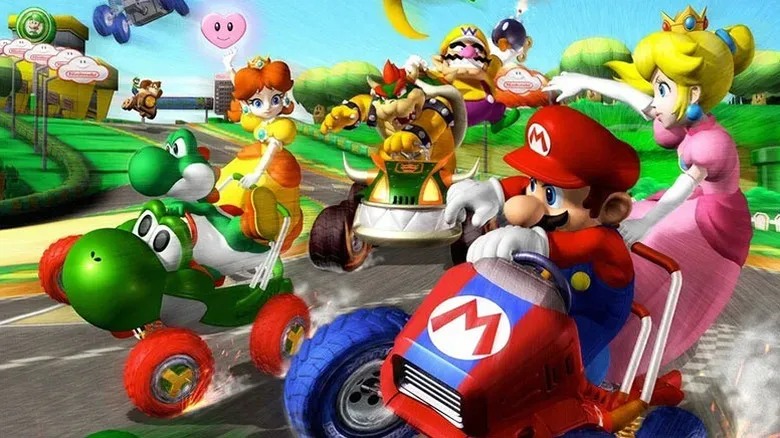
That local-multiplayer spirit is central to Mario Kart: Double Dash!!. Its defining twist put two characters on each kart: one drives, while the other handles items. The arrangement supported two-player teams and transformed races into loud little experiments in communication, blame assignment and extremely optimistic tactical planning.
Not every later Mario Kart adopted the same format, which makes Double Dash!! feel especially distinctive within the series. It also arrived with tracks that were bigger and more inventive than the franchise had previously managed. Wario Colosseum and its version of Rainbow Road demonstrated the GameCube’s ability to deliver scale and color that still read well today.
Its legacy is hiding in plain sight. Many of its courses have appeared again in later Mario Kart releases, so players who skipped the original may recognize its ideas even if they never had to coordinate a driver and a shell-thrower on the same couch.
F-Zero GX remains gloriously unreasonable
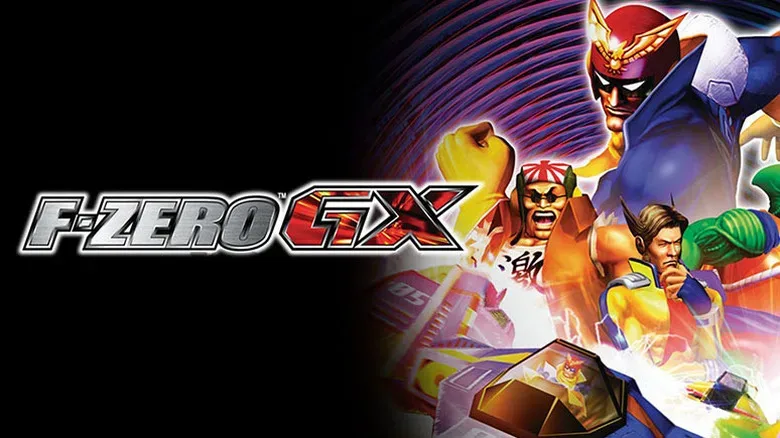
F-Zero GX took the Super NES original’s futuristic racing premise and made it violently, wonderfully fast. The ingredients were familiar: hovercraft, elaborate courses, rival racers and the looming possibility that one error would turn a good run into wreckage. The GameCube era allowed those courses to become longer, denser and far more visually dramatic.
The key is speed. Even decades later, GX feels like it is trying to peel the labels off the console. Its demanding AI and unforgiving track design offer very little patience for hesitation. Falling through the standings can happen almost instantly, and that severity is part of the game’s identity rather than an accidental blemish.
For a series that has not had another comparable mainline entry since, GX has become both a monument and a recurring plea. It is now available through the Nintendo Classics GameCube collection on Switch 2 for Nintendo Switch Online Expansion Pack subscribers, giving a new audience a chance to discover why people remain obsessed with Captain Falcon’s most punishing day at the office.
Animal Crossing already understood the long game
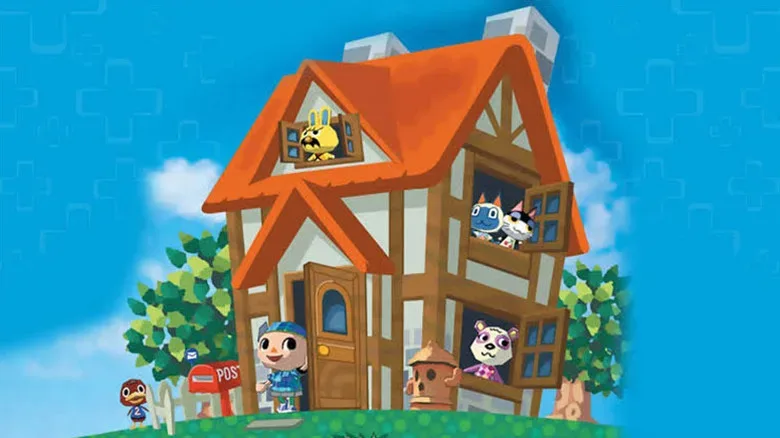
The original North American Animal Crossing, released in 2002, contains much of the series’ enduring DNA. Its town operates in real time. Fishing, bug catching and fossil collecting reward a little daily attention. Villagers have memorable personalities, and K.K. Slider is on hand to perform on Saturday nights. The pleasures are relaxed, routine-driven and delightfully open ended.
Looking back, what is striking is not how primitive it feels, but how clearly the formula was established. Later games refined it enormously, but the original already knew that players would happily make their own goals in a world structured around small rituals and personal spaces. It also introduced the inescapable financial presence of Tom Nook, a character whose housing arrangement somehow manages to feel both welcoming and faintly ominous.
There was no online feature to facilitate visits, pranks or trades. Friends instead used memory cards, which made town-based mischief a much more physical operation. That limitation now sounds quaint, but it speaks to an era in which a borrowed accessory could become the delivery system for a terrible new villager catchphrase.
Eternal Darkness made the player part of the horror story
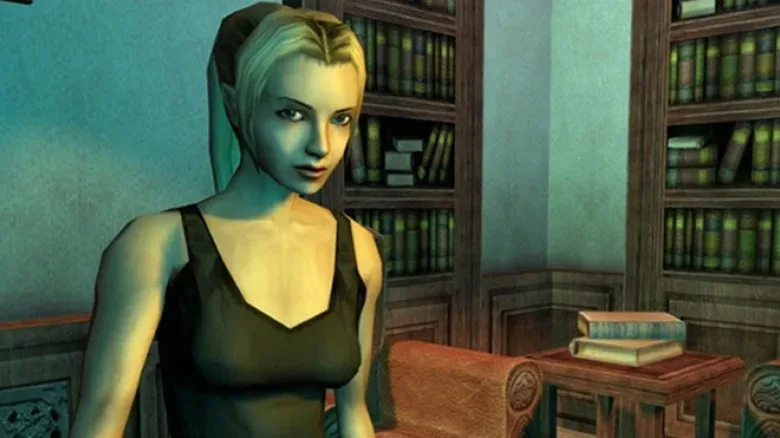
Eternal Darkness: Sanity’s Requiem remains one of the GameCube’s boldest oddities. It is a third-person horror game with a Lovecraftian mythology, a cast spread across multiple historical periods, puzzles, combat and a body-targeting system. It is also built to make players distrust what their television and console appear to be doing.
Its sanity effects are the famous attraction. The game can simulate technical failures, sudden camera changes, audio disruptions, insects on the screen and even the apparent loss of save data. These tricks do not merely decorate the horror; they blur the boundary between the game’s supernatural pressure and the player’s own momentary panic.
Nintendo publishing something so grotesque and mischievous remains notable. Unfortunately, it has not received a rerelease, port or remaster, so playing it currently requires a working GameCube and disc. A modern return would be welcome, but the absence has only added to its cult aura.
Resident Evil 4 changed action games from a GameCube start
It is easy to overlook that Resident Evil 4 began as a GameCube exclusive because it has since reached an enormous range of platforms and received a remake. The original’s place in history is difficult to overstate. Its over-the-shoulder camera made shooting feel tense and physical while offering a perspective that countless later action games would adapt.
It also showed off the GameCube’s technical capability with detailed environments and strong character models. On a platform often associated with colorful Nintendo adventures, its arrival was an important statement: the GameCube could host intense, polished action horror as effectively as it hosted kart races and platformers.
The game’s influence reached beyond its own series. A generation of third-person action design followed its lead, proving that the little purple box had one of the era’s most consequential third-party stories after all.
The Wind Waker and Twilight Princess offered two great Zelda directions
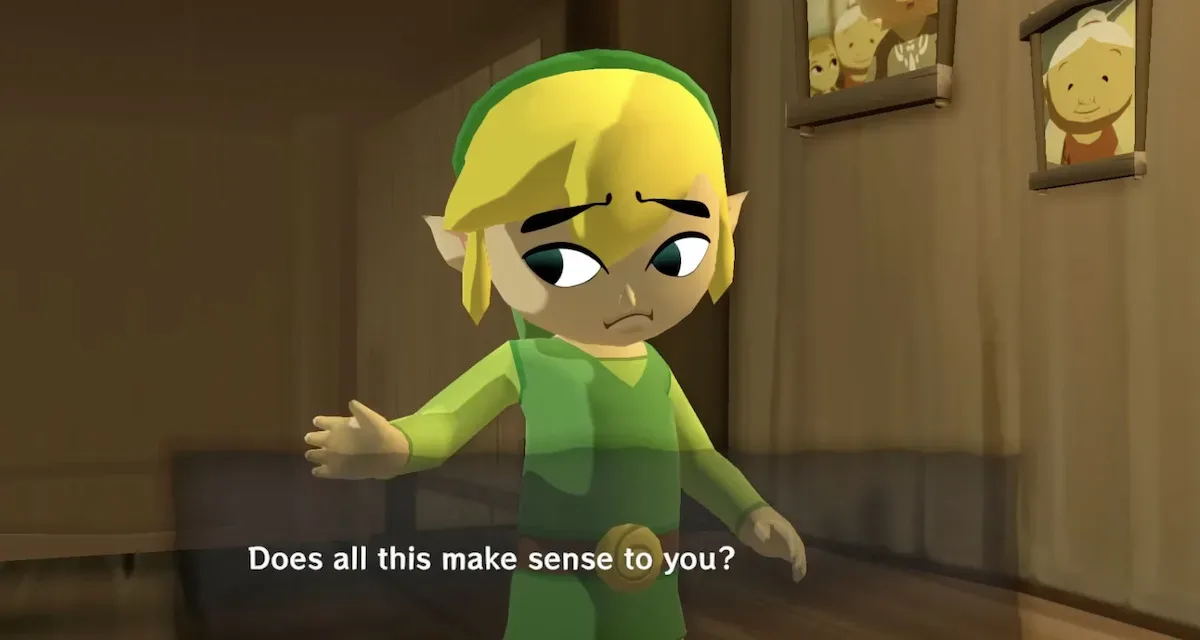
The GameCube’s Zelda legacy is unusually rich because it contains two contrasting visions of Hyrule. The Legend of Zelda: The Wind Waker, released in late 2002, embraced cel-shaded visuals and a vast sea. Its sailing can occasionally leave the world feeling sparse, but its best destinations are unforgettable. Dragon Roost Island, in particular, remains a beautiful meeting point of music, color and exploration.
Its art style has held up remarkably well, and its ocean-going structure represented an early Nintendo step toward a more open style of adventure. It was initially a major tonal departure after Ocarina of Time; over time, it has earned recognition as one of the series’ finest entries.
The Legend of Zelda: Twilight Princess took the opposite route. Released for GameCube and as a Wii launch title in 2006, it offered a more realistic aesthetic, a more mature Link and a massive land-based Hyrule that made riding Epona feel central again. The GameCube version preserves Link as left-handed because the game was originally developed for that system. The Wii release mirrored the world to align with right-handed motion controls, while the 2016 Wii U HD version used the original layout.
Twilight Princess expanded Link’s sword techniques, introduced his wolf form and delivered a traditional dungeon-driven Zelda adventure on a grand scale. Some players view it as more derivative in retrospect, but it is also a remarkably polished expression of the classic Link, Zelda and Ganon structure.
Path of Radiance and Skies of Arcadia Legends deserve more attention
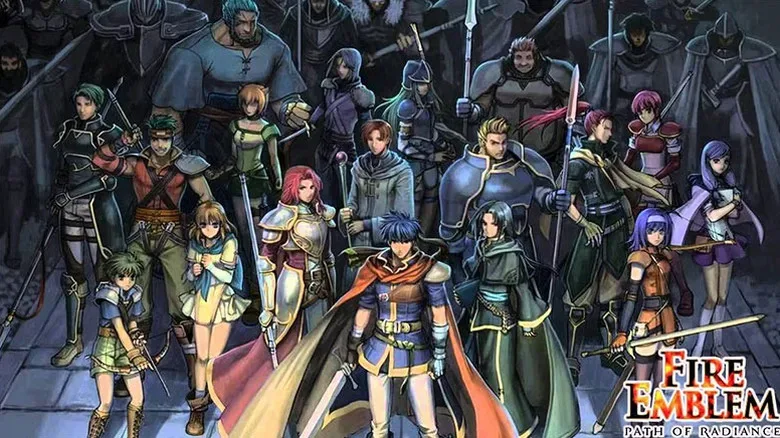
Fire Emblem: Path of Radiance, released in 2005, was the franchise’s sole GameCube game and its first move into 3D. Its visual presentation naturally looks dated beside later entries, and it does not include the relationship systems that attracted many newer fans. Still, it contains the tactical foundation and character-focused storytelling that helped define modern Fire Emblem. Its English script is particularly regarded for carrying much of the Japanese original’s nuance.
Skies of Arcadia Legends is technically a GameCube port of a Dreamcast RPG, but that should not diminish its place in the library. The version improves frame-rate and stability issues and adds characters. In a world of floating continents, sky pirates navigate an airship through exploration and large-scale turn-based battles. It remains a wonderfully earnest adventure from creators with experience on series including Phantasy Star, Panzer Dragoon and Sakura Wars.
Like Eternal Darkness, it would benefit immensely from a digital rerelease. Nintendo’s wider legacy is still evolving in unexpected directions, from hardware traditions to new projects such as Game Freak’s weather-driven mobile concept. But the GameCube’s software catalog makes the strongest argument for preserving the past: these games are not museum pieces waiting for a polite nod. They are still full of ideas worth playing.