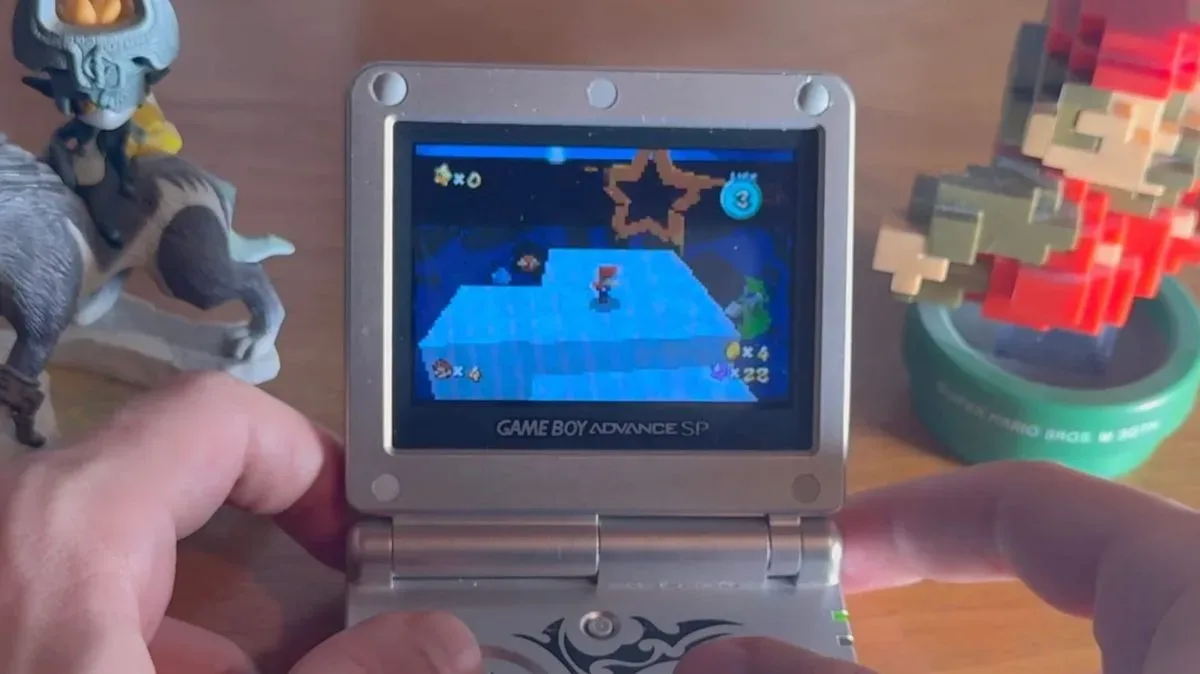
Super Smash Land, a homebrew demake inspired by Super Smash Bros., can now run on actual Game Boy Advance hardware. It is not a newly made official GBA edition of Nintendo’s platform fighter; rather, it is the existing Game Boy project translated from C so it can operate on GBA-compatible setups.
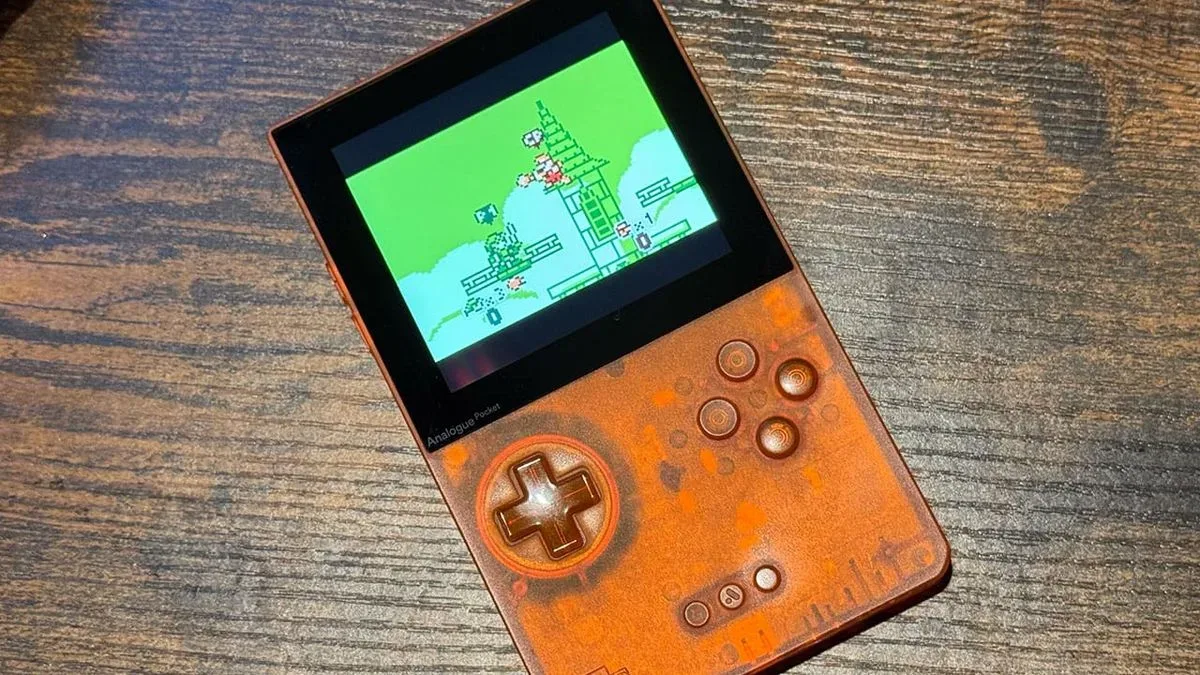
That distinction matters, but it does not make the result any less appealing. The Game Boy Advance never received its own official Super Smash Bros., despite being a natural fit for short, portable multiplayer sessions. Nintendo’s series eventually reached a handheld platform with the Nintendo 3DS. Super Smash Land instead imagines an earlier route: a compact, deliberately retro-styled fighter that can now be loaded onto compatible GBA hardware through a flash cart, played on FPGA devices such as Analogue Pocket, or run through an emulator.
A Game Boy demake, now adapted for GBA
A demake is a fan-made reimagining of a game as though it had been developed for older or less powerful hardware. That is different from a straight port. A port generally seeks to bring the original game to another system; a demake recreates its central ideas within new technical and aesthetic boundaries. In Super Smash Land’s case, the starting point was a Game Boy interpretation of the familiar platform-fighting format, not a lost GBA release recovered from a vault beneath Nintendo headquarters.
The newly highlighted version comes from translating the project’s original code from C for use on the GBA. C is a programming language commonly used in game development, particularly where developers need close control over how software runs on a machine. For players, the important practical result is compatibility: the game can be put on a suitable flash cart and played on a Game Boy Advance, rather than being confined to its earlier target hardware or to software emulation.
An FPGA handheld takes a different route from typical emulation. FPGA, short for field-programmable gate array, refers to configurable hardware that can be set up to reproduce the behavior of other hardware systems. Devices in this category can therefore be attractive to players who want to run software on a modern portable while retaining a hardware-oriented approach. Super Smash Land’s support for both FPGA devices and emulators gives players several ways to access the same build without suggesting that every route has identical setup requirements.
Six fighters, with two held back as unlocks
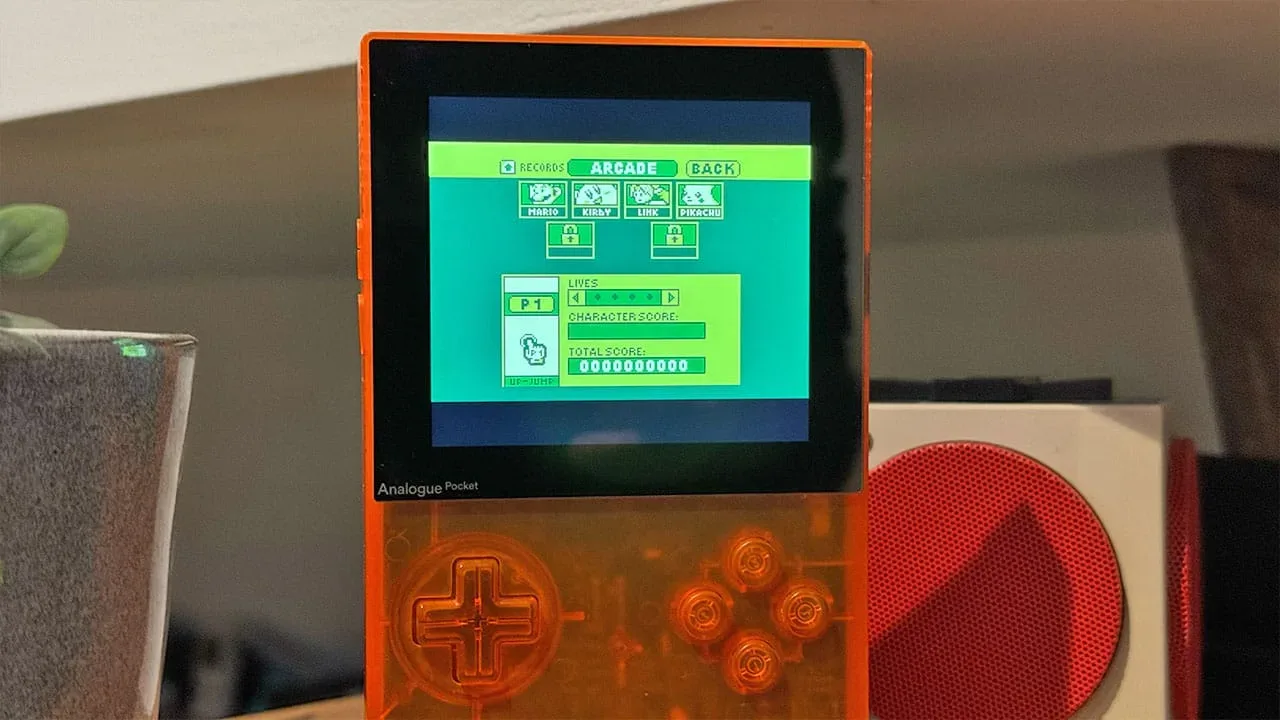
The roster contains six fighters. Mario, Link, Kirby and Pikachu are available from the start, while Mega Man and Vaporeon must be unlocked. That makes the initial selection intentionally small, but it also preserves a very Smash-like reason to keep playing beyond a first round or two.
Unlockable characters are more than a decorative checklist in a compact fighting game. They give solo modes a purpose, encourage players to experiment with different matchups and create a sense of progression even when the mechanics are designed for quick sessions. The supplied details do not specify the conditions for unlocking Mega Man, Vaporeon, or the additional stages, so prospective players should expect some discoveries to be left to the game rather than treating every reward as immediately accessible.
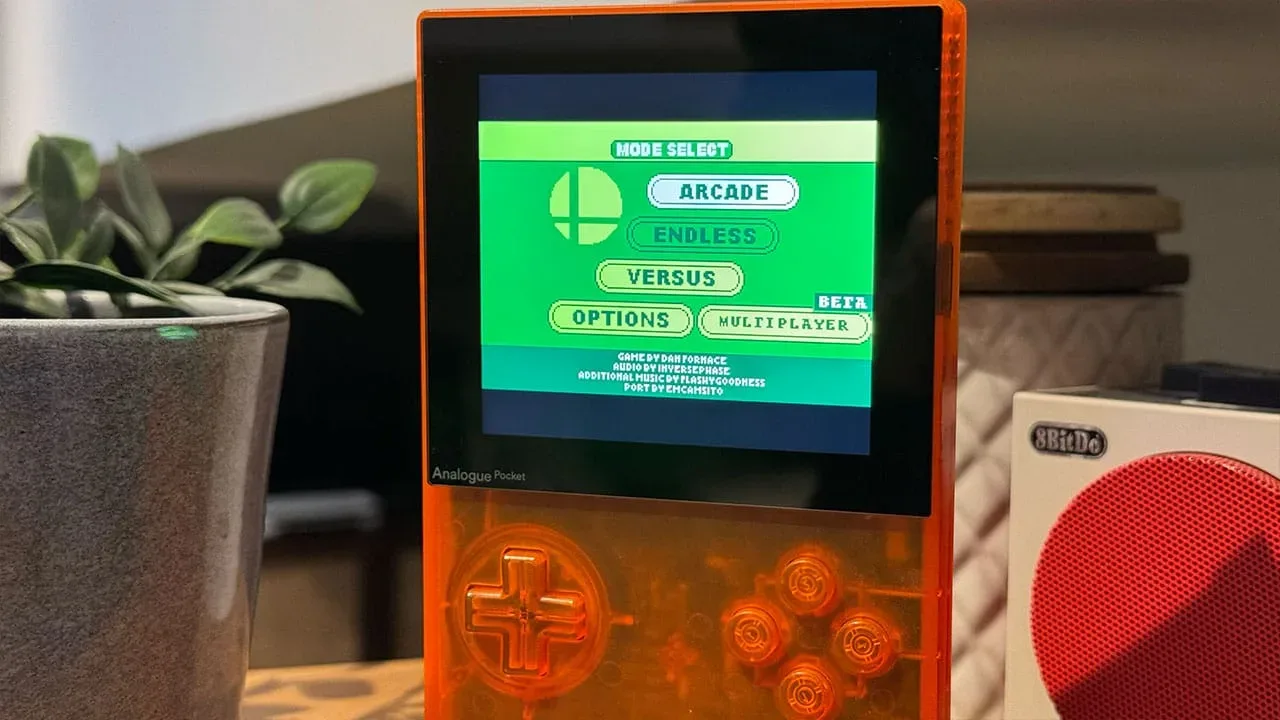
The game has three play modes:
- Arcade, a structured single-player option.
- Versus, the mode most directly suited to player-against-player matches.
- Endless, which offers another repeatable way to play beyond a standard arcade run.
It also includes 11 stages. Five are available at the outset, while six are locked initially. Between the two hidden fighters and the six unavailable stages, the game begins with four characters and five arenas, then expands through play. For a homebrew title drawing on the appeal of a much larger fighting series, that approach is a sensible fit: it puts a usable set of options in front of players quickly while making repeat sessions matter.
Multiplayer is the part that makes the GBA version especially interesting
The headline feature is local multiplayer on real hardware. Up to four players can participate when each person has a Game Boy Advance, a link cable arrangement and the same version of the ROM. That last requirement deserves emphasis. When several handhelds are connected for a game, matching software versions help ensure all systems are operating with the same game data and rules. Anyone preparing a group session should therefore confirm that every cart or device is using the identical ROM build before attempting to link up.
A flash cart is a cartridge-like device that loads software from removable storage, commonly a microSD card. In this case, the basic process is to obtain the ROM, put it on the microSD card used by the flash cart, and launch it through compatible hardware. Players using an FPGA handheld or a computer emulator have a different setup path, but the core attraction remains the same: a tiny platform fighter made to be played in bursts, with friends in the room if the necessary hardware is available.
There are three camera modes to cycle through as well. Camera choices can have a meaningful effect in a platform fighter, because framing determines how easily players can track fighters, hazards and the edges of a stage. The available information does not define the differences among the three modes, but their inclusion suggests that Super Smash Land is not merely chasing the visual novelty of running on a GBA. It is also giving players a way to tailor how they view its compact battles.
Expect the CPU to apply pressure
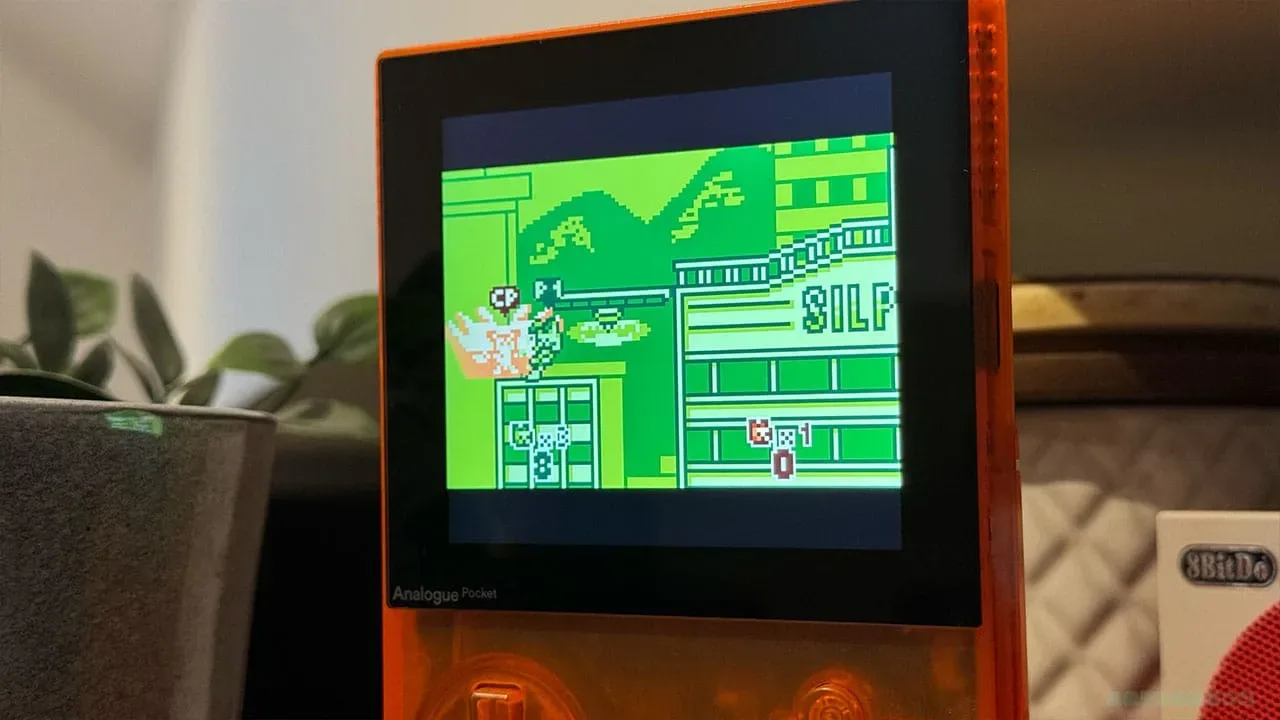
Solo play is not described as a gentle sightseeing tour. The computer-controlled opponents are characterized as aggressive, rapidly attacking a stationary Pikachu and applying similarly determined pressure in a Link-versus-Mario match. That is useful context for anyone interested in Arcade or Endless: the CPU is intended to fight, not simply occupy the screen while a player tests buttons.
The project does not use AI in the contemporary generative sense. In this context, the term is best understood in its traditional game-design meaning: computer-controlled behavior that decides how an opponent responds during a match. The available description indicates challenging CPU behavior, but it does not provide a technical breakdown of the routines behind it. It would be premature to make claims about difficulty scaling, inputs, or opponent logic beyond the observed aggressiveness.
Classic character-flavored actions are present, including Link’s sword-spin jump. Details like that are important in a demake because they establish the line between a generic retro brawler and a project trying to capture the recognizable rhythms of Smash-style competition. Super Smash Land is working with a far smaller visual and technical canvas than the main series, yet its fighter selection, stages, modes, unlocks and move references are all aimed at making that premise immediately legible.
What players need to know before setting it up
Super Smash Land is distributed as a ROM through Itch.io. From there, the appropriate method depends on the platform:
- For a Game Boy Advance, copy the ROM to the microSD card used by a compatible flash cart.
- For an FPGA handheld, use the device’s supported ROM-loading process.
- For a computer, open the ROM in a compatible emulator.
For local multiplayer, the requirements become more specific: multiple Game Boy Advance systems, link-cable support, and the same ROM version on every participating device. The maximum is four players. That is a compellingly physical setup in an era when multiplayer usually means accounts, patches and matchmaking, but it also means a group cannot improvise with just one handheld and one cart.
Players building a portable retro setup may also care about power away from home. The site has previously covered the Anker Prime 300W power bank’s handheld, phone and laptop use cases, though Super Smash Land itself does not require that specific accessory. For an original GBA multiplayer session, the key hardware remains the handhelds, compatible flash carts and link cables.
Why this port is more than a novelty
Homebrew projects often become interesting because they answer a small but persistent “what if?” Super Smash Land answers one that is easy to understand: what if the Game Boy Advance had received a pocket-sized Smash-style fighter before the series made its official handheld debut on 3DS?
The game’s value is not that it replaces the original console releases, nor that it somehow turns a GBA into hardware it was never meant to be. Its appeal lies in the adaptation. A six-character roster, 11 stages, three modes, three camera options, unlockables and four-player link-cable play make a coherent feature set for a retro-styled fan project. Translating that work so it runs on GBA hardware gives it a particularly fitting home.
For retro players, the most practical draw is choice. It can be experienced on a flash cart in an original GBA, on an FPGA handheld, or on an emulator. For groups with the requisite cables and matching software, it can also turn into a four-person local match. And for anyone who remembers the GBA as a system full of link-cable possibilities but without its own official Smash entry, Super Smash Land offers a remarkably specific alternate-history answer—one cartridge-sized brawl at a time.