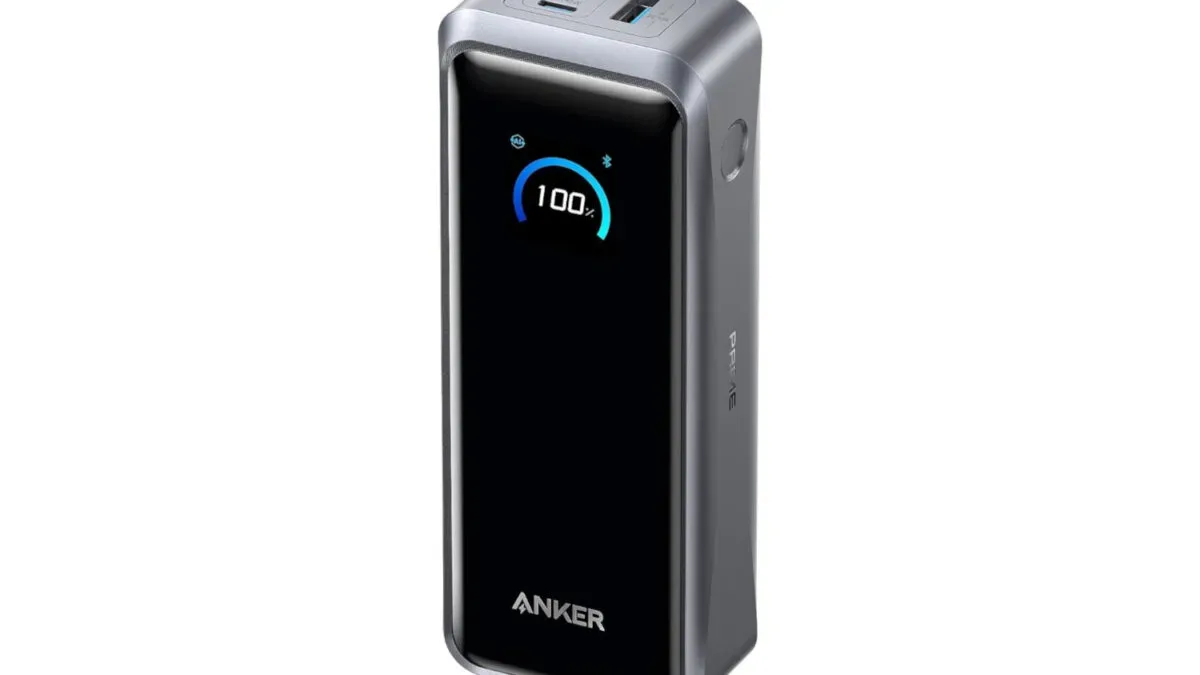
A portable battery is often treated as a phone accessory right up until a handheld PC, laptop and phone all need power at the same time. That is the use case Anker’s Prime 300W Power Bank is built around: a high-capacity external battery with enough advertised output to serve more demanding gear than a typical pocket charger.
The Anker Prime 300W Power Bank is currently listed at $200, a $30 reduction from its stated $230 price. It is not a casual purchase at that price, but its supplied specifications explain the premium: 26,250mAh capacity, 300W total output, multiple ports for as many as three devices at once, and dual-input charging for refilling the bank itself.
For players who carry a Steam Deck alongside a phone, or anyone who travels with a laptop and several smaller devices, the appeal is less about topping up one gadget and more about keeping a whole portable setup usable away from a wall outlet.
What the headline numbers actually mean
Two measurements do most of the work in describing a power bank, and they answer different questions.
- mAh, or milliamp-hours, is a capacity figure. In plain terms, it describes how much electrical charge the battery stores.
- Watts, or W, describe power: how quickly energy can be delivered at a given moment. Higher available wattage matters most for devices that request substantial power, such as laptops and handheld PCs.
The Prime’s 26,250mAh rating is its stored-capacity figure, while 300W is its total advertised output. A large capacity alone does not guarantee that a battery can adequately serve a laptop; conversely, a fast output means little if the battery is depleted quickly. This model’s proposition is that it brings both a substantial reserve and a high total output in the same unit.
That distinction is particularly useful for gaming hardware. A phone may only need a modest top-up over a long day. A handheld PC running a demanding game can draw more energy, and a laptop can introduce another significant load. The ability to charge several devices is valuable only when the power bank can manage that shared demand. Anker says this model can power three devices concurrently, rather than forcing an owner to cycle through them one at a time.
Actual results will still vary. Battery condition, what a device is doing while plugged in, its own charging limits and conversion losses all affect how many charges a user gets. The 26,250mAh rating is therefore best understood as the power bank’s advertised capacity, not a promise that every connected device receives that exact figure.
A practical fit for a portable gaming setup
The clearest audience here is someone whose day involves more than a single low-power device. A commuter might leave with a phone and a Steam Deck; a traveler may add a laptop; a shared outlet at an event can turn into a logistical mini-game. A three-device power bank can reduce the number of chargers and wall sockets needed during those stretches.
Related coverage includes Anker Prime 300W Power Bank Deal Targets Steam Deck, Phones, and Laptop Charging.
The 300W total output is also a notable specification because it frames the product as more than a phone-focused backup battery. The supplied details specifically position it for a MacBook as well as smaller electronics. That makes it potentially relevant to players who use a laptop for games, work or both, provided their particular device and charging setup are compatible.
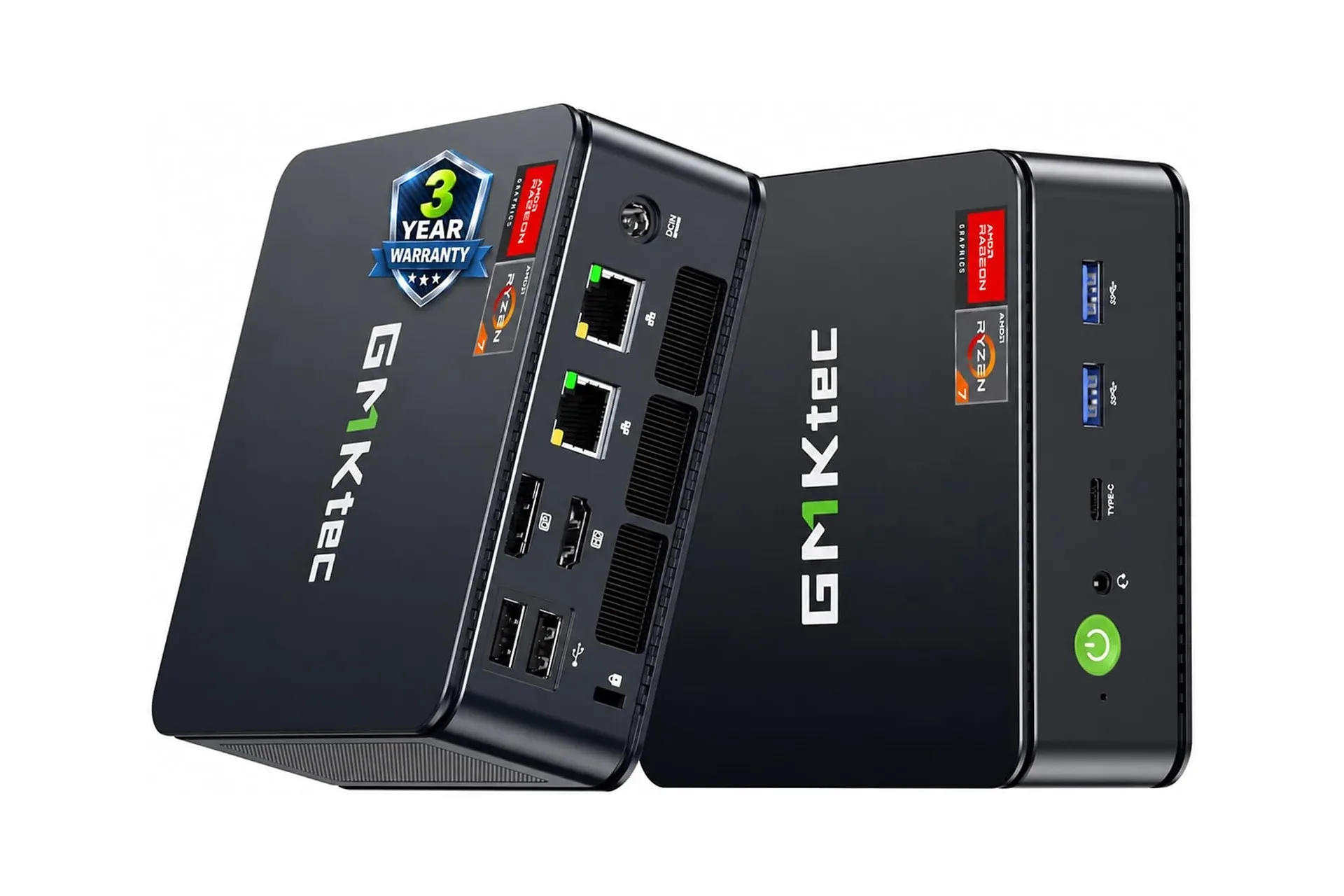
It also complements the kind of compact-PC setup represented by this small-form-factor Ryzen 7 mini PC: shrinking the computer does not eliminate the need to think about power when the display, accessories or travel plans move beyond a desk. The Anker is not a substitute for mains power in every scenario, but it is designed for those moments when fixed power is unavailable or inconvenient.
Three ports change the priority from speed to allocation
Multiple ports are not merely a convenience feature. They make the power bank a shared energy pool. In practice, the owner has to decide what matters at that moment: keep the handheld playing, get the phone back into service, or preserve laptop battery for later. The supplied information says the Prime can detect the appropriate amount of power to provide automatically. That is intended to help it deliver suitable charging power to connected equipment while protecting devices.
For prospective buyers, the important wording is total output. The advertised 300W figure applies across the power bank’s output capability, not necessarily as a guarantee that every individual port will provide the same amount simultaneously. Anyone with a particular high-draw laptop or a specialized charging requirement should check its charging expectations and the power bank’s port specifications before treating it as a complete replacement for the charger that came with the device.
That is not a knock against the product. It is simply the sensible way to read any multiport charger or battery: the headline is an upper capability figure, while real-world use is about which devices are connected and how their charging needs are distributed.
Dual-input charging matters when the battery is part of the daily kit
A high-capacity battery is only useful if it can be replenished without becoming an overnight chore. Anker says the Prime uses a dual-input charging system to recharge quickly. “Dual input” means the power bank can take charging power through two inputs rather than relying on a single one, with the objective of shortening its own recharge time.
That makes the feature more meaningful for a battery of this size than it would be for a small emergency phone pack. If a portable battery is meant to carry a day of charging duties for several devices, it must also be ready for the next trip, commute or gaming session. Faster refilling does not make capacity infinite, but it reduces the downtime between uses.
There is a tradeoff. The supplied information notes that the unit is larger than some power banks, which follows naturally from its capacity and power ambitions. Prospective owners should think of it as a piece of gear to pack intentionally, rather than a tiny accessory to forget in a jacket pocket. For a bag that already holds a handheld, laptop, cables and headphones, the additional bulk may be acceptable. For minimalists who only need occasional phone insurance, it may be more than necessary.
Travel is a benefit, but not a reason to skip preparation
The power bank is described as TSA-approved, making it an option for flights. That is a meaningful point for travelers who want their devices charged during long airport waits or while working and gaming in transit.
Still, travel rules and carrier policies are worth confirming before departure, especially when bringing a relatively large-capacity battery. The sensible packing approach is to keep the power bank accessible, carry the cables needed for the devices that matter most, and avoid assuming that one high-output battery solves every compatibility issue. A laptop’s charging cable, a handheld’s connector and a phone’s port may not all be identical.
Who should consider the $200 listing
At $200, this is best viewed as a specialist portable-power purchase rather than an automatic recommendation for everybody. Its value depends on whether its high capacity, 300W output and simultaneous charging address a repeated problem.
It makes the most sense for people who:
- Regularly carry several devices, including a handheld PC or laptop.
- Need to charge as many as three devices at the same time.
- Want a larger portable battery that can be refilled quickly through dual input.
- Travel and want an externally powered option described as suitable for flights.
- Can accommodate a larger power bank in a backpack or travel bag.
It may be excessive for people who:
- Only need occasional phone charging.
- Prioritize the smallest possible battery over capacity and output.
- Rarely use more than one device away from a wall outlet.
- Do not have a consistent need for laptop- or handheld-oriented portable power.
The $30 discount lowers the entry point, but it does not alter the central calculation: buyers are paying for a large-capacity, high-output battery designed to cover a broad collection of portable devices. For the person who is routinely watching a phone, Steam Deck and laptop battery indicator fall in parallel, that combination is the point. For everyone else, a less capable—and likely less expensive—power bank may remain the more proportionate choice.
Shop the products
Check current price, model and availability at the retailer.