The Dreamcast’s horror library is easy to underestimate. Resident Evil Code: Veronica is the obvious centerpiece, but Sega’s final console also hosted military science fiction, dinosaur panic, licensed supernatural horror, B-movie spectacle and Japanese experimentation. Some of these games follow the classic survival-horror pattern of exploration, puzzles, limited supplies and dangerous encounters. Others stretch the category toward action, role-playing or cinematic adventure.
This ranking includes Dreamcast games released in North America, Europe or Japan that make exploration, investigation, survival systems or environmental danger central to the experience. Light-gun games such as The House of the Dead 2 and Zombie Revenge are excluded because their primary structure is arcade shooting rather than survival exploration. The order weighs atmosphere first, followed by resource pressure, puzzle and route design, combat tension, Dreamcast-specific value and the ability to sustain a distinctive horror identity.
The list is not trying to pretend that Blue Stinger, D2 or The Ring: Terror’s Realm are identical to Resident Evil. Their differences are part of the point. The strongest Dreamcast horror games either refine familiar ideas or take a memorable risk with them.
10. The Ring: Terror’s Realm
The Ring: Terror’s Realm is an uneven licensed horror experiment, but it earns the final place because it shows how Dreamcast developers translated a recognizable supernatural property into an exploration game. Released in Japan as Ring and in North America with its longer subtitle, the game builds its identity around investigation, story revelations and hostile encounters rather than a light-gun or arcade structure.
Its atmosphere is more successful than its refinement. The appeal comes from the uneasy combination of recognizable survival-horror conventions and a license associated with supernatural dread. Players looking for tight combat, elegant puzzles or consistent pacing will find stronger choices elsewhere. Players interested in the Dreamcast’s willingness to host strange and divisive horror adaptations will find a useful historical case study. Its regional naming and release differences also make it a reminder that Dreamcast horror was not a single standardized library.
- Best for players curious about licensed Dreamcast horror and supernatural investigation.
- Its low ranking reflects uneven execution, not a lack of historical interest.
9. Blue Stinger
Blue Stinger occupies the borderland between survival horror and action adventure. Its island setting, monsters and threatening premise establish horror credentials, but direct weapon combat is central enough that the game often feels more aggressive than defensive. Instead of making every encounter a choice between escape and ammunition expenditure, it gives the player a more active role in clearing danger from the path.
That shift creates a distinctive rhythm. Blue Stinger is less claustrophobic than the best fixed-camera horror and can feel tonally unpredictable, yet its holiday-season setting and colorful Dreamcast presentation give it an identity that more conventional imitators lack. It is a good recommendation for players who want horror atmosphere without committing to the slowest or most restrictive version of survival horror. It is a weaker fit for anyone seeking disciplined scarcity and an entirely serious tone.
- Choose it for direct combat, an unusual setting and a more action-oriented pace.
- Do not assume that its survival-horror classification means it follows Resident Evil’s exact formula.
8. Alone in the Dark: The New Nightmare
Alone in the Dark: The New Nightmare represents a bridge between earlier fixed-camera horror and the Dreamcast generation’s more elaborate 3D presentation. Its structure emphasizes investigation, environmental navigation and carefully staged encounters, making it a useful alternative to Capcom’s dominant model. The two playable characters also give the campaign a sense of perspective and route variation rather than presenting one completely uniform journey.
Atmosphere is the game’s strongest asset. It understands that horror can come from what an environment withholds: a dark passage, an unclear threat or an object whose purpose is not immediately obvious. Its cross-platform identity means it does not always feel designed around Dreamcast alone, and some systems are less unified than those of the highest-ranked entries. Even so, it belongs here because it preserves classic survival-horror priorities while showing how the genre was adapting to polygonal worlds.
- Best for players who want traditional investigation and fixed-camera horror language.
- A useful historical bridge, though not as Dreamcast-specific as the games ranked above it.
7. Carrier
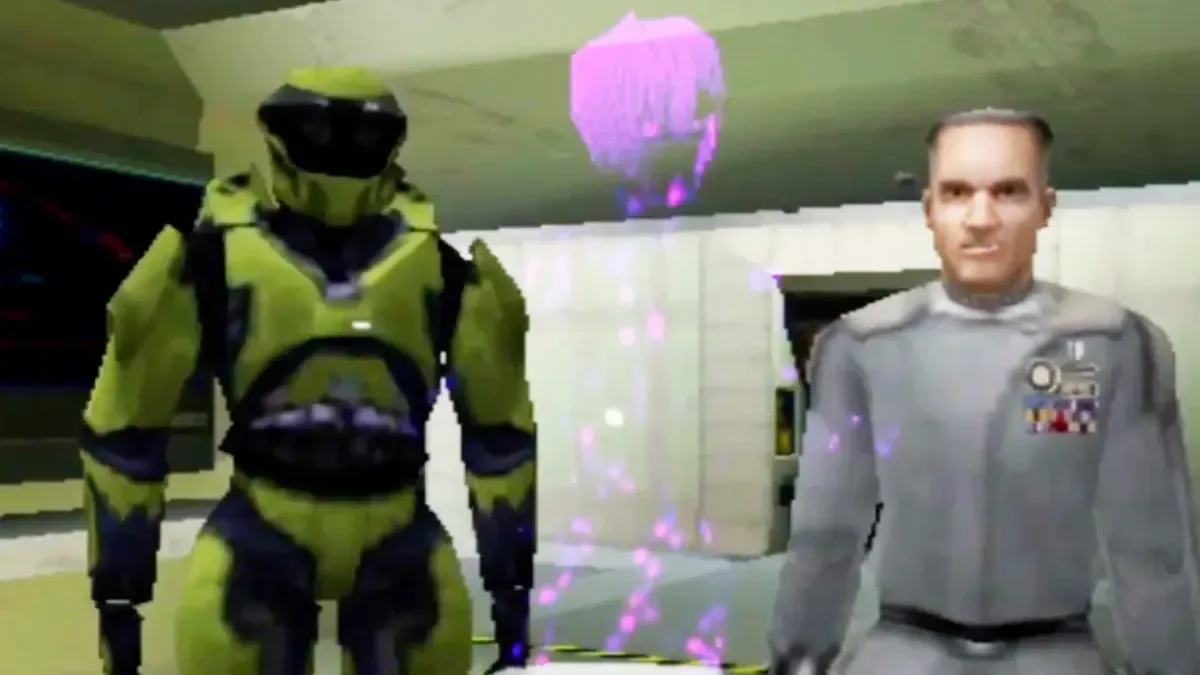
Carrier relocates survival horror to a contaminated military aircraft carrier, giving the genre a setting with an immediate sense of confinement and purpose. Corridors, technical spaces and shipboard systems provide a natural framework for locked routes, discoveries and escalating biological danger. The military science-fiction setting separates it from haunted mansions and police stations without abandoning the genre’s core loop.
The game clearly belongs to the Resident Evil-influenced branch of Dreamcast horror, but that is not necessarily a weakness. Its value lies in how the setting changes the texture of exploration. A ship suggests compartments, restricted access and mechanical failure, so progression feels tied to the environment rather than pasted onto a generic map. Combat can make Carrier feel closer to survival action than pure vulnerability, yet its combination of exploration, hostile creatures and limited decision-making gives it a defensible place in the ranking.
- Choose it for military science fiction and a contained shipboard setting.
- Its strongest distinction is environmental identity, not a radically new combat system.
6. Resident Evil 3: Nemesis
Resident Evil 3: Nemesis changes the survival-horror rhythm by turning pursuit into a recurring source of pressure. Nemesis is not simply another enemy waiting in a room. The threat can interrupt movement, alter priorities and make familiar spaces feel temporarily unsafe. That pursuit structure gives the game a more urgent pulse than the slower exploration associated with earlier entries.
The Dreamcast edition is based on the expanded computer version and includes enhanced character presentation, additional costume options and an immediately available Mercenaries mode. The underlying game also retains branching decisions, weapon creation and a strong emphasis on rapid response. Those systems reward replaying scenarios and comparing outcomes. It ranks below Resident Evil 2 and Dino Crisis here because its strongest ideas can make the experience feel more like repeated escalation than sustained atmospheric dread. Even so, its enemy pressure is one of the clearest demonstrations of how a familiar formula can be given a different tempo.
- Best for players who want pursuit pressure and a faster survival-horror rhythm.
- Its replay value comes from branching decisions, weapon options and alternate presentation details.
5. Resident Evil 2
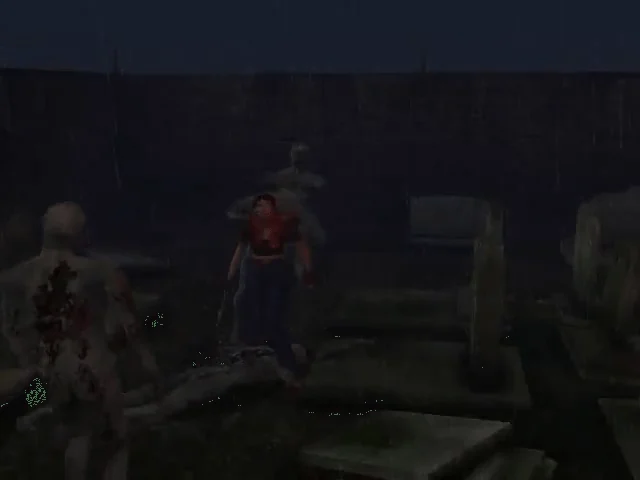
Resident Evil 2 remains one of the Dreamcast’s most important horror ports because its structure is built around contrast. Leon and Claire provide different routes through the same crisis, while the connected scenarios make the city and its facilities feel larger than a single linear campaign. A second playthrough is not simply a repeat with a new costume; it changes the player’s understanding of the unfolding disaster.
The Dreamcast release brings several extras associated with the computer-based version, including Extreme Battle, a gallery and alternate difficulty arrangements. The VMU can also display useful character-status information during play. Its fixed-camera presentation, puzzle progression and ammunition decisions remain a benchmark for the other games on this list. It does not rank higher because its greatest strengths originate in the original game’s broader design rather than in a concept created specifically for Dreamcast. Nevertheless, its scenario structure and careful resource pressure make it one of the safest recommendations for anyone beginning with Dreamcast survival horror.
- Choose it for scenario variety, classic puzzles and carefully managed resource pressure.
- The Dreamcast edition is an enhanced port, not a Dreamcast original.
4. Dino Crisis
Dino Crisis takes the survival-horror framework and replaces its most familiar threat with dinosaurs, but the important difference is behavioral pressure. Dinosaurs are not simply zombies with a new appearance. Their speed and aggression can make open spaces feel dangerous, while ammunition decisions become especially important when creatures can close distance quickly.
The change in enemy behavior affects how players read familiar survival-horror situations. A hallway is not safe merely because it has already been explored, and a powerful weapon does not automatically remove the need for caution. The Dreamcast version also benefits from the console’s stronger presentation compared with the original PlayStation release, making its real-time environments and creature encounters a natural fit for Sega’s hardware.
Dino Crisis ranks above Resident Evil 2 because its premise changes the player’s instincts. It is a strong choice for anyone who wants survival horror with more immediate physical danger, faster enemies and a stronger sense that the environment can become unsafe without warning.
- Best for players who prefer fast, aggressive creatures to conventional undead enemies.
- Its resource pressure is most effective when ammunition and enemy speed force route decisions.
3. Illbleed
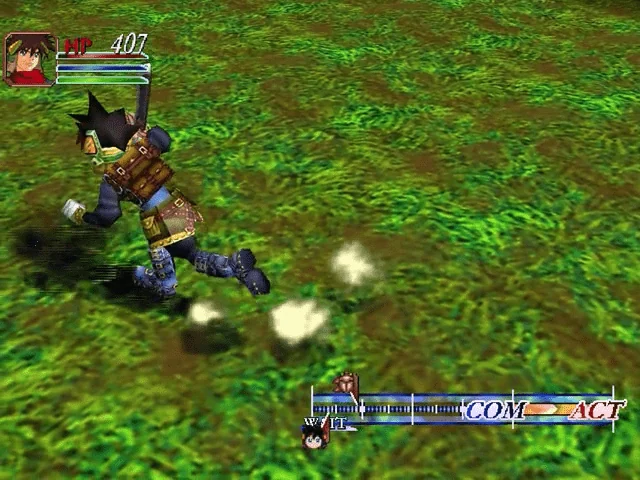
Illbleed is the Dreamcast’s great argument for treating horror as a system rather than only a mood. Its themed attraction structure turns danger into a series of deliberately designed traps, surprises and theatrical set pieces. The exaggerated B-movie presentation can be funny, grotesque or knowingly artificial, but that surface style supports the central idea: horror attractions are built to manipulate attention, and the player must learn to read the environment before it springs its mechanisms.
That makes Illbleed unusually interactive. The challenge is not only defeating enemies or finding keys; it is recognizing that apparently decorative details may carry mechanical danger. The game’s horror monitor and trap-focused design make the player think about bodily condition, stress and environmental clues in a way that few conventional survival-horror games attempt.
Illbleed is too eccentric and uneven to serve as a universal recommendation, but it rewards players who enjoy horror that refuses to behave like a serious haunted-house simulation. Its third-place position reflects originality and mechanical identity rather than polish. If the goal is to understand why Dreamcast horror remains memorable, Illbleed is essential.
- Choose it for trap detection, themed horror attractions and flamboyant B-movie tone.
- Expect experimentation and unevenness rather than a polished replacement for Resident Evil.
2. D2
D2 is one of the strangest major horror releases on Dreamcast. Directed by Kenji Eno and developed by Warp, it combines cinematic horror presentation with first-person shooting and role-playing elements. That mixture changes the player’s relationship with danger: encounters are not only moments of aim and reaction, because progression systems and exploration also shape how the campaign develops.
Its science-fiction setting gives the horror a different emotional vocabulary from mansion, police-station and laboratory stories. D2 is interested in isolation, catastrophe and the unsettling distance between ordinary human spaces and a world transformed by disaster. The combination is not perfectly comfortable, which is precisely why it ranks so highly. Players seeking compact puzzles and traditional fixed-camera design may find it diffuse. Players who want a game that could only plausibly emerge from the Dreamcast’s adventurous software culture will find one of the list’s most distinctive experiences.
The North American release also makes this unusual experiment more accessible to English-language Dreamcast players than its Japanese-first reputation might suggest. D2 is not the best choice for genre purity, but it is one of the strongest choices for atmosphere, ambition and strangeness.
- Best for players who value science-fiction atmosphere and hybrid systems.
- Its unusual structure is a feature for curious players and a drawback for anyone seeking strict genre purity.
1. Resident Evil Code: Veronica
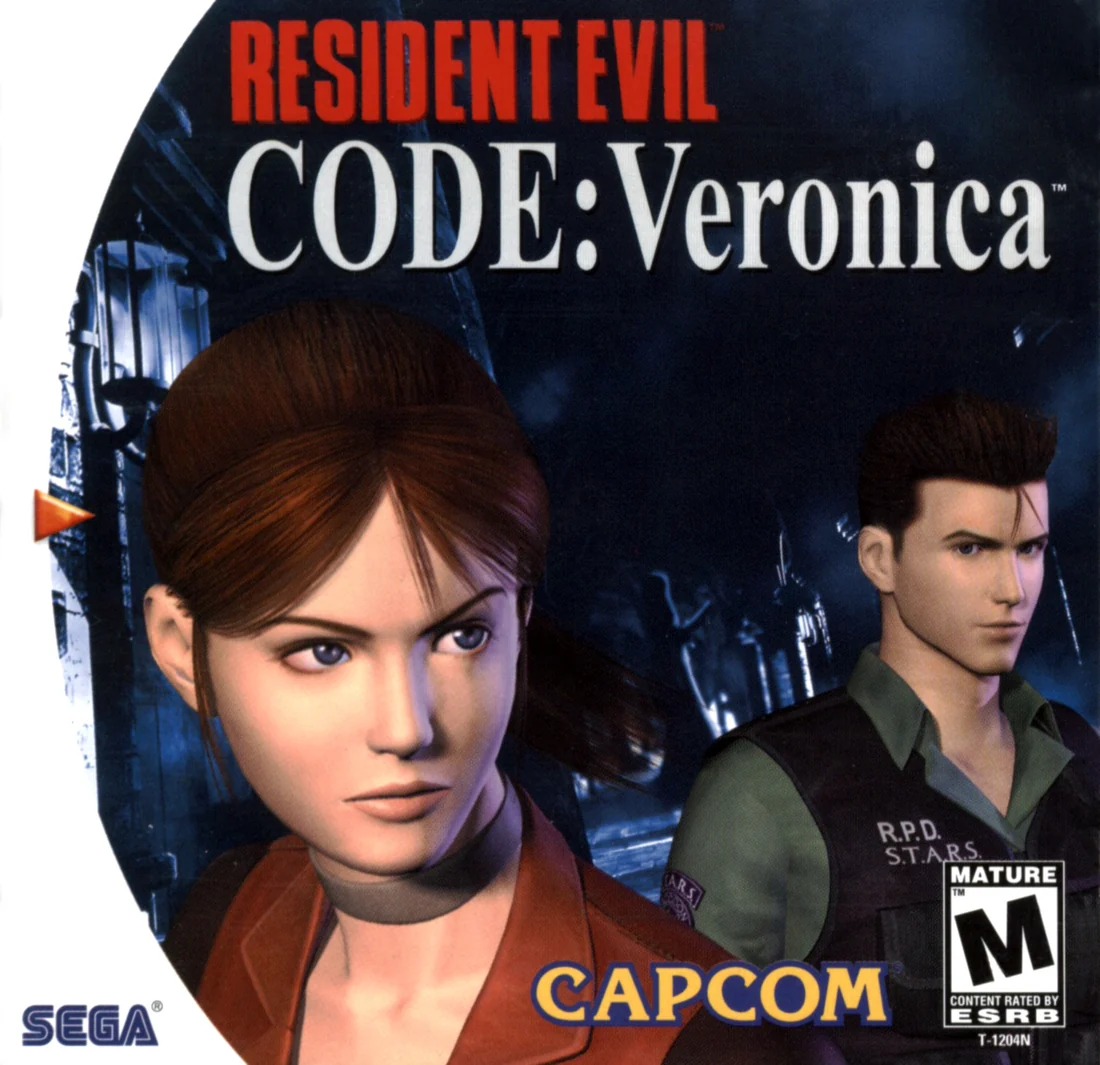
Resident Evil Code: Veronica is the strongest overall Dreamcast survival-horror package because it combines scale, atmosphere and mechanical continuity without losing the pressure that defines the genre. Capcom developed it for Dreamcast, and its real-time 3D environments and moving camera work make locations feel more expansive than the classic fixed-camera rooms associated with earlier entries. The result is a game that feels like a major transition point while still relying on exploration, puzzles, ammunition choices and dangerous encounters.
Its placement is not based only on production ambition. Code: Veronica gives the Dreamcast a horror showcase with a strong sense of console identity, from its presentation to its expanded environments. Combat is important, but progress still depends on understanding spaces, preserving useful supplies and recognizing when a threat should be avoided. That balance makes it a better overall recommendation than the games that specialize more narrowly in pursuit, action or eccentricity.
Edition distinctions matter. The original western Dreamcast release is Resident Evil Code: Veronica. Code: Veronica X, also called Complete in some contexts, is a separate expanded version with additional story material and different regional availability. Those releases should not be treated as interchangeable. For atmosphere, structure and historical importance together, the original Dreamcast entry remains the clearest recommendation on this list.
- Best overall for players wanting a large, polished Dreamcast survival-horror showcase.
- Check the exact regional edition before assuming a release is Code: Veronica X or Complete.
These ten games reveal a Dreamcast horror library split between refinement and risk. Capcom supplied the clearest survival-horror framework through Resident Evil 2, Resident Evil 3, Dino Crisis and Code: Veronica, while Carrier and Alone in the Dark showed how established ideas could move into new settings. Blue Stinger, D2, Illbleed and The Ring: Terror’s Realm pushed toward action, role-playing, licensed fiction or theatrical experimentation.
Start with Code: Veronica for the strongest all-round presentation, choose Dino Crisis for creature-driven resource pressure, and look to Illbleed or D2 when originality matters more than polish. The Dreamcast’s horror legacy is not simply that it hosted familiar franchises. It is that the system made room for several competing definitions of what a frightening game could be.