The Sega Dreamcast is often remembered for arcade racers, fighting games and ambitious role-playing adventures, but its platforming library is more varied than its reputation suggests. Traditional 3D collectathons sit beside side-scrolling hybrids, licensed character adventures, surreal European releases and games built around unusual movement systems.
This ranking counts platform-focused action games and platform-adventure hybrids released for Dreamcast. The order weighs how satisfying the central movement is, how well stages develop their ideas, how much exploration or collectible design supports the journey, and how strongly each game expresses a distinct Dreamcast identity. Regional and edition differences matter: a Japanese-exclusive game is identified as such, and a Dreamcast version is not treated as interchangeable with every port.
The list is not intended to declare an objective winner. A player who values speed may prefer Sonic Adventure, while someone looking for an unusual import may find Napple Tale more appealing than a technically smoother licensed game. The ranking instead asks which releases offer the richest combination of movement, stage variety, mechanical identity and historical interest on Sega’s console.
10. Disney’s 102 Dalmatians: Puppies to the Rescue
Disney’s 102 Dalmatians: Puppies to the Rescue is the most conventional choice on this list, but that is also why it earns a place. It is a third-person platform game built around collectible-driven stages, hazards and recognizable licensed characters. The structure is accessible rather than especially inventive, making it a useful entry point for players who prefer a straightforward adventure over a demanding movement showcase.
The license gives the game an immediately readable setting, while the platforming provides a familiar route through themed environments. Its lower placement reflects limited mechanical ambition compared with the games above it. The game is more notable as a snapshot of the period’s licensed 3D platform market than as a major reinvention of the genre.
It should not be confused with the Game Boy Color release, which is a separate 2D side-scrolling platformer. The Dreamcast edition belongs here because of its 3D platform design, not because every version shares the same presentation or stage structure. Players seeking a gentle, recognizable adventure will get more from it than players looking for demanding movement systems or unusual level logic.
- Best suited to players who want a gentle licensed 3D platform adventure.
- Do not use the Game Boy Color version as evidence for the Dreamcast game’s design.
- Its collectible structure is more notable than its movement innovation.
- The lower ranking reflects conventional design rather than a failure to belong in the genre.
9. Frogger 2: Swampy’s Revenge
Frogger 2: Swampy’s Revenge takes the familiar Frogger idea into a platform-focused adventure. Its campaign asks the player to navigate hazards through jumping, climbing, diving and obstacle avoidance rather than simply crossing a road or stream. That gives the character’s movement a broader role and lets the stages behave like compact obstacle courses.
This expanded formula is a good example of how late-1990s and early-2000s developers tried to reinterpret older arcade properties as larger console adventures. Frogger’s basic identity remains visible, but the game gives it more verticality and more varied routes. The result is not as distinctive as the strongest platformers here, yet it is a coherent attempt to make movement the central problem.
The Dreamcast release supports one to four players in its available modes, but multiplayer is not the reason for its ranking. Its core identity remains a single-character platform adventure. The movement variety makes it more interesting than a basic licensed tie-in, while the level design is not as distinctive or cohesive as the strongest games here. It is a worthwhile pick for players curious about how an old arcade premise was expanded into 3D.
- Choose it for obstacle navigation and a broader Frogger formula.
- Treat multiplayer as an additional feature, not the campaign’s defining strength.
- Its movement ideas are stronger than its overall stage identity.
- The Dreamcast version’s multiplayer support should not be assumed to describe every port.
8. Kao the Kangaroo
Kao the Kangaroo is a clear example of the Dreamcast mascot platformer: jump through themed stages, collect useful objects, avoid hazards and fight enemies with boxing-style attacks. Its structure is easy to understand, and the kangaroo protagonist gives the game an immediately legible movement and combat vocabulary.
Kao’s attack options help the stages feel more active than a purely traversal-focused platformer. The character can punch enemies, use his tail and collect power-ups that affect survivability or offensive reach. Those systems are straightforward, but they give the player reasons to move through each area instead of treating every obstacle as a jump-only problem.
The tradeoff is familiarity. Kao delivers the expected 3D jump-and-run experience without the unusual stage logic, tonal contrast or mechanical twist found in higher-ranked entries. That does not make it irrelevant; it makes it a solid choice for players who want a traditional platformer without a complicated premise.
The Dreamcast and Windows releases should be distinguished from the Game Boy Advance counterpart, which is a different 2D side-scrolling game. The platform matters because the editions do not represent one identical design.
- Best for players seeking a traditional mascot platformer.
- Expect collectibles, hazards and close-range combat rather than a radical control system.
- Do not conflate the Dreamcast edition with the separate Game Boy Advance game.
- Its strongest appeal is clarity and familiarity, not originality.
7. Toy Story 2: Buzz Lightyear to the Rescue!
Toy Story 2: Buzz Lightyear to the Rescue! turns the film’s miniature-world premise into a 3D platform adventure. Buzz travels through environments inspired by the movie, and the game uses character interactions, objectives and collectible-oriented exploration to give each area more purpose than a simple run from entrance to exit.
Its strongest feature is how naturally the license supports platforming. Toy rooms, outdoor spaces and other film-linked settings can make scale part of the stage identity, while Buzz’s role as an action figure gives the adventure a clear physical vocabulary. The environments are not merely decorative backdrops; they help explain why a familiar household space can become a platforming route filled with hazards and objectives.
The game ranks below the more mechanically distinctive entries because the underlying structure remains familiar. Its appeal comes from the relationship between setting and level design more than from a new movement system. The Dreamcast release is related to the Nintendo 64 and PlayStation versions, but those versions should not be treated as identical in presentation, stage construction or technical behavior.
For players who enjoy licensed-world exploration, Toy Story 2 is a stronger recommendation than its tie-in label might suggest. It does not reach the structural ambition of the top three, but it demonstrates how a film setting can provide useful platforming ideas instead of merely supplying character art.
- A good fit for licensed-world exploration and objective-based stages.
- Its environmental identity does more work than its core movement system.
- Platform-specific differences make broad port comparisons unreliable.
- Choose it for scale, recognizable settings and accessible 3D exploration.
6. Disney’s Donald Duck: Goin’ Quackers
Disney’s Donald Duck: Goin’ Quackers, also known as Donald Duck: Quack Attack in some regions, is more mechanically varied than its license might suggest. It alternates between three-dimensional running and jumping and side-scrolling sections, giving the adventure a brisker rhythm than a single-format collectathon.
The regular 3D stages place the camera behind Donald as he runs forward, while other sections use a side view that recalls traditional 2D platformers. Bonus sequences can change the perspective again by sending Donald toward the screen. These shifts give the game a broader sense of platforming variety, even though the individual mechanics remain relatively simple.
The variety is also its limitation. Perspective changes can make the game feel like a collection of different platforming approaches rather than one perfectly unified movement system. Even so, it earns a higher position because it experiments with presentation and stage flow while remaining easy to read.
Regional naming and platform differences matter here. The Dreamcast, Nintendo 64 and Windows releases are related, while PlayStation, Game Boy Color and later versions received different designs or content. The Dreamcast title should therefore not be described as identical across the entire console family.
- Look for perspective variety rather than one continuous 3D movement model.
- Search both Donald Duck: Goin’ Quackers and Donald Duck: Quack Attack when checking regional references.
- Its ambition is broader than its mechanical cohesion.
- Do not use the Game Boy Color version as evidence for the Dreamcast edition.
5. Evil Twin: Cyprien’s Chronicles
Evil Twin: Cyprien’s Chronicles is one of the Dreamcast’s more unusual platform-adventure releases. Its surreal setting and darker visual tone separate it from the cheerful mascot games surrounding it. The game’s interest comes from the way it combines a strange fictional world with 3D platforming, creating an atmosphere that feels closer to a troubled fantasy adventure than a conventional cartoon collectathon.
That identity places it above more polished but familiar licensed games. Cyprien’s journey is shaped by a world that feels unstable and dreamlike, so the environments carry more narrative weight than the ordinary themed stages found in many mascot platformers. The darker tone also changes the player’s expectations: exploration is not presented only as a cheerful hunt for collectibles, but as movement through an unsettling fantasy space.
Evil Twin is not ranked higher because ambition does not automatically make every movement or stage idea equally convincing. Its value is strongest when the setting, camera and platform-adventure structure work together. It can feel less immediately approachable than the brighter games lower on the list, especially for players expecting a fast, polished mascot experience.
It is also a regional discovery. The Dreamcast release was issued in Europe in 2002, including releases for France and the United Kingdom, so it should not be presented as a standard North American launch. For players interested in the system’s oddities, however, its tone and setting make it substantially more memorable than a generic platformer.
- Choose it for atmosphere, surreal world-building and European Dreamcast history.
- Do not imply a broad North American Dreamcast release.
- Its distinct identity matters more than conventional mascot polish.
- Expect a darker platform-adventure tone than the licensed games on this list.
4. Super Magnetic Neo
Super Magnetic Neo earns its place through a central idea that affects movement, puzzles and enemy encounters: magnetic polarity. Instead of treating platforming as a sequence of jumps with occasional power-ups, it makes attraction and repulsion part of the character’s route through a stage. That gives the game a mechanical identity immediately visible in its level design.
Neo can switch between positive and negative charges. Opposite charges attract while similar charges repel, allowing him to pull himself toward platforms, launch away from surfaces, interact with magnetic pendulums and manipulate environmental objects. Enemies use the same color-coded logic, so the magnetic system is not limited to traversal. It also influences whether a threat should be pulled close or pushed away.
Its variety extends beyond a standard camera arrangement. Stages can use behind-the-character views, side-view passages and forward-running sequences, allowing the magnetic concept to appear in different spatial contexts. A challenge mode adds shorter tests built around the same system, reinforcing the idea that the magnet is the game’s organizing principle rather than a temporary gimmick.
The result is less dependent on mascot familiarity and more dependent on whether the player enjoys learning a specific movement language. It does not have the broad adventure structure of the top three, but it is one of the clearest examples of a Dreamcast platformer built around a signature system rather than a license.
- Best for players who want a platformer organized around one unusual mechanic.
- Pay attention to how polarity changes routes, hazards and enemy interactions.
- Its mechanical originality is stronger than its narrative or mascot appeal.
- The Japanese, North American and European releases all belong to the Dreamcast platform, but regional packaging and naming differ.
3. Napple Tale: Arsia in Daydream
Napple Tale: Arsia in Daydream is a Japanese-exclusive Dreamcast release that refuses to fit neatly into one platforming template. It combines a third-person hub in Napple town with 2D side-scrolling platform stages themed around the four seasons. The player controls Arsia while gathering petals, talking to residents and revisiting areas as new requirements become available.
That structure gives the game a sense of place beyond the individual levels. The hub connects the platforming episodes and helps the adventure feel like a journey through a larger world. Story conversations, item requirements and character interactions create a rhythm that is different from the continuous stage progression of a conventional mascot platformer.
Napple Tale also includes collection and combination systems involving pets, items and created objects. Those elements give the game additional texture, though they can make its design feel more like a hybrid adventure than a pure platformer. That hybrid quality is precisely what makes it valuable in a Dreamcast ranking: it shows how the platform genre could serve as one component of a larger, story-led structure.
Its language and regional limitation are important parts of the recommendation. Napple Tale is not a standard North American release, and the original Japanese presentation can make it a less immediately accessible choice. In design terms, though, its hybrid structure is precisely what makes it special. It ranks above the mechanic-led games because it offers not only distinctive stages but also a wider adventure framework that reflects the Dreamcast’s willingness to host unusual Japanese projects.
- Best for players interested in Japanese-exclusive Dreamcast design.
- Expect a hybrid of 2D stages, a third-person hub and story-led exploration.
- Identify the original language and region before describing its accessibility.
- Its unusual structure is more important than fitting a narrow definition of a mascot platformer.
2. Sonic Adventure
Sonic Adventure is the Dreamcast’s defining platform-adventure statement, even though it is broader than a simple stage-based platformer. Its high-speed Sonic stages sit beside exploratory areas and campaigns for several playable characters. That range shows Sega trying to translate Sonic’s momentum into a 3D world while also giving the wider cast different movement priorities.
Sonic’s stages emphasize acceleration, slopes, loops and rapid route reading. Other characters slow the pace or change the central task, turning the game into a collection of movement styles rather than one uniform control model. The result is uneven in concept, but it is also why Sonic Adventure remains an important platforming case study: it treats 3D Sonic as both a speed game and an adventure framework.
The adventure structure gives the Dreamcast version a scale that earlier Sonic games did not attempt. Players move between action stages and broader areas where exploration, character encounters and progression connect the separate campaigns. This design can feel less focused than a traditional platformer, but it gives the game a strong sense of experimentation.
It ranks second because its best ideas are highly memorable, while its broad multi-character design is less unified than the tighter winner. For players who want the clearest snapshot of Sega’s early 3D platforming ambition, this remains an essential choice. It is not simply a 2D Sonic formula placed in a polygonal world; it is Sega testing several different interpretations of what a Sonic adventure could be.
- Choose it for character variety, speed stages and exploratory adventure areas.
- Its platforming identity is spread across several campaign styles.
- It is broader than a conventional single-character platformer, but movement remains central.
- Expect experimentation and contrast rather than a completely uniform stage-to-stage experience.
1. Rayman 2: The Great Escape
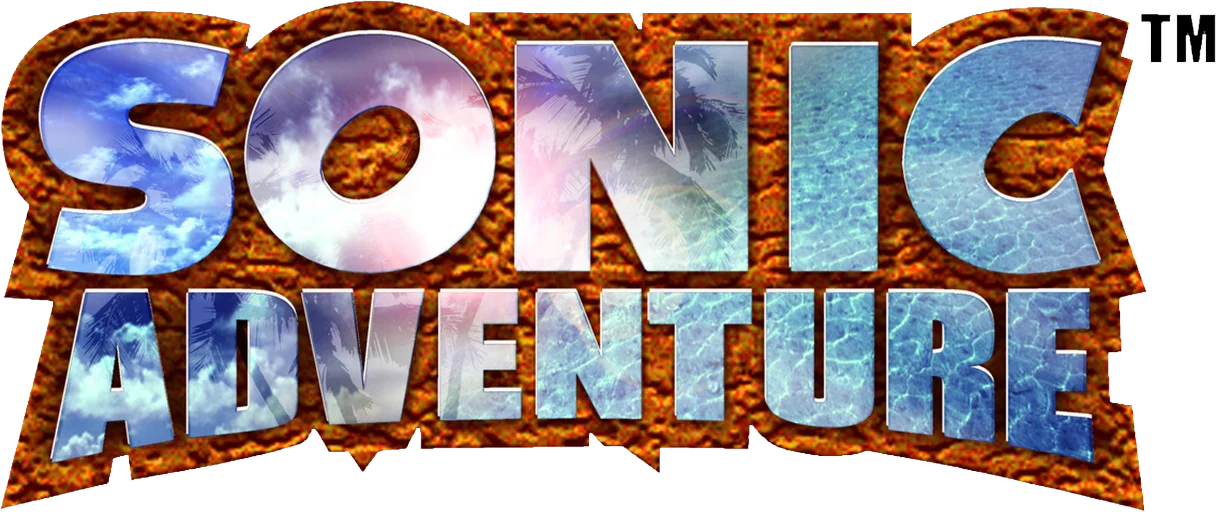
Rayman 2: The Great Escape takes the top position because it balances movement, exploration and stage variety more consistently than the other entries. It is a free-roaming 3D platformer rather than a direct continuation of the original game’s 2D structure, and its levels are built around navigation, abilities, hazards and environmental objectives. The movement supports the world instead of existing only as a way to reach the next collectible.
Rayman’s abilities develop the relationship between movement and level design. Jumping, gliding, swinging, swimming and projectile attacks give stages different spatial demands, while the game’s fantasy environments provide recognizable identities from one area to the next. The adventure is structured enough to guide the player, but open enough to make exploration and collectible hunting feel like meaningful extensions of the main route.
The Dreamcast version also matters as an edition in its own right. It adds Globox Village, an area containing exclusive mini-games unlocked through hidden Globox crystals. It also changes parts of the hub structure and includes additional enemy variations. Those features give the Dreamcast release historical relevance beyond simply being another port with improved presentation.
That content should not be attributed automatically to PlayStation, Nintendo 64, Windows or later editions. The ports of Rayman 2 differ substantially, and some later versions borrow elements from the Dreamcast design without reproducing the entire package. Edition-specific language is therefore essential when discussing the game’s Dreamcast identity.
Sonic Adventure 2 offers tighter campaign contrast and memorable speed, treasure-hunting and shooting-focused stage types, but Rayman 2 wins this ranking through the steadier relationship between movement and level design. It is the strongest all-round choice here for players who want a 3D platformer in which traversal, exploration and environmental objectives consistently reinforce one another.
- Best overall choice for balanced 3D movement and exploration.
- Check edition-specific claims before applying Dreamcast content to other ports.
- Its free-roaming structure gives the platforming room to develop beyond isolated speed trials.
- The Dreamcast version’s Globox Village and bonus material are part of its distinct edition identity.
Dreamcast platforming was not one single style. The system supported fast mascot stages, collectible adventures, licensed experiments, darker European projects, Japanese hybrids and platformers organized around unusual mechanics. That variety is why the library remains more interesting than a list led only by Sonic.
The ranking also shows how different kinds of ambition can matter. Rayman 2 is the strongest all-round package, Sonic Adventure remains the clearest illustration of Sega’s early 3D ambitions, and Super Magnetic Neo proves that a single clever mechanic can carry an entire platforming identity. Napple Tale and Evil Twin demonstrate how regional releases expanded the system’s range beyond the games most commonly discussed in North America.
Players seeking a familiar starting point can choose Rayman 2, Sonic Adventure or Toy Story 2. Those looking for something less expected should look toward Napple Tale, Super Magnetic Neo or Evil Twin, where the Dreamcast’s platforming identity becomes stranger and more inventive. The library is uneven, but its variety is exactly what makes it worth revisiting.