Black Friday has a habit of making every blinking price tag look like destiny. For retro players, that can be especially dangerous: a dusty listing for an original console suddenly gains a red banner, a handheld appears to be “almost gone,” and before long a shopping cart is full of hardware that may not actually improve the way anyone plays.
The more useful way to approach Black Friday 2026 is not as a hunt for the largest advertised discount, but as a chance to fix the weakest part of an existing retro setup. That could mean replacing a tired controller, making an older console easier to use on a modern television, or adding a wireless adapter that lets a favorite current gamepad work with an original machine.
There are possible deals already in the mix, including an 8BitDo NES Retro Receiver listed below $20, a reduced Retroid Pocket 5 as the handheld is being discontinued, and an OSSC video solution sitting around the kind of price normally expected in the Black Friday period. None automatically qualifies as a must-buy. Their value depends on the specific console, display, controllers and play habits they are meant to serve.
That is less flashy than yelling “historic savings” at a picture of a cartridge, but it is how a retro purchase becomes useful after the sale tab is closed.
Start with the problem, not the promotion
A retro setup generally has a few practical pressure points: controls, display compatibility, storage and system access. Buyers who identify one of those gaps before November 27, 2026 can judge sales more clearly when the official Black Friday event arrives.
For example, someone who already owns an NES and dislikes being tethered to the television does not necessarily need another console. A receiver that allows wireless gamepads to connect may be the more meaningful upgrade. The NES Retro Receiver is one example worth monitoring while it remains listed below $20, particularly because older 8BitDo adapters can disappear from storefronts rather than linger indefinitely.
Likewise, a player who can already run their old console but finds it unpleasant on a new flat-panel display should prioritize the video chain over a second controller or a novelty mini system. An upscaler will not change the game itself, but it can change whether using the console feels convenient enough to become a regular habit.
That distinction matters because Black Friday discounts are not a universal measure of value. A 50% reduction on a device that duplicates what is already on the shelf can be a worse buy than a modest saving on the adapter, cable or controller that removes a persistent annoyance.
Related coverage includes Early Black Friday 2026 Retro Gaming Deals to Watch: Handhelds, Controllers and Upscalers.
A focused pre-sale checklist
- Name the system: Decide whether the purchase is for an NES, Nintendo 64, PlayStation 2, Dreamcast, Xbox, or another specific platform.
- Name the limitation: Is the issue wired controls, poor display output, a missing memory-card solution, or portability?
- Check the connection: Ensure a controller adapter, receiver or display device is designed for the relevant machine and input path.
- Set an acceptable price before the event: This makes it easier to ignore a dramatic discount that is still outside the budget.
- Consider availability separately from discounts: A discontinued item may be worth considering before Black Friday if it is the exact device needed, but “might sell out” is not by itself a reason to buy.
Controllers and adapters are likely to be the sensible targets
Controllers are often the least glamorous part of retro shopping and one of the most consequential. Old hardware can remain perfectly enjoyable, yet an unreliable pad, a short cable or a controller shape that no longer suits a player can make it feel like a chore. A modern replacement can therefore have a bigger day-to-day impact than a collector-focused console refresh.
8BitDo is among the brands to watch here. Its N64 controller is positioned as a wireless option for Nintendo 64 players. For people who would rather retain a modern controller they already own, the company’s Retro Receiver and BlueRetro adapters are the more direct route. These devices are meant to bridge a newer wireless pad and original hardware, avoiding the need to replace every controller in the room.
The technical terms are straightforward but important. Bluetooth is a wireless standard commonly used by modern devices. 2.4GHz wireless refers to another radio approach used by many dedicated controller receivers. They are not interchangeable labels for every product: the controller and receiving hardware need to support the same intended connection method. The Gulikit Elves 2 Pro bundle, for instance, includes a Hyperlink 2 Fastest Wireless Adapter intended to add 2.4GHz use on USB devices, alongside the controller’s Bluetooth capability.
Compatibility is the unglamorous word that should decide every purchase. A bundle may look attractive, but a buyer should still ask where it will be used: an original console, a USB-equipped device, or a DIY emulation setup. The right answer determines whether an included adapter is helpful or merely extra plastic in a drawer.
Retro Fighters also offers platform-specific alternatives in this broader controller conversation: the StrikerDC for Dreamcast players, the Xbox-inspired Hunter, and the Defender for PlayStation or Xbox use. The practical lesson is not that one brand is best for everyone. It is that a controller should be selected around the platform and the way it will be played rather than because its sale graphic has the biggest font.
Video upgrades: what a line doubler actually does
Connecting an old console to a modern display is a common source of confusion because old systems and new televisions were built for very different video expectations. This is where an OSSC or GBS-C can enter the picture.
The OSSC is described as a line doubler. In simple terms, it takes the RGB video signal from compatible older hardware and doubles lines to produce a sharper result than more conventional approaches. RGB is a method of carrying red, green and blue image information; in this context, it is the signal the device uses for its enhancement process. That does not mean an OSSC is a magic “make everything 4K” box. It is a tool designed to improve how older video is presented through a contemporary display connection path.
For PlayStation 2 players, the GBS-C is another device to watch. Both it and the OSSC are positioned as meaningful upgrades for people trying to make legacy systems sit more comfortably beside current televisions and monitors. The right purchase is still dependent on the console and existing cables, so the useful rule is to investigate the signal path before buying rather than assuming any HDMI-branded accessory produces the same result.
Budget alternatives will likely be plentiful. Passthrough HDMI adapters are expected to be widely available during the sale period. “Passthrough” here means the device is principally adapting the connection to HDMI rather than offering the fuller processing associated with an upscaler or line doubler. That may be entirely sufficient for a simple setup, but it should not be mistaken for the same category of hardware.
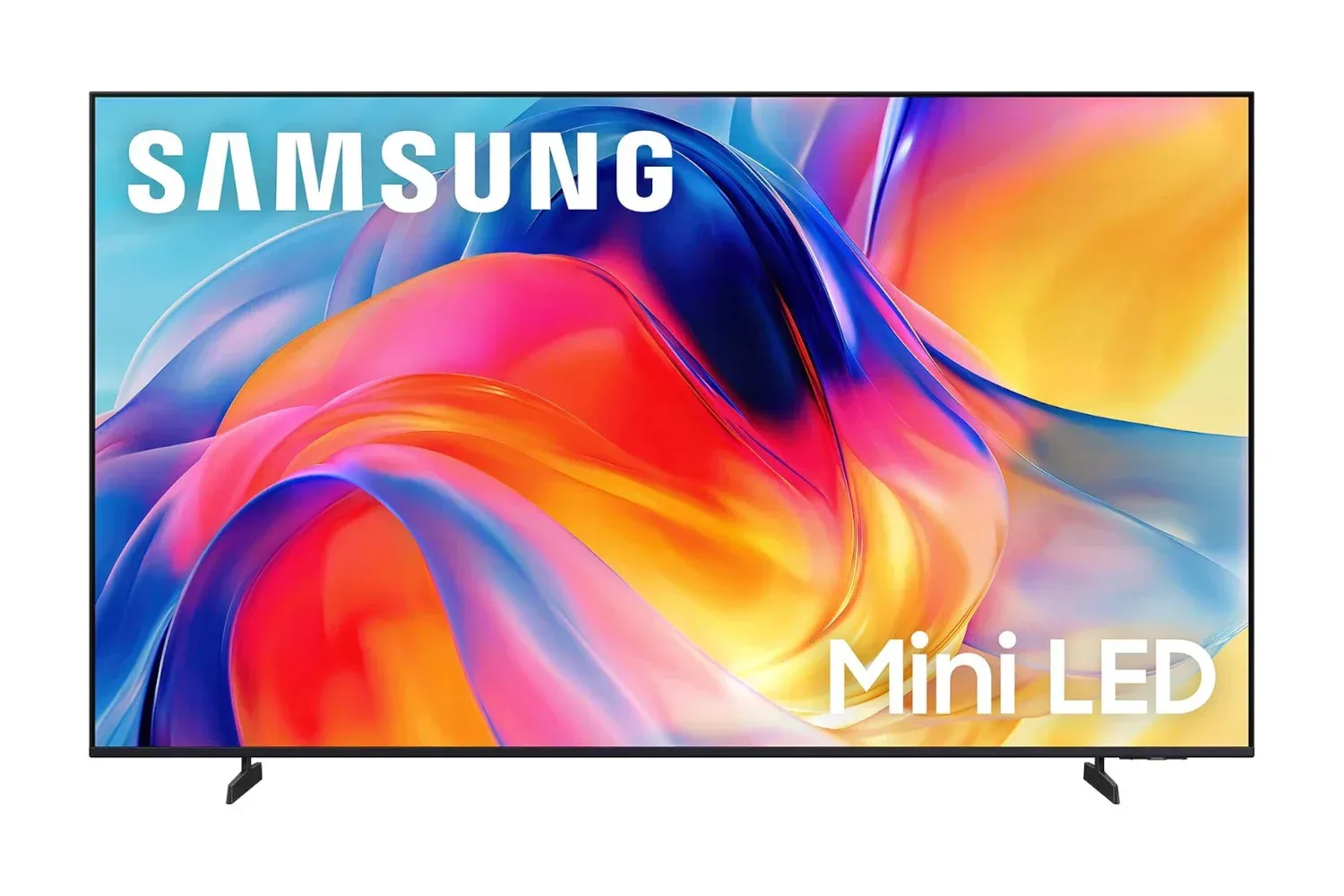
Display shopping may also be part of the equation. A new screen cannot replace the need to understand what an older console outputs, but it can be worthwhile to evaluate a television’s claimed gaming features alongside the rest of a setup. For a current example of how those specifications are presented, see the Samsung M70H 4K Smart TV listing and its claimed 120Hz gaming support.
Handhelds and mini machines have different buying logic
Modern retro handhelds can be compelling because they combine portability with access to classic-style play, but their timing is less predictable than a controller sale. The Retroid Pocket 5 is already cheaper than its usual price because it is being discontinued, and an additional reduction has appeared through AliExpress. The important uncertainty is availability: it may not still be around by Black Friday.
That makes the Pocket 5 a case where waiting only makes sense if the buyer would be equally satisfied with another device. If it is the particular high-end handheld someone has researched and wants, a smaller early reduction can be more valuable than a hypothetical future discount on something that has vanished from stock. Conversely, anyone merely intrigued by the idea of a retro handheld should resist treating discontinuation as a compulsory purchase signal.
Mini arcade systems are similarly optional. The Neo Geo Mini is not currently discounted, but it is far less expensive than it was at its 2018 launch. With the Neo Geo AES+ delayed, the mini machine may appeal to players who want an affordable route to games such as Metal Slug and King of Fighters. That appeal comes from its role in a player’s collection and use case, not from a sale badge it does not have.
HDMI plug-and-play devices and miniature arcade cabinets could also surface through clearance-style listings. The Sega Astro City Mini is an example of a legacy mini cabinet that may be discounted if resellers are looking to move stock. Yet rising component costs mean no one should assume these items will receive especially deep cuts.
Be wary of “discounted” original hardware
The most important warning for Black Friday may be the simplest: the event is not an especially reliable way to buy original decades-old consoles. Third-party listings can portray vintage hardware as heavily discounted without establishing a meaningful relationship to normal second-hand pricing. A sale price is not automatically a market price.
For an original console, the sounder approach is to monitor second-hand values over time and compare condition, included accessories and the seller’s details. Black Friday can then be reserved for newer accessories that improve the experience: a receiver, controller, HDMI solution or perhaps a specialty device.
That specialty category includes hardware such as the Summercart64, which may appeal to Nintendo 64 owners interested in Zelda ROM hacks, and the PSxMemCard Gen2 for PlayStation 2. The latter is described as supporting up to 8,000 virtual memory cards and arriving with FreeMcBoot configured for DIY projects and region-locking workarounds. These are niche purchases, not casual stocking stuffers, and they should be assessed carefully for their intended use and the owner’s comfort with console modification.
The pattern remains the same across every item: research first, buy second. A deal is useful when it removes friction from playing the games already loved. It is much less useful when it turns Black Friday into a speedrun of accumulating unresolved compatibility questions.
How to judge the sales when they arrive
There is no guarantee that the Atari 2600+, Super Pocket, Atari 7800+ or other retro-focused hardware will reach record-low prices. The broader hardware market has been affected by higher costs this year, and retro remakes are not immune. Retailers such as Amazon, AliExpress and Woot may be worth monitoring for handheld, Retroid and Atari-related listings, respectively, but no retailer’s name can substitute for a price comparison.
A sensible Black Friday plan is therefore modest: make a shortlist, save the normal prices, and prioritize accessories that improve existing play. Check whether a lower price is actually lower than recent pricing, whether the item is in stock from a seller you trust, and whether the device has a clear place in the setup.
For most retro players, the quietly satisfying purchase will not be an impulsive “rare” console listing. It will be the wireless receiver that gets an old system back into regular use, the controller that makes a favorite game comfortable again, or the display hardware that finally makes an aging console feel at home on a modern screen.
Shop the products
Check current price, model and availability at the retailer.