Command & Conquer has reached version 1.0 on Atari ST-compatible hardware, bringing Westwood Studios’ 1995 real-time strategy game to a computer family with far tighter visual and memory constraints than the MS-DOS original. Developed by indyjo, the conversion follows experiments that began in late 2025 and now presents a striking proposition for Atari users: a version designed to run with 4 MB of RAM, rendered within a 16-color palette, with video cutscenes and multiple supported audio routes.
That combination is what makes this more than a simple exercise in putting familiar units on a different screen. Command & Conquer is a strategy game whose readability depends on terrain, structures, infantry, vehicles and interface information remaining recognizable while the player makes fast decisions. Moving it from a 256-color VGA presentation to the Atari ST’s 16-color limit means the project had to make every available color work harder.
A 16-color answer to a 256-color game
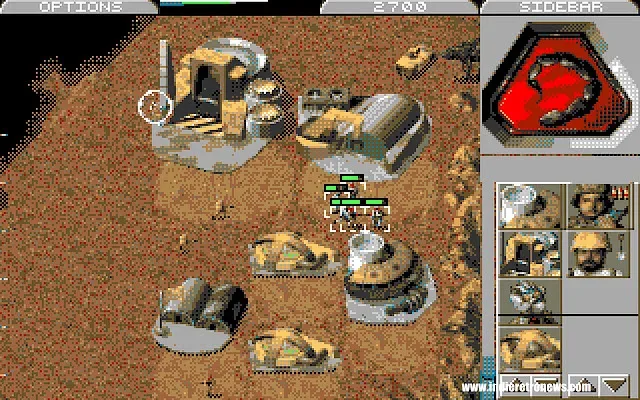
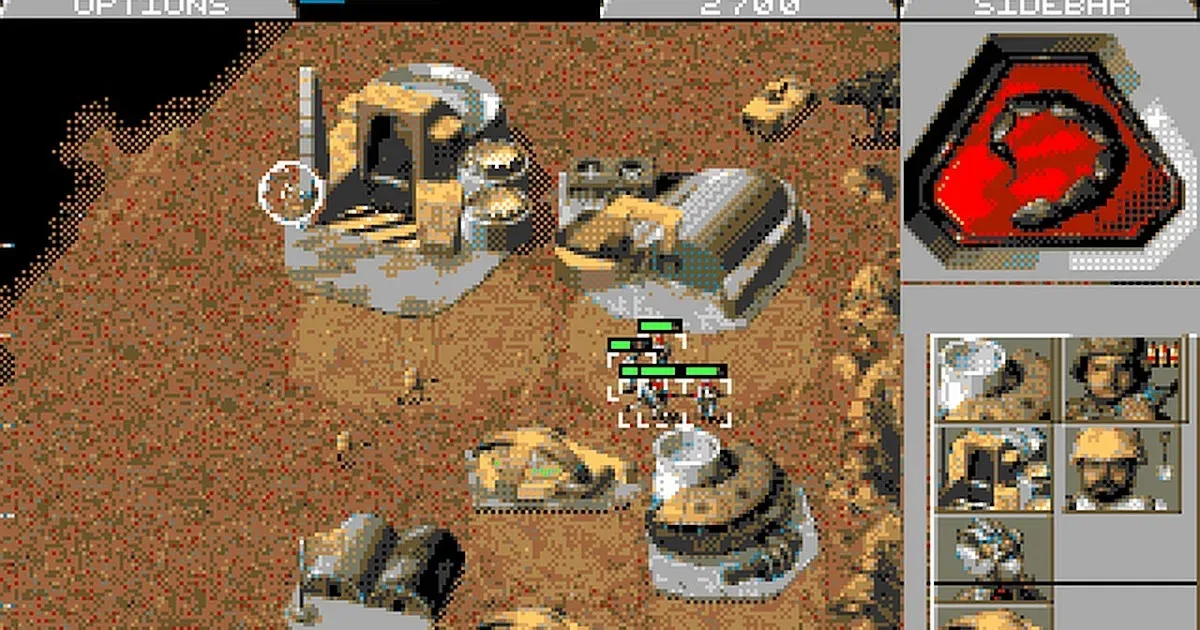
The original DOS game used 256-color VGA graphics. On the Atari ST conversion, the game’s detailed military-themed assets have been reduced into a 16-color presentation through an automated asset workflow. The result is not merely a setting changed in a configuration menu: it is an adaptation of the game’s visual material to a substantially narrower color budget.
Color reduction is the process of translating an image made with many colors into one that uses fewer. In this case, it is especially consequential because the palette has to carry both atmosphere and practical gameplay information. A battlefield needs terrain to remain legible; units must stand apart from the ground beneath them; and buildings and interface elements need enough visual distinction to be understood at a glance.
With only 16 colors available, the conversion necessarily places a premium on contrast, silhouettes and carefully chosen shades. A single color may have to imply more than one material or lighting condition. That limitation can produce a look that differs sharply from the VGA edition, but it also puts the port in conversation with the Atari ST’s own pixel-art character rather than treating the machine as a failed attempt to imitate a later PC standard.
The use of an automated workflow is meaningful here. Command & Conquer contains a broad range of visual assets, and converting them consistently is its own production challenge. Automation can help make a large conversion manageable, though it does not erase the underlying artistic and technical judgment involved in getting a reduced palette to communicate the game clearly.
Memory is the other battlefield
The project also cuts the memory footprint in half, allowing the 1.0 release to run on an Atari ST-compatible computer with at least 4 MB of RAM. RAM, or random-access memory, is the working space used while software is running. On a game with maps, unit graphics, sound and cinematic material to account for, lowering that requirement is central to making the port practical on the stated minimum configuration.
The minimum specification is straightforward: any Atari ST-compatible computer with 4 MB of RAM. That is an important baseline, but it should not be mistaken for a promise that every supported machine will offer the same experience or performance. The stated recommended setup is considerably more capable: a 68020 or newer processor at 32 MHz, 4 MB or more of RAM, DMA sound and a Blitter, with the Atari TT given as an example.
Related coverage includes Command & Conquer Reaches 1.0 on Atari ST in Ambitious 16-Color Port.
The 68020 is a Motorola processor generation beyond the baseline hardware associated with earlier Atari ST models. The recommendation for a 32 MHz 68020+ system indicates that the conversion can take advantage of more processing headroom. In practical terms, a recommendation such as this is guidance toward the hardware profile expected to provide the smoother, more comfortable version of the game, rather than a replacement for the 4 MB minimum requirement.
A Blitter is dedicated hardware intended to speed up certain graphics operations, particularly the movement and manipulation of blocks of image data. For a strategy game that must repeatedly draw and update a battlefield, interface and moving units, this can matter. Its appearance on the recommended list signals that the port has been designed with a range of Atari-compatible systems in mind, while recognizing that more capable graphics assistance is beneficial.
Full-motion video on the Atari ST
One of the release’s most notable claims is support for full-motion video cutscenes at 320x200 resolution and 15 frames per second. Full-motion video, often abbreviated as FMV, refers to pre-rendered or recorded moving-video sequences used for story scenes rather than the game’s ordinary interactive graphics. Command & Conquer is closely associated with this style of presentation, so retaining it is a major part of preserving the game’s identity in a new hardware environment.
At 320x200 and 15 fps, these scenes are adapted to a specific performance and display target rather than presented as a direct duplicate of the DOS version. Fifteen frames per second describes how many distinct images are displayed each second. It is below the rate commonly associated with very fluid video, but the fact that the port includes moving cutscenes at all is a substantial technical accomplishment within the project’s stated constraints.
The release describes this as a first for the Atari ST platform. More importantly for players, the cutscenes are not treated as an optional curiosity detached from the rest of the conversion. Their inclusion alongside gameplay graphics, sound effects, music and speech suggests an effort to bring over the game as a complete audiovisual package, not simply its strategic core.
Several audio paths, including the YM-2149
The port supports a fully digital soundtrack, speech and sound effects, with compatibility for DMA sound, the YM-2149 chip or a Covox Speech Thing. That flexibility is valuable because Atari ST-compatible systems and peripherals can differ in how they produce audio.
DMA sound uses direct memory access to move audio data without placing the same burden on the processor for every transfer. In broad terms, this can be useful when a system is handling both game logic and audio playback. The YM-2149 is a sound chip associated with the Atari ST family, while the Covox Speech Thing is another supported means of outputting digital sound. The important practical point is that the conversion lists more than one audio option, rather than limiting the game to a single ideal hardware arrangement.
Speech is particularly relevant to the larger challenge of adapting Command & Conquer. Strategy games are often remembered for mechanics, but their personality can be carried by mission briefings, voice clips, music and effects as much as by unit movement. Digital soundtrack and speech support therefore represent an attempt to retain the game’s presentation as well as its systems.
Why this conversion matters
Porting an already complex PC strategy game to period hardware is a balancing act. The Atari ST version has to fit assets into less memory, translate visuals into fewer colors, meet the demands of real-time play, and accommodate audio and video within hardware constraints. None of those requirements exists in isolation. Larger or more detailed visual data affects memory; video and sound demand their own resources; and gameplay remains dependent on the system responding promptly enough for the player to issue orders.
The 1.0 release is therefore best understood as a completed milestone for an ambitious compatibility and adaptation effort. It does not turn the Atari ST into a VGA DOS PC, nor does it need to. Its achievement is in building a version around what the target machine can do: 16-color visuals, a 4 MB memory floor, optional performance advantages from stronger processors and graphics hardware, video at a defined resolution and frame rate, and several sound configurations.
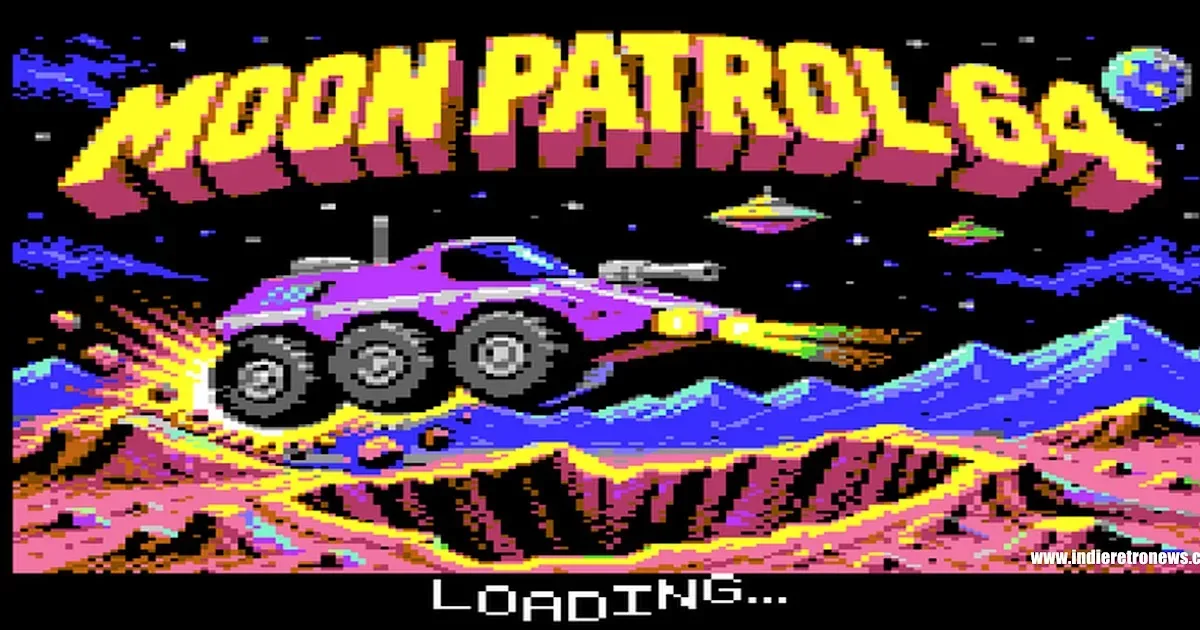
For retro-computing fans, that approach makes the differences part of the appeal. The port offers a way to encounter a major 1995 strategy game through the aesthetic and technical language of Atari hardware. Anyone following similarly unlikely conversions across older computers can also see a useful parallel in this unofficial Moon Patrol 64 project for Commodore 64: the enduring interest is not just in revisiting a known game, but in watching developers negotiate a machine’s particular strengths and restrictions.
Hardware checklist for interested Atari users
- Minimum: An Atari ST-compatible computer with at least 4 MB of RAM.
- Recommended processor: A 68020 or newer CPU running at 32 MHz.
- Recommended memory: 4 MB of RAM or more.
- Recommended features: DMA sound and a Blitter.
- Example recommended system: Atari TT.
- Video target: Full-motion cutscenes at 320x200 and 15 frames per second.
- Audio support: DMA sound, YM-2149, or Covox Speech Thing.
The release is dedicated to the late Thorsten Otto. Indyjo credits Otto’s foundational contributions to the Atari ST software-development ecosystem as an important part of what enabled the project. It is a fitting acknowledgment for a port that depends not only on one game’s conversion work, but also on the tools and technical groundwork that continue to make serious new software possible on decades-old machines.