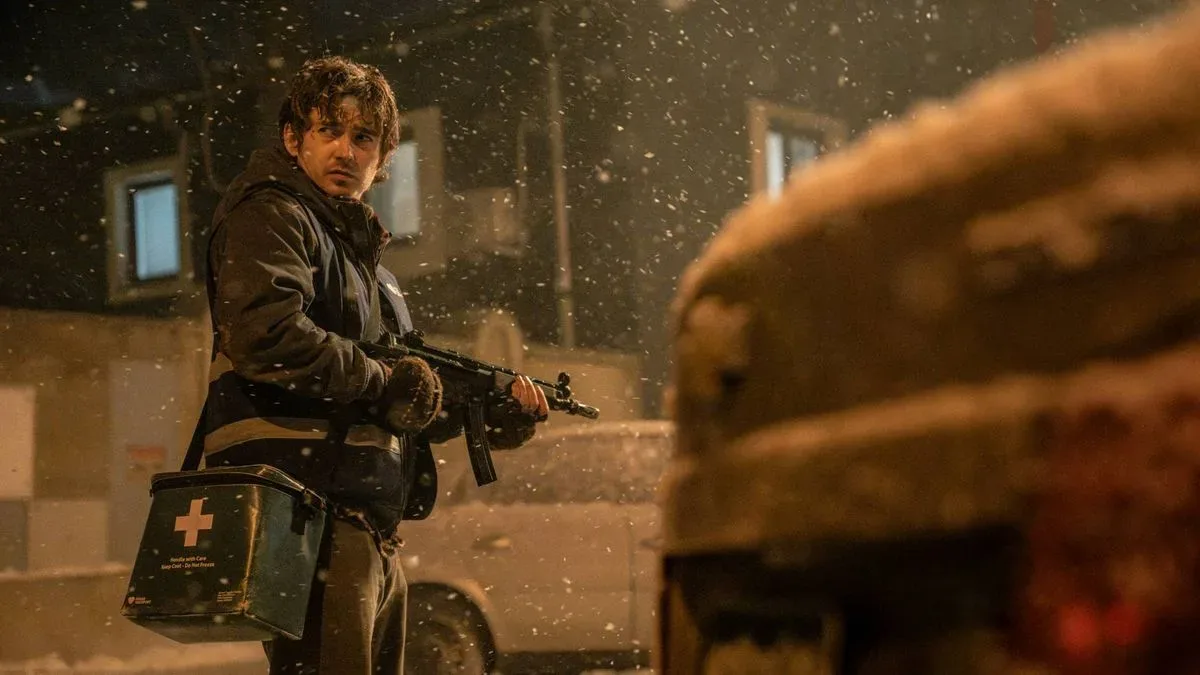
Zach Cregger still wants to make Henchman, an unusual Gotham-set screenplay built around a person who would normally be lucky to occupy the blurry background of a Batman panel. Its protagonist is a pharmacist who becomes entangled in a power struggle involving Batman and the Joker, eventually becoming one of the Joker’s henchmen.
That premise is compelling precisely because it does not sound like a conventional Batman vehicle. Batman and the Joker are enormous figures in popular culture, characters whose conflicts tend to pull in citywide stakes, elaborate criminal schemes, gadgets, mythology and a great deal of continuity baggage. Cregger’s interest appears to run in the other direction: toward a normal person trying to survive a frightening situation that is far larger than them.
The crucial caveat is that Henchman is an existing script and an idea Cregger would like to make, not a confirmed DC film. He has said online discussion has inflated the story, stressed that it is not a Joker-and-Harley Quinn script, and said he has not spoken with James Gunn about it. In other words, the Bat-Signal is not currently lit over a production office. It is a filmmaker describing a project he finds creatively exciting.
A Gotham story where the capes are not the main characters
Cregger has described Henchman as the story of an ordinary Gotham pharmacist accidentally pulled into a major conflict between Batman and the Joker. The pharmacist’s eventual role as a Joker henchman supplies the title, but the central perspective matters more than the job description. This is not framed as an origin tale for an established supervillain, nor as a story designed around the Dark Knight’s own point of view.
Instead, the concept asks what it feels like for someone without superpowers, immense wealth, a secret cave or an iconic laugh to be caught at the edge of Gotham’s recurring disasters. That is a useful angle for a fictional city whose residents regularly have to carry on with their lives while theatrical criminals and masked vigilantes turn local infrastructure into collateral damage.
“Peripheral” storytelling is the relevant technical term here. It means placing the narrative focus beside the famous event or famous character rather than directly on it. The major figures can still exert pressure on every scene, but the audience receives that pressure through the person with the least control over it. A pharmacist does not decide what Batman or the Joker wants. He has to react to the consequences.
That can make a familiar setting feel newly unstable. A viewer already knows Batman is capable and understands the Joker is dangerous in broad terms. They do not know whether a random citizen caught between them can get home, protect someone, make the right call, or avoid becoming useful to the wrong person. The smaller vantage point creates room for suspense without requiring the story to outdo every previous rooftop showdown.
Cregger’s stated interest is in the bystander near the edge of a story audiences already know, rather than another attempt to retell Batman’s central conflict.
Why a pharmacist is more than an oddball hook
The profession is specific enough to suggest practical story possibilities, although no further plot details have been established. A pharmacist is not merely “a guy from Gotham.” It is a civilian occupation associated with routine, responsibility and contact with a broad cross-section of a community. That makes the character a sharp contrast to a criminal power play, and it anchors the concept in an everyday life that can be disrupted.
Specificity is especially important in a city as mythologized as Gotham. If the hero of a side-angle story is simply an undefined civilian, the premise risks feeling like an exercise in avoiding the recognizable characters. Giving him a clear place in ordinary society establishes a life worth interrupting. It also makes the phrase “accidentally sucked into” the conflict more legible: this is someone presumed to have an existence outside cape business before cape business crashes through the window, probably without even the decency to use the door.
Cregger has called the script weird and emphasized that he liked the character and what happens to him. That points to a character-first motivation rather than an attempt to claim he is the world’s biggest Batman authority. He has explicitly said he is not. For an adaptation-adjacent project, that distinction is meaningful. Enthusiasm for the person at the center of the story is different from an urge to catalogue every piece of lore surrounding them.
Cregger’s preference for contained pressure
His comments connect Henchman to the approach he has described for his Resident Evil film. That movie is said to occur on the periphery of Resident Evil 2, following a medical courier across one terrible night in Raccoon City. The shared idea is not that the two stories have the same plot. It is that both use a recognizable fictional world as the setting for a more immediate personal ordeal.
Cregger says he likes small, intimate stories with problems the audience can understand, comparing the appeal to an ant pushing a grain of sand. It is a modest image for projects that involve Raccoon City and Gotham, two places not generally famous for modest evenings. Yet it identifies the scale he seems to value: a character faces one overwhelming obstacle, and the drama comes from watching them attempt to move it.
He has also contrasted that focus with dealing in enormous “tectonic plates” of politics and lore. In franchise discussion, lore means the accumulated fictional history, rules, backstory and continuity connections surrounding a property. Lore can be rewarding, but it can also become the main thing a story has to service. A contained plot is not necessarily shallow; it simply gives priority to a defined human problem over explaining every mechanism in the universe.
For Henchman, that could mean Gotham is felt rather than exhaustively diagrammed. Batman and the Joker could be central forces without every scene becoming a referendum on their entire publication history. The audience would learn what it needs to know because the pharmacist needs to know it. That is an efficient storytelling filter and, if the script ever moves forward, potentially an inviting entry point for people who do not arrive carrying a utility belt full of continuity notes.
What the idea is—and what it is not
It is easy for the words “Batman,” “Joker” and “henchman” to turn a speculative concept into an imaginary release calendar entry. Cregger’s own clarification should stop that leap. He has not said Henchman is in development, that it has DC approval, that it has a cast, or that it has been discussed with Gunn. None of those assumptions should be smuggled in just because Gotham has a talent for making rumors dress dramatically.
It is also not accurate to reduce the premise to a Joker and Harley Quinn story. Cregger has specifically rejected that characterization. The available description centers on the pharmacist and on the way he is caught in the Batman-Joker power struggle. The Joker’s henchman element tells audiences where the lead ends up; it does not establish a familiar villain-duo narrative as the film’s actual focus.
That restraint is worth preserving because the concept’s attraction lies in its off-center position. Once every famous Gotham name is treated as the real protagonist, the pharmacist becomes exactly what the story is designed not to make him: background scenery.
A wider DC slate, but no announced slot for Henchman
DC’s next theatrical release is Clayface, due in theaters on October 23. For readers tracking that film’s route beyond cinemas, this look at possible Clayface streaming timing separates the theatrical plan from later digital possibilities.
But Clayface being next does not create any announced connection to Henchman. The latter remains a script Cregger is interested in making. That is all the evidence supports at present.
Still, the fact that he continues to discuss it suggests the core idea has stuck with him: a Gotham story viewed from ground level, through someone who did not ask to be recruited into the city’s most famous feud. For a universe built around icons, that is a refreshingly human place to stand—assuming one remembers to look up when something starts falling from a blimp.