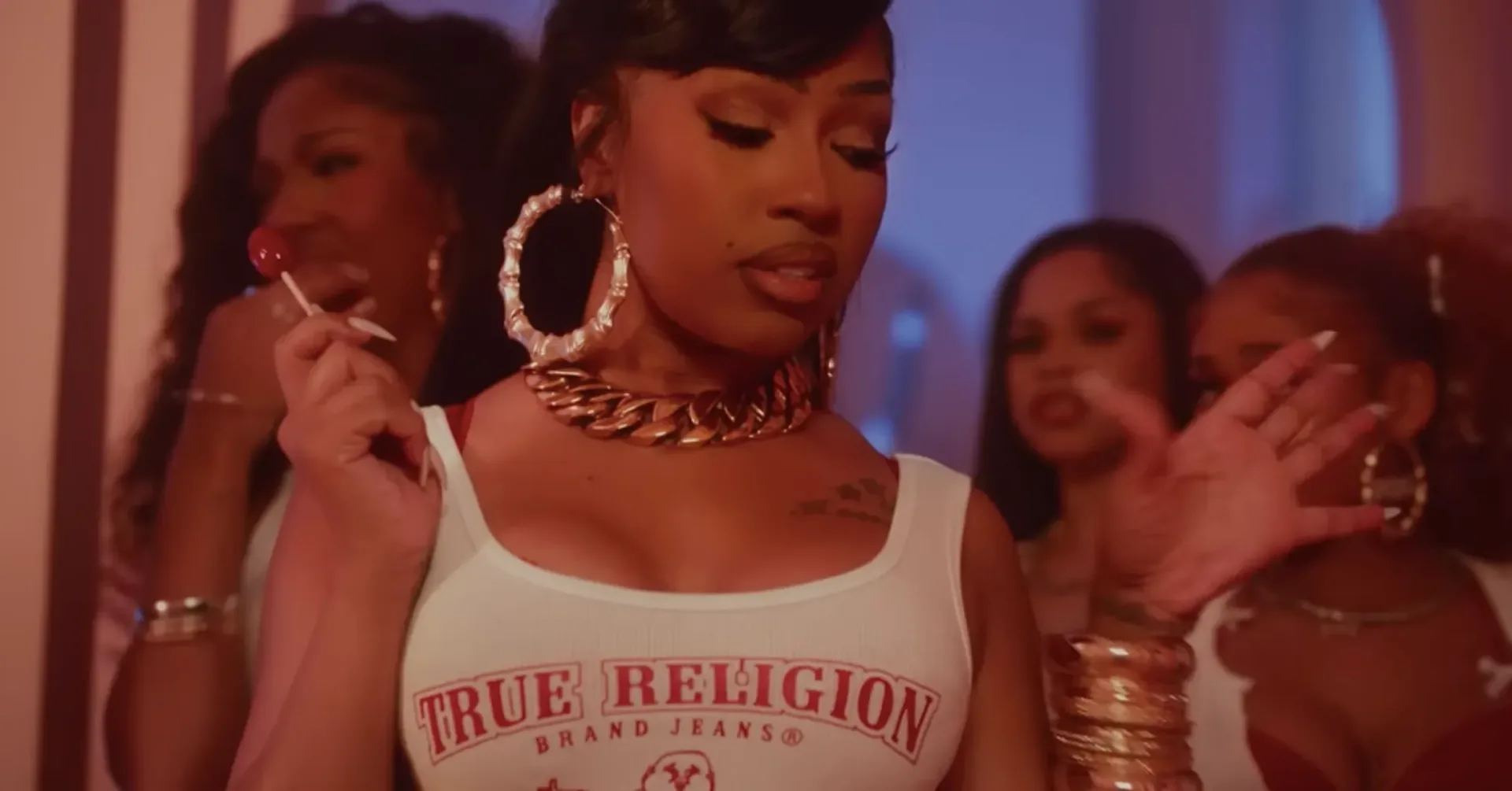
Yung Miami is pushing back on online allegations that attempted to connect her to Diddy’s prostitution case. In a discussion centered on her newly released album Watch Dis, the performer said anonymous online accounts had portrayed her as someone who transported prostitutes for Diddy or acted as an accomplice who could face legal repercussions. She rejected that framing and criticized the people behind those claims for not correcting the record.
The comments arrive as Watch Dis draws attention for material that addresses both her former City Girls partner JT and Diddy, her former partner. The references to Diddy have naturally become a major part of the surrounding conversation, given his current 50-month prison sentence for transportation for prostitution. But Yung Miami’s remarks make an important distinction: discussing a personal relationship, or putting that relationship into music, is not the same as accepting speculation about participation in a criminal case.
That distinction is the core of the story. Celebrity coverage often compresses several separate ideas into one loud online narrative: a public relationship, an artist’s lyrics, an ongoing public fascination with a legal case, and unverified posts from anonymous accounts. Yung Miami’s response separates them. She spoke about the relationship and denied the alleged role that was being assigned to her online.
What Yung Miami said about the allegations
Yung Miami said bloggers and anonymous accounts spread claims suggesting she had transported prostitutes for Diddy. The allegation went further than gossip about who she dated: it suggested potential complicity and legal exposure. She described those posts as frustrating, particularly because, in her view, the people circulating them did not subsequently provide a retraction.
For more context, explore Navi Was Nearly a Human-Like Fairy, Until Nintendo 64 Limits Made Her a Ball of Light.
It is crucial to be precise with language here. An allegation is a claim, not proof. An anonymous social-media post is likewise not evidence simply because it is widely repeated, screen-captured, or incorporated into a larger discussion. The supplied reporting characterizes the claims about Yung Miami as unfounded, and there is no factual basis presented here to treat them as established.
There is a practical reason this distinction matters beyond celebrity news. Once a claim is attached to a person’s name, online repetition can give it an artificial sense of credibility. A post can be reframed as “people are saying,” then treated as a topic of debate, then repeated without the original uncertainty. That progression does not make the claim more reliable. It only makes it more visible.
Yung Miami’s complaint also points to the uneven way corrections travel online. An initial sensational claim can be circulated quickly, while a clarification or retraction—if one arrives at all—often reaches far fewer people. Her comments put the focus on the cost of that imbalance when the claim is not merely embarrassing but implies involvement in serious criminal conduct.
Her comments about Diddy and their relationship
While denying any role in the case, Yung Miami was not presenting her relationship with Diddy as hostile. She said he treated her well, while explicitly signaling that her personal experience was not meant to dismiss or weaken anyone else’s experience. That is a narrow but meaningful statement: she was describing how she says he treated her, not making a universal claim about him or attempting to speak for others.
She also explained the arrangement she says governed their relationship. When the pair were together, they were together; when they were not together, each could do as they wished. In plain terms, she characterized it as a relationship with agreed boundaries rather than a conventional claim of uninterrupted exclusivity.
Yung Miami additionally said Diddy was visibly happy when they were together, using the image of him showing “all 32 teeth.” Her description suggests she believes they complemented one another well. It does not clarify their present status, however. She said people continue to ask where the two stand, but did not offer a definitive answer.
That remaining uncertainty is worth preserving. Public audiences tend to seek a clean label—together, separated, friends, estranged—but Yung Miami did not provide one. Reading more into the situation than she actually said would recreate the same speculative dynamic she was criticizing.
Why the album context matters
Watch Dis is the immediate setting for the conversation because the album includes references to both JT and Diddy. Music frequently gives listeners an entry point into an artist’s personal history, but it also creates an incentive for outside observers to turn every lyric or interview answer into a complete factual timeline. That is rarely a safe assumption.
Lyrics can be direct, stylized, selective, exaggerated, emotionally immediate, or designed for a record’s larger dramatic shape. The information available here supports the simple conclusion that Yung Miami addresses people from her life on the album. It does not support treating the album alone as a legal document, a comprehensive account of her past relationship, or confirmation of social-media theories about the case.
Her interview comments therefore do two jobs at once. On one level, they provide context for listeners hearing Diddy referenced around the album’s release. On another, they draw a firm boundary around claims that go beyond her art and personal history into purported criminal involvement. The first is a subject she is willing to discuss. The second is something she says was falsely attributed to her.
Separating personal accounts from broader claims
Yung Miami’s statement that Diddy treated her well is personal testimony about her own relationship. Her accompanying qualifier matters because it acknowledges the limits of that testimony. A person can accurately describe their own experience without claiming it resolves every other account or every public question surrounding someone else.
This is an area where short clips and paraphrases can lose essential context. The line “he treated me well,” presented alone, could be misconstrued as a defense of every allegation or controversy associated with him. But her stated intent, as described here, was not to undermine anybody else’s experience. Keeping both parts together makes the meaning clearer and more faithful to what she conveyed.
Similarly, her explanation of relationship boundaries should not be recast as evidence of a role in conduct she denied. Relationship terms can explain how two people understood exclusivity or time apart. They do not independently establish anything about criminal allegations. Those are entirely separate questions, and collapsing them is precisely the sort of leap that can fuel misleading narratives.
What readers should take from the exchange
The clearest factual takeaway is straightforward: Yung Miami disputed online claims that she transported prostitutes for Diddy or was an accomplice in his prostitution case. She said the claims were false and expressed frustration that the accounts spreading them did not retract them. She also discussed her relationship with Diddy in qualified terms, saying he treated her well while not attempting to invalidate others’ experiences.
Everything beyond that requires care. The current status of their relationship remains unconfirmed by her comments. The album’s references are not, by themselves, a complete guide to events outside the music. And claims circulated by anonymous accounts should not be elevated into fact through repetition.
For readers who want the immediate discussion in context, this report on Yung Miami’s comments about the claims and Watch Dis provides additional framing. The larger lesson remains the same: high-interest celebrity stories demand more precision, not less, especially when a rumor alleges criminal conduct.