Ye has pushed back on criticism of a Jakarta concert clip in which he restarted part of “Heartless” several times, saying the moment was intended as an audience-driven singalong rather than an attempt to antagonize the crowd.
Responding on X after the October 24 concert, Ye called the scene “a vibe,” said the audience was “very loud,” and framed the repeated passage as part of the spirit of “rock and roll.” The exchange followed an online claim that he was trying to provoke fans by repeating the section. Accounts of the show, however, describe a performance built around giving the crowd substantial responsibility for the song’s chorus.
What happened during “Heartless”
The Jakarta performance took place at Gelora B### Karno Stadium and was promoted by Raw Vision Collective. It began at 9 p.m. and marked Ye’s first solo concert in Indonesia.
During “Heartless,” Ye had the audience sing the chorus and returned them to the refrain repeatedly. One account said that portion was repeated seven times. At one point, the backing track was absent while fans continued singing, making the audience itself the dominant sound in the stadium.
That distinction matters when interpreting a short social-media clip. A repeated lyric or musical phrase can appear confrontational, stalled or needlessly drawn out when removed from the full performance. In a live setting, though, it can operate as a call-and-response: the performer prompts a crowd, the crowd answers, and the exchange is repeated to build intensity or emphasize participation. That is the structure Ye says was at work in Jakarta.
His response does not settle whether every viewer will enjoy that approach. Repetition is a stylistic choice, and some audiences may prefer a tighter run through the song. But the available descriptions place the disputed segment inside a wider crowd-singalong rather than a conventional uninterrupted performance of the track.
A large-scale show with the audience at its center
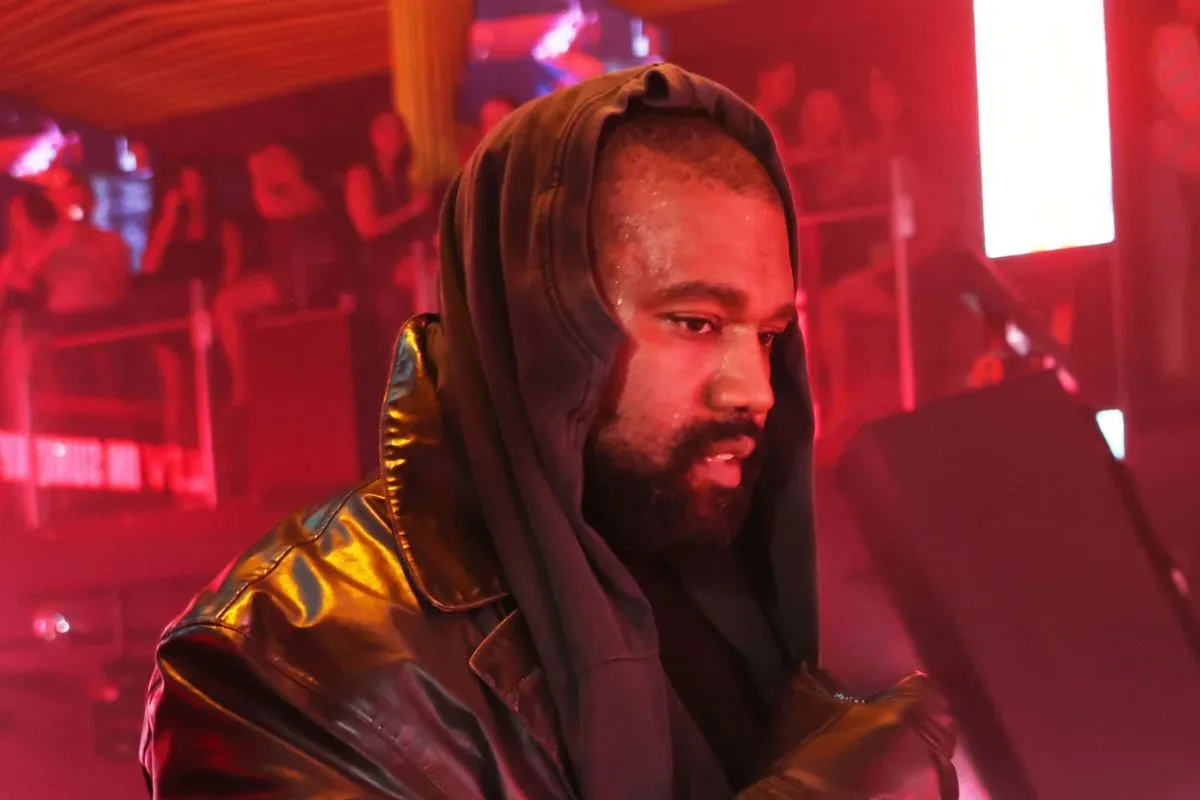
The concert ran for roughly two hours and used a huge globe-shaped stage positioned with fans around it. Lasers and fireworks supported the production. Organizers estimated that 50,000 people attended.
The scale is useful context for the “Heartless” debate. In a venue of that size, having tens of thousands of people carry a chorus can become an intentional part of the arrangement. Instead of treating the audience as background noise between songs, the performance design can turn the crowd into a musical element. The unaccompanied singing reported during “Heartless” appears to have been one of the clearest examples of that approach.
Related coverage includes Ye Calls Jakarta ‘Heartless’ Singalong a Vibe After Clip Sparks Debate.
Ye’s set also reached back to earlier material, including “All Falls Down,” “Through the Wire” and “Gold Digger.” Those songs, alongside “Heartless,” gave the Jakarta crowd a set of widely recognizable tracks around which to participate. The evening ended in similar fashion: for “Runaway,” Ye returned with a small piano after going inside the globe, while fireworks accompanied the opening and the crowd sang along.
In other words, “Heartless” was not described as an isolated pause in an otherwise conventional show. It was part of a night in which crowd voices were repeatedly given a prominent role.
Sound reports were mixed
The concert’s production was not received uniformly in every respect. Fan accounts differed on the sound: one attendee reported rough audio at times, while another said the sound was generally clear from his location, though speaker vibrations occasionally overlapped.
Those accounts are best understood as individual perspectives, not a conclusive assessment of the full venue mix. Stadium sound can vary notably by seat, distance from speakers, local reflections and crowd volume. A fan near one audio source may experience vibration or overlap differently from someone elsewhere in the building. That does not prove or disprove broader claims about the show’s audio, but it explains why two people at the same concert can report different results.
It also adds a little nuance to the online clip discourse. The audience being especially loud was central to Ye’s explanation of the “Heartless” sequence. For some attendees, that shared vocal volume may have been the point; for others, it may have complicated how clearly they heard the performance.
A rare Southeast Asian appearance
The Jakarta date was announced in July as Ye’s only Southeast Asian stop on his 2026 tour. It was also his first performance in the region in more than 15 years. Earlier regional appearances included Singapore shows in 2008 and 2010.
That lengthy gap helps explain why the Jakarta concert carried significance beyond one viral moment. It gave Indonesian fans a rare chance to hear a career-spanning selection of Ye’s older songs in person, on a stadium-scale production, with crowd participation built into key moments.
Short clips can be useful snapshots, but they rarely communicate the mechanics of a live event: how a performer cues an audience, whether a refrain becomes a shared chant, what comes immediately before or after it, or how the room responds over time. Here, the broader reporting and Ye’s own explanation point toward a deliberately extended singalong.
For readers following music events alongside other pop-culture news, Taylor Swift’s Nashville Songwriters Hall of Fame recognition is another recent reminder that songs can have lives far beyond their original releases—whether through institutions, recordings or an enormous crowd taking over a chorus.
The practical takeaway from the clip debate
The dispute is less about a new factual revelation than about interpretation. One reading saw repeated restarts of “Heartless” as an effort to get a reaction. Ye’s account describes a performance device meant to keep the audience singing. Reports from inside the concert support the basic context that fans were asked to carry the chorus, including briefly without the backing track.
That does not require pretending there was no room for disagreement. Concertgoers and viewers are free to decide whether the repetition worked for them. The key point is that the viral snippet does not appear to provide the whole picture. The Jakarta show featured a large crowd, a globe-stage production, pyrotechnics and multiple opportunities for fans to sing—especially during “Heartless” and the closing “Runaway.”
On that evidence, the repeated “Heartless” passage reads most clearly as a participatory live arrangement: a crowd-led refrain stretched out because the performer wanted the stadium to keep it going.