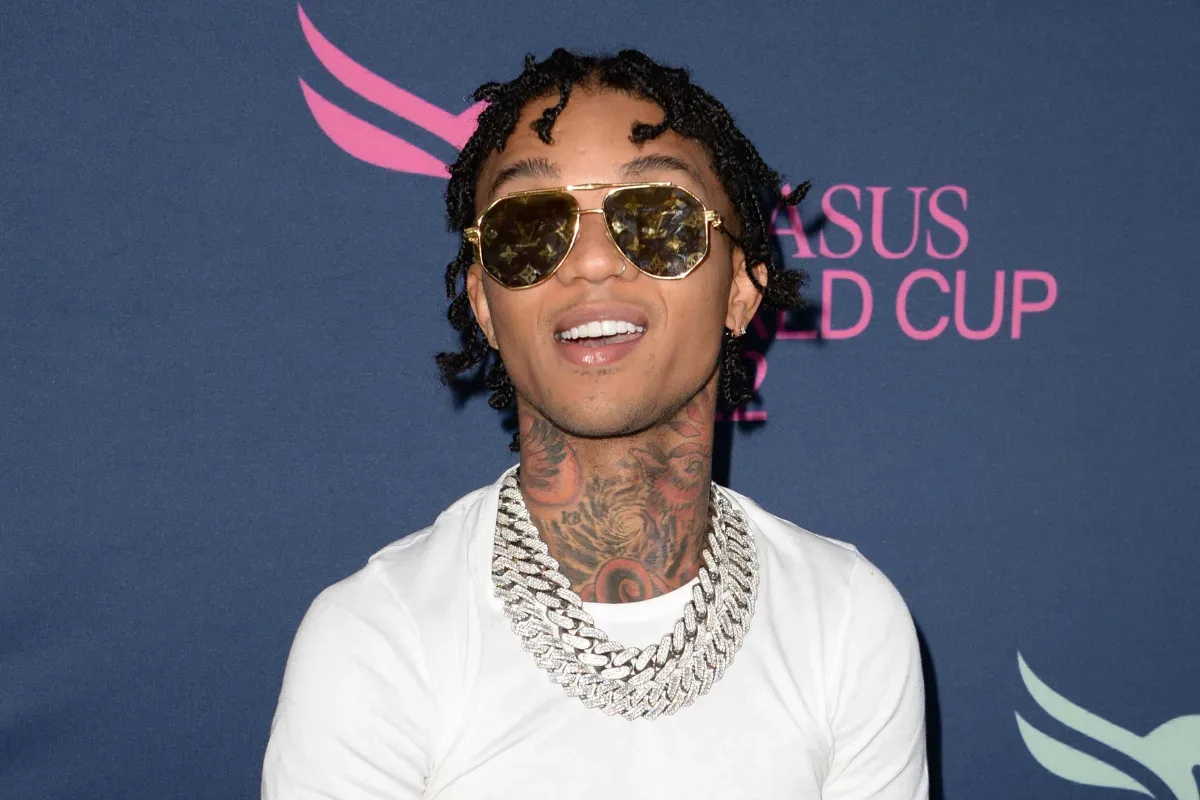

Ye’s Phoenix show delivered two especially notable moments: Big Sean joined him onstage, and “Street Lights” returned to the live set after an absence of several years. For a concert that reportedly also included time with Phoenix Suns guard Devin Booker, those choices made the night feel built around more than a standard run-through of familiar material.
Big Sean’s appearance carries an obvious history. Ye had previously called signing the Detroit rapper one of his biggest mistakes, a remark that turned their relationship into public fodder. The two have since reconciled, and the Phoenix cameo put that repaired connection in front of a live audience. It is a simple guest spot on paper, but it changes the read of the performance: a former professional rupture became a shared stage moment.
The deeper musical surprise was “Street Lights,” from 808s & Heartbreaks. The song is not framed as a new release or a newly announced permanent addition to the tour; what makes it significant is its reported return after years away from Ye’s live performances. Live-set changes matter because they can give longtime listeners a different entry point than the predictable big-single rotation. A catalogue can be huge, while a concert setlist is necessarily selective.
Why “Street Lights” stands out
“Street Lights” comes from an album frequently defined by its electronic textures and emotionally direct writing. In this context, its inclusion is meaningful precisely because it is not described as a default, ever-present concert pick. Bringing back an older deep-catalogue selection can make a show’s pacing feel more personal and less like a checklist of the most commercially familiar songs.
That does not mean one performance confirms a sweeping creative or touring shift. A setlist is a snapshot, and special occasions often generate choices that may not carry to every date. Still, a song’s return can be worth noting without overstating it. It tells fans that the show’s musical boundaries were broad enough to accommodate an older, less routinely performed track.
There is also a difference between a song simply being played and a song becoming the headline of a night. The Big Sean cameo brought the human story: two artists with a publicly discussed fracture sharing a performance space. “Street Lights” brought the catalogue story: a song associated with an earlier era being revisited. Together, they gave the Phoenix concert both a guest-driven spectacle and a setlist-driven surprise.
A guest appearance with real context
Concert guests are often judged by what they signal. Sometimes they are straightforward local cameos; sometimes they preview a project; sometimes they create a nostalgia beat. Here, Big Sean’s appearance is notable because the background between the two artists was already public. Their reconciliation means the moment should not be reduced to the earlier criticism, but that criticism explains why the reunion registered with the crowd.
It also illustrates how live performance can operate differently from interviews, posts or headlines. An appearance does not erase past disagreement, and it does not require fans to settle every question surrounding either artist. It does, however, provide a visible statement of present-day cooperation. On a stage, that statement is immediate: both performers are participating in the same moment, for the same audience.
Related coverage includes Ye Brings Out Big Sean and Revisits “Street Lights” in Phoenix.
The audience response was enthusiastic, fitting the basic logic of an unannounced guest. The value of a surprise performer is partly informational: the audience does not know the reveal is coming, then understands its significance at once. In this case, the reaction was tied not merely to recognition, but to the particular history behind the pairing.
What the Phoenix show says—and does not say—about the tour
Ye has more shows planned for 2027, and the Phoenix performance suggests that special guests and less frequently performed material remain possible within this current concert run. That is useful context for attendees following future dates. It is not a promise that Big Sean will appear again, that “Street Lights” will be performed at every stop, or that any specific guest will arrive in another city.
Fans often treat clips from a single date as if they are a full tour roadmap. That approach can create expectations no artist has actually set. The more grounded takeaway is narrower: Phoenix received a distinctive pairing and an uncommon song choice. Anyone attending a future show may reasonably hope for variation, but should treat the particulars as unique unless they recur.
The event also arrived amid continued attention on Ye’s public standing. His prior statements and controversies remain a major factor in how audiences assess any public resurgence, and reactions to the tour will not be uniform. The Phoenix report describes a year without a fresh controversy attached to the tour activity, but a successful show or an enthusiastic crowd does not settle the broader debate around an artist’s past conduct. Commercial demand, audience enjoyment and public accountability are overlapping issues, not interchangeable measures.
That distinction matters when reading the concert as a cultural event. The performance can be discussed accurately as a night with a reconciliatory guest appearance and a rare catalogue selection, while acknowledging that neither moment compels a shared verdict on Ye’s wider public record.
How to read rare-song chatter without getting carried away
For listeners tracking live music, “rare” is a useful but slippery word. It generally means a song has appeared infrequently or has been absent for a substantial period; it does not automatically mean a song has never been played, has been formally retired, or is now a durable setlist fixture. The Phoenix account gives the clearest available version: “Street Lights” had not been sung live in years.
That framing is enough to establish why the moment drew attention. There is no need to turn it into a claim about a full album revival, a newly structured tour, or an imminent recording project. Concert discourse moves quickly, especially when fan-recorded footage and reaction posts make one moment feel universal. The sensible approach is to preserve the scale of the fact: a specific song made a significant return at a specific concert.
Live events can also change abruptly. A guest spot can be arranged for one night, a throwback can be selected because of mood or occasion, and a crowd’s reaction can make a familiar song feel newly important. Recent reporting on a festival set interrupted after an object was thrown toward the stage is a reminder that performances are shaped by real-time circumstances as well as setlist planning. Phoenix, by contrast, is being remembered for the positive unpredictability of an unexpected collaborator and a long-unheard selection.
The immediate takeaway
The Phoenix date’s clearest story is not that every old tension has vanished or that every future Ye show will follow the same script. It is that the concert combined two kinds of rarity: Big Sean’s onstage return alongside Ye after their publicly discussed dispute, and the revival of “Street Lights” from 808s & Heartbreaks.
For fans of the song, the performance is a welcome reminder that the deeper reaches of a catalogue can still surface in a major live setting. For those watching the tour more broadly, it is evidence that individual nights may contain genuine variations rather than identical presentations. And for observers weighing Ye’s current run against his wider history, it is one concert moment—not a definitive answer to the larger conversation.