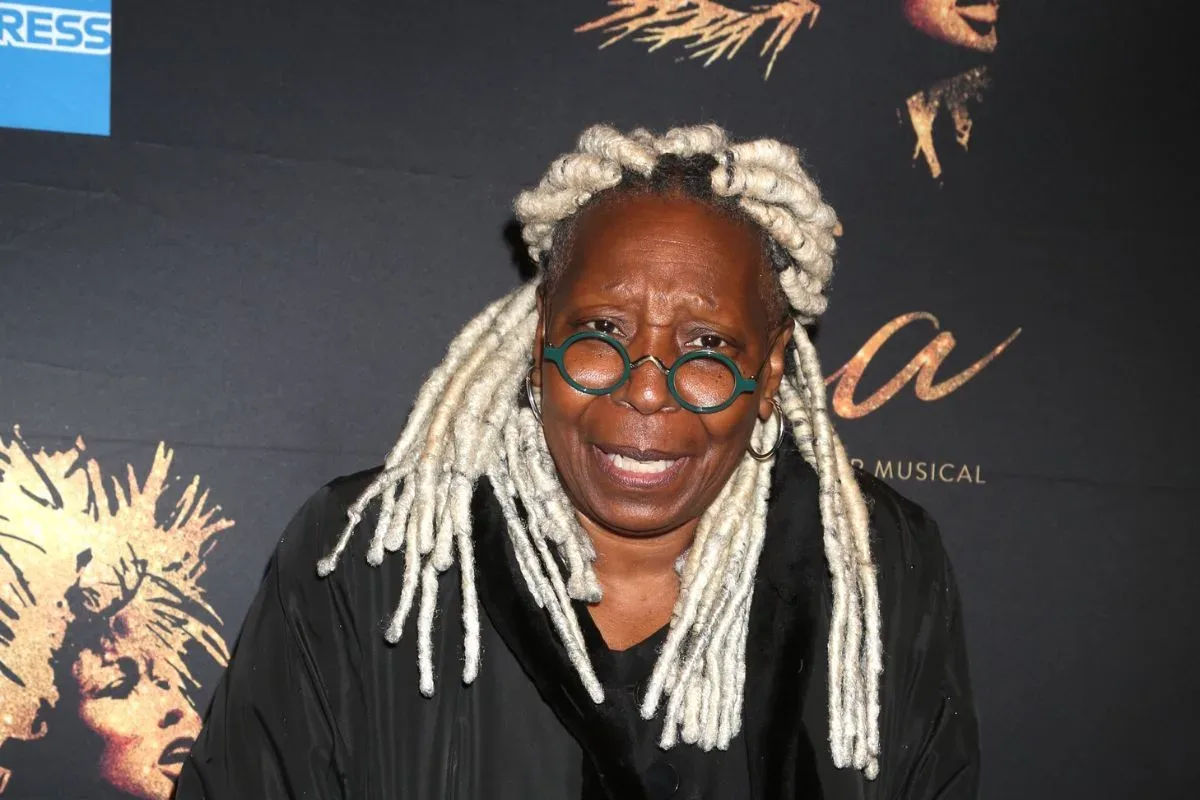
Whoopi Goldberg has offered an unusually plainspoken explanation for why she continues to return to The View: the job pays well. Her compact answer, “A good check,” is funny because it is direct, but the longer explanation carries more weight. Goldberg described daytime television as a place where she is well compensated, where she believes she earns that compensation, and where she gets to do work that remains difficult to find for many performers.
That matters because the conversation is not simply about one television personality’s salary. Goldberg connected her choice to a familiar imbalance in entertainment: what an established woman can command for movie work compared with male counterparts. She said she does not expect to be paid “guy money” for a film role. In that light, a dependable television role is not a fallback or a punchline. It is a job with a known structure, a platform for her voice and, most importantly, a regular paycheck.
Goldberg has been part of The View for nearly two decades. She said Barbara Walters brought her onto the daytime panel after offering her a position while Goldberg was working in radio. Goldberg accepted because she needed work. Years later, she still describes that dependable employment as something worth appreciating, particularly when many people are searching for jobs.
A blunt answer with a broader point
There is a tendency to treat candor about money as a surprising celebrity confession. Goldberg’s remarks instead make the practical point that compensation is part of why people take and keep jobs. She did not disclose a specific salary, although she has said the amount would surprise people. The important detail is not a number that was never provided; it is her clear argument that she is paid for work she regards as real labor.
Her description of that labor has two parts. First, there is the on-air responsibility: Goldberg said Walters hired her to share her opinions, and she continues to take that responsibility seriously. Second, there is the reality of response. She acknowledged that audiences will not always like what she says. On a panel program built around competing viewpoints, disagreement is not an accidental byproduct. It is part of the assignment.
What “daytime panel” means here: a panel show brings several hosts together to discuss current issues and personal perspectives. Its format depends on conversation rather than a scripted dramatic performance. That does not mean it is effortless. The work requires hosts to show up consistently, engage with topics and accept that public disagreement can become a central part of the show’s relationship with viewers.
Goldberg has said she likes having the opportunity to work through issues and trade ideas with other people. That makes her explanation more layered than the three-word headline answer. The salary is plainly significant, but she has also framed the role as one that lets her participate in debate. People who disagree with her have not changed that calculation; differing opinions, she said, are part of the job.
Reliable work has value beyond the headline number
Entertainment work is often discussed through premiere dates, casting lists and large paydays. Goldberg’s comments point to a more basic concern: consistency. A long-running television position can offer a kind of professional stability that does not necessarily accompany film acting, even for a performer with a substantial body of work.
Related coverage includes Whoopi Goldberg Says ‘A Good Check’ Keeps Her on ‘The View’.
That distinction is especially relevant to the way Goldberg described Hollywood pay. Her remarks do not claim that film roles have no value. Rather, they explain why a television job can be the more sensible place to build a working life when the movie business is not offering equivalent compensation. The contrast also makes her statement about “earning” her pay important. She is not characterizing the job as an easy detour from acting; she is asserting that the compensation corresponds to the work she does on the program.
There is a practical lesson in that outlook for audiences accustomed to reading every celebrity career move as a prestige calculation. Creative fulfillment, visibility, security and pay can all coexist in a decision. A high-profile job can be creatively public-facing while still being, at its core, employment. Goldberg’s answer strips away the expectation that she must offer a loftier reason for keeping a job that works for her.
That no-frills stance also fits the panel format. A regular host is not merely appearing for an isolated promotional cycle. The position involves an ongoing presence and recurring public scrutiny. Goldberg’s willingness to say that some people will like her views and some will not suggests she sees that friction as built into the role rather than as evidence she should leave it.
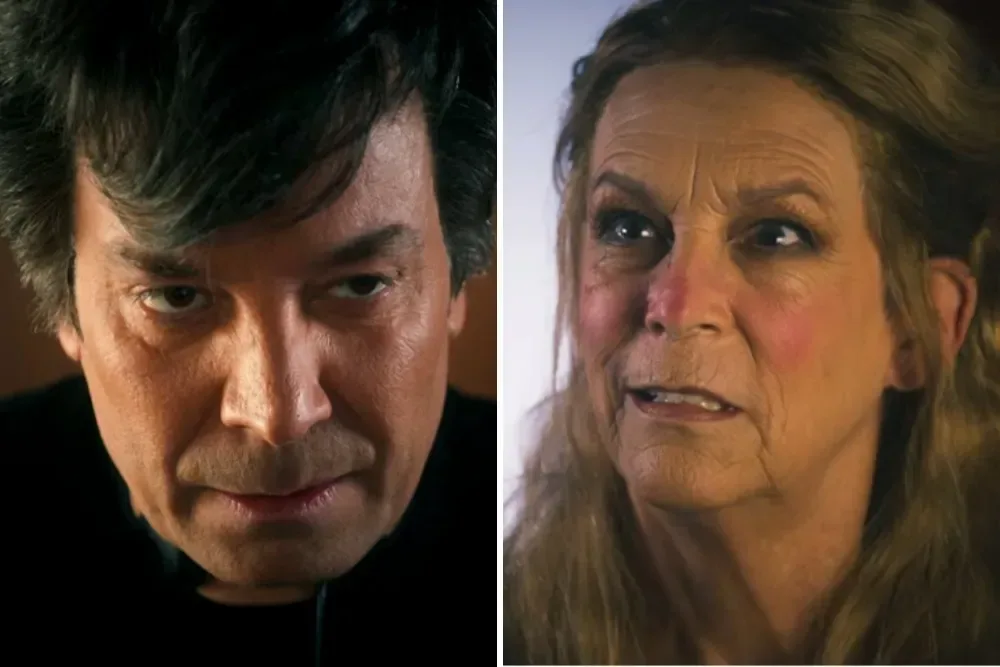
For another example of television promotion leaning into deliberate discomfort and comic performance, see Jimmy Fallon and Jamie Lee Curtis’ awkward late-night spoof.
‘Sister Act’ remains part of the conversation
The same discussion also returned to Sister Act 3, a prospective continuation of a film series that remains closely associated with Goldberg. The original Sister Act arrived in 1992, and Goldberg returned the following year for Sister Act 2: Back in the Habit. Lauryn Hill was among the cast of the second film.
More than three decades later, Goldberg said fans around the world still embrace the first two films. That enduring attachment helps explain why a third installment still invites interest, but it is important to separate that interest from details that have not been confirmed. Goldberg has discussed people she would like to involve, not announced a finalized cast.
In a 2022 conversation, she named Nicki Minaj, Lizzo and Keke Palmer as people she hoped might join her in a third film. At that time, she was describing a wish list and said a script was expected later that month. A wish list is exactly that: an expression of creative interest, not a casting confirmation. No completed cast, production timetable or release information is established by those comments.
Goldberg also said she had hoped to make the film before Maggie Smith died. The statement adds a poignant note to the prospect of revisiting the series. It also underlines why fans should resist treating nostalgia alone as a guarantee that a sequel will arrive in any particular form. The emotional connection to the films is clear, but the supplied information does not establish where the project currently stands beyond Goldberg’s continued interest in it.
What is confirmed, and what remains uncertain
- Confirmed: Goldberg starred in Sister Act in 1992 and returned for Sister Act 2: Back in the Habit in 1993.
- Confirmed: Goldberg has spoken positively about a third film and about the lasting global audience for the earlier movies.
- Confirmed: In 2022, she named Minaj, Lizzo and Palmer as performers she wanted involved.
- Uncertain: Those names were presented as a wish list, not as confirmed casting.
- Uncertain: No release date, production schedule or finalized lineup was provided in these comments.
The common thread: doing the work in front of her
Goldberg’s talk about The View and Sister Act 3 is linked by more than her career history. In both cases, she is speaking frankly about the gap between public expectation and working reality. People may view a long television run as an abstract celebrity arrangement, but she describes it in the language of employment: she needed a job, was offered one and values being paid well to do it. People may view a sequel wish list as a set of imminent announcements, but her comments frame it as hope and creative preference rather than settled fact.
That clarity is useful. It makes room for both sides of Goldberg’s position: she values a secure, well-paid role, and she takes seriously the platform it gives her to express opinions and engage in disagreement. Meanwhile, her affection for the Sister Act audience remains visible, even as the future of a third movie cannot be filled in with assumptions.
The sharpest line is still the simplest one. “A good check” may be the attention-grabbing answer, but it is also a sensible account of why Goldberg stays. Financial security, ongoing work and a role she believes she performs well are reasons enough.