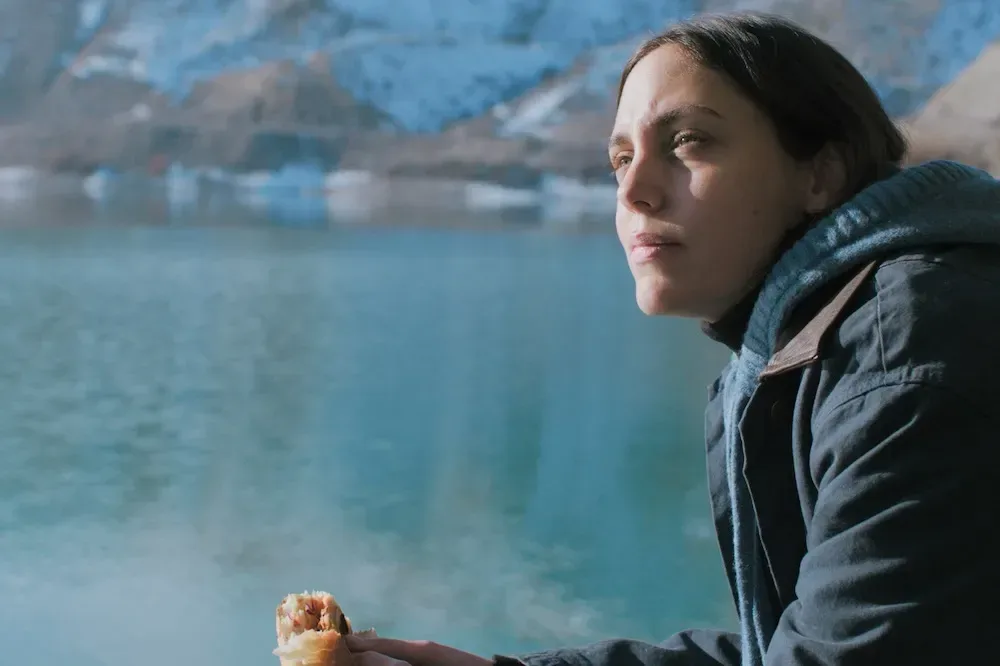
What Remains, Yeşim Ustaoğlu’s 130-minute Turkish-language drama, approaches a familiar crisis with unusual patience. A poet can no longer write. Her relationship is strained. Money becomes tighter when her partner loses his university job. Then, rather than staging one grand rupture and assigning blame, the film follows the uncertain space that opens after a woman leaves home alone.
That choice gives the film its quietly radical shape. Elif, played by Öykü Karayel, does not set off on the road to reject her partner Mehmet, played by Metin Akdülger, or to erase her place in the life of their young son Selim, played by Ali Kayra Kul. She keeps in contact with both. Mehmet takes over the daily work of parenting, while also confronting his own relationship with his ailing father. The result is a relationship drama interested less in deciding who has failed than in asking whether love can survive—and perhaps become healthier through—distance.
The film screened in competition at the San Sebastián Film Festival on September 23, 2026. Its original title is Artakalan, and it comes from a Turkey-France-Luxembourg-Bulgaria co-production led by Ustaoğlu’s company, with Cité Films, Tarantula, RFF International and MUBI among the co-production partners.
A creative home that has stopped working
Before Elif leaves Istanbul, the film establishes a household with an appealingly makeshift creative rhythm. Elif is a poet of some recognition, but her recent writing has not given her what she needs from the work. The problem is not simply a lack of output. It is a loss of connection to the source of her art: words arrive, but not with the clarity or force that makes them feel alive.
Meanwhile, Selim’s curiosity fills much of the apartment. He watches butterflies in a jar as they form cocoons, takes long urban walks with his mother and works on elaborate chain-reaction contraptions. The latter are often called Rube Goldberg devices: constructions designed to accomplish a small task through a comically complicated sequence of actions. In this home, the devices suit the atmosphere. Everything appears to be in motion, yet the essential mechanisms are becoming harder to keep running.
Mehmet has converted a room into a studio for his experimental music. His artistic curiosity extends to ordinary and imperfect sounds, including the noise of a malfunctioning appliance. That detail matters because it locates both adults within an environment of creative attentiveness. They are not portrayed as people who do not understand art; they are people whose shared life has stopped leaving enough room for each other’s inner lives.
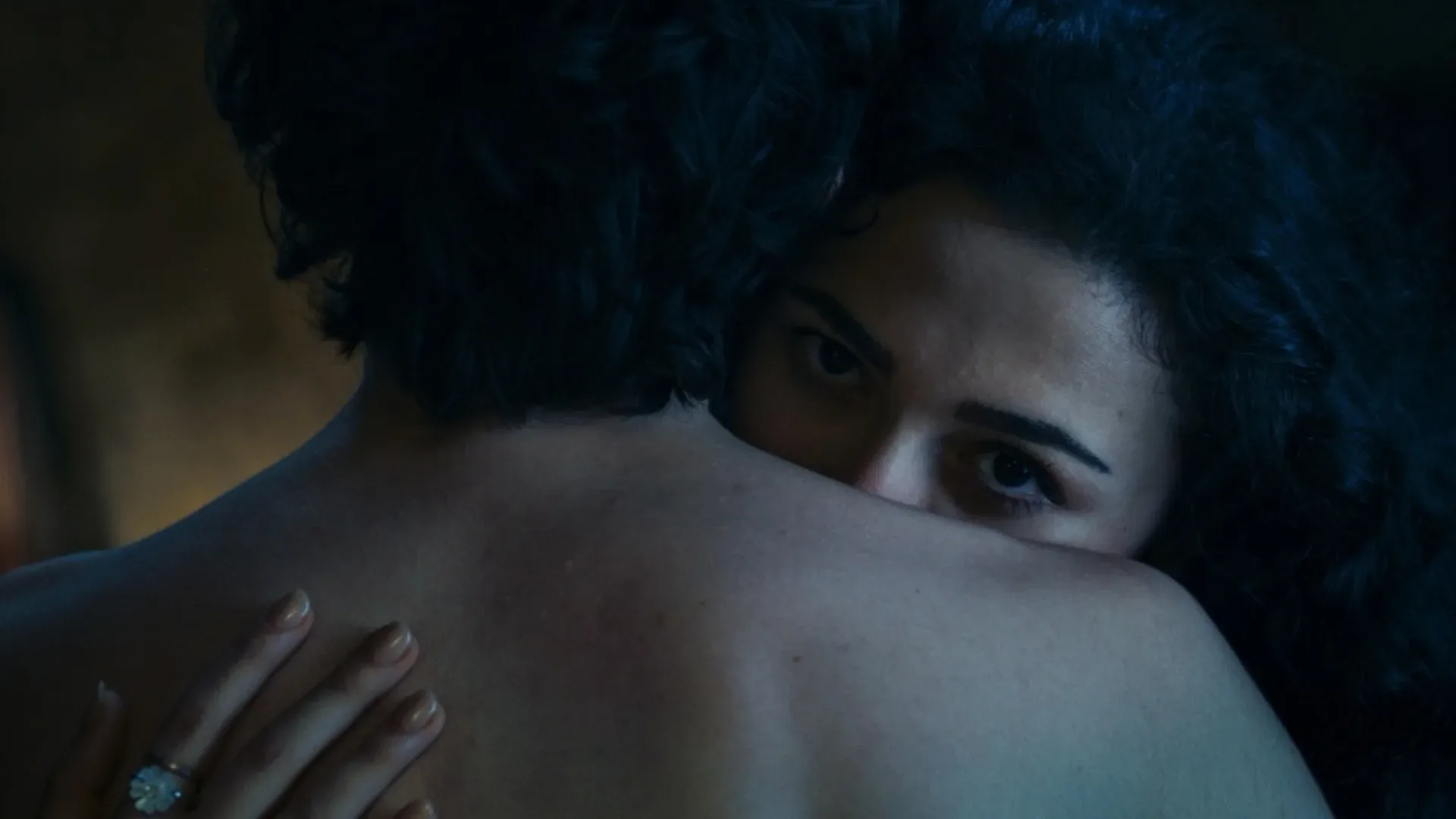
The household’s precarity becomes unmistakable when Mehmet is dismissed from his job teaching specialized music practices to university students. His job had been the family’s reliable income. A late-night argument follows, held in the subdued tones required when a child is asleep nearby. The scene brings into focus what had been accumulating beneath the domestic surface: Elif is barely eating and has not showered for weeks, while Mehmet has grievances of his own and keeps reaching for practical fixes that cannot reach the underlying wound.
There is an important distinction here. A practical solution attempts to change the immediate circumstances: find work, organize the home, propose a next step. Elif’s distress, as the film presents it, is harder to solve because it concerns her ability to inhabit herself. When Mehmet admits that he did not grasp the depth of her problem, the gap between care and understanding becomes painfully clear.
The road trip is not framed as abandonment
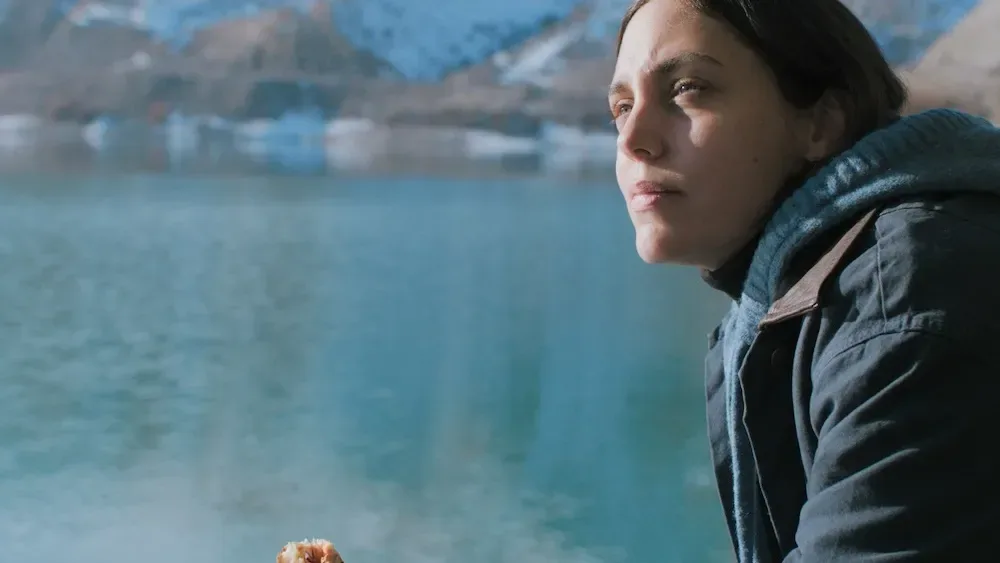
After a temporary ceasefire between the couple, Elif leaves before dawn. Her route moves from Istanbul through tunnels and highways, across changing countryside and through expansive, sparsely populated terrain. At first the drive is directionless. Eventually, she understands that she wants to reach the small mountain village where her grandmother spent her final years.
On paper, that premise could invite an easy moral framework: a mother departs, a father remains, and the narrative punishes or excuses one of them. What Remains resists that framework. Elif stays in touch with Selim through video calls and continues speaking with Mehmet. Her leaving creates a new arrangement, but the film does not describe it as a clean severing of maternal responsibility or emotional attachment.
That is not the same as pretending the departure has no cost. Mehmet is the parent handling the day-to-day responsibilities while Elif is away, and the pressure on him becomes part of his own story. When his aging father becomes ill, he takes Selim with him to help care for the older man. Through that experience, the film traces Mehmet’s position across generations: he is a son, a father and a man who loves his father without wishing to repeat his father’s way of living.
This balance is one of the drama’s most distinctive attributes. Elif’s need for solitude is taken seriously without making Mehmet a villain or an afterthought. Mehmet’s adjustment is given weight without turning it into a counterargument against Elif’s journey. Separation, in this context, is neither a triumphant escape nor an uncomplicated wound. It is a condition that changes the responsibilities and self-understanding of everyone involved.
Three encounters and a changing self-image
On her travels, Elif meets three women at different points. They are each solitary, but the film distinguishes solitude from loneliness. That distinction is central to its worldview. Solitude is the state of being alone; loneliness is the painful experience of unwanted disconnection. The women Elif meets are resourceful and self-sufficient, and their warmth toward her suggests a form of community that does not depend on constant proximity or conventional domestic roles.
Their hospitality begins to alter Elif’s sense of herself. Karayel’s performance is described through small shifts rather than showy transformations: tension leaves her face, and the audience’s judgment of Elif loosens as Elif becomes more able to accept herself. It is a particularly elegant dramatic strategy. The character’s recovery does not merely persuade viewers through explanation; it changes the conditions through which viewers see her.
That progression also reframes the film’s earliest scenes. The apartment initially looks like a charming, bohemian creative household, but the later conflict reveals the limitations of that picture. Material instability, blocked creative work, depression-like withdrawal and unsaid resentments have all existed behind the attractive surface. Elif’s travel does not erase those conditions. Instead, it gives her enough physical and emotional space to recognize them without being consumed by them.
Landscape as more than scenery
Cinematographer Kiril Prodanov photographs rural and remote Turkish landscapes in rich detail, making the terrain a substantial part of Elif’s passage. The roads, plains, mountains and ancient cities are not simply picturesque pauses between plot points. They establish scale. Against places that appear vast and enduring, the couple’s present conflict can be understood as intensely important without being the only possible definition of either person’s life.
That visual approach serves the film’s lyricism. A lyrical film does not necessarily mean one filled with speeches or ornate dialogue. Here, it means that mood, image and emotional association carry meaning alongside the literal events. A highway, an isolated village or a face relaxing after an act of kindness can communicate a change that a conventional explanatory scene might overstate.
The creative team reinforces that approach. Ustaoğlu directs and wrote the screenplay; Mathilde Muyard edited the film; Şevket Akıncı composed the music. Elif’s poems were supplied by Turkish poet Birhan Keskin, grounding the character’s recovered voice in poetry rather than treating the writing as a vague symbol of healing.
Near the end, Elif’s writing returns to Mehmet with an image of complicated affection, calling him her “crooked tooth” and friend. It is not the language of a neat reunion, and that is precisely why it carries force. A crooked tooth can be troublesome, intimate and inseparable from a person’s history. The phrase allows gratitude, pain and familiarity to coexist.
What the film’s title leaves open
What Remains ultimately argues for self-acceptance as a necessary foundation for other forms of love: love for a partner, a child, art and the people encountered beyond the home. Yet it does not make self-acceptance synonymous with self-isolation. Elif’s journey is sustained by calls to her family and by the care she receives from strangers. Mehmet’s parallel path is likewise defined by obligations to his son and father.
That makes the film’s central proposition more demanding than a simple slogan about walking away. Letting go can mean giving another person air rather than denying that they matter. It can mean acknowledging that a relationship’s old structure was untenable while refusing to flatten its history into resentment. And it can mean accepting that an artistic voice may return only after its owner finds a way to live with greater compassion toward herself.
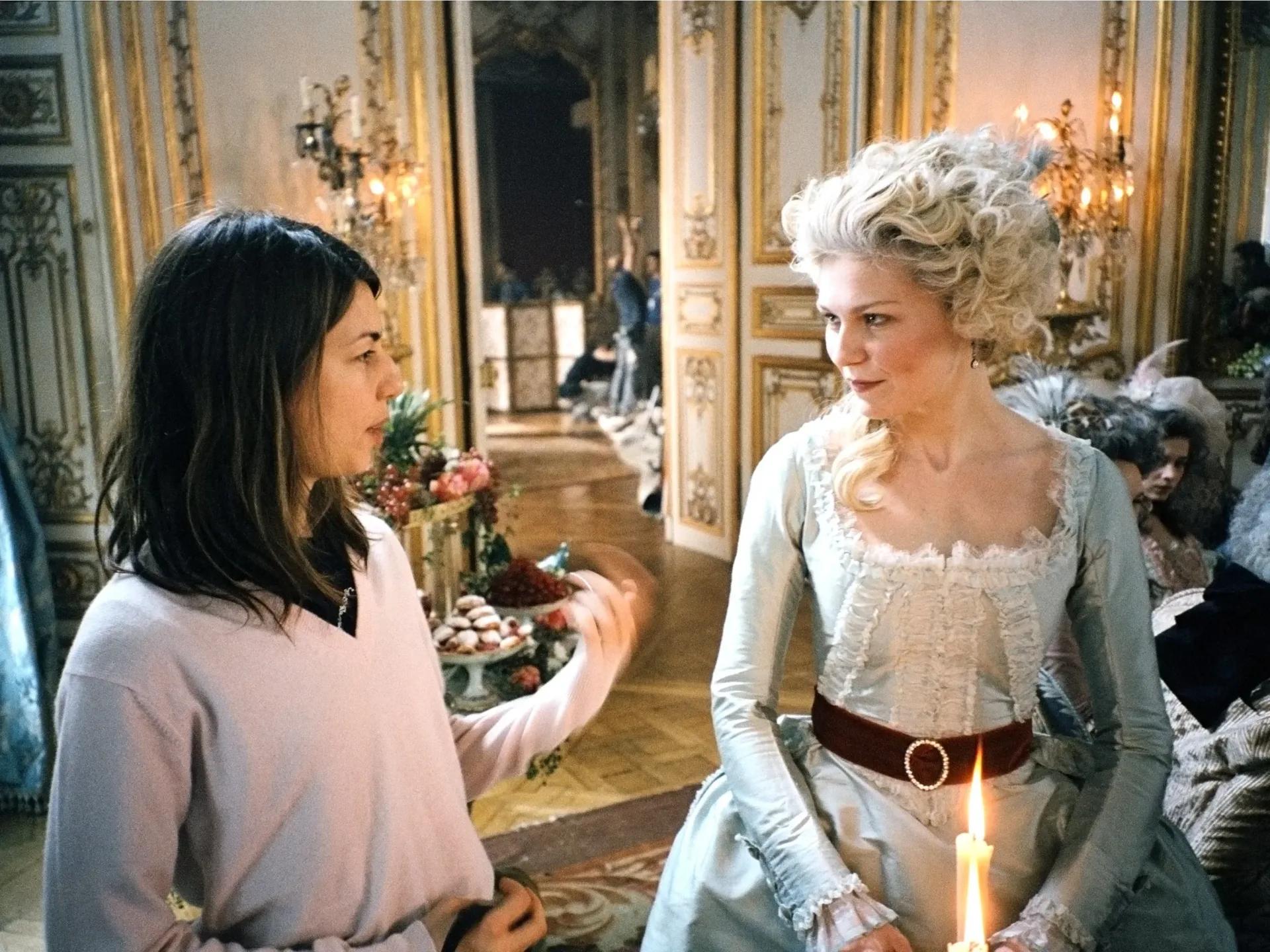
For readers interested in another filmmaker-centered piece about process and family perspective, see this look at the documentary built from archival footage of Sofia Coppola at work.
Ustaoğlu’s film leaves its relationship deliberately open rather than resolving it into a conventional victory or defeat. Both Elif and Mehmet emerge changed, not because the distance between them has made the past disappear, but because it has released them from the demand that one person must contain the entirety of the other’s life. In that measured, even-handed uncertainty, What Remains finds its deepest tenderness.