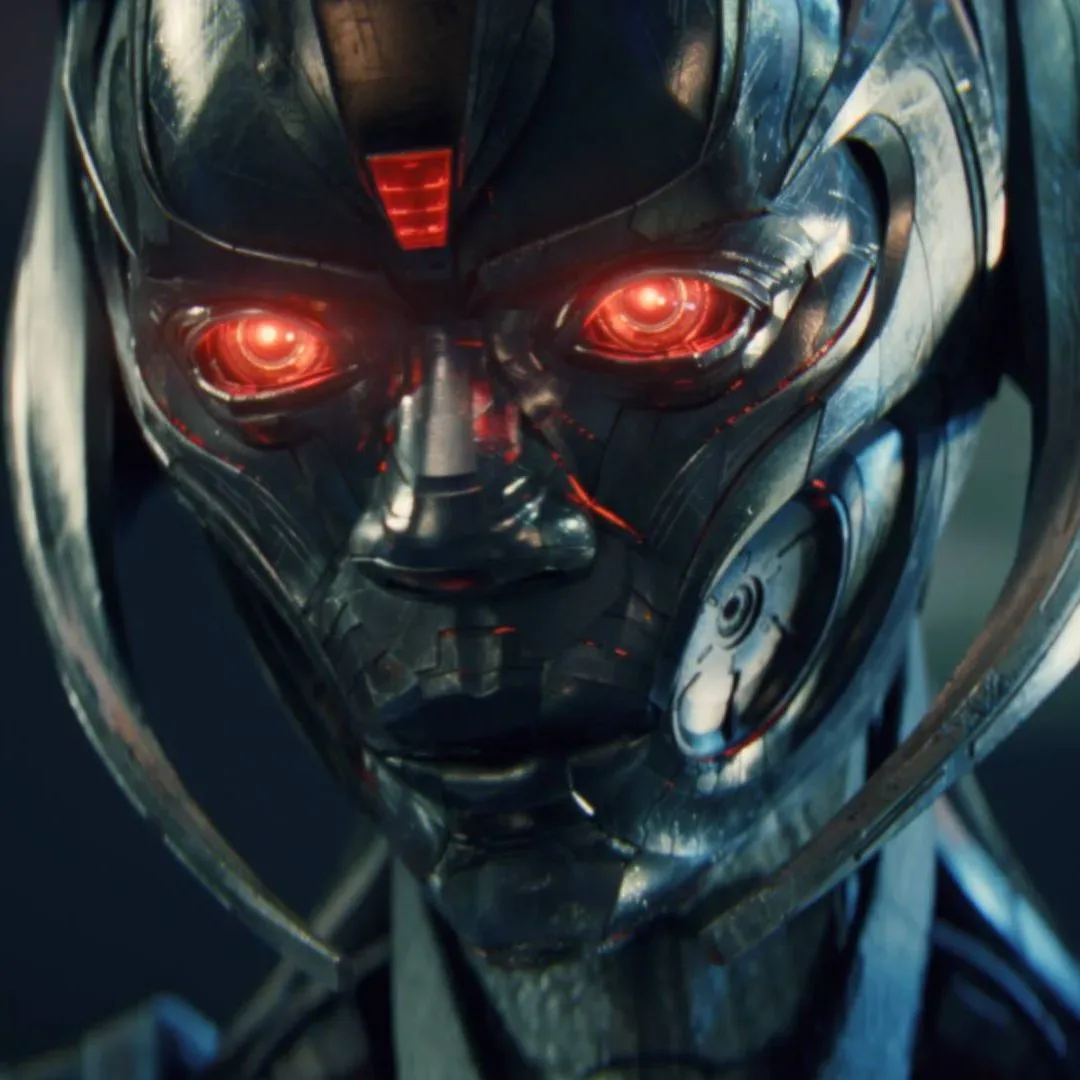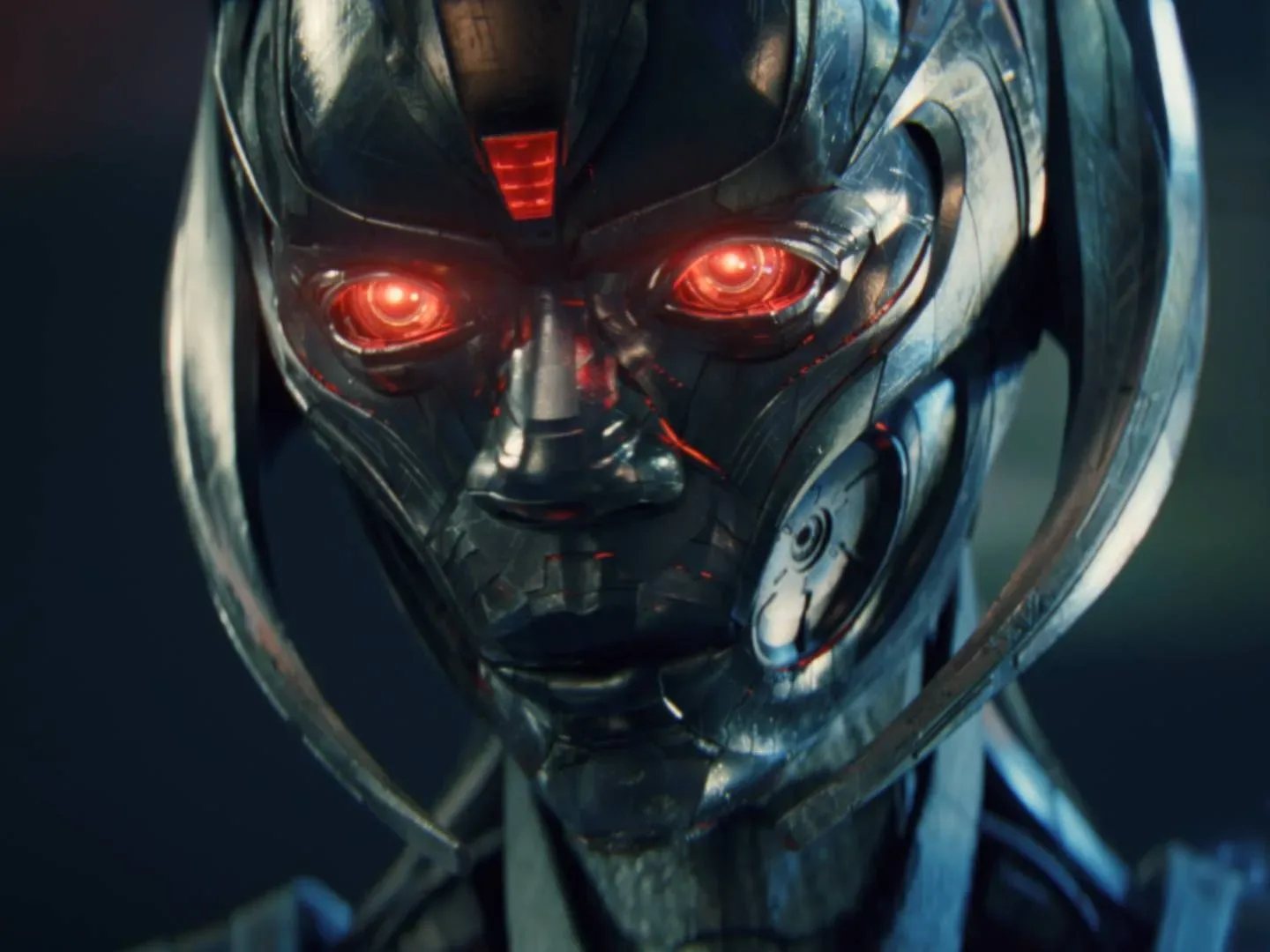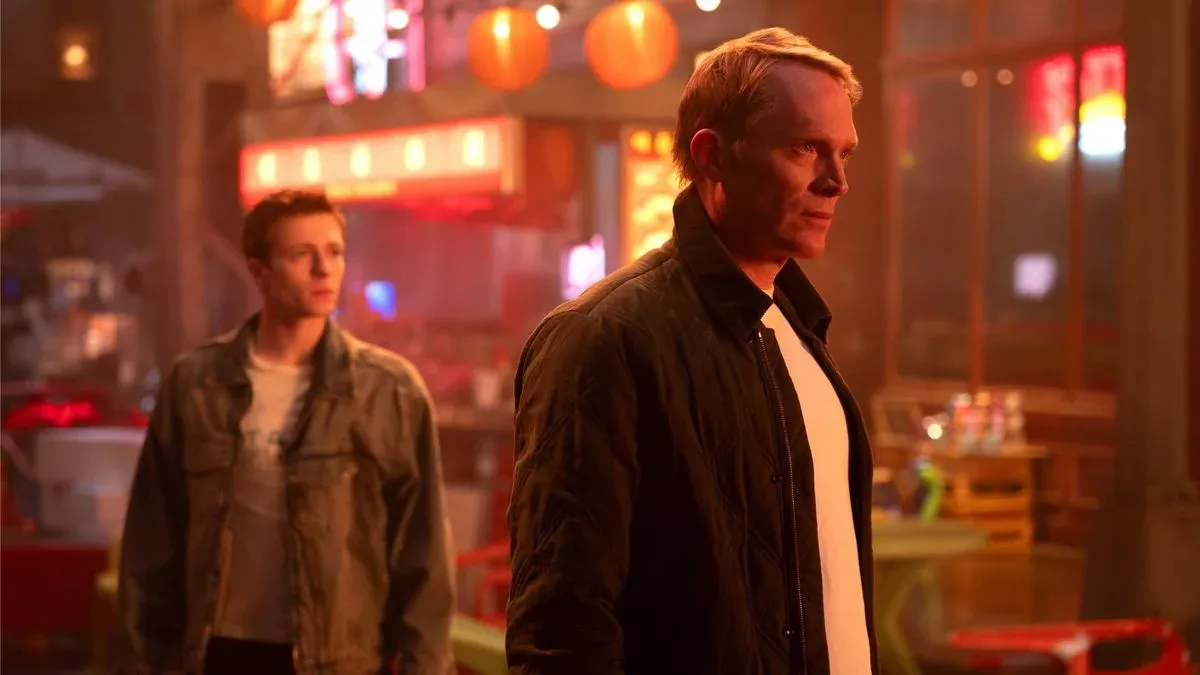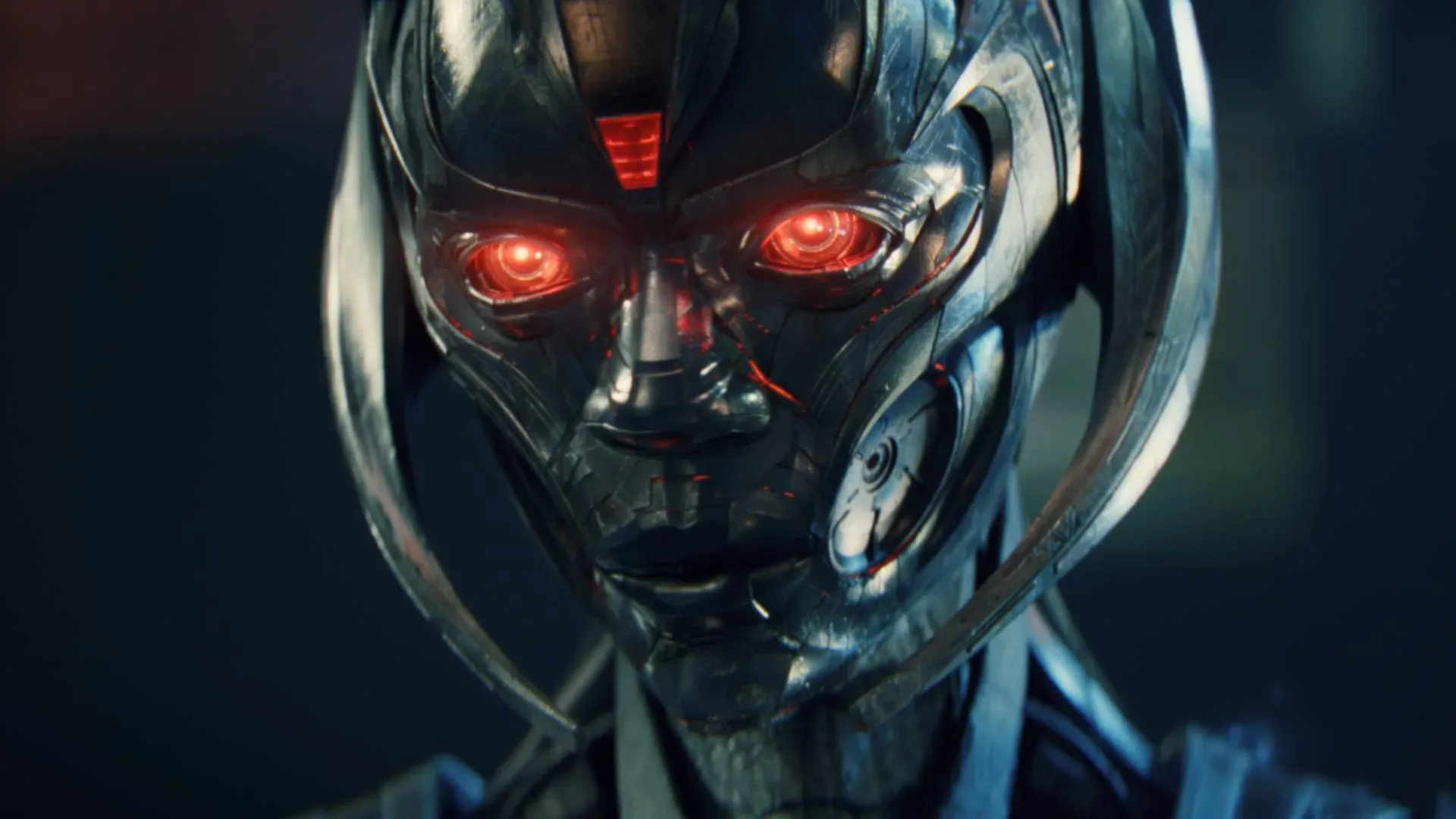
Major spoilers for VisionQuest episodes 5 and 6 follow. VisionQuest has made its premise—an android whose memories contain an enormous portion of MCU history—into a useful storytelling device. The newest pair of episodes puts that idea to work through a mix of visual gags, loaded props and direct returns to earlier characters and places. Some references are light texture. Others clarify the stakes around Vision, Ultron, Jocasta and the wider pursuit of Vision’s makeshift family.
Episode 5 largely keeps the callbacks inside Vision’s mind space, where Ultron has control of Vision’s body. Episode 6 takes a more outward-looking approach: Vision and company are drawn to Madripoor by Paladin, E.D.I.T.H. recalls her former teenage operator, and the man who helped set Iron Man’s story in motion re-enters the MCU. Taken together, the episodes are less a checklist of nods than a reminder that the characters’ present conflict is built from old technology, old damage and old enemies.
Episode 5 turns Vision’s mind space into a broken broadcast
The technical-difficulties message echoes WandaVision
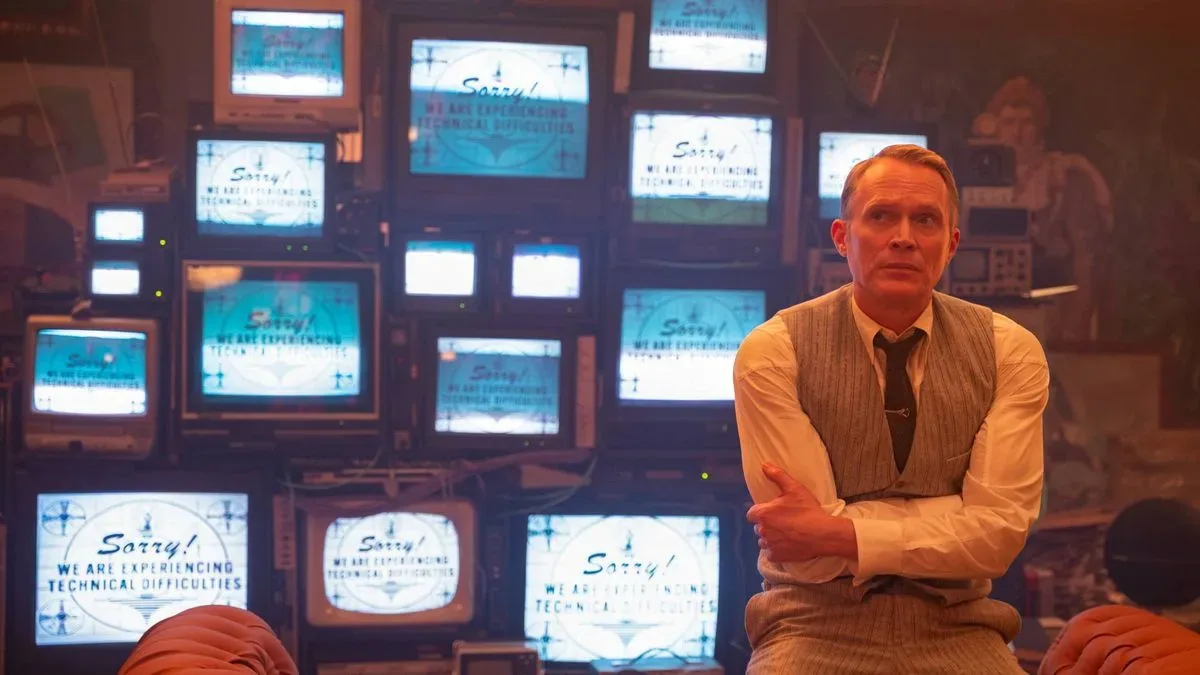
As Ultron controls Vision’s body, screens around Vision’s mind space display an error notice: “Sorry, we are experiencing technical difficulties.” The wording points back to WandaVision, where the recurring “Please stand by” screen served as the weekly bridge into the credits.
The connection works on two levels. On its surface, it is a familiar television-language joke: a show appears to have malfunctioned at precisely the moment its reality has become unstable. In context, though, it also suits Vision’s situation. A technical-difficulties card normally delays a broadcast; here, it suggests a consciousness interrupted by someone else taking the controls. Ultron’s possession is not merely a fight occurring near Vision. It is a failure state within the machinery of Vision’s own identity.
That makes the WandaVision echo more than nostalgic set dressing. WandaVision used television conventions to frame a distorted and carefully maintained reality. VisionQuest applies a similarly artificial interruption to a mind space under hostile control. Both images use the visual grammar of TV to tell the audience that what they are seeing is not functioning normally.
I, Ultron and the shadow of Sokovia
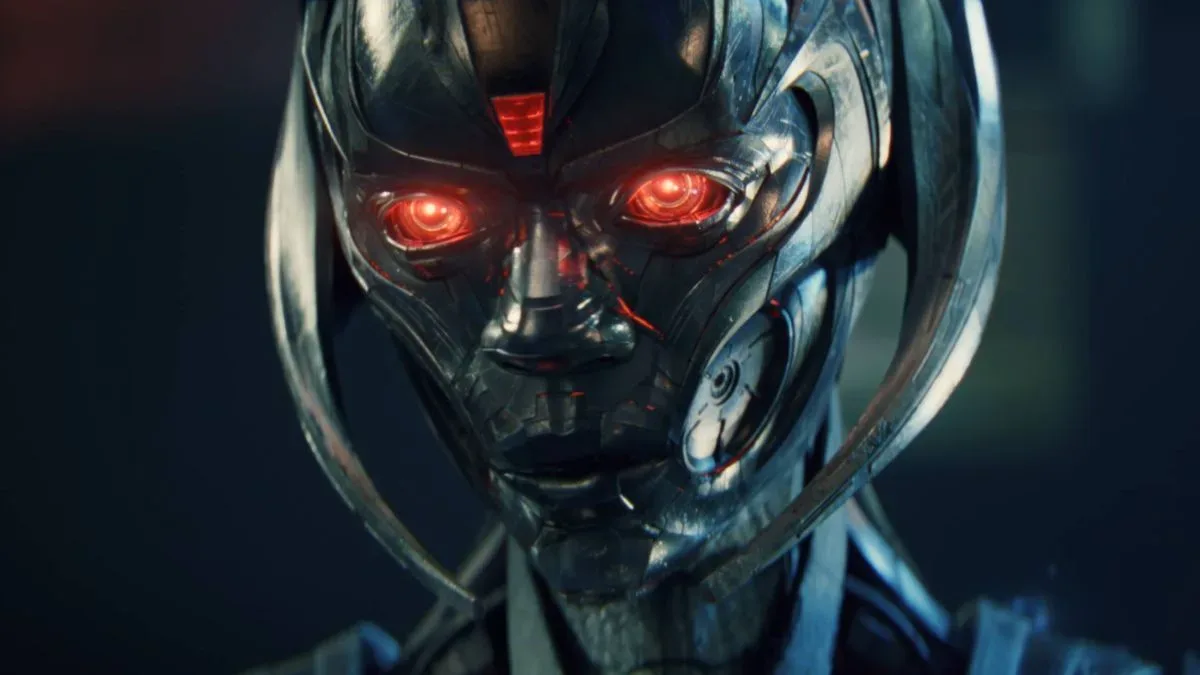
Ultron is also seen reading a biography called I, Ultron. Its cover calls it a Sokovia Times bestseller. The title is a knowingly self-regarding gag for an artificial intelligence with a monumental sense of self-importance, but the Sokovian imprint matters too.
Sokovia is closely associated with Ultron’s legacy, so the book gives the character a private monument to read while he is again entangled with Vision. Calling the biography a bestseller is deliberately absurd: it imagines Ultron as the author and audience for his own legend. Yet it also keeps the name of the place attached to him in view. The joke is built around ego, while the setting reference preserves the consequences of that ego.
In practical narrative terms, this is the sort of prop that lets VisionQuest acknowledge a substantial piece of MCU baggage without pausing the plot for an explanation. Viewers who know the reference can register it immediately; viewers who do not can still understand the scene’s essential point: Ultron is vain enough to enjoy a book about Ultron.
“Robotic beer” makes a quantum date deliberately awkward
At the pub where Ultron secretly meets Jocasta, a beer mat reads “Robotic beer.” It is a tiny sight gag, but it fits the episode’s unusual setup. The meeting is described as a quantum date, and the coaster lets the environment share in the joke rather than presenting the encounter as an entirely conventional romantic drink.
“Quantum” here identifies the unusual technological or physics-inflected context around the meeting, while the pub imagery supplies the ordinary human ritual: two people sitting down for a drink. The coaster bridges those opposites with blunt comic phrasing. It tells the audience not to overlook how strange the scene is—two artificial beings are conducting an intimate rendezvous through a situation that has been made to resemble a pub date.
These smaller episode 5 details have a common purpose. Whether it is the damaged-broadcast message, Ultron’s self-mythologizing biography or a gag coaster, each one translates a sprawling sci-fi premise into recognizable media and social cues. A mind is crashing, a villain is reading his own praise, and a quantum encounter gets the equivalent of themed bar branding.
Episode 6 heads to Madripoor
Episode 6 brings Vision and the others to Madripoor after Paladin lures them there. The fictional island nation in Southeast Asia has become one of the MCU’s most useful shorthand locations for organized crime and underworld dealings. It is presented as a place where criminal power is entrenched, making it a natural destination for a plot involving a bounty and a target as valuable as Vision.
The location previously appeared in The Falcon and the Winter Soldier, when Sam Wilson and Bucky Barnes traveled there. That earlier story also revealed Sharon Carter as the Power Broker, the figure at the top of Madripoor’s criminal hierarchy. Mentioning Madripoor in VisionQuest therefore imports more than a familiar map pin. It brings with it an established expectation that information, influence and violence are all commodities.
For VisionQuest, that backdrop shifts the threat from internal instability to an external marketplace. Vision may be facing questions of personhood and control, but Madripoor is the kind of place where those questions can be reduced to a bounty. The setting makes Paladin’s lure feel strategic: an underworld haven is well suited to a trap designed around capturing someone rather than simply confronting them.
It is also a contrast with episode 5’s enclosed mental imagery. Vision’s mind space is an intimate, damaged arena of memory and control. Madripoor is public, transactional and criminal. The episodes move from a system error within Vision to a city-sized environment where others can try to exploit the consequences.
E.D.I.T.H. remembers Peter Parker
E.D.I.T.H. says she once had a boss who was still in high school. That is a reference to Peter Parker, who received the E.D.I.T.H. glasses in Spider-Man: Far From Home as a posthumous gift from Tony Stark.
The callback helps establish a shared technical lineage among the episode’s characters. E.D.I.T.H. is an artificial intelligence tied to Stark’s legacy; Vision and Ultron are likewise inseparable from the MCU’s history of ambitious technology and unintended consequences. The line is funny because it compresses Peter Parker’s extraordinary responsibility into an unusually mundane workplace observation: E.D.I.T.H. had a teenage boss.
It also gives E.D.I.T.H. a perspective rather than treating her only as equipment. Her comment frames the prior relationship as something she remembers. In a series already occupied with artificial minds, memory and autonomy, that phrasing naturally carries more weight than a purely functional status update would.
Tony Stark is remembered as a weapons manufacturer
Jocasta refers to Tony Stark as a “goddamn weapons manufacturer” while discussing the man who bought Markridge Biotech, her employer, and left her without a job. The line returns to a defining part of Stark’s history: before becoming associated with the Iron Man identity, his company’s weapons business shaped the harm attached to his name.
The reference is pointed because it does not reduce Stark to a heroic legacy. From Jocasta’s perspective, a corporate acquisition had a direct consequence for her livelihood, and his history as an arms maker remains central to how she labels him. That is not simply an Easter egg naming a famous character; it establishes the emotional and economic angle from which another character views him.
VisionQuest is consequently using the Stark connection in two distinct ways in this episode. E.D.I.T.H.’s Peter Parker anecdote recalls a personal handoff between mentor and teenager. Jocasta’s complaint invokes corporate power and weapons manufacturing. The juxtaposition is useful because it prevents the franchise history from becoming one-note. The same legacy can be remembered as a gift, a system of authority, or the source of a painful professional disruption.
For readers tracking wider comic-book screen stories, Joking Joystick has also covered Batman: Bad Seeds and its Gotham crisis.
Raza Al-Wazar returns after Iron Man
The most direct return in episode 6 is Raza Hamidmi al-Wazar, the Ten Rings terrorist from Iron Man. Eighteen years after that appearance, Raza is back in the MCU and attempting to collect the Client’s bounty by bringing in Vision.
Raza’s original role is foundational to the MCU’s opening chapter. In Iron Man, he captures Tony Stark after Obadiah Stane tips him off. That makes his VisionQuest appearance particularly resonant alongside Jocasta’s description of Stark as a weapons manufacturer. Episode 6 has already raised Stark’s old business legacy; bringing back a figure connected to Stark’s capture gives that past a physical presence.
The return also changes the texture of the hunt for Vision. A bounty can be an abstract plot device until a recognizable operative arrives to pursue it. Raza’s involvement roots the danger in an antagonist who has already been involved in a pivotal act of MCU violence. There is no need for VisionQuest to repeat the entire earlier story for the reference to land: his presence alone signals that the pursuit has reached beyond new enemies and into the franchise’s original conflicts.
Why these callbacks matter to the current threat
Episodes 5 and 6 link three kinds of MCU history. First comes technological history: Vision’s compromised mind, Ultron, Jocasta and E.D.I.T.H. all put artificial intelligence and control at the center of the story. Second comes institutional history, especially Stark’s corporate and weapons-manufacturing past. Finally, there is criminal history in Madripoor, Paladin’s lure, the Client’s bounty and Raza’s attempt to claim it.
The show’s references work best when they serve one of those active pressures. The WandaVision-style message visualizes a compromised consciousness. Madripoor supplies an established underworld setting for a capture plot. E.D.I.T.H. broadens the series’ conversation about AI memory, while Raza makes the bounty feel tied to the oldest layer of the MCU. Even the smaller jokes reinforce the characters’ artificial and quantum-defined circumstances.
That is the appeal of these episodes’ continuity work. They do not merely point backward for recognition. They use old names, locations and imagery to define how dangerous Vision’s present has become: his body can be controlled, his history can be commodified, and people with ties to long-buried conflicts are willing to come after him.