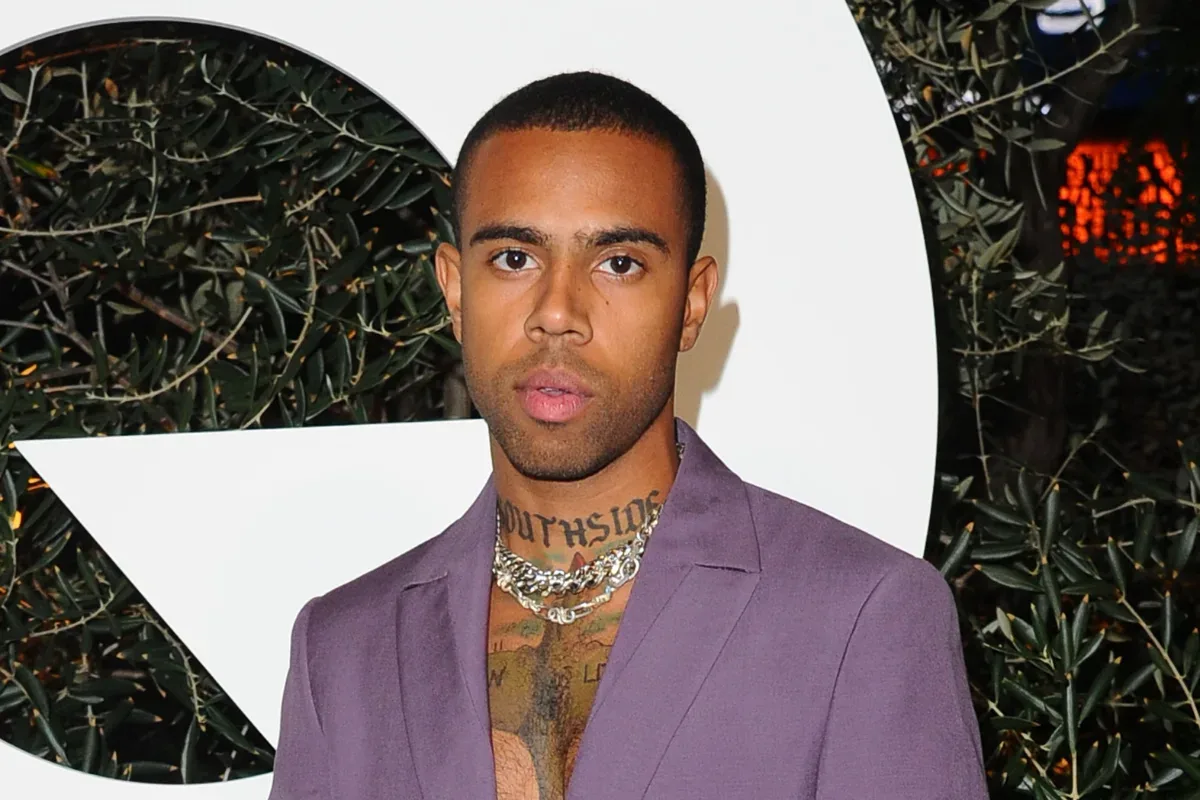
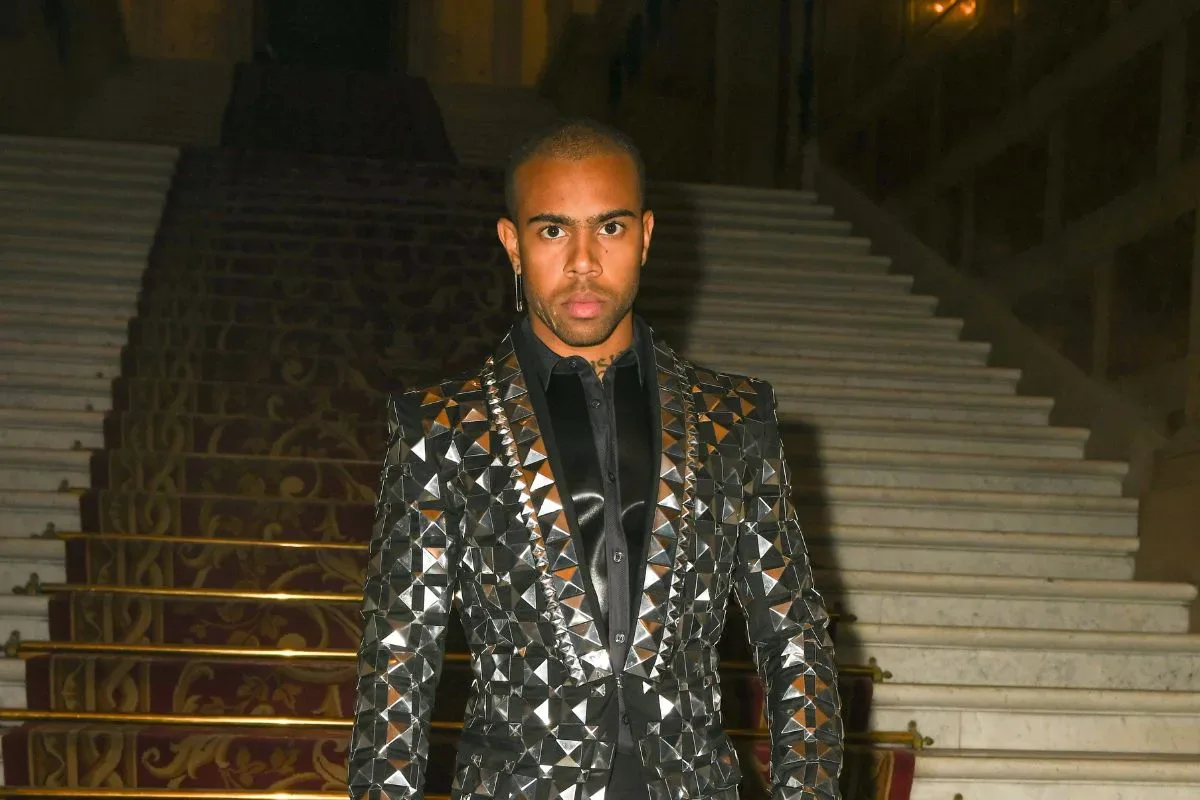
Vic Mensa is revisiting Innanetape with affection, but not with the obligation to reproduce every word exactly as he wrote it in high school. The Chicago artist has said that some lyrics on the 2013 project no longer fit the present moment, and he has occasionally paused rather than perform those sections during its anniversary-era return.
That distinction matters. A catalogue revival can easily be framed as pure nostalgia: put an older project back into circulation, play the recognizable songs, and recreate a past version of the artist for the audience. Mensa’s approach appears more complicated and more candid. He remains proud of the work and struck by what he managed to make at a young age, but he is also recognizing that an artist’s relationship to a song can change over time.
He did not identify the specific lyrics he now omits. That leaves the focus on the broader principle rather than inviting fans to turn the performances into a scavenger hunt for altered lines. The point is not that he has disowned Innanetape. Rather, he is treating the project as a record of where he was when he created it, while reserving the right to decide what he wants to say onstage now.
A return without total reenactment
Innanetape originally arrived in 2013 and reached streaming services on September 30. Making the project available through major streaming platforms gives old listeners a more direct way to revisit it and gives newer audiences an accessible entry point into a formative release in Mensa’s catalogue.
But availability is different from reenactment. A recorded song preserves a particular performance and perspective; a live performance happens in the present. Mensa’s comments draw a clear line between the two. The original recording remains part of the project’s history, while the current performer does not necessarily have to endorse or repeat every line in exactly the same way years later.
That is especially notable with music written at a young age. Mensa has spoken about being surprised by parts of the material when he considers how young he was at the time. There is pride in that surprise: he sees evidence of an accomplishment made while still in high school. Yet the same distance that makes that achievement impressive can also make certain words feel misaligned with his present-day outlook.
One song that still feels immediately connected to him is “Holy Holy.” Mensa singled it out as a track that continues to resonate fully, and performing it brings him back to the scale of what he had achieved as a teenager. That response illustrates why a blanket judgment on older work would miss the point. His connection varies track by track, and even within a song, a performance can contain both enduring artistic value and a line he chooses not to repeat.
What it means when an artist changes a live lyric
In practical terms, an omitted lyric is not necessarily a rewrite, a new official version or a removal of the original track. It is a performance choice. A musician may skip a phrase, pause before it, alter delivery, or allow the band and crowd to carry a transition. None of those actions changes what listeners hear on the original release.
Related coverage includes Vic Mensa Revisits Innanetape With a Changed Perspective.
For an audience, that can make the anniversary show feel less like a museum exhibit and more like an active conversation between past and present. Fans may know the recordings word for word, but the artist is not frozen at the age or in the circumstances in which those recordings were made. Mensa’s decision makes that reality visible instead of pretending it does not exist.
It also offers a useful way to think about nostalgia in music. Nostalgia does not have to mean unconditional approval of every detail from an earlier period. An artist can celebrate the ambition, craft, friendships and creative momentum of a project while being honest that personal growth changes what feels appropriate to perform. In Mensa’s case, the live return to Innanetape seems built around that balance: respect for the record, not an attempt to become its younger creator again.
Live bands bring another dimension to Innanetape
The recent performances have also allowed Mensa to return to the live-musician element at the heart of the project. He described playing jazz clubs with a band as a highlight of bringing the mixtape back to the stage.
That detail is important because a band changes more than the visual setup of a rap performance. Live instrumentation can alter pacing, emphasis and the space around a vocal. It gives songs room to breathe and lets performers shape transitions in real time. In the context of Mensa’s changed relationship with select lyrics, that flexibility may be particularly valuable: a band-led setting can support a pause or a shift in delivery without making it feel like an interruption.
The anniversary run included an October 28 date at Garcia’s in Chicago’s West Loop. Joey Purp opened the show, while Chance The Rapper joined Mensa for “Suitcase,” a bonus track on the streaming edition of Innanetape. Their appearance placed a Chicago collaboration into the live celebration while also pointing listeners toward the expanded streaming-era version of the project.
For listeners returning to the release, the streaming edition’s bonus-track designation is worth noting. It distinguishes “Suitcase” from the material associated with the original project while giving the current edition its own added context. The song’s appearance at the Chicago show connected that updated release format to the anniversary performances.
Streaming return arrives during a broader independent phase
The Innanetape reissue is also significant as the first release under Mensa’s partnership with UnitedMasters, announced in September. The arrangement covers more than recorded music, extending into film, media and commerce, while allowing Mensa to retain ownership.
Ownership is a central term in any artist-business discussion. Here, it means Mensa retains ownership under the partnership rather than giving up that ownership as part of the arrangement. The supplied details do not define every operational term of the deal, but its stated scope suggests a framework that reaches beyond simply putting out songs.
The streaming release follows another step in Mensa’s independent activity: in June, he released sundiata independently through his own website. Taken together, the independent release and the new partnership place the renewed attention on Innanetape within a period of wider control over how his work is issued and developed.
That business context should not be confused with the creative decision to skip older lyrics. They are separate issues. Still, both reflect an artist actively deciding how his past and present work will be presented: one choice concerns ownership and distribution, the other concerns what he is personally prepared to say into a microphone today.
A new album and a larger production role
Mensa’s return to Innanetape comes ahead of a new full-length album expected in 2027. He has also described taking himself more seriously as a producer for the next project, including using voice memos to capture ideas before developing them further.
A voice memo, in this context, is a quick audio note used to preserve an idea before it disappears. For a songwriter or producer, it can hold a melody, rhythmic thought, vocal phrase or broader sketch that can later become the basis for a fuller recording. Mensa’s mention of the practice indicates an interest in building a more deliberate workflow around early creative sparks.
The prospective album is therefore not presented simply as a follow-up to an anniversary campaign. It is tied to a shift in his creative role, with Mensa placing more emphasis on production as well as performance. That makes the timing of the Innanetape revisit especially interesting: he is looking back at work made in high school while preparing a future release with a more expanded sense of authorship.
His media plans are expanding as well. The Vic Mensa Show was announced in August with 24 episodes planned for its first season, and Chance The Rapper is set to be its premiere guest. The show adds another outlet for Mensa’s voice beyond music, while the planned album and the Innanetape return keep the musical catalogue firmly in view.
For more on artists navigating independent paths after early industry experiences, see this look at Looze Cannon’s independent path.
Why the Innanetape revival feels current
The most revealing part of Mensa’s reflection is its lack of a simple answer. He can feel fully connected to “Holy Holy,” marvel at work he made as a student, enjoy playing the material with a band in jazz-club settings, and still stop himself from delivering certain passages. Those positions do not contradict each other. They describe a mature relationship to a body of work that has outlived the circumstances of its creation.
For fans, the return of Innanetape offers both the permanence of the recordings and the unpredictability of their present-day interpretation. The streaming release provides the project in a readily accessible form. The performances, meanwhile, show that an anniversary is not required to be an exact replay. Mensa is celebrating a major early accomplishment on terms that acknowledge who he was, who he is now, and the difference between the two.