Looze Cannon’s growing profile around “Big Michael Michael” has put a fresh spotlight on an unusually long road behind the Detroit performer’s current moment. The rapper says he first signed a record deal at 8 years old, only to be dropped after his debut album without an explanation. That experience remains central to how he is approaching renewed label interest now: with a preference for retaining control of his work and considering private investment instead.
That is more than a standard cautionary-industry anecdote. Cannon’s account ties together childhood recording ambitions, years spent performing and working outside music, a basement-built online audience, and a viral character-driven song that began as a TikTok livestream freestyle. It also puts the spotlight on a creative identity that extends beyond rap alone. His official biography describes work in production, DJing and acting, while Cannon has named stand-up comedy as a future goal.
“Big Michael Michael” may be the entry point for many listeners, but Cannon’s story suggests the song did not arrive out of nowhere. It emerged after years of recordings, independent hustle and performance experimentation—and it has made his earlier catalog newly relevant.
A childhood deal, and a lasting reason to be careful
Cannon said his first deal came through Universal when he was 8. He was released after his first album, he said, and was not told why. The experience did not end his interest in performing, but it appears to have informed the business boundaries he is drawing as his audience expands.
Record deals can involve far more than the simple act of releasing a song. Depending on their terms, they can affect who owns master recordings, who makes release decisions and how revenue is divided. Master recordings are the particular recorded performances heard by listeners; control of them can matter significantly as a song generates income or gains licensing opportunities. Cannon has not publicly laid out the terms of his childhood deal, so there is no basis to draw conclusions about its specifics. What he has made clear is the lesson he took from being dropped: he is not eager to repeat a situation in which he lacks meaningful control.
With labels now reaching out, Cannon has said he would rather work with private investors and preserve ownership. He has connected that goal to building for his young son. This is a practical distinction, not just a slogan about independence. An artist who keeps control may have more say over where material appears and how a catalog is managed, though independent paths can also require the artist and their team to handle resources, planning and risk that a label might otherwise provide.
For Cannon, the appeal of that autonomy is rooted in lived experience rather than a theoretical debate over the music business. His present-day leverage comes after he built attention himself, rather than waiting for another company to decide whether to develop him.
The long route from live performance to TikTok
Before the recent rise, Cannon continued finding ways to perform. His path included work as a rapping birthday clown, followed by a job at a Chrysler plant. He later left that job and spent years creating content from his basement. The sequence is important because it shows that online visibility was not his starting point; it was the place where a long-running performance instinct found a larger audience.
Related coverage includes Looze Cannon Reflects on Early Deal as ‘Big Michael Michael’ Expands His Reach.
Cannon has credited advice from DDG as a key moment in his move toward TikTok. On the platform, comedy and freestyle performances helped him reach more people. A freestyle, in this context, refers to a rap performance created spontaneously or presented as spontaneous, often emphasizing quick wordplay, rhythm and personality. It is a format especially suited to short-form video because viewers can immediately understand the performer’s skill and point of view without first knowing a full catalog.
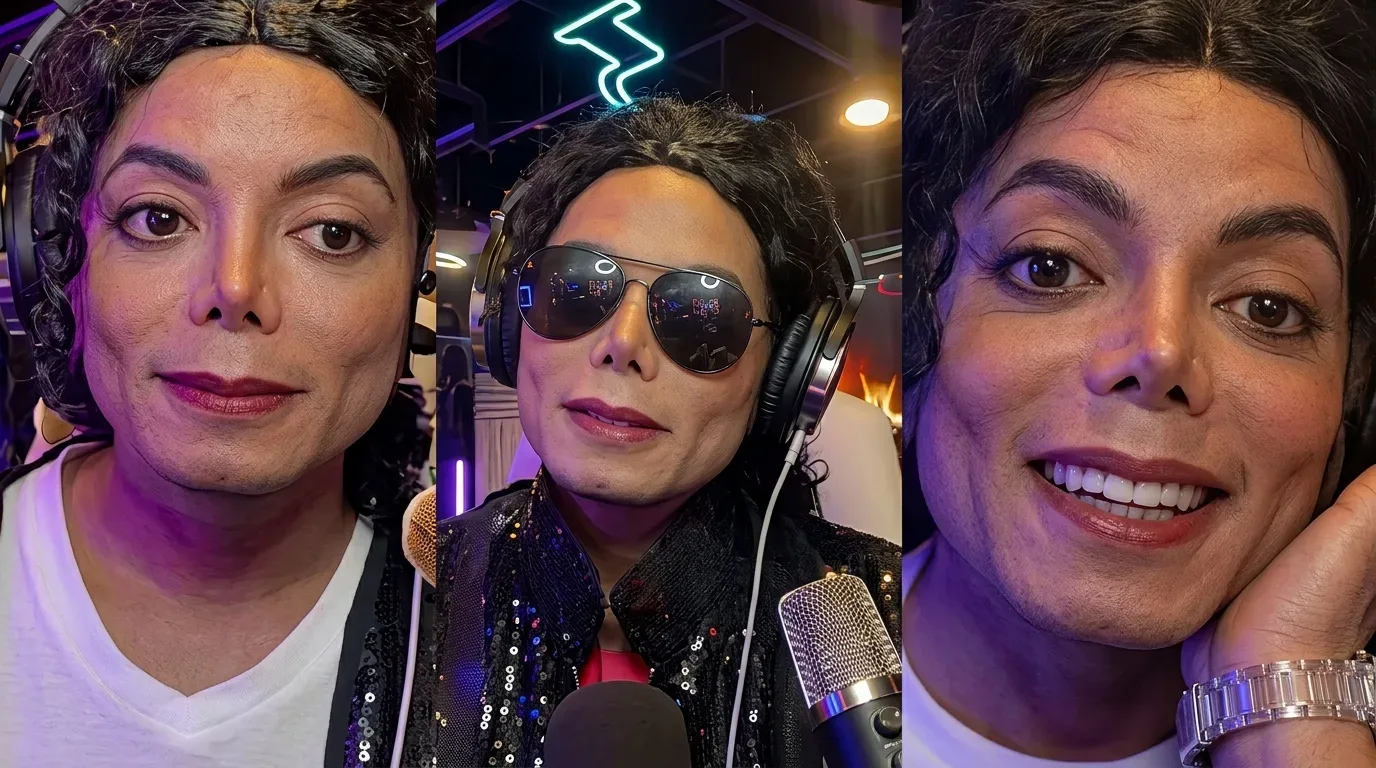
That format also gave Cannon room to combine music and character work. His official site says “Big Michael Michael” began as a freestyle during a TikTok livestream. A livestream differs from a standard uploaded video because it unfolds in real time, allowing a performer to react to viewers and develop material in front of an audience. In Cannon’s case, the format appears to have provided the conditions for a spontaneous idea to become a recognizable piece of his public identity.
The approach has a broader practical benefit for artists: a memorable character or recurring comic premise can create a clear doorway into a performer’s music. The risk, of course, is that a viral identity can overshadow work made before it. Cannon’s current attention is instead prompting listeners to look backward as well as forward.
His public posture also appears to be part of the appeal. Cannon summed up his approach in an interview:
“I just fight negative with positive, you know, and that’s all. I never like to exchange the same energy.”
That sentiment does not explain a career on its own, but it offers a useful frame for Cannon’s content. His rise is linked to humor, freestyling and a persona that can travel quickly online, while his stated outlook emphasizes refusing to mirror negativity. For an artist whose visibility has grown through direct audience interaction, that can be as much a creative choice as a personal one.
What listeners can find beyond the viral song
“Big Michael Michael” brought Cannon considerable attention, yet his catalog reaches back well before the character caught on. Looze Minded, released in 2016, contains 12 tracks across 41 minutes. His releases also include Lil Glen from 2020 and Now Or Never from 2023, as well as the 2024 single “Hide & Seek.”
Those releases matter because viral success frequently changes how a back catalog is heard. A new listener who arrives for one comic, character-led track may discover a much broader timeline of music. In Cannon’s case, the span from Looze Minded through his more recent work establishes that “Big Michael Michael” is part of an ongoing output, not his first attempt at building an audience.
He initially sold “Big Michael Michael” directly to listeners for $1.99 before later making it available on streaming services as its momentum grew. That release sequence highlights two different distribution approaches. A direct sale asks listeners to buy a file from the artist, while streaming distribution puts a recording on services where plays are counted within a subscription or ad-supported system. The supplied information does not indicate why Cannon selected the original $1.99 model beyond his eventual decision to broaden access, but it is consistent with an artist testing a direct relationship with supporters before widening the song’s reach.
Wider streaming availability can make a breakout track easier to find, share and add to playlists. Direct sales, meanwhile, can make support more immediate and can give an artist a closer connection to the people who intentionally seek out the record. Cannon’s move from one model to the other reflects a willingness to adapt the release strategy as the audience changed.
There is a useful comparison in the wider music conversation around artists translating online momentum into their next phase. Molly Santana’s plans for a headlining tour, for example, point to the different decisions artists face once attention turns into a larger public opportunity. Cannon’s immediate focus, based on the information available, remains recording, collaborations and another project rather than any announced live plan.
New recordings and a multi-lane creative profile
Cannon has been recording with Eric Bellinger and Roscoe Dash while preparing another project. He is also credited with an appearance on Melody Renee’s “Beautiful Noise.” The same title has a separate place in his career: Cannon’s official site identifies Beautiful Noise as his first starring role in an independent drama.
That overlap makes clear that Cannon is not presenting acting as a distant hypothetical. He has already taken a lead role in an independent film, alongside music work that includes production and DJing. His stated ambition to eventually do stand-up comedy extends the pattern. He has pointed to Jamie Foxx and Martin Lawrence as models, two entertainers whose careers are associated with moving across comedy and screen performance. Cannon’s mention of them establishes an aspiration, not a confirmed project or a claim that he is following their exact path.
He is also working on collaborations with producer Drummerboy. Beyond the named collaborators, few details about the next project have been provided, including its title, track list, release date or format. That uncertainty is worth keeping intact: there is evidence of active recording, but not enough to define what the finished release will be.
Why control is the thread connecting Cannon’s story
Cannon’s career can be read as a series of pivots toward audience ownership and creative flexibility. After a childhood label experience ended abruptly, he continued performing in unconventional settings. After working at a Chrysler plant, he bet on content creation from his basement. After receiving advice that pointed him toward TikTok, he used comedy and freestyles to build a larger audience. And before streaming “Big Michael Michael,” he tried selling it directly.
None of those steps guarantees a simple formula for other artists. The source material does not provide audience figures, financial results, contract terms or details of Cannon’s investor conversations. But it does support a clearer, narrower takeaway: the artist has built his current position through persistence and a willingness to use formats that let his personality reach listeners directly.
As “Big Michael Michael” introduces Cannon to more people, the most revealing part of the story may be his insistence that new opportunities should not erase the lessons of the old ones. The performer who signed a deal at 8 is now weighing industry attention with his own goals, his son’s future and the belief that the work should remain in his hands.