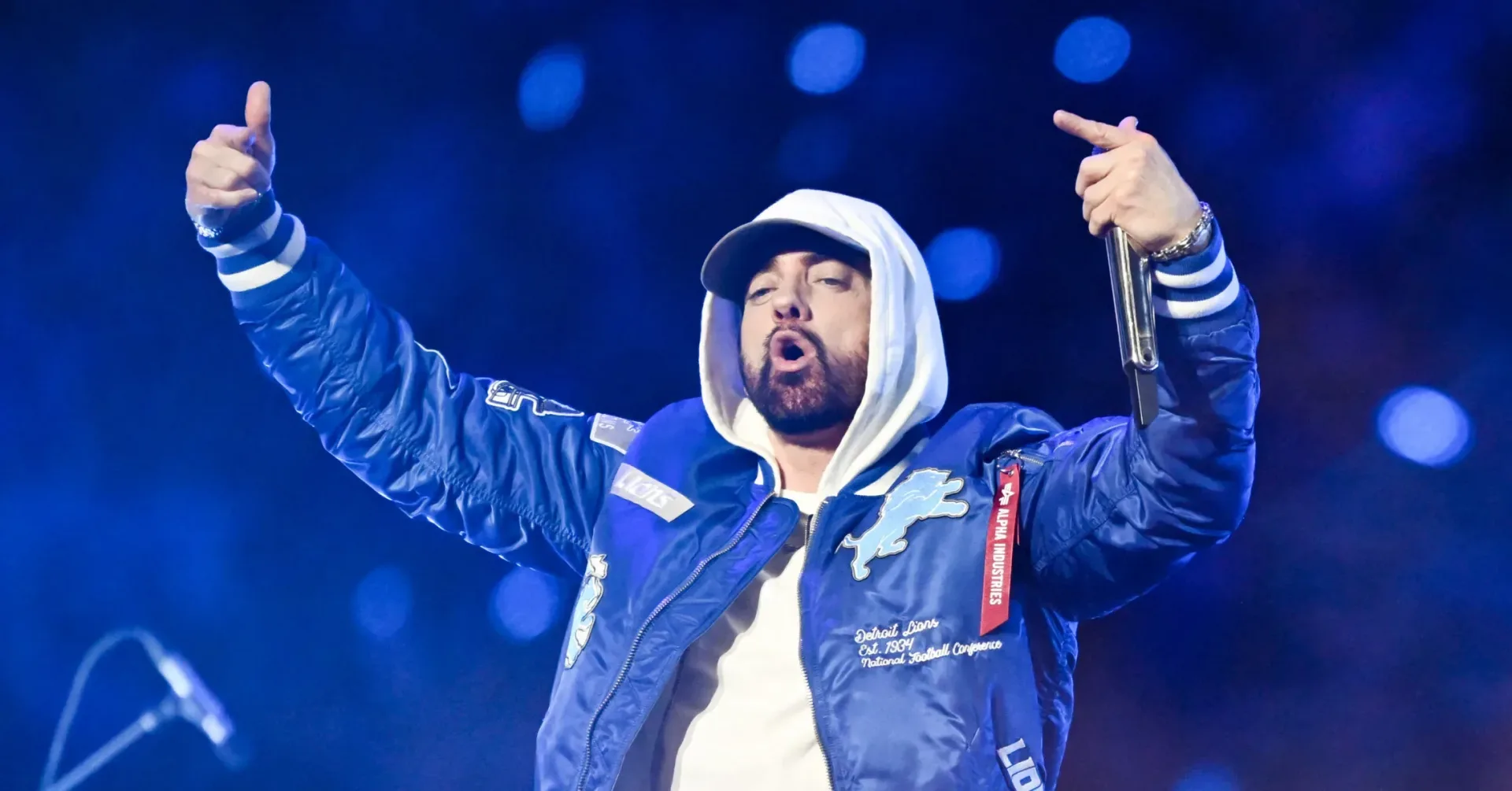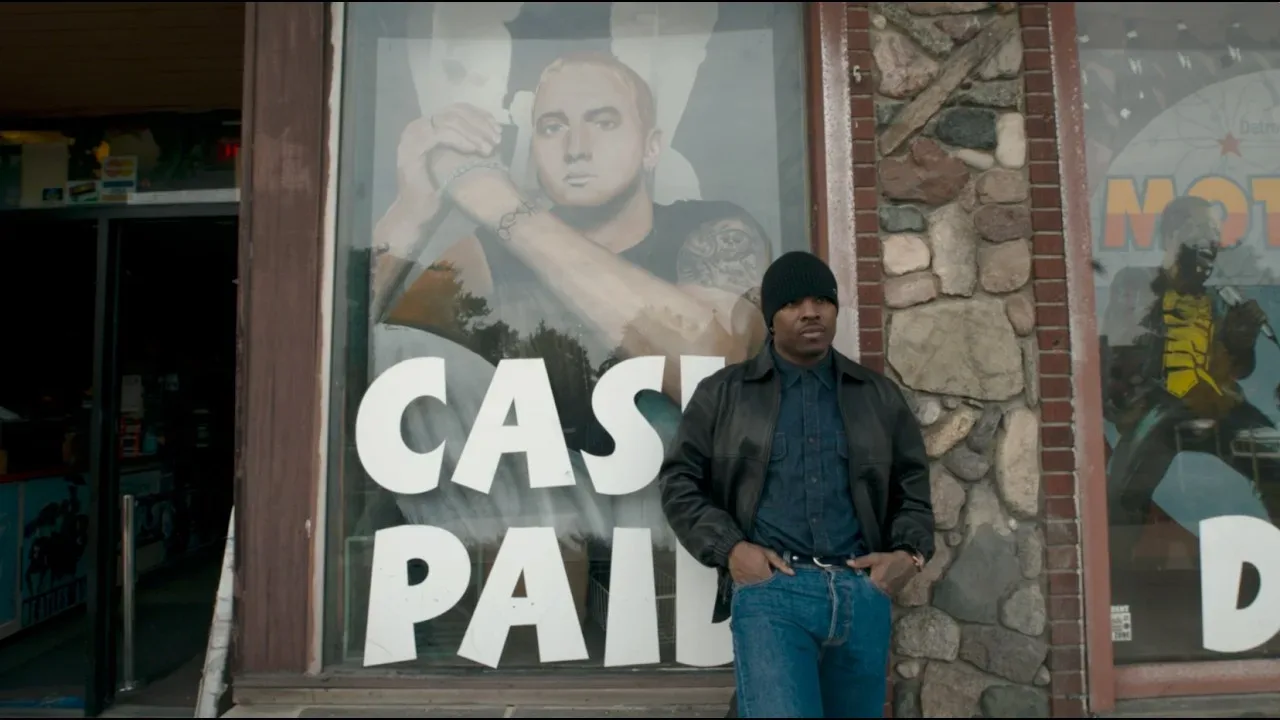
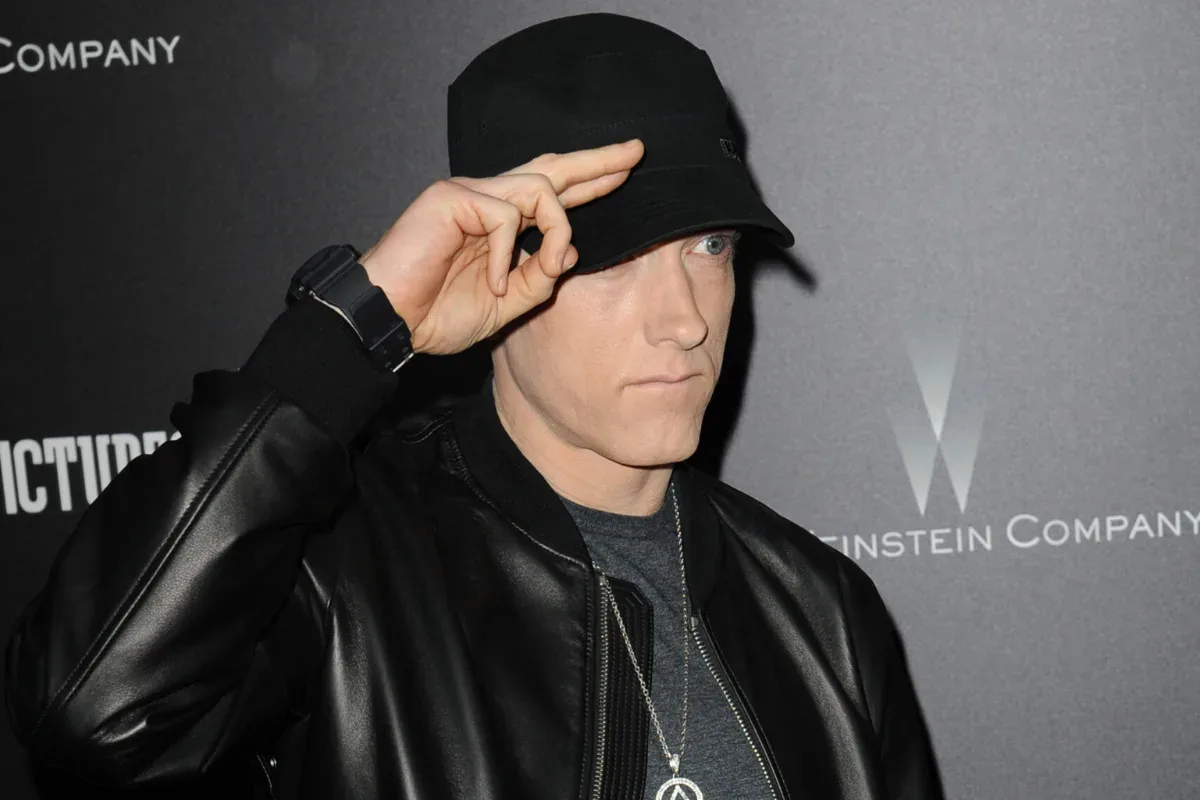
Eminem’s pre-Slim Shady LP era is back in focus with Infinite EP, a six-track digital collection built from his earliest album recordings. The release arrived November 12, timed to the 30th anniversary of the original Infinite album’s release, and it is accompanied by a new mini-documentary assembled with rare archival footage.
The important distinction is that this is an archival project rather than a newly recorded Eminem release. The returning songs have received fresh mixes and additional production from Jake Bass and Mike “Slim” Wilder, but the material itself reaches back to the Detroit period before Eminem’s major-label breakthrough. For listeners who know him primarily through the Slim Shady persona and the records that followed, the package is framed as a compact look at work made while his local career was still taking shape.
The six songs on the digital EP
The digital edition contains six selections from Infinite:
- “Infinite”
- “It’s O.K.”
- “Tonite”
- “313”
- “Open Mic”
- “Never 2 Far”
Denaun Porter produced the original recordings. Mike “Slim” Wilder was a co-producer, while Jeff Bass and Mark Bass were executive producers. The newer work by Jake Bass and Wilder matters because a fresh mix is not the same thing as a remix: it generally means returning to the recorded elements to rebalance and refine the sound, rather than replacing the song with an entirely new interpretation. The supplied details do not describe exactly what was altered song by song, so listeners should not assume new vocals, new verses, or a wholesale reconstruction.
That restraint is useful context for the release. An anniversary reissue can mean many different things, from a duplicate pressing to an expanded edition full of unreleased recordings. Here, the digital core is a curated six-song collection, enhanced with updated mixes and an archival film. It revisits a defined chapter rather than presenting itself as a lost new album.
Physical formats and the vinyl-exclusive extra
Vinyl, CD, and cassette editions are scheduled to follow on February 26, 2027. The vinyl version has one additional archival attraction: “The Hip Hop Shop Freestyle – Feb 17, 1996,” described as a vinyl-only performance.
That makes format a meaningful part of the release rather than merely a packaging preference. Digital listeners receive the six-track EP, while vinyl buyers are set to receive an extra performance from 1996. No wider digital release for that freestyle is stated, so its vinyl-only status is the key detail for anyone deciding which edition fits their interest.
The physical angle also echoes the original album’s limited distribution. Infinite initially came out through Web Entertainment in limited quantities on vinyl and cassette. The forthcoming vinyl, CD, and cassette editions therefore return the recordings to tangible formats associated with the project’s earliest circulation, while also making clear that this is a modern anniversary edition, not the original pressing.
What the package does—and does not—promise
- It does include: six early Eminem tracks, new mixes and additional production, a mini-documentary using rare archival footage, and a vinyl-only 1996 freestyle.
- It does not appear to be: a new studio album, a complete presentation of every known early demo, or a claim that the tracks were newly recorded.
- Physical release date: February 26, 2027, for vinyl, CD, and cassette editions.
For collectors, the distinction between an original limited run and a later anniversary pressing is essential. The information available identifies the original Infinite release as limited vinyl and cassette through Web Entertainment, while the new editions are a separate reissue campaign with its own track configuration and bonus material. Those are different objects with different historical contexts, even when they share songs and formats.
A Detroit story before the Bass Brothers partnership
The archival framing extends beyond the six tracks. Before Infinite, Eminem was recording demos and performing around Detroit. Champtown has recalled meeting him through a dancer named Shortcut, at a time when Eminem was part of the Basement Productions crew.
The pair’s work included “What Color Is Soul,” also involving Chaos Kid, as well as Eminem’s appearance in Champtown’s “Do-Da-Dippity” video. Champtown also brought him to Prince’s Paisley Park studio in 1992. Footage from that session and from early performances has been described as documenting a relationship that predates Infinite by several years.
Those details give the mini-documentary a potentially wider purpose than simply illustrating an album anniversary. Archival footage can show the networks behind an artist’s formative years: collaborators, crews, performances, demos, and the spaces where a regional reputation is built. The announcement only says the film uses rare footage, so it does not confirm which specific moments or people appear. Still, the known history establishes that the period contains material from before the recordings selected for the EP.
There is a practical difference between archival evidence and retrospective storytelling. The former is contemporaneous material—performance clips, session footage, or other visual records from the time. The latter is a newer project organizing those materials into a narrative. This mini-documentary is the latter, drawing on the former. That process is part of why preservation and post-production choices matter in music documentaries; similar production questions are also at the center of a look at how editors are using AI in post-production, though no AI use has been stated for this film.
How Eminem connected with the Bass Brothers
The road to Jeff and Mark Bass did not begin with Dr. Dre. Eminem later recalled that he was cutting demos and rapping on radio when Mark Bass heard him on the air and immediately contacted the studio. They met later that week.
The relationship did not move in a straight line. An attempted deal with Elektra did not happen, and Eminem and the brothers stopped working together for a period. Eminem said he subsequently used his income-tax check to finance a single while continuing to develop his name in Detroit. After the parties reconnected, the Bass Brothers offered a production deal. That arrangement helped establish the independent recordings distributed through Web Entertainment.
This sequence explains why Infinite occupies a distinct place in the larger catalog. It emerged after years of local activity and early recording, but before the later shift in public profile associated with The Slim Shady LP. The EP’s updated presentation is therefore not only about an old track list. It points back to the independent infrastructure—radio exposure, local performances, demos, production relationships, and a small-scale distributor—that existed before worldwide success.
Why this anniversary differs from the prior ‘Infinite’ revisit
This is not the first time the anniversary of Infinite has prompted an archival release. In November 2016, the title track received a 20th-anniversary remix alongside a documentary focused on the album’s creation.
The current edition broadens the musical selection from that prior focus on “Infinite” itself. Rather than centering only on the title song, it collects six album tracks, adds new mixes and additional production, and reserves a separate historical performance for the vinyl edition. The accompanying mini-documentary again makes the visual archive part of the campaign, but the available information does not establish whether it shares footage with the earlier film or takes a different approach.
For fans approaching the material for the first time, the cleanest way to understand the release is as a selected, remixed archival EP with a documentary component—not as a replacement for the original album’s history. For listeners already familiar with the 2016 return of the title track, its appeal is the expanded six-song scope and the format-specific inclusion of “The Hip Hop Shop Freestyle – Feb 17, 1996.”