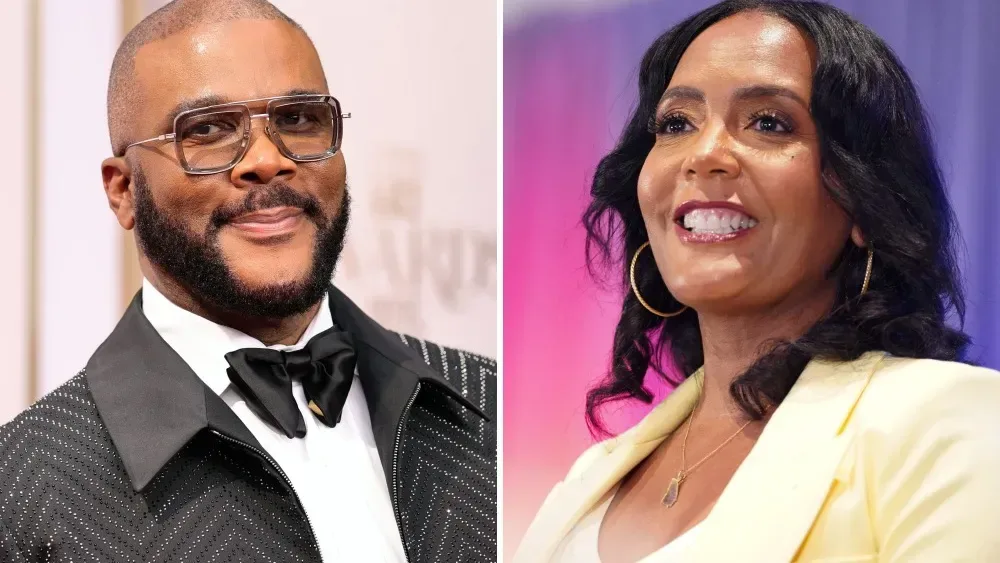
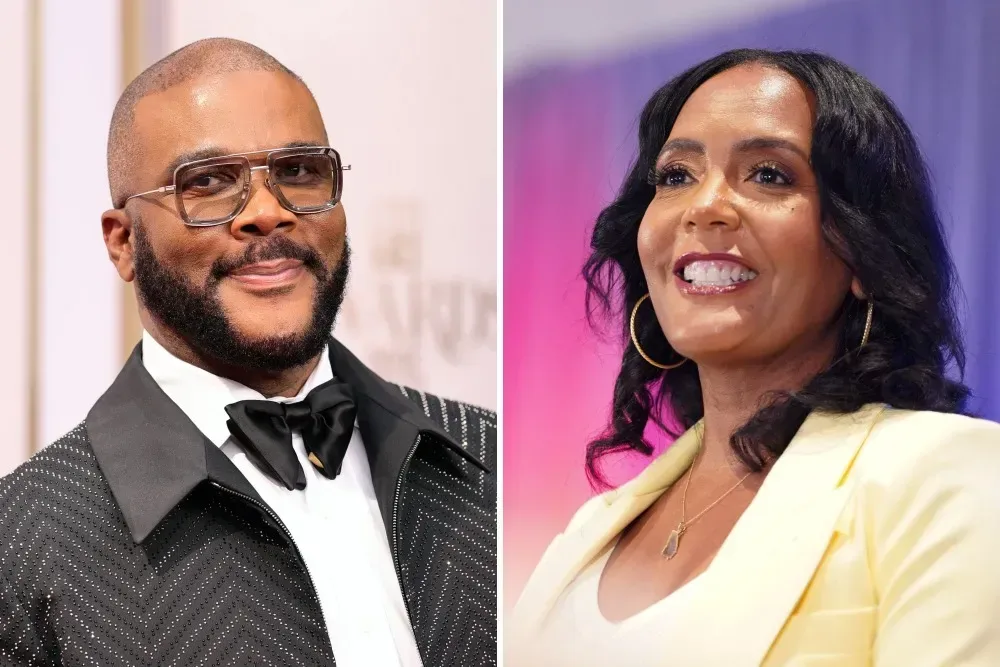
Tyler Perry has been named to the transition team for Georgia Governor-elect Keisha Lance Bottoms, placing one of Atlanta’s most prominent entertainment figures in the early orbit of a new state administration.
Bottoms, who won Georgia’s 2026 gubernatorial election, is set to become the state’s 84th governor on January 11, 2027. Her victory is historically significant: she is the first Black woman elected governor of a U.S. state and Georgia’s first Black governor.
In announcing Perry’s role, Bottoms pointed to his standing as an entertainment entrepreneur, his philanthropy in Georgia, and his ownership of Tyler Perry Studios in Atlanta. The appointment is also likely to draw close public attention because Perry faces civil lawsuits filed by actors Derek Dixon and Mario Rodriguez that contain allegations of sexual battery and assault. Those allegations are claims made in lawsuits, not findings of fact in the material available here.
What a transition team does
A governor’s transition period is the interval between an election and the incoming administration taking office. A transition team commonly helps an incoming governor organize priorities, recruit personnel, review the work of state government, and prepare for the transfer of executive authority. A team member’s inclusion does not, by itself, establish what responsibilities that person will hold after inauguration or whether they will receive a formal state-government position.
That distinction matters in reading the Perry announcement. Bottoms has announced him as part of the transition team, but the available information does not define his specific assignment, scope of authority, or how long his involvement will last. It also does not say that Perry will serve in the administration once Bottoms is sworn in.
Still, the selection has clear symbolic weight. Perry owns a major studio operation in Atlanta and is a highly recognizable producer, filmmaker and performer. Entertainment businesses can be important local employers and infrastructure partners, which makes established figures in the field visible participants when elected officials discuss a state’s economic and cultural identity. For a site following screen culture, the appointment is another reminder that major film figures can be part of policy conversations well beyond a production slate. For more on a separate movie-industry development, see Bradley Cooper’s G.I. Joe movie project.
Bottoms’ public-service background
Before winning the governorship, Bottoms served as mayor of Atlanta and as a member of the Atlanta City Council. She also held roles in the White House during the Biden administration, serving as a senior adviser and director of the White House Office of Public Engagement.
Those positions place the transition announcement in a broader political context. A governor’s transition is not simply a ceremonial gathering of prominent supporters; it is the first organizational step before an administration begins governing. High-profile appointments therefore tend to be evaluated both for what expertise a member may bring and for what scrutiny they may invite.
Related coverage includes Tyler Perry Joins Keisha Lance Bottoms’ Georgia Transition Team.
In Perry’s case, his professional footprint in Atlanta gives the selection a direct connection to the city and Georgia’s entertainment sector. But his celebrity and the unresolved litigation involving him mean the decision is likely to be discussed on more than business or cultural grounds.
The lawsuits involving Perry
Derek Dixon, an actor who appeared in Perry productions including The Oval, filed a lawsuit against Perry in June 2025. The complaint alleges sexual battery and assault beginning in 2021 and seeks $260 million in damages as well as a jury trial.
Dixon’s lawsuit alleges that Perry used power and influence to exploit actors and employees seeking professional guidance and opportunities. Those are allegations from Dixon’s filing. The supplied information does not establish a court ruling, verdict, settlement, or other legal resolution of Dixon’s claims.
In December 2025, Mario Rodriguez filed a separate lawsuit seeking $77 million against Perry and Lionsgate, the distributor of Boo! A Madea Halloween. Rodriguez, who appeared in that comedy-horror film, alleged unwanted sexual advances, sexual battery and sexual assault. The lawsuit also alleged that Lionsgate ignored the alleged conduct.
The available account notes that friendly text messages between Rodriguez and Perry emerged after the alleged misconduct. The existence of such messages is part of the public dispute described in the supplied material, but it does not itself resolve what occurred or determine the merits of Rodriguez’s allegations. As with Dixon’s case, no outcome or adjudicated conclusion is provided here.
Why careful language is essential
Sexual misconduct allegations in civil litigation require precision. A lawsuit is a legal complaint in which a plaintiff sets out claims and asks a court for relief. It is not a judicial finding that the allegations have been proven. Likewise, the filing of a claim does not make the underlying issue insignificant; it means the claims should be described accurately, attributed to the party making them, and separated from established facts.
For readers assessing the transition-team news, the confirmed points in the available information are limited but consequential: Perry has been named to Bottoms’ transition team; Dixon and Rodriguez have filed lawsuits against him; the suits seek substantial damages; and Bottoms is scheduled to take office in January 2027. The factual record supplied does not include responses from Perry, Lionsgate, Bottoms, or the transition team regarding the lawsuits and the appointment.
Why the appointment will remain under scrutiny
Transition teams are often judged by the people an incoming administration chooses to associate with at its outset. Perry’s role will be viewed through two overlapping lenses: his influence in Georgia’s entertainment community and the serious, unresolved claims asserted in the lawsuits.
For Bottoms, the choice highlights a familiar challenge of political transitions: prominent allies and civic figures may offer industry knowledge, local relationships and visibility, while also bringing their own public controversies. The available material does not state whether the transition team considered the litigation before naming Perry, nor does it outline any process for responding to concerns about his inclusion.
For Perry, the appointment adds a governmental dimension to a public profile already shaped by his entertainment work, studio ownership and philanthropic reputation in Georgia. It does not change the legal status of the civil allegations. Until there is a reported legal development, the appropriate description remains that the claims are allegations in pending lawsuits.
The immediate practical question is not whether Perry’s appointment settles any dispute; it does not. It is how visible a role he will have as Bottoms builds her administration before inauguration. The currently available details establish his place on the transition team, but leave the team’s structure, his expected duties and any further response to the controversy unspecified.